On This Page
Description
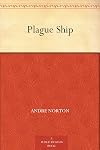
In the distant future, interstellar trade is as vital to survival as were the spice trading missions of the medieval and early modern periods. In Plague Ship , science fiction author Andre Norton details a series of interstellar trade missions that don't go exactly as planned, leading to unforeseen consequences that have the potential to imperil the delicate economic balance of the entire galaxy.Tags
Recommendations





































Member Reviews
Again I was astonished how well these 70 year old "classics" (is it allowed to call a pulp a classic) hold up. Nowadays this novel would be probably marketed as YA SF, but all in all it's still an entertaining, solid adventure with interesting, though exclusively male (even the cat!) characters.Of course, some more alien-ness from the aliens, some more nuances especially in the side characters and perhaps a real antagonist would've been nice,but that's not what a fast-paced story like this can and wants to deliver.
Norton, Andre. Plague Ship. 1956. Solar Queen No. 2. Open Road Media, 2017.
There is nothing strikingly original about Andre Norton’s Plague Ship, the second in the Solar Queen series, but it is one of the more competent and readable examples of 1950s pulp science fiction. Unlike many planetary romances and space operas, Plague Ship does not resort to super-competent heroes or deus-ex-whatever endings. Instead, we have an interstellar trading future with believably corrupt human villains and well-sketched aliens. The crew of the Solar Queen works together to rationally solve their problems—in this case a disease that is incapacitating them one after the other, making them a ship no one wants landing in their backyard. The solution show more the plot provides is amusing and believable. It is surprising that this book has been allowed to slip into public domain. 4 stars. show less
There is nothing strikingly original about Andre Norton’s Plague Ship, the second in the Solar Queen series, but it is one of the more competent and readable examples of 1950s pulp science fiction. Unlike many planetary romances and space operas, Plague Ship does not resort to super-competent heroes or deus-ex-whatever endings. Instead, we have an interstellar trading future with believably corrupt human villains and well-sketched aliens. The crew of the Solar Queen works together to rationally solve their problems—in this case a disease that is incapacitating them one after the other, making them a ship no one wants landing in their backyard. The solution show more the plot provides is amusing and believable. It is surprising that this book has been allowed to slip into public domain. 4 stars. show less
The first time I read this, I was chewing my fingernails down to the bone trying to see how the Queen would get out of this one. Of course, I was maybe nine then. This time - a few tense moments, though I knew in general all would be well, and several belly laughs - on Sargol, on the ship (Sinbad's reaction to the critters, and the Hoobat's hunting technique), and the ending. I do like Dane. The oddest thing about this series is how firmly it _is_ a series; again, the end of this one sets up and foreshadows the next book. Fun. And having read later books, including the more recent co-written ones - events echo forward as well, Derelict for Trade in particular makes a lot of references to Plague Ship, from them having been Posted to what show more they would have done had they truly been infected. It makes things very rich. show less
I wasn't terribly happy with this book. I listened to it on a trip a couple years ago using the Librivox reading, and quit two-thirds the way through. I picked the hard-copy up to finish it recently, and found the finish to be as unimpressive as I expected. To start with, why yes, of course the cat people love catnip. More importantly, given the non-dystopic future, when the plague ship of the title shows up, the government would have devoted resources to at least convince its occupants that they will get medical help of some sort, and they don't need to panic and start doing stupid things. This government, on the other hand, would rather let them die, so surprise, surprise, the occupants of the ship panic and start doing stupid things show more to stay alive. And they continue to do stupid and grossly illegal things until they succeed in escaping their dilemma, at which point the government, instead of punishing them for major felonies including armed kidnapping, basically gives them a slap on the wrist and sends them on their next adventure. Perhaps I was demanding more of realism than I should have, but it was social realism, not scientific realism, that I was demanding. show less
One of the Solar Queen series, these are space opera in the old school, and fun to read. In this adventure, the trading ship is stricken by a strange ailment, and unless they are fast and clever, they will be quarantined and abandoned to die. The ship's cat plays a pivotal role, an element I enjoyed.
Plague Ship by Andre Norton (Alice Mary Norton) is one of the 130 novels the author wrote, so we may be able to excuse an opening sentence as dreadful as the one above. Maybe she was having an off day. Plague Ship is pulp, as one can tell from the cover, and probably not very good pulp at that. It's a rather mundane story, frankly. A ship full of traders travel to a newly discovered planet, exchange goods with the cat-like natives who live there, and head home only to discover they have picked up a strange virus which makes them officially a plague ship, unable to land on earth (Terra) or any other planet inhabited by humans.
But it's in the book's mundane aspects that one can find something fairly interesting. Take away the rockets and show more the aliens and Plague Ship becomes a novel about business, about work. Not a glamorous, soap opera kind of story full of beautiful, backstabbing women, but a story about how business deals are actually transacted; the negotiations, the problems with delivery, the interpersonal struggles to please all of the parties involved, the squabbles with the competition. Real everyday life buried inside a piece of interplanetary pulp fiction.
Book critic Maureen Corrigan has written about the overall disappearance of work in modern fiction. There was a time when books about work were commonplace. Horatio Alger stories come immediately to mind, but descriptions of people trying to be successful in the workplace, trying to do their jobs well, used to be a regular feature in all sorts of fiction. Even a novel about psychological breakdown like Sylvia Plath's The Bell Jar (1963) has long sections about how to become successful at work, in Ms. Plath's case as a magazine writer. Ms. Corrigan believes that the last bastion of work in modern fiction is the detective story. Detective novels are about work above all. They may feature exciting scenes and exotic characters, but the main focus of the novel is how the detective does the job. It surprised me to discover that this is basically what science fiction, especially 1950's pulp science fiction is about. How will business men go about their business in the future, when we can travel to and trade with distant planets? Plague Ship provides one possible answer.
Is it an undiscovered gem? Not in my view. But it does provide a window on the past which may be strange for a novel about the future. By projecting the concerns and interests of her contemporary readers on the question of what their futures may be like, Ms. Norton gives us a glimpse into the psyche of her own time. show less
But it's in the book's mundane aspects that one can find something fairly interesting. Take away the rockets and show more the aliens and Plague Ship becomes a novel about business, about work. Not a glamorous, soap opera kind of story full of beautiful, backstabbing women, but a story about how business deals are actually transacted; the negotiations, the problems with delivery, the interpersonal struggles to please all of the parties involved, the squabbles with the competition. Real everyday life buried inside a piece of interplanetary pulp fiction.
Book critic Maureen Corrigan has written about the overall disappearance of work in modern fiction. There was a time when books about work were commonplace. Horatio Alger stories come immediately to mind, but descriptions of people trying to be successful in the workplace, trying to do their jobs well, used to be a regular feature in all sorts of fiction. Even a novel about psychological breakdown like Sylvia Plath's The Bell Jar (1963) has long sections about how to become successful at work, in Ms. Plath's case as a magazine writer. Ms. Corrigan believes that the last bastion of work in modern fiction is the detective story. Detective novels are about work above all. They may feature exciting scenes and exotic characters, but the main focus of the novel is how the detective does the job. It surprised me to discover that this is basically what science fiction, especially 1950's pulp science fiction is about. How will business men go about their business in the future, when we can travel to and trade with distant planets? Plague Ship provides one possible answer.
Is it an undiscovered gem? Not in my view. But it does provide a window on the past which may be strange for a novel about the future. By projecting the concerns and interests of her contemporary readers on the question of what their futures may be like, Ms. Norton gives us a glimpse into the psyche of her own time. show less
Given that this was written in the mid-50s, this holds up pretty well, and while the basic concept comes across as a little dated (a starship travelling to exotic, alien planets looking for goods to trade), it actually holds up fairly well. After I started reading it I found out that it is actually the second adventure of the solar queen and its crew, but I don't think I missed anything by not having read the first book, as this holds up well on its own.
The Solar Queen is an independent trader that has lucked out in gaining the trading contract to an exotic new planet. The crew go through the delicate process of ingratiating themselves with the local tribes so that they can trade for highly-prized gemstones that they have access to. show more Despite the attempts by a major corporation to muscle in on their patch, they succeed in closing the deal, only to find after they have left the planet that crew members start falling sick from a mysterious illness. The ship is branded a 'plague ship' which is barred from landing on any human planet. A few of the youngest crew members have to find a way to beat the blockade, find put what's causing the illness and find someone who can cure it. Not an easy proposition (but for the reader, a reasonably entertaining one).
Overall this is a decent read, without being anything mind blowing. Some of the actions of the crew, and the plot twists don't always seem very logical, but serve the purpose of making the story more dramatic. The ending also seems to owe much to a Deus Ex Machina moment. I can't say this was a great read, but it wasn't a waste of time either. show less
The Solar Queen is an independent trader that has lucked out in gaining the trading contract to an exotic new planet. The crew go through the delicate process of ingratiating themselves with the local tribes so that they can trade for highly-prized gemstones that they have access to. show more Despite the attempts by a major corporation to muscle in on their patch, they succeed in closing the deal, only to find after they have left the planet that crew members start falling sick from a mysterious illness. The ship is branded a 'plague ship' which is barred from landing on any human planet. A few of the youngest crew members have to find a way to beat the blockade, find put what's causing the illness and find someone who can cure it. Not an easy proposition (but for the reader, a reasonably entertaining one).
Overall this is a decent read, without being anything mind blowing. Some of the actions of the crew, and the plot twists don't always seem very logical, but serve the purpose of making the story more dramatic. The ending also seems to owe much to a Deus Ex Machina moment. I can't say this was a great read, but it wasn't a waste of time either. show less
Members
- Recently Added By
Lists

Books Read in 2013
1,630 works; 51 members

Books Read in 2019
4,052 works; 110 members
Author Information

435+ Works 76,532 Members
Born Alice Mary Norton on February 17, 1912 in Cleveland, Ohio, she legally changed her name to Andre Alice Norton in 1934. She attended the Flora Stone Mather College of Western Reserve University (now Case Western Reserve) for a year then took evening courses in journalism and writing that were offered by Cleveland College, the adult division of show more the same university. Norton was a librarian for the Cleveland Library System then a reader at Gnome Press. After that position, she became a full-time writer. She is most noted for writing fantasy, in particular the Witch World series. Her first book The Prince of Commands was published in 1934. Other titles include Ralestone Luck, Magic in Ithkar, Voorloper, Uncharted Stars, The Gifts of Asti and All Cats are Gray. She also wrote under the pen names Andre Norton, Andrew North and Allen Weston She was the first woman to receive the Gandalf Grand Master of Fantasy and the Nebula Grand Master Award. She has also received a Phoenix Award for overall writing achievement, a Jules Verne Award, and a Science Fiction Book Club Book of the Year Award for her title The Elvenbane. In 1997 she was inducted into the Science Fiction and Fantasy Hall of Fame. She died on March 17, 2005. (Bowker Author Biography) show less
Some Editions
Series

Belongs to Publisher Series
Work Relationships
Is contained in
Common Knowledge
- Original publication date
- 1956-04
- People/Characters
- Ali Kamil (engineer apprentice); Karl Kosti; Captain Jellico; Frank Mura; Queex (hoobat); Van Rycke (Cargo-master) (show all 14); Rip Shannon (astrogator); Sinbad, ship's cat of the Solar Queen; Johan Stotz (engineer); Craig Tau (medic); Dane Thorson (Cargo-master-apprentice); Jasper Weeks; Steen Wilcox; Tang Ya
- Important places
- the Solar Queen; Sargol
- Important events
- First appearance of the Salariki
- First words
- Dane Thorson, Cargo-master-apprentice of the Solar Queen, Galactic Free Trader spacer, Terra registry, stood in the middle of the ship's cramped bather while Rip Shannon, assistant Astrogator and his senior in the service of ... (show all)Trade by some four years, applied gobs of highly scented paste to the skin between Dane's rather prominent shoulder blades.
- Last words
- (Click to show. Warning: May contain spoilers.)But Cargo-master Van Rycke, in spite of knowing the Solar Queen and the temper of her crew, was exceedingly over-optimistic when he made that emphatic statement.
Classifications
Statistics
- Members
- 728
- Popularity
- 38,979
- Reviews
- 14
- Rating
- (3.53)
- Languages
- English, Swedish
- Media
- Paper, Audiobook, Ebook
- ISBNs
- 60
- ASINs
- 31