
The Virtue of Selfishness
by Ayn Rand 
On This Page
Description
The provocative title of Ayn Rand's The Virtue of Selfishness introduces an equally provocative thesis about ethics. Traditional ethics has always been suspicious of self-interest, praising acts that are selfless in intent and calling amoral or immoral acts that are motivated by self interest. Ayn Rand's view is exactly the opposite. This collection of nineteen essays is an effective summary of Ayn Rand's philosophy, which holds the value of the individual over and above that of the state or show more any other "collective." The thread running through all of the essays is Rand's definition of selfishness as "rational self-interest," with the idea that one has the right to assure one's own survival, to pursue happiness, and to own the fruits of one's labor without having to sacrifice any of these to others against one's will. show lessTags
Recommendations







































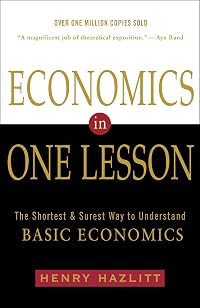
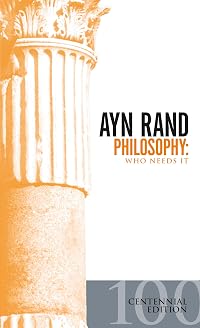

Member Recommendations


Member Reviews
The prose is clearly written. But, as a person who has experienced parenthood, the ideas expressed are indeed egoistic. But they are in no way a pattern for an individual who is a social animal. It is a rationalization of sociopathy. Do read it, so as to gain an insight into the actions of the totally self interested and absorbed. Neither of the authors chose, or could be brought to, reproduce.
Even if you've never experienced the full Randian oeuvre, just think about what this book represents. Read that title and ponder a society in which altruism is regarded as the greatest vice and selfishness the highest virtue. In which a handful of "talented" supermen rule and prosper, while many if not most are left behind or abandoned. In the world around us, does not much of what is heartless, destructive of the planet and demeaning of human dignity follow from this value system?
Some reviewers of Rand's books note here that they became devoted followers as teenagers and outgrew the ideology as young adults. Good for them. I dabbled a bit with Objectivism in earlier years and moved on. Since then, Rand's persistent followers have show more attained critical mass in the leadership of one of our two political parties. (Paul Ryan may have had to disown Rand's "atheist philosophy" out of expediency in 2012, but nobody who is familiar with his past statements can be fooled by the disavowals.) Is it coincidence that the rise of the Randians coincides with the Republican Party making itself unfit to participate responsibly in government?
For better or worse, these ideas cannot be ignored. And since most readers will never make it through The Fountainhead--much less that didactic doorstop, Atlas Shrugged--this book is as good as any to experience the great lady at her most accessible. show less
Some reviewers of Rand's books note here that they became devoted followers as teenagers and outgrew the ideology as young adults. Good for them. I dabbled a bit with Objectivism in earlier years and moved on. Since then, Rand's persistent followers have show more attained critical mass in the leadership of one of our two political parties. (Paul Ryan may have had to disown Rand's "atheist philosophy" out of expediency in 2012, but nobody who is familiar with his past statements can be fooled by the disavowals.) Is it coincidence that the rise of the Randians coincides with the Republican Party making itself unfit to participate responsibly in government?
For better or worse, these ideas cannot be ignored. And since most readers will never make it through The Fountainhead--much less that didactic doorstop, Atlas Shrugged--this book is as good as any to experience the great lady at her most accessible. show less
Anyone unfamiliar with Ayn Rand’s philosophy may be thinking “Is this some kind of joke? Can selfishness really be a virtue?” If you have read any of Ayn Rand’s novels you will know not only can selfishness be a virtue - but is something to strive for as selfishness is a prelude to a happy successful fulfilled life.
"The Virtue of Selfishness" begins with the traditional Webster’s Dictionary definition”
selfishness - the quality or state of being selfish... excessive regard to one’s own interest or happiness... the supreme self love or self-preference which leads a person to direct his purposes to the advancement of his own interest, power, or happiness, without regard for others.”
I imagine it’s the words “without show more regard for others” that really upsets society. After all, we all have to strive to live civilly amongst our peers. But as Ayn Rand points out, in today’s world the popular use of the word “selfishness” would be synonymous with the word “EVIL”. But by who’s authority?
Rand does not condone evil - she simply stresses the theory of Objectivist Ethics - the good of reason, purpose and self-esteem, productiveness, pride and rationality, and establishing values. In the book’s 19 essays she talks about the importance of choosing the right goals and values, emphasizes that all actions should be rational and “a rational man sees his interests in terms of a lifetime and selects his goals accordingly..... he does not become his own destroyer by pursuing a desire today which wipes out all his values tomorrow.” .... not “I want it because it feels good” but “I want it because it is RIGHT” - In other words selfish personal well thought out long range planning. Ayn Rand’s philosophy requires holding one-self to the highest standards -and if that is selfish - so be it.
She used this as a starting-point in "The Virtue of Selfishness" to discuss altruism, compromise, argument from intimidation, ethics, social norms, morality, man’s rights, racism, justice, the nature of government ( and what it’s function should be), and socialism versus capitalism.
There are many wonderful quotes:
On Love - Love and friendship are profoundly personal, selfish values. Love is an expression and assertion of self-esteem, a response to one’s own values in the person of another. One gains a profoundly personal, selfish joy from the mere existence of the person one loves. It is one’s own personal, selfish happiness that one seeks, earns, and deserves from love.
On Pride and Humility - Pride has to be earned; it is the reward of effort and achievement; but to gain virtue of humility, one has only to abstain from thinking - nothing else is demanded - and one will feel humble quickly enough.
On Happiness - Happiness is the state of noncontradictory joy - a joy without penalty or guilt, a joy that does not clash with any of your values and does not work for your destruction.
On Irrational Behavior and Random Actions - Neither life nor happiness can be achieved by the pursuit of irrational whims. Just as man is free to attempt to survive by any random means, as a parasite, a moocher or a looter, but not free to succeed at it beyond the range of the moment, - so he is free to seek his happiness in any irrational fraud, any whim, any delusion, and mindless escape from reality, but not free to succeed at it beyond the range of the moment nor to escape the consequences.
On Hedonists and Altruist Doctrines - the “moral cannibalism” of all hedonists and altruist doctrines lies in the premise that the happiness of one man necessitates the injury of another.
Ayn Rand’s philosophy is controversial - especially in this modern 21st century anything goes society because to live by her ideal lifestyle would require a tremendous amount of self discipline and a reversal of the “herd mentality” so prevalent today.
However, "The Virtue of Selfishness" is thought provoking and inspirational. A good book for book club discussions. But then again, depending on your own life philosophy - it may induce some very heated debates. show less
"The Virtue of Selfishness" begins with the traditional Webster’s Dictionary definition”
selfishness - the quality or state of being selfish... excessive regard to one’s own interest or happiness... the supreme self love or self-preference which leads a person to direct his purposes to the advancement of his own interest, power, or happiness, without regard for others.”
I imagine it’s the words “without show more regard for others” that really upsets society. After all, we all have to strive to live civilly amongst our peers. But as Ayn Rand points out, in today’s world the popular use of the word “selfishness” would be synonymous with the word “EVIL”. But by who’s authority?
Rand does not condone evil - she simply stresses the theory of Objectivist Ethics - the good of reason, purpose and self-esteem, productiveness, pride and rationality, and establishing values. In the book’s 19 essays she talks about the importance of choosing the right goals and values, emphasizes that all actions should be rational and “a rational man sees his interests in terms of a lifetime and selects his goals accordingly..... he does not become his own destroyer by pursuing a desire today which wipes out all his values tomorrow.” .... not “I want it because it feels good” but “I want it because it is RIGHT” - In other words selfish personal well thought out long range planning. Ayn Rand’s philosophy requires holding one-self to the highest standards -and if that is selfish - so be it.
She used this as a starting-point in "The Virtue of Selfishness" to discuss altruism, compromise, argument from intimidation, ethics, social norms, morality, man’s rights, racism, justice, the nature of government ( and what it’s function should be), and socialism versus capitalism.
There are many wonderful quotes:
On Love - Love and friendship are profoundly personal, selfish values. Love is an expression and assertion of self-esteem, a response to one’s own values in the person of another. One gains a profoundly personal, selfish joy from the mere existence of the person one loves. It is one’s own personal, selfish happiness that one seeks, earns, and deserves from love.
On Pride and Humility - Pride has to be earned; it is the reward of effort and achievement; but to gain virtue of humility, one has only to abstain from thinking - nothing else is demanded - and one will feel humble quickly enough.
On Happiness - Happiness is the state of noncontradictory joy - a joy without penalty or guilt, a joy that does not clash with any of your values and does not work for your destruction.
On Irrational Behavior and Random Actions - Neither life nor happiness can be achieved by the pursuit of irrational whims. Just as man is free to attempt to survive by any random means, as a parasite, a moocher or a looter, but not free to succeed at it beyond the range of the moment, - so he is free to seek his happiness in any irrational fraud, any whim, any delusion, and mindless escape from reality, but not free to succeed at it beyond the range of the moment nor to escape the consequences.
On Hedonists and Altruist Doctrines - the “moral cannibalism” of all hedonists and altruist doctrines lies in the premise that the happiness of one man necessitates the injury of another.
Ayn Rand’s philosophy is controversial - especially in this modern 21st century anything goes society because to live by her ideal lifestyle would require a tremendous amount of self discipline and a reversal of the “herd mentality” so prevalent today.
However, "The Virtue of Selfishness" is thought provoking and inspirational. A good book for book club discussions. But then again, depending on your own life philosophy - it may induce some very heated debates. show less
I had heard many opinions about ayn rand, some viciously opposed to her and a devout/downright cultish group of adherents, before picking up and reading this collection of essays by her and nathaniel branden. In short: she's divisive.
But having just finished the collection, i can say this (and knowing it will sound odd in relation to a female author/philosopher) but this is a ballsy woman. Rand is no doubt an incredibly smart woman, more than smart enough to know that the kind of views she was setting forth would win her few accolades and numerous attacks from people across the right/left divide and literary/philosophical spectrum.
But she put forth her views with an earnest conviction and an iron will, and despite not agreeing with show more everything she has to say (though a surprising amount rings true, especially man the individual having only to be loyal to his sense of reason) i can respect miss rand for the force of change, positive and negative, that her ideas can represent, and the incredible passion she has in formulating it and giving readers at the very least a different way to view the world outside of the established and accepted norms. show less
But having just finished the collection, i can say this (and knowing it will sound odd in relation to a female author/philosopher) but this is a ballsy woman. Rand is no doubt an incredibly smart woman, more than smart enough to know that the kind of views she was setting forth would win her few accolades and numerous attacks from people across the right/left divide and literary/philosophical spectrum.
But she put forth her views with an earnest conviction and an iron will, and despite not agreeing with show more everything she has to say (though a surprising amount rings true, especially man the individual having only to be loyal to his sense of reason) i can respect miss rand for the force of change, positive and negative, that her ideas can represent, and the incredible passion she has in formulating it and giving readers at the very least a different way to view the world outside of the established and accepted norms. show less
Ayn Rand was not afraid of turning conventional wisdom on its head. For millennia, one of the few ethical principles that prevailed across cultures was the value of altruism, i.e. , giving up your life for the benefit of others. Rubbish, writes Rand.
Rand was as anti-community and pro-individual as anyone I have ever read. Adamantly opposed to coercive state and religious power, she built a philosophy, Objectivism, on rational thinking and reason. She became too dogmatic and rigid for my taste in later years; nevertheless, she has some very interesting things to say.
"Every human being is an end in himself, not the means to the ends or the welfare of others and therefore, man must live for his own sake, neither sacrificing himself to show more others nor sacrificing others to himself." I find this statement profound in its implications; if it were to be adopted everywhere, wars would cease. It's only because we have bought into the principle of sacrificing oneself for the greater good that armies can survive, yet the reason is so others can accumulate or obtain what you should be able to.
In her philosophy, the happiness of the individual is paramount. Religious types will find her philosophy more than unsettling, because as an atheist, she values the present and current life above everything else. Whether you like her or not, several of the essays are well worth the time to read, particularly "Collectivized Rights" and "Man's Rights." One's gut response is to say that she has rejected charity and helping others. Not at all. It's just that helping others should not be at one's own expense, e.g., spending a fortune to cure one's wife of a disease because the wife is important to oneself would fit nicely into her worldview. Love is entirely selfish.
An important book no matter where you stand. show less
Rand was as anti-community and pro-individual as anyone I have ever read. Adamantly opposed to coercive state and religious power, she built a philosophy, Objectivism, on rational thinking and reason. She became too dogmatic and rigid for my taste in later years; nevertheless, she has some very interesting things to say.
"Every human being is an end in himself, not the means to the ends or the welfare of others and therefore, man must live for his own sake, neither sacrificing himself to show more others nor sacrificing others to himself." I find this statement profound in its implications; if it were to be adopted everywhere, wars would cease. It's only because we have bought into the principle of sacrificing oneself for the greater good that armies can survive, yet the reason is so others can accumulate or obtain what you should be able to.
In her philosophy, the happiness of the individual is paramount. Religious types will find her philosophy more than unsettling, because as an atheist, she values the present and current life above everything else. Whether you like her or not, several of the essays are well worth the time to read, particularly "Collectivized Rights" and "Man's Rights." One's gut response is to say that she has rejected charity and helping others. Not at all. It's just that helping others should not be at one's own expense, e.g., spending a fortune to cure one's wife of a disease because the wife is important to oneself would fit nicely into her worldview. Love is entirely selfish.
An important book no matter where you stand. show less
Ayn Rand was once asked if she could present the essence of her philosophy while standing on one foot. She answered: Metaphysics: Objective Reality; Epistemology: Reason; Ethics: Self-interest; Politics: Capitalism. I first encountered Ayn Rand through her works of fiction as a young woman barely out of my teens. Back then I was already an atheist, one with a great belief in science and reason. There was nothing in her "metaphysics" or "epistemology" that I found the least bit surprising or controversial--indeed in essentials I already agreed with her. Her ethics and her politics were a different story. I remember reading Atlas Shrugged and thinking "you crazy bitch." But she did touch off a revolution in my thinking, changing me from a show more liberal to a libertarian.
Do I agree with everything within these pages? Well, let's say there is still much of it where I have doubts, and where I feel uneasy about her tone if nothing else. She wrote in the book:
I hear once in a while: 'Why do you use the word selfishness to denote virtuous qualities of character, when that word antagonizes so many people to whom it does not mean the things you mean'? To those who ask it, my answer is: 'For the reason that makes you afraid of it'
That's rather a slap at the reader and her opponents. Yet having read her books, even without her elaborating, I knew what she meant. Or thought I did. That people do fear selfishness as an ideal. Make no mistake--this is a demanding ethic. It requires integrity, to never fake reality. To never let your weakness stand as a plea for the unearned. It doesn't allow you to cover up a lack of self-worth by being subsumed by being part of a "greater" whole.
At the same time--and this is more a matter of tone than substance--I do think Rand undervalues benevolence, kindness, generosity. I found I liked better Spinoza's formulation of the question of ethics. Spinoza, like Aristotle (and Rand), emphasizes that ethics is about human flourishing and happiness. But what I like about Spinoza is his emphasis on reciprocity and empathy--in other words, the Golden Rule that has been a near universal in moral thinking from Confucius to Jesus: “Every man should desire for others the good which he seeks for himself.” Spinoza recognizing humans flourish best with other humans argues it’s in a person’s self-interest, and makes a person happiest, when consequently people “are just, faithful, and honourable in their conduct.” I like that squaring of the circle of selfishness and altruism--which I think Rand too easily dismisses. But you know, were it not for Rand bringing philosophy alive to me and convincing me it's important I would never have read Aristotle--or Spinoza. show less
Do I agree with everything within these pages? Well, let's say there is still much of it where I have doubts, and where I feel uneasy about her tone if nothing else. She wrote in the book:
I hear once in a while: 'Why do you use the word selfishness to denote virtuous qualities of character, when that word antagonizes so many people to whom it does not mean the things you mean'? To those who ask it, my answer is: 'For the reason that makes you afraid of it'
That's rather a slap at the reader and her opponents. Yet having read her books, even without her elaborating, I knew what she meant. Or thought I did. That people do fear selfishness as an ideal. Make no mistake--this is a demanding ethic. It requires integrity, to never fake reality. To never let your weakness stand as a plea for the unearned. It doesn't allow you to cover up a lack of self-worth by being subsumed by being part of a "greater" whole.
At the same time--and this is more a matter of tone than substance--I do think Rand undervalues benevolence, kindness, generosity. I found I liked better Spinoza's formulation of the question of ethics. Spinoza, like Aristotle (and Rand), emphasizes that ethics is about human flourishing and happiness. But what I like about Spinoza is his emphasis on reciprocity and empathy--in other words, the Golden Rule that has been a near universal in moral thinking from Confucius to Jesus: “Every man should desire for others the good which he seeks for himself.” Spinoza recognizing humans flourish best with other humans argues it’s in a person’s self-interest, and makes a person happiest, when consequently people “are just, faithful, and honourable in their conduct.” I like that squaring of the circle of selfishness and altruism--which I think Rand too easily dismisses. But you know, were it not for Rand bringing philosophy alive to me and convincing me it's important I would never have read Aristotle--or Spinoza. show less
It seems every few (several?) years, I give some Rand book a chance. So many people I appreciate for different reason hold her philosophy in such high regard. I appreciate her attacks on racist ideology. I think I can understand her vehemence for Russian socialism and reverence for the U.S. Constitution. I get turned off by her pride in her own dogma and quoting Atlas Shrugged like a bible of objectivist parables. Despite her defense of extremism, such axioms strike me as bereft of consideration:
The physical sensation of pleasure is a signal indicating that the organism is pursuing the right course of action.
Members
- Recently Added By
Lists

Books Read in 2015
3,299 works; 126 members
Author Information

181+ Works 76,653 Members
Ayn Rand, 1905 - 1982 Novelist and philosopher Ayn Rand was born Alice Rosenbaum on February 2, 1905 in St. Petersburg, Russia. She graduated with highest honors in history from the University of Petrograd in 1924, and she came to the United States in 1926 with dreams of becoming a screenwriter. In 1929, she married actor Charles "Frank" O'Connor. show more After arriving in Hollywood, Rand was spotted by Cecil B. DeMille standing at the gate of his studio and gave her a job as an extra in King of Kings. She also worked as a script reader and a wardrobe girl and, in 1932, she sold Red Pawn to Universal Studios. In the 1950's, she returned to New York City where she hosted a Saturday night group she called "the collective." It was also during this time that Rand received a fan letter from a young man, Nathaniel Branden. She was impressed with his letter, and she wrote him back. Her correspondence with him eventually led to an affair that lasted over a decade. He became her chief spokesperson and codified the principles of her novels into a strict philosophical system (objectivism) and founded an institute bearing his name. Their affair ended in 1968 when Branden got involved with another one of Rand's disciples. According to Rand, people are inherently selfish and act only out of personal interest making a selfish act, a rational one. It is from this belief that her characters play out their lives. Rand's first novel was "We the Living" (1936) and was followed by "Anthem" (1938), "The Fountainhead" (1943), and "Atlas Shrugged" (1957). All four of her novels made the top ten of the controversial list of the 100 Best Novels of the 20th Century. On March 6, 1982, Ayn Rand died in her New York City apartment. (Bowker Author Biography) show less
Ayn Rand has a Legacy Library. Legacy libraries are the personal libraries of famous readers, entered by LibraryThing members from the Legacy Libraries group.
All Editions
Awards and Honors
Notable Lists
Series
Belongs to Publisher Series
Signet Books (T2791)
Work Relationships
Is contained in
Has as a commentary on the text
Has as a student's study guide
Has as a teacher's guide
Common Knowledge
- Original publication date
- 1964
- First words
- The title of this book may evoke the kind of question that I hear once in a while: "Why do you use the word 'selfishness' to denote virtuous qualities of character, when the word antagonizes so many people to whom it does not... (show all) mean the things you mean?"
- Quotations
- Psychologically, the choice "to think or not" is the choice "to focus or not." Existentially, the choice "to focus or not" is the choice "to be conscious or not." Metaphysically, the choice "to be conscious or not" is the c... (show all)hoice of life or death.
Value is that which one acts to gain and/or keep--virtue is the act by which one gains and/or keeps it.
The virtue of Rationality means the recognition and acceptance of reason as one's only source of knowledge, one's only judge of values and one's only guide to action. It means one's total commitment to a state of full, conscious awareness, to the maintenance of a full mental focus in all issues, in all choices, in all of one's waking hours. - Last words
- (Click to show. Warning: May contain spoilers.)The most illustrious example of the proper example to the Argument from Intimidation was given in American history by the man who, rejecting the enemy's moral standards and with full certainty of his own rectitude, said: "If this be treason, make the most of it."
Classifications
Statistics
- Members
- 2,781
- Popularity
- 6,606
- Reviews
- 28
- Rating
- (3.45)
- Languages
- 12 — Chinese, Czech, English, French, German, Italian, Japanese, Polish, Portuguese, Russian, Spanish, Turkish
- Media
- Paper, Audiobook, Ebook
- ISBNs
- 52
- ASINs
- 28