
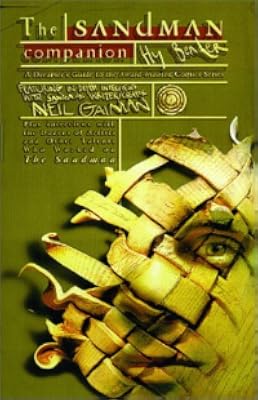
The Sandman Companion
by Hy Bender
The Sandman (Collections and Selections — Reader's Companion), The Sandman {1989-1996} (Companions — Companion 1999)
On This Page
Description
"The Sandman was a groundbreaking and award-winning series that told the dark and tragic tale of Morpheus, the King of Dreams. A fascinating mythology of horror and consequence, this epic masterfully combined intriguing literature with captivating art. The Sandman Companion is an exhaustive guide to this legend. Revealing hitherto undisclosed information and behind-the-scenes secrets, this book features in-depth interviews, never-before-seen illustrations, character origins, and story show more explanations and analysis. Also including excerpts from the original proposal for the series, this handbook is the perfect complement to the Sandman graphic novels"--Publisher description. show lessTags
Recommendations


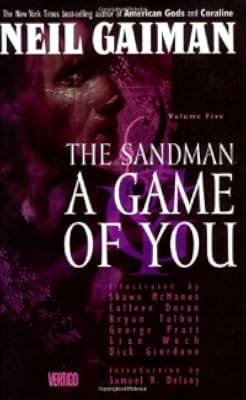

Member Recommendations
Jannes Academic treatment of the Sandman comics. Worthwhile for the enthusiast.
Member Reviews
http://nhw.livejournal.com/61371.html
Great stuff, this, very much helping one understand the series much better. Structured very nicely as well so as to avoid spoilers - one could easily read the series a book at a time and cross-refer to the relevant chapters here. Obviously there's much more to say about Sandman, and plenty of room for debate - for instance, I really rather liked the Cluracan's story about the city of Aurelian from World's End, though Gaiman reckons it one of the weakest of the series; and I wasn't particularly gripped by Ramadan which seems to be a general favourite. Basing the book around interviews with Gaiman about what he thought he was doing is a risky tactic - Theodore Krulik's book about Roger Zelazny is a show more yawn a minute as a result of doing the same - but Bender is not afraid to debate Gaiman's own writing with the author. It really does enhance one's enjoyment of the books. (But is Gaiman claiming too much when he seems to imply that with Death he invented the Goth look?) show less
Great stuff, this, very much helping one understand the series much better. Structured very nicely as well so as to avoid spoilers - one could easily read the series a book at a time and cross-refer to the relevant chapters here. Obviously there's much more to say about Sandman, and plenty of room for debate - for instance, I really rather liked the Cluracan's story about the city of Aurelian from World's End, though Gaiman reckons it one of the weakest of the series; and I wasn't particularly gripped by Ramadan which seems to be a general favourite. Basing the book around interviews with Gaiman about what he thought he was doing is a risky tactic - Theodore Krulik's book about Roger Zelazny is a show more yawn a minute as a result of doing the same - but Bender is not afraid to debate Gaiman's own writing with the author. It really does enhance one's enjoyment of the books. (But is Gaiman claiming too much when he seems to imply that with Death he invented the Goth look?) show less
A great companion read to the Sandman series which covers many of the themes and images in the series as well as its characters. Gaiman himself is given a huge amount of space (via interviews) to explain his backgrounds and thought processes when he was creating this universe and all of them are enlightening. There is also room made for many of the artists involved to at least comment briefly on their respective parts. If you want to delve deeper into the creation of the saga, Bender's companion is a highly recommended place to start. The only complaint I have is that Bender sometimes tries a little too hard to find themes between the stories of one collected volume - they were, at least in the beginning, created as separate comic show more magazines and, although Gaiman had an overall plan, even he didn't know the series would run as long as he did. It is a small complaint, though, since the benefits of the book are great. show less
This is it: the last Sandman spin-off out there, until Sandman: Year Zero finally comes out. Hy Bender's book looks back at Neil Gaiman's series, breaking it down by story arc, and providing plot summaries and analysis, with box outs on art. I don't get the reason for the summaries: if you didn't read these stories already, you wouldn't care; if you have, you'd get bored. It was over two years ago that I read The Sandman, and I still remembered enough to find these boring. There are occasional nuggets of insight in them, but that makes it all the worse, because you know you're missing out!
Aside from that, this was a pretty good book. The analysis is definitely driven by Bender's extensive interviews of Gaiman himself, and Gaiman show more remembers a surprising number of small details. Lots of great bits about what Gaiman was thinking, and Bender asks some good questions. (Though a couple of them feel like obvious setups.) If you're that into The Sandman, or you're just a completist like I am, it's worth picking up.
It did make me think that there's not really a lot of comics guidebooks out there, like there are for TV shows. (I have ones about Blake's 7, The Prisoner, Sapphire & Steel, Star Trek: Deep Space Nine, and Torchwood, not to mention tons and tons of Doctor Who ones.) I wonder why that is? Would no one buy a guide to all (for example) Green Arrow comics?
Neil Gaiman's The Sandman Spin-Offs: « Previous in sequence | Next in sequence » show less
Aside from that, this was a pretty good book. The analysis is definitely driven by Bender's extensive interviews of Gaiman himself, and Gaiman show more remembers a surprising number of small details. Lots of great bits about what Gaiman was thinking, and Bender asks some good questions. (Though a couple of them feel like obvious setups.) If you're that into The Sandman, or you're just a completist like I am, it's worth picking up.
It did make me think that there's not really a lot of comics guidebooks out there, like there are for TV shows. (I have ones about Blake's 7, The Prisoner, Sapphire & Steel, Star Trek: Deep Space Nine, and Torchwood, not to mention tons and tons of Doctor Who ones.) I wonder why that is? Would no one buy a guide to all (for example) Green Arrow comics?
Neil Gaiman's The Sandman Spin-Offs: « Previous in sequence | Next in sequence » show less
I thought this was a great book. It essentially looks at each collection in turn, with Hy Bender describing the story arc and 'Some Things Worth Noticing' and then he lets Neil Gaiman talk about the creative process and points of interest for that section. Neil Gaiman is a really articulate interviewee and gives great value, and its what he talks about that is the main interest in the book. Fortunately there's lots of space for him and its fascinating to read. The only slight disappointment is that the 'Some Things Worth Noticing' section for each collection is normally only a couple of pages long and, while it does give some interesting interpretations, this bit is just too short. It would have been interesting if this bit was expanded show more for the author to attempt more exploration and critical analysis of subtext, mythology etc. Neil Gaiman does touch on this at times but this feels like a missed opportunity.
For me, the book could have been twice as long as it is so readable and The Sandman is a massive work which fully justifies the attention. This isn't a criticism but rather an expression of how much I enjoyed reading this book. Highly recommended. show less
For me, the book could have been twice as long as it is so readable and The Sandman is a massive work which fully justifies the attention. This isn't a criticism but rather an expression of how much I enjoyed reading this book. Highly recommended. show less
This is an absolutely thrilling companion reader to the Sandman series. Most of the book is composed of interviews with Neil Gaiman, and the depth and wonder that he evokes when speaking about his writing is absolutely astonishing. Minute details from the series suddenly receive great importance, and the reader will begin to draw connections between characters and events that she may not have seen before. This is truly fantastic, and a must-read for any fan of the Sandman series.
Hy Bender’s The Sandman Companion: A Dreamer’s Guide to the Award-winning Comics Series examines the original run of Gaiman’s Sandman in detail, beginning with the series’ creation through what was then its ending with the storyline “The Wake” and issue 75. Bender structures his book into three parts. The first discusses the formation of the series and DC’s Vertigo line, the second examining each of the major storylines in detail, and the third looking at characters’ origins, Gaiman’s use of language, and the series’ influence as of 1999, three years after the final regular issue.
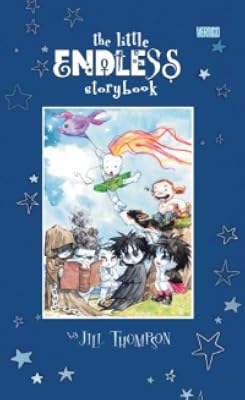
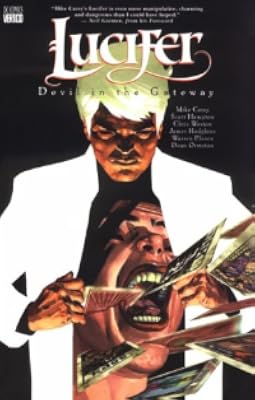
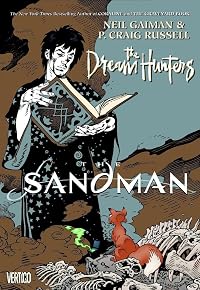
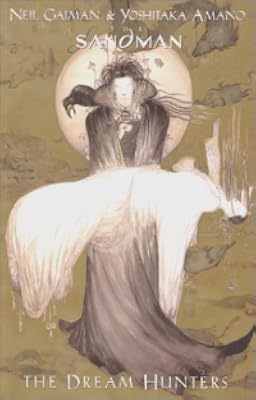
In the second part, Bender first summarizes the major points of each storyline, then discusses “some things worth noticing,” before show more featuring an in-depth interview with Gaiman about that specific storyline – what inspired certain parts, things he’s proud of or would do differently, challenges from DC editorial. Being written in 1999, the only spin-off that Bender discusses (and that briefly) is the Sandman Midnight Theatre one-shot. Due to the book coming out in 1999, Bender can only make a brief reference to The Sandman: The Dream Hunters in his second appendix along with a quick discussion of the Sandman Presents mini-series about various characters, the Death spin-offs, and DC’s monthly series, The Dreaming. Were Vertigo Books to update this volume, they could discuss these in greater detail and include mentions of Jill Thompson’s Little Endless Storybook books (the Li’l Endless do get a mention on page 153 as they appeared in “Fables and Reflections”), the Lucifer series, Overture, and more. That said, Bender’s work is a must-read for all fans of Gaiman’s Sandman who want to know more about it and learn what literary works Gaiman referenced so they may find them at their local library. It deepens one’s understanding and appreciation of this ground-breaking comics work.
As Bender concludes of the character of Dream, “Like a dream, the Sandman’s identity and meaning depend on your own personal reading of him” (pg. 208). The same may be said of the Sandman comic book and Bender’s work will help readers to find new readings. show less
In the second part, Bender first summarizes the major points of each storyline, then discusses “some things worth noticing,” before show more featuring an in-depth interview with Gaiman about that specific storyline – what inspired certain parts, things he’s proud of or would do differently, challenges from DC editorial. Being written in 1999, the only spin-off that Bender discusses (and that briefly) is the Sandman Midnight Theatre one-shot. Due to the book coming out in 1999, Bender can only make a brief reference to The Sandman: The Dream Hunters in his second appendix along with a quick discussion of the Sandman Presents mini-series about various characters, the Death spin-offs, and DC’s monthly series, The Dreaming. Were Vertigo Books to update this volume, they could discuss these in greater detail and include mentions of Jill Thompson’s Little Endless Storybook books (the Li’l Endless do get a mention on page 153 as they appeared in “Fables and Reflections”), the Lucifer series, Overture, and more. That said, Bender’s work is a must-read for all fans of Gaiman’s Sandman who want to know more about it and learn what literary works Gaiman referenced so they may find them at their local library. It deepens one’s understanding and appreciation of this ground-breaking comics work.
As Bender concludes of the character of Dream, “Like a dream, the Sandman’s identity and meaning depend on your own personal reading of him” (pg. 208). The same may be said of the Sandman comic book and Bender’s work will help readers to find new readings. show less
The commentary track to one of the best comic book series ever. Hardly indispensible, but very interesting.
Members
- Recently Added By
Author Information

7 Works 1,311 Members
All Editions
Some Editions
Series

The Sandman
11 works (Collections and Selections — Reader's Companion)

The Sandman {1989-1996}
76 works (Companions — Companion 1999)
Belongs to Publisher Series
Work Relationships
Reference guide/companion to
Common Knowledge
- Canonical title
- The Sandman Companion
- Alternate titles
- The Sandman Companion: A Dreamer's Guide to the Award-Winning Comic Series
- Original publication date
- 1999-11-10
- People/Characters
- Neil Gaiman; Tori Amos; Karen Berger; Samuel R. Delany; Colleen Doran; Mike Dringenberg (show all 25); Harlan Ellison; Marc Hempel; Kelley Jones; Caitlín R. Kiernan; Todd Klein; Scott McCloud; Elizabeth McIntyre; Dave McKean; Alan Moore; Steve Oliff; P. Craig Russell; Peter Straub; Bryan Talbot; Jill Thompson; Charles Vess; Danny Vozzo; Michael Zulli; Sandman: Morpheus: Dream; Dream of the Endless
- Epigraph
- The next century's task will be to rediscover its gods. -ANDRE MALRAUX
We have the right, and the obligation, to tell old stories in our own ways, because they are OUR stories. -NEIL GAIMAN - Dedication
- To Neil Gaiman and Alan Moore, for their wit and kindness
- First words
- Mysteries are vital to both our lives and the stories that sustain our lives.
- Last words
- (Click to show. Warning: May contain spoilers.)It is going to be a beautiful day.
- Original language
- English
Classifications
- Genres
- Nonfiction, Literature Studies and Criticism, Graphic Novels & Comics
- DDC/MDS
- 741.5973 — Arts & recreation Drawing & decorative arts Drawing Comic books, graphic novels, fotonovelas, cartoons, caricatures, comic strips History, geographic treatment, biography North American United States (General)
- LCC
- PN6728 .S26 .B46 — Language and Literature Literature (General) Literature (General) Collections of general literature Comic books, strips, etc.
- BISAC
Statistics
- Members
- 1,284
- Popularity
- 18,923
- Reviews
- 16
- Rating
- (3.90)
- Languages
- English
- Media
- Paper
- ISBNs
- 4
- ASINs
- 5