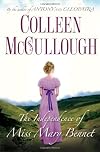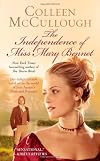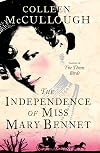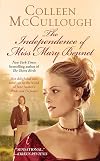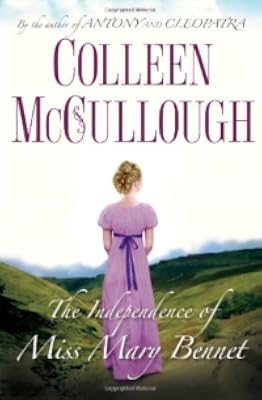
The Independence of Miss Mary Bennet
by Colleen McCullough
On This Page
Description
The best-selling author of The Thorn Birds presents a sequel to Pride and Prejudice that finds the willful third Bennet sister setting out in her late thirties in pursuit of adventure while her sisters worry about her at home.Tags
Recommendations





Member Reviews
*** ITA/ENG ***
Colleen McCullough con questa sua opera rende piena giustizia al concetto: ho letto fanfiction migliori (ma di molto!). Mi si è affacciato il dubbio che ci sia della parodia di genere da qualche parte nel libro, ma purtroppo resta solo un dubbio.
Nota bene: Jane Austen mi piace il giusto, non penso che sia sacrilegio toccare i suoi libri con meno che guanti di seta, né che sia la fine del mondo se un suo personaggio dice qualcosa di più spinto di "accipuffolina!" se gli cade un martello sull'alluce.
Tuttavia, quando leggo un romanzo che dovrebbe essere seguito, spin-off o simili di un altro romanzo che apprezzo, mi aspetto che sia (1) scritto bene (2) coerente con l'ambientazione e i personaggi originali (3) faccia show more qualcosa di interessante con i suddetti.
Qui solo il primo punto è centrato a metà (ma c'è anche una traduzione di mezzo per cui non so quanto sia colpa dell'autrice). Per il resto... tristezza.
Piccolo excursus per spiegare la mia delusione con la gestione del personaggio: innanzitutto brutta, Mary Bennet, non lo è mai statase non nella serie BBC degli anni '90, già nell'ultimo film è tornata solo 'dimenticabile' . Nel romanzo viene descritta come 'plain' ('normale', come del resto lo è Charlotte, l'amica di Elizabeth che sposa il pastore borioso). La sua sfortuna è avere due sorelle maggiori molto belle (quante di noi sarebbero 'brutte' se avessero come sorella Scarlett Johansson?), ma soprattutto un carattere del cavolo: è boriosa, triste e con la testa piena di frasi fatte.
Mary Bennet in questo libro è invece una banale "gnocca che nessuno si filava perché aveva i brufoli", a cui piace fare battutacce che scandalizzano le sorelle (perché è emancipata&moderna). In più vuole salvare i poveri e scrivere libri (emancipata&moderna #2), ma ovviamente... senza un uomo non è in grado di fare nulla di concreto (emancipata&moderna #3).
Di contro gli altri personaggi, per darle un risalto di cui non ha bisogno (ti sta già sulle balle abbastanza così), vengono demoliti a mazzate sui denti. Purtroppo, oltre a vite tristi e nuove e mortificanti personalitàcredo che il peggio del facepalm sia Darcy che crede il figlio gay perché non vuole fare il militare, quando nel romanzo originale ha sì un cugino ufficiale, ma per sé stesso preferisce la carriera di 'gentiluomo ricco' (d'altronde è pieno di soldi, chi glielo fa fare?) non viene aggiunto niente che dia loro un minimo di spessore.
Un nulla di fatto quindi, con premesse interessanti trasformate in un triste e anonimo romanzetto rosa.
**************
I do not have any mystical adoration for Jane Austen's books, I don't think the world is going to end tomorrow if they aren't treated with silk gloves. In fact, I picked this book because I liked the idea of a story centering around the unremarkable middle sister Mary Bennet.
However, when reading a sequel or a spin-off of an established work, I expect it to be (1) well written (2) coherent with the original setting and characters (3) at the same time makes something interesting with them.
This book started promising and then utterly failed in favour of the classic, trite romance-erotica book where the protagonist is gorgeous-just-in-need-of-a-makeover, with a supposed 'very modern mentality' (which limits itself to sex jokes, since to do anything relevant se still needs to be saved by a man).
Of course, in case we don't hate her already, she has to be better than anyone else, included, of course, her sisters, so Jane and Elizabeth need to be trapped in miserable lives with... some morons with weird personalities? Of course, the abuse will not count in the end and everyone will be happy again because plot (logic is overrated). show less
Colleen McCullough con questa sua opera rende piena giustizia al concetto: ho letto fanfiction migliori (ma di molto!). Mi si è affacciato il dubbio che ci sia della parodia di genere da qualche parte nel libro, ma purtroppo resta solo un dubbio.
Nota bene: Jane Austen mi piace il giusto, non penso che sia sacrilegio toccare i suoi libri con meno che guanti di seta, né che sia la fine del mondo se un suo personaggio dice qualcosa di più spinto di "accipuffolina!" se gli cade un martello sull'alluce.
Tuttavia, quando leggo un romanzo che dovrebbe essere seguito, spin-off o simili di un altro romanzo che apprezzo, mi aspetto che sia (1) scritto bene (2) coerente con l'ambientazione e i personaggi originali (3) faccia show more qualcosa di interessante con i suddetti.
Qui solo il primo punto è centrato a metà (ma c'è anche una traduzione di mezzo per cui non so quanto sia colpa dell'autrice). Per il resto... tristezza.
Piccolo excursus per spiegare la mia delusione con la gestione del personaggio: innanzitutto brutta, Mary Bennet, non lo è mai stata
Mary Bennet in questo libro è invece una banale "gnocca che nessuno si filava perché aveva i brufoli", a cui piace fare battutacce che scandalizzano le sorelle (perché è emancipata&moderna). In più vuole salvare i poveri e scrivere libri (emancipata&moderna #2), ma ovviamente... senza un uomo non è in grado di fare nulla di concreto (emancipata&moderna #3).
Di contro gli altri personaggi, per darle un risalto di cui non ha bisogno (ti sta già sulle balle abbastanza così), vengono demoliti a mazzate sui denti. Purtroppo, oltre a vite tristi e nuove e mortificanti personalità
Un nulla di fatto quindi, con premesse interessanti trasformate in un triste e anonimo romanzetto rosa.
**************
I do not have any mystical adoration for Jane Austen's books, I don't think the world is going to end tomorrow if they aren't treated with silk gloves. In fact, I picked this book because I liked the idea of a story centering around the unremarkable middle sister Mary Bennet.
However, when reading a sequel or a spin-off of an established work, I expect it to be (1) well written (2) coherent with the original setting and characters (3) at the same time makes something interesting with them.
This book started promising and then utterly failed in favour of the classic, trite romance-erotica book where the protagonist is gorgeous-just-in-need-of-a-makeover, with a supposed 'very modern mentality' (which limits itself to sex jokes, since to do anything relevant se still needs to be saved by a man).
Of course, in case we don't hate her already, she has to be better than anyone else, included, of course, her sisters, so Jane and Elizabeth need to be trapped in miserable lives with... some morons with weird personalities? Of course, the abuse will not count in the end and everyone will be happy again because plot (logic is overrated). show less
This novels picks up Mary Bennet's story several years after the end of [Pride and Prejudice]. A lot has changed since then, very little for the better. Romantic Kitty is glad her husband is dead and thinks only of her clothes; funny Lizzie has no life and no interests and doesn't understand her young children; Jane constantly weeps; Darcy bribes and outright physically forces the Bennet sisters from seeing their mother until she's dead, hates his children (especially his son who is kind and gentle so Darcy thinks he's gay, and further thinks this is the worst thing ever), and wishes he'd never married Lizzie; Colonel Fitzwilliam murdered Anne de Burgh?!, etc) seemingly so Mary can have a scene with each of them in which they think show more about how beautiful she's gotten, and she thinks with derision what a fool/asshole/pitiable wretch they are. The only character who seems to have improved over the years is Mary, who has become a purple-eyed beauty with strong feminist, anti-classist, anti-racist opinions. I found these developments to be so improbable that I gave up on the book midway through, which means I missed out on even more fantastic plots such as Darcy revealing himself to have a half-black bastard brother that he uses as his henchman to carry out diabolical schemes, Mary writing a book about the plight of the poor so touching that it changes all of England, and Mary getting kidnapped by cultists.
If this were a regency romance without links to Pride and Prejudice, I might have been able to enjoy it. But as a sequel to Pride and Prejudice it is so mean-spirited, so completely at odds with the original work in both tone and characterization, that it absolutely did not work for me. show less
If this were a regency romance without links to Pride and Prejudice, I might have been able to enjoy it. But as a sequel to Pride and Prejudice it is so mean-spirited, so completely at odds with the original work in both tone and characterization, that it absolutely did not work for me. show less
Update as on 18 May 2011 - I decided to read the book through since I can't bare to leave a book unfinished.:-/I was forewarned by the reviews that I had read. But I thought I would give this a try anyway...mainly because the author, Colleen McCullough, is a favourite of mine. It was a disaster, this presumed sequel to Austen's well-loved Pride and Prejudice. I wanted, so much, to give McCullough a chance; I tried to make excuses for her; I tried to glean as much as I could of that age and say it was worth the effort. But no matter what, I've finished this book feeling quite disgusted and let down.This novel read like any other Regency romance written by authors today. It was all saquerine and fluffy, and the Austen characters we know show more so well are nearly unrecognisable! McCullough has taken little things from P&P and exaggerated them into the people these characters become twenty years later. However, I see no fault in that except that she has made caricatures of these people - all of them are caricatures - the sisters and Darcy (Bingley isn't recognisable at all, not to mention that he never appears on the scene). Mary's love interest is your typical romance hero, though he is quite likable. Even the way the plot plays out and the subplots as well, are very disconcerting, abrupt, and too neatly and unrealistically done. The characters, including the men, talk non-stop. They are all absolute rattlepates....more so than the women characters. Can you imagine Darcy talking and explaining and pontificating out loud and in a very pansy way?I'm afraid I could find nothing to recommend in this book.Written as on 7 May 2011I am disappointed.Worse than disappointed actually. What word could I possibly use to describe, not just the disappointment, but the revulsion I felt while reading the first chapter of The Independence of Miss Mary Bennet? That's all I have read of this novel, and this is all I will possibly ever read of this novel. I don't read any of the fan fiction passing off as Jane Austen sequels, prequels and adaptations in the current market. There's a part of me that feels the essence of Austen could never be recaptured, and it is that very essence that has allowed her literature to survive for nearly 200 years, whilst her more famous contemporaries have dwindled out of sight and memory. Could anyone do Austen's characters and themes any justice? I'm very sceptical about that. But I figured if there was one person who could capture the mood and atmosphere of the early 19th century, thereby making up for the lack of Austen's touch with her characters, I thought it would be Colleen McCullough. She has a lovely writing style, and she is a wonderful story-teller. However, there was nothing of the McCullough I've read before, present in this sequel to Austen's Pride and Prejudice. I was horrified right from the start. I didn't recognise the writing style, and I couldn't, for the life of me, take to the manner in which the first chapter was written to make things clear to the Austen reader, of the circumstance in each sister's situation seventeen years after the older Bennet sisters are married. I was prepared for something very different, I admit. I knew McCullough would give more detail of the period Austen wrote in - something we never glean from Austen's works at all. I was prepared for ghastly truths of that era which were always wrapped up in clean linen. I was prepared for a novel that was as different from Austen as could be, yet captured the spirit of those characters we are so well acquainted with. What I wasn't prepared for was some inexperienced, school-girlish tripe that is more along the lines of a fan fiction Mary Sue. McCullough sets the stage for the sisters - Jane and Bingley are happy and as amiable as ever, always being guided by the domineering, self-willed 'Fitz' Darcy, who in turn is having a horrible marriage with Elizabeth. So far, these characters sound as absurdly unlike the characters of Austen, even should they be nearly twenty years older than the original. Then there is an exaggerated caricature of Lydia, and while Kitty is interesting in a way and well off as a wealthy widow, Mary turns out to be a beauty in the manner of her second older sister, Elizabeth. The novel opens with the death of Mrs Bennet, and we soon learn that the five sisters are seeing each other together after about fifteen years. Why? Because Darcy has kept them all apart! Apparently, he despises his wife's family so much that he has tyrannised them for years.Oh, it's awful! Believe me, I haven't really given anything away. I have only read the first chapter and the above is the gist of it. I cannot understand what happened to McCullough's story-telling ability. I looked up to see how old she was when she wrote this book and it would seem she was on the border of seventy. Perhaps senility could be her excuse? I don't know. I only know that I wish to bury my head in one of her earlier books if only to reassure myself that I wasn't wrong in my opinion of her the first time around.:-/ show less
My Review from my old books blog dated 2009
SPOILERS
Everyone who has ever read good literature knows about the Bennets. That family from Pride and Prejudice with 5 daughters - Elizabeth, Jane, Mary, Lydia and Kitty.
The time is now 20 years after the end of P&P. Mrs Bennet has just died. And everyone gets together for the funeral.
Elizabeth and Fitzwilliam Darcy are still married. They have 5 children - Charles, Georgiana, Susan, Anne and Cathy. The Bennet Curse is what Darcy calls it. Their marriage is floundering because there are no more sons and the one son they do have, is not living up to Darcy's expectations. Darcy no longer visits Lizzie's bed.
Jane is still married to Charles Bingley. They have 8 living children (7 boys and 1 girl) show more but Jane has lost 4 other babies and she looks older than her years.
Lydia ia still Mrs George Wickam, but is now an alcoholic (in modern terms). George has been sent to various wars and lately to America - purely to keep him away from Lydia. Once again this is Darcy's doing.
Kitty had made the best marriage. She married Lord Menadew. She had a coming out season in London and was able to capture a Lord.
Caroline Bingley is still not married and she still lusts after Fitzwilliam Darcy.
And then there is Mary. The middle Bennet daughter. The one who was left to care for Mama Bennet after the other daughters all had their scandals and left home. Darcy has paid an allowance to Mary to care for Mrs Bennet for the last 17 years.
Mary has not be a docile daughter for all these years. No way. She has read every single book in the library. When she finally meets up with Elizabeth at their mothers funeral, she can see how tired Jane is from so many pregnancies. She makes a statement to Elizabeth that is shocking.
"I know I am not supposed to be aware of such things, Lizzie, but can't someone tell brother Charles to plug it with a cork??"
"Mary!! How do you know of such things, How can you be so indelicate?" exclaims Lizzie in shock.
"I know because I have read every book in the library, and I am tired of delicacy about subjects that lie so close to our female fates." is Mary's reply.
This is the first sign of Mary being independent. Fitzwilliam tries to have Mary come live at Pemberley as a proper spinster of their class should. Mary refuses and makes her own plans. Mary has become enamoured of a person named Argus who writes letters to the newspapers about the social inequalities between the upper and lower classes.
Mary decide to write a book about the poor people and the best way to know about the poor, is to go out and live like a poor person. So Mary sets out on a trip by stage coach (not the post mail which is for the upper class). She is leered at and groped by men and gets lost of the hills of Darbyshire. When she refuses one too many men, she is hit over the head by one man and then abducted by another man. She is then forced to be his scribe and to write down his thoughts on religion. He has a following of young children, who disappear when they turn 12 or 13.
For 2 months the family search for her - most of this searching is done by Ned Summers - a half black man (his mother was from Jamaica) and a very close friend of Darcy's. Darcy too has secrets, secrets he has never told Lizzie in 20 years of marriage.
Finally Mary is able to escape from her captor and is eventually found and rescued. The Bennets decide to start up an orphanage for these children who have no idea where they come from and therefore have no home parish to go to.
Lizzie and Fitzwilliam beging talking and Lizzie explains why she no longer allows Fitz into her bed. She felt that he raped her on their wedding night. What to him was passion, to her was rape (although she did not use that word). She said it was by force. She would lay there as a statue while he did his business. This went on for the next 10 years until he stopped visiting.
Fitzwilliam is devastated about how his actions were perceived. He promises to show Lizzie how good love can really be. At age 50, his passions are no longer uncontrollable as they used to be when he was 30.
There are 2 deaths within the Bennet family. One is a Bennet daughter. The other is Ned Summers. Finally all the secrets are coming out.
Oh and Mary (by now only 36) finds her true love and gets married as well. She gives birth to a healthy boy. Lizzie too has another child (at age 41) - finally a second son.
I really really enjoyed this book. I love Mary. I too am a middle child and I too an somewhat independent. I love how Mary tries her best to be independent in that day and age (early 1800s) but how she is used and abused just because it is assumed, by the men, that women have no brains and are good for nothing except making babies. Even in the 21st century, men still think this way about women.
GRR that makes me so MAD!!! show less
SPOILERS
Everyone who has ever read good literature knows about the Bennets. That family from Pride and Prejudice with 5 daughters - Elizabeth, Jane, Mary, Lydia and Kitty.
The time is now 20 years after the end of P&P. Mrs Bennet has just died. And everyone gets together for the funeral.
Elizabeth and Fitzwilliam Darcy are still married. They have 5 children - Charles, Georgiana, Susan, Anne and Cathy. The Bennet Curse is what Darcy calls it. Their marriage is floundering because there are no more sons and the one son they do have, is not living up to Darcy's expectations. Darcy no longer visits Lizzie's bed.
Jane is still married to Charles Bingley. They have 8 living children (7 boys and 1 girl) show more but Jane has lost 4 other babies and she looks older than her years.
Lydia ia still Mrs George Wickam, but is now an alcoholic (in modern terms). George has been sent to various wars and lately to America - purely to keep him away from Lydia. Once again this is Darcy's doing.
Kitty had made the best marriage. She married Lord Menadew. She had a coming out season in London and was able to capture a Lord.
Caroline Bingley is still not married and she still lusts after Fitzwilliam Darcy.
And then there is Mary. The middle Bennet daughter. The one who was left to care for Mama Bennet after the other daughters all had their scandals and left home. Darcy has paid an allowance to Mary to care for Mrs Bennet for the last 17 years.
Mary has not be a docile daughter for all these years. No way. She has read every single book in the library. When she finally meets up with Elizabeth at their mothers funeral, she can see how tired Jane is from so many pregnancies. She makes a statement to Elizabeth that is shocking.
"I know I am not supposed to be aware of such things, Lizzie, but can't someone tell brother Charles to plug it with a cork??"
"Mary!! How do you know of such things, How can you be so indelicate?" exclaims Lizzie in shock.
"I know because I have read every book in the library, and I am tired of delicacy about subjects that lie so close to our female fates." is Mary's reply.
This is the first sign of Mary being independent. Fitzwilliam tries to have Mary come live at Pemberley as a proper spinster of their class should. Mary refuses and makes her own plans. Mary has become enamoured of a person named Argus who writes letters to the newspapers about the social inequalities between the upper and lower classes.
Mary decide to write a book about the poor people and the best way to know about the poor, is to go out and live like a poor person. So Mary sets out on a trip by stage coach (not the post mail which is for the upper class). She is leered at and groped by men and gets lost of the hills of Darbyshire. When she refuses one too many men, she is hit over the head by one man and then abducted by another man. She is then forced to be his scribe and to write down his thoughts on religion. He has a following of young children, who disappear when they turn 12 or 13.
For 2 months the family search for her - most of this searching is done by Ned Summers - a half black man (his mother was from Jamaica) and a very close friend of Darcy's. Darcy too has secrets, secrets he has never told Lizzie in 20 years of marriage.
Finally Mary is able to escape from her captor and is eventually found and rescued. The Bennets decide to start up an orphanage for these children who have no idea where they come from and therefore have no home parish to go to.
Lizzie and Fitzwilliam beging talking and Lizzie explains why she no longer allows Fitz into her bed. She felt that he raped her on their wedding night. What to him was passion, to her was rape (although she did not use that word). She said it was by force. She would lay there as a statue while he did his business. This went on for the next 10 years until he stopped visiting.
Fitzwilliam is devastated about how his actions were perceived. He promises to show Lizzie how good love can really be. At age 50, his passions are no longer uncontrollable as they used to be when he was 30.
There are 2 deaths within the Bennet family. One is a Bennet daughter. The other is Ned Summers. Finally all the secrets are coming out.
Oh and Mary (by now only 36) finds her true love and gets married as well. She gives birth to a healthy boy. Lizzie too has another child (at age 41) - finally a second son.
I really really enjoyed this book. I love Mary. I too am a middle child and I too an somewhat independent. I love how Mary tries her best to be independent in that day and age (early 1800s) but how she is used and abused just because it is assumed, by the men, that women have no brains and are good for nothing except making babies. Even in the 21st century, men still think this way about women.
GRR that makes me so MAD!!! show less
I am only about 60 pages into this, but thus far I'm loving it. I have tried, but found myself unable to read other Jane Austen follow-ons. This is different, however, instead of imagining a hyper-romantic life for Darcy and Lizzy, Jane and Bingley, Colleen McCullough focuses on the usually unnoticed middle child, Mary, 17 years later, a well-read, intelligent spinster who, upon the death of her mother, decides to take up social crusading.
Meanwhile, Darcy, now in the House of Commons, has proven himself a foolish, ill-tempered man who regrets marrying "below his station" and frets that Elizabeth has given him only daughters, save for one bookish, sensitive son whom he considers beneath the Darcy standard of masculinity.
Jane, whose show more temperament makes it difficult for her to be anything but reasonably happy, is not in an unloving marriage, but one in which she lives the live of a brood mare. At 40 she has had 12 children, 8 of them living, and is pregnant again. She dotes on them, has all the help she needs to care for them, but is unlikely to live into old age given the depredations so many pregnancies have made on her. Bingley, surprise, is simply oblivious to this.
This is a thoughtful elaboration of a story from a contemporary perspective, infused with a sensibility more akin to that in Mary Wollstonecraft, imbued with Dickensian tendencies, than Jane herself, for whom the trials of lower class, as opposed to genteel, poverty rarely entered in. show less
Meanwhile, Darcy, now in the House of Commons, has proven himself a foolish, ill-tempered man who regrets marrying "below his station" and frets that Elizabeth has given him only daughters, save for one bookish, sensitive son whom he considers beneath the Darcy standard of masculinity.
Jane, whose show more temperament makes it difficult for her to be anything but reasonably happy, is not in an unloving marriage, but one in which she lives the live of a brood mare. At 40 she has had 12 children, 8 of them living, and is pregnant again. She dotes on them, has all the help she needs to care for them, but is unlikely to live into old age given the depredations so many pregnancies have made on her. Bingley, surprise, is simply oblivious to this.
This is a thoughtful elaboration of a story from a contemporary perspective, infused with a sensibility more akin to that in Mary Wollstonecraft, imbued with Dickensian tendencies, than Jane herself, for whom the trials of lower class, as opposed to genteel, poverty rarely entered in. show less
I wanted to enjoy this book far more than I actually did. Colleen McCullough has a knack for lively writing that brings long-gone times and places to life with vivid color. Unfortunately, my problem likely resides in the fact that this was written as a “Pride and Prejudice” sequel.
Now, I’m not an Austen fan who considers her writing sacrosanct stuff that should never be questioned, have sequels, prequels, homages, etc. written, re-interpreted, or the like. Memorable characters and stories like Austen wrote tend to inspire that sort of effort.
But it’s fairly obvious McCullough has set out to not only prod what she sees as a sacred cow, she’s knocked it square between the eyes and merrily sent it off to the slaughterhouse. She show more seems determined to write something as far from “Pride and Prejudice” as possible. In some ways, this works. The plot is a cracking good read, humorous and energetic and chock-full of Perils of Pauline-type hijinks. We’re treated to fare including the plight of the ordinary man, highwaymen, and even a religious cult. If “P and P” was a stately comedy of manners, “Mary Bennet” is an irreverent comedy of adventure, and an enjoyable one for that.
Unfortunately, that turnabout falls flat when it comes to the characters. They have a few facets of their original nature taken and augmented to extremes, which, rather than being wittily satirical, unfortunately just renders them to the point of being cartoonish caricatures. Darcy is far more arrogant, humorless, and unyielding than ever before, obsessed with propriety and becoming Prime Minister. Elizabeth has become his long-suffering wife, loveless and forlorn, her jabs of wit turned into feeble prods. Jane is a patient broodmare, Bingley a cheerfully oblivious man who shows up every so often to impregnate his wife yet again and disappear to his mistress and slave plantation in Jamaica. They’re very one-note in nature until the very end.
Most of all I was bothered by the transformation of Mary Bennet. It’s one thing to want to tell the story of the overlooked and often-forgotten middle sister, who I’ve always believed got the short end of the stick. The original was undeniably a homely, awkward seventeen-year-old mindlessly spouting Scripture and maxims about propriety. McCullough has had Mary cooped up for twenty years as a companion to Mrs. Bennet, and then from that unfortunate, narrow existence, somehow presents her as having become an utterly forward-thinking, iron-willed, independent, daring feminist, who, at the age of thirty-seven (firmly a middle-aged matron by Regency standards), is suddenly far more ravishing a creature than any of her sisters ever was. It’s just a total 180 degree unbelievable transformation, given the base material and the lack of logical opportunity to produce that result.
That, in the end, is my main issue with this novel, although the final pages are cringe-worthy and the last line one of the worst I’ve ever read. If a writer wants to tell the story of any character previously written, whether by Jane Austen, Charles Dickens, or JK Rowling, they need to present that character, and others taken from that canon, as believably related to the originals. I don’t see that in “Mary Bennet”: the only solid ties this bunch has to the “Pride and Prejudice” characters are those of name. If McCullough had written this as a straight historical novel with no connections to Austen rather than drastically overshot the mark in writing a tongue-in-cheek sequel, I suspect the characters would have been better developed, and the non-stop adventuresome plot would make their tale worth reading. show less
Now, I’m not an Austen fan who considers her writing sacrosanct stuff that should never be questioned, have sequels, prequels, homages, etc. written, re-interpreted, or the like. Memorable characters and stories like Austen wrote tend to inspire that sort of effort.
But it’s fairly obvious McCullough has set out to not only prod what she sees as a sacred cow, she’s knocked it square between the eyes and merrily sent it off to the slaughterhouse. She show more seems determined to write something as far from “Pride and Prejudice” as possible. In some ways, this works. The plot is a cracking good read, humorous and energetic and chock-full of Perils of Pauline-type hijinks. We’re treated to fare including the plight of the ordinary man, highwaymen, and even a religious cult. If “P and P” was a stately comedy of manners, “Mary Bennet” is an irreverent comedy of adventure, and an enjoyable one for that.
Unfortunately, that turnabout falls flat when it comes to the characters. They have a few facets of their original nature taken and augmented to extremes, which, rather than being wittily satirical, unfortunately just renders them to the point of being cartoonish caricatures. Darcy is far more arrogant, humorless, and unyielding than ever before, obsessed with propriety and becoming Prime Minister. Elizabeth has become his long-suffering wife, loveless and forlorn, her jabs of wit turned into feeble prods. Jane is a patient broodmare, Bingley a cheerfully oblivious man who shows up every so often to impregnate his wife yet again and disappear to his mistress and slave plantation in Jamaica. They’re very one-note in nature until the very end.
Most of all I was bothered by the transformation of Mary Bennet. It’s one thing to want to tell the story of the overlooked and often-forgotten middle sister, who I’ve always believed got the short end of the stick. The original was undeniably a homely, awkward seventeen-year-old mindlessly spouting Scripture and maxims about propriety. McCullough has had Mary cooped up for twenty years as a companion to Mrs. Bennet, and then from that unfortunate, narrow existence, somehow presents her as having become an utterly forward-thinking, iron-willed, independent, daring feminist, who, at the age of thirty-seven (firmly a middle-aged matron by Regency standards), is suddenly far more ravishing a creature than any of her sisters ever was. It’s just a total 180 degree unbelievable transformation, given the base material and the lack of logical opportunity to produce that result.
That, in the end, is my main issue with this novel, although the final pages are cringe-worthy and the last line one of the worst I’ve ever read. If a writer wants to tell the story of any character previously written, whether by Jane Austen, Charles Dickens, or JK Rowling, they need to present that character, and others taken from that canon, as believably related to the originals. I don’t see that in “Mary Bennet”: the only solid ties this bunch has to the “Pride and Prejudice” characters are those of name. If McCullough had written this as a straight historical novel with no connections to Austen rather than drastically overshot the mark in writing a tongue-in-cheek sequel, I suspect the characters would have been better developed, and the non-stop adventuresome plot would make their tale worth reading. show less
I was excited for some more brilliant Elizabeth / Darcy banter, and I was interested in seeing how the relationship matured. Would seventeen years of marriage to Elizabeth get Darcy laughing and lighthearted, or would she find that the dark, sarcastic, brooding type can be hard to live with? Are Jane and Bingley cheated by every servant, as Mr. Bennett predicted at the end of Pride and Prejudice?
I was hoping that bookish Mary would have some bluestocking friends and perhaps meet a nice professor or author for her love interest. Instead, she is kidnapped first by highwaymen, then by Darcy’s brutish secret half-brother, and finally spends most of the book held hostage by, um, a human-sacrifice cult living in the huge underground caves show more near Pemberley! (The Darcys just have endless skeletons in their closets, don’t they?). I had to check a couple times to make sure I was reading an actual novel and not internet fanfic.
Read the rest (Of the review, that is. Please don't read this book!) show less
I was hoping that bookish Mary would have some bluestocking friends and perhaps meet a nice professor or author for her love interest. Instead, she is kidnapped first by highwaymen, then by Darcy’s brutish secret half-brother, and finally spends most of the book held hostage by, um, a human-sacrifice cult living in the huge underground caves show more near Pemberley! (The Darcys just have endless skeletons in their closets, don’t they?). I had to check a couple times to make sure I was reading an actual novel and not internet fanfic.
Read the rest (Of the review, that is. Please don't read this book!) show less
Members
- Recently Added By
Lists

Austenland
165 works; 12 members

Fiction with Women's Names in the Title
378 works; 15 members

Books Read in 2016
4,666 works; 197 members

Mary Bennet Books
21 works; 2 members
Talk Discussions
Past Discussions
New book "The Independence of Mary Bennett" - any thoughts? in I Love Jane Austen (June 2010)
Author Information

74+ Works 30,252 Members
Colleen McCullough was born on June 1, 1937 in Wellington, New South Wales, Australia. She attended Holy Cross College and the University of Sydney. She wanted to pursue a career in medicine but had an allergic reaction to the antiseptic soap that surgeons use to scrub. She decided to study neuroscience and established the department of show more neurophysiology at the Royal North Shore Hospital in Sydney before working as a researcher and teacher at Yale Medical School for ten years. Her first novel, Tim, was published in 1974 and was adapted into a movie starring Mel Gibson. During her lifetime, she wrote 25 novels including The Thorn Birds, An Indecent Obsession, A Creed for the Third Millennium, The Ladies of Missalonghi, the Masters of Rome series, and Bittersweet. The Thorn Birds was adapted into a U.S. television mini-series in 1983, which won four Golden Globe awards. She died after a long illness on January 29, 2015 at the age of 77. (Bowker Author Biography) show less
Some Editions
Work Relationships
Is a (non-series) sequel to
Common Knowledge
- Canonical title
- The Independence of Miss Mary Bennet
- Original title
- The Independence of Miss Mary Bennet
- Original publication date
- 2008-12-30
- People/Characters
- Mary Bennet; Fitzwilliam Darcy; Elizabeth Bennet Darcy (Elizabeth Bennet); Charles Darcy; Angus Sinclair
- Important places
- Hertford, Hertfordshire, England, UK
- Dedication
- For Bruni: Composer and diva. As beautiful a person inside as she is outside.
- First words
- The long, late light threw a gilt mantle over the skeletons of shrubs and trees scattered through the Shelby Manor gardens; a few wisps of smoke, smudged at their edges, drifted from the embers of a fire kindled to burn the l... (show all)ast of the fallen leaves, and somewhere a stay-behind bird was chattering the tuneless nocturne of late autumn.
- Quotations
- For a long time now I have looked back upon my childhood and girlhood at Longbourn as the happiest years of my life; we were so close, so merry, so secure. Because of the last, that security, we forgave Mama her idiocies and ... (show all)Papa his sarcastic attitude. But Jane and I shone the brightest, and were well aware of it. The Bennet sisters were layered: Jane and I considered the most beautiful and promising; Kitty and Lydia empty-headed jesters; and Mary - the middle child - neither one thing nor the other. I can see shades of that Mary in this one; she is still a merciless critic of frailties, still contemptuous of material things. But oh how she has changed!
- Last words
- (Click to show. Warning: May contain spoilers.)"oh, Angus, look! He is smiling Diddums, tiddlums, coochy-coo, smile for Papa, Hamish! Show him how much you are looking forward to being circumcised!"
- Original language
- English
Classifications
- Genres
- Fiction and Literature, General Fiction, Romance, Historical Fiction
- DDC/MDS
- 823.914 — Literature & rhetoric English & Old English literatures English fiction 1900- 1901-1999 1945-1999
- LCC
- PR9619.3 .M32 .I6 — Language and Literature English English Literature English literature: Provincial, local, etc.
- BISAC
Statistics
- Members
- 624
- Popularity
- 46,576
- Reviews
- 41
- Rating
- (2.88)
- Languages
- 6 — English, French, Italian, Portuguese, Spanish, Swedish
- Media
- Paper, Audiobook, Ebook
- ISBNs
- 50
- ASINs
- 7