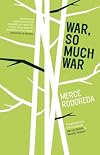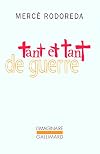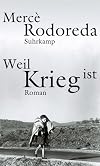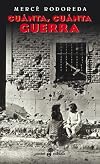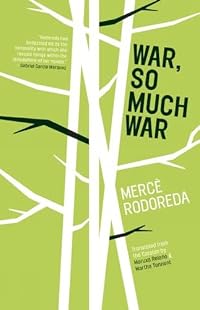
War, So Much War
by Mercè Rodoreda
On This Page
Description
"Despite its title, there is little of war and much of the fantastic in this coming-of-age story, which was the last novel Mercè Rodoreda published during her lifetime. We first meet its young protagonist, Adrià Guinart, as he is leaving Barcelona out of boredom and a thirst for freedom, embarking on a long journey through the backwaters of a rural land, accompanied by the interminable, distant rumblings of an indefinable war. In vignette-like chapters and a narrative style imbued with the show more fantastic, Guinart meets with numerous adventures and peculiar characters who offer him a surrealistic view of an impoverished, war-ravaged society and shape his perception of his place in the world"--Page 4 of cover. show lessTags
Recommendations


















Member Reviews
War, Not Much War.
The War in this book is there, but it doesn't take center stage. Instead, it provides a backdrop and an excuse for commentary and tension. While I found the scenarios making up the wild and inventive vignettes of this novel intriguing and beautifully composed, they were so disconnected and random at times, that my interest wavered. It was only possible to get a sense of place and time when the protagonist was not in the midst of surreal cruelty and all-too-human suffering. Indifference, pathos, wandering, those seemed to be the prevailing moods.
It is certainly important and riveting in sections, but I wonder if the author's other works might follow more memorable modes of storytelling. Perhaps after multiple readings show more this book would sink in more, but I have to dig around to grasp at any of the disparate images left in my mind after reading it. For instance, when the protagonist explains the significance of their own shadow, blows it out of proportion, acquires a phobia of it, and then retreats back into self-contemplation, I am not sure I understand the significance of the interlude. There are many such unique musings to be found among the playful tricks of children and the unexplainable weirdness to be found here, all of which contains traces of Marquez, Kafka, and Kobo Abe. We are players in a game, the rules of which we do not fully understand, Rodoreda seems to say.
This is certainly a colorful and somber novel, quick to finish but not easy to encapsulate or explain. I am left with mixed impressions, and a desire to check out her other works. show less
The War in this book is there, but it doesn't take center stage. Instead, it provides a backdrop and an excuse for commentary and tension. While I found the scenarios making up the wild and inventive vignettes of this novel intriguing and beautifully composed, they were so disconnected and random at times, that my interest wavered. It was only possible to get a sense of place and time when the protagonist was not in the midst of surreal cruelty and all-too-human suffering. Indifference, pathos, wandering, those seemed to be the prevailing moods.
It is certainly important and riveting in sections, but I wonder if the author's other works might follow more memorable modes of storytelling. Perhaps after multiple readings show more this book would sink in more, but I have to dig around to grasp at any of the disparate images left in my mind after reading it. For instance, when the protagonist explains the significance of their own shadow, blows it out of proportion, acquires a phobia of it, and then retreats back into self-contemplation, I am not sure I understand the significance of the interlude. There are many such unique musings to be found among the playful tricks of children and the unexplainable weirdness to be found here, all of which contains traces of Marquez, Kafka, and Kobo Abe. We are players in a game, the rules of which we do not fully understand, Rodoreda seems to say.
This is certainly a colorful and somber novel, quick to finish but not easy to encapsulate or explain. I am left with mixed impressions, and a desire to check out her other works. show less
Some nice writing, but it is one of those books which stumbles from one encounter to another, without them hanging together. This Alice in Wonderlnd style is not to my taste, I never really connected with the characters at all. Judging by other reviews, perhaps not the best introduction to Mercè Rodoreda's work, and perhaps it makes more sense in the context of having read her other work?
Obra extraordinària que ens mostra l'inabastable i intrincat univers de la Rodoreda. Requereix d'una lectura pausada i concentrada. I ben segur d'una relectura.
May 21, 2025Spanish
H1.32.3
Jun 15, 2021Catalan
Ratings
Members
- Recently Added By
Author Information

85+ Works 4,239 Members
Some Editions
Awards and Honors
Series
Belongs to Publisher Series
Common Knowledge
- Canonical title*
- Quanta, quanta guerra...
- Original title
- Quanta, quanta guerra...
- Original publication date
- 1980
- People/Characters*
- Adrià Guinart
- Epigraph*
- El sueño de la razón produce monstruos. - Francisco de Goya.
What make me take this trip to Africa? There is no explanation. - Saul Bellow.
A great ravel of flights from nothing to nothing. - D. H. Lawrence. - First words*
- Vaig néixer a mitjanit, a la tardor, amb una taca al front no pas més grossa que una llentia.
- Quotations*
- Em va costar de posar-me a caminar: deixava enrera, amb el bosc encès, molta vida cremada. Tornaria a casa a treballar el camp de clavells amb l’aigua que lliscava pels reguerons, amb el soroll dels trens a la nit, amb el ... (show all)roser de roses grogues que s’emparrava fins al terrat. Tornaria diferent. Havia vist la mort de la vora. I el mal. Una gran tristesa com una mà molt dura m’estrenyia el cor. ¿On era a casa? ¿Encara tenia casa? Hi tornaria carregat amb muntanyes de records de tota la gent que havia conegut, que havia nascut i que havia viscut només perquè jo la pogués conèixer, i que em voltaria tot al llarg del camí… tants ulls dolços, tants ulls tristos, tants ulls sorpresos, tants ulls desesperats… ¿S’esborraria el record del mal o el duria sempre amb mi com una malaltia de l’ànima? La carretera era ampla, el camí de casa l’hauria de buscar, no sabia on era. Vell com era el món. Pensava en tot el que acabava de veure i que no era enlloc: ni àngels nim orts acostant-se a buscar la seva pau en l’acabament d’aquella nit. Només jo i la febre. Mentre el sol començava a pujar cel amunt com cada dia, com sempre…
- Last words*
- (Click to show. Warning: May contain spoilers.)Mentre el sol començava a pujar cel amunt com cada dia, com sempre...
- Original language
- Catalan
*Some information comes from Common Knowledge in other languages. Click "Edit" for more information.
Classifications
Statistics
- Members
- 179
- Popularity
- 182,358
- Reviews
- 5
- Rating
- (3.86)
- Languages
- 7 — Catalan, English, French, German, Italian, Portuguese, Spanish
- Media
- Paper, Audiobook, Ebook
- ISBNs
- 17
- ASINs
- 4