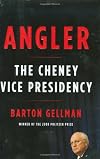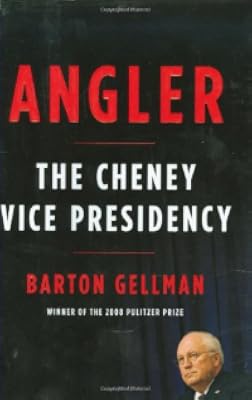
Angler: The Cheney Vice Presidency
by Barton Gellman
On This Page
Description
Dick Cheney changed history, defining his times and shaping a White House as no vice president has before--yet concealing most of his work from public view. Pulitzer Prize-winning Washington Post reporter Barton Gellman shows how Cheney operated, why, and what he wrought. This is a work of careful, concrete, and original reporting backed by hundreds of interviews with close Cheney allies as well as rivals, many speaking candidly on the record for the first time. It is a study of the inner show more workings of the Bush administration and the vice president's central role as the administration's canniest power player. Gellman exposes the mechanics of Cheney's largely successful post-September 11 campaign to win unchecked power for the commander in chief, and reflects upon, and perhaps changes, the legacy that Cheney--and the Bush administration as a whole--will leave as they exit office.--From publisher description. show lessTags
Recommendations


















Member Reviews
I didn't like this book because I like Dick Cheney, I liked it because it finally satisfied my curiousity about how things worked during the Bush/Cheney years. It was fascinating to read how Cheney, in true Machievellian fashion, used his knowledge of how government works -- gathered over years as an administration insider -- to move forward his own agenda, often without Bush's full understanding of what was going on. He was brilliant and masterful at manipulating information and people to get his policies adopted, without things being tracable to him. The book gives a clear sense of Cheney's motives and philosophies, and where he and Bush differed. He was brilliant, devious, secretive and powerful. Too bad his ideology was so negative.
This was an excellent book, based on Barton Gellman's Pulitzer Prize winning 2008 investigations and writings on National politics. As a Washington Post writer, Mr. Gellman had access to many in Cheney's inner circle and the Bush White House to put together this informative description of the Vice President's role in setting the tone and direction of the Administration. We've seen political cartoons over the past eight years with Dick Cheney as the ventriloquist, pulling the strings and putting words into the mouth of the Bush puppet sitting on his knee. A harsh depiction, perhaps, but as this book shows, there were some reasons for how that view became popular. How much of that stereotype was true, and how much was false was hard to show more know, until this book became available. This book answers a lot of those questions. It truly filled in a lot of gaps in the my understanding of the inner workings of the Bush Administration. Cheney had widely been reported to be the most powerful Vice President in American history. Few, if any, recent books explore the dynamics between the President and Vice President. Gellman does, and paints a clear picture of Cheney and his power, consistent with everything we've heard and read over these past eight years. The book also talks of other key members of Cheney's team, like David Addington, who was so central to many of the more unpopular and controversial initiatives of the Bush years. Gellman also points out some of the few in the Administration who were able to stand up to the powerful Cheney / Addington team such as Deputy Attorney General James Comey. (Comey was acting Attorney General who did not give in to the pressure from the White House to sign off on "illegal" spying when Ashcroft was hospitalized). If you're interested in understanding how Bush, who entered the Office as a Candidate envisioning policies such as "compassionate Conservatism", limiting global-warming, being a Uniter, championing Education reform and limited government, and then seemed to evolve into one of the Nation's most unpopular chief executives, should find this book very interesting. As Steve Clemons in the American Conservative stated, this is "an indispensable volume without which the Bush Presidency can't be understood". show less
Gellman's book is not a biography. It only deals with Cheney's time in office as Vice President. It does cover some familiar ground, but also surprising facts, personality traits, and events.
Cheney comes across here as indeed a man driven by his love of his country and to do what he perceives as right for the country, regardless of the costs and the politics. He is, in some ways, driven by ideology. One of his most fixed ideas was that the power of the Presidency was damaged by the fallout over Nixon and Watergate, and he was determined to increase the power of the Presidency by any and all means.
Yet Gellman places him in the pragmatist wing of the GOP rather than the neoconservative wing, despite the fact that the Iraq war was the show more neocons' wet dream. His explanation of why Cheney supported the war makes more sense than any other explanation I've seen. Cheney did see Iran and North Korea as more of a threat, but we would not be able to attack them without severe blowback. The response of China to an attack on North Korea was too uncertain and Iraq had a well-equipped army and the fourth largest oil reserves. So Iraq was selected for its "demonstration effect" - it would show the other enemy regimes that America could and would act (see chapter 9). Gellman doesn't say it, but Cheney seems to have miscalculated the time and effort involved in the Iraq war, and that Iran's position in the region would only be enhanced by removal of Saddam Hussein.
Perhaps the most fascinating part of the book is the depiction of the near meltdown of the government over the attempt to re-authorize the surveillance program over the objections of much of the Justice Department. We've all heard about the dramatic scene in John Ashcroft's hospital room, but Gellman gives even more detail and shows why this was one of the most important episodes in the Bush administration. First of all, the program was reauthorized without the approval of the Attorney General, and it came quite close to having several layers of Justice Department employees resigning over it, even many who didn't know all the details of the program in question. Gellman seems to think the administration would not have survived that kind of a loss and the subsequent Congressional investigations. Moreover, Cheney and his right-hand man, David Addington, did not sufficiently brief the President on the events, and Gellman seems to think Bush after this turned to Cheney less and to other advisers more. Cheney was also weakened by the loss of Scooter Libby.
All in all, a fascinating read. Gellman uses many sources, but relied heavily on interviews with as many people as he could, some of whom are anonymous - a necessary evil in a book like this. Future historians will find this book invaluable in understanding the Bush administration, as should citizens trying to understand why our government under George W. Bush has gone so wrong.
Highly recommended. show less
Cheney comes across here as indeed a man driven by his love of his country and to do what he perceives as right for the country, regardless of the costs and the politics. He is, in some ways, driven by ideology. One of his most fixed ideas was that the power of the Presidency was damaged by the fallout over Nixon and Watergate, and he was determined to increase the power of the Presidency by any and all means.
Yet Gellman places him in the pragmatist wing of the GOP rather than the neoconservative wing, despite the fact that the Iraq war was the show more neocons' wet dream. His explanation of why Cheney supported the war makes more sense than any other explanation I've seen. Cheney did see Iran and North Korea as more of a threat, but we would not be able to attack them without severe blowback. The response of China to an attack on North Korea was too uncertain and Iraq had a well-equipped army and the fourth largest oil reserves. So Iraq was selected for its "demonstration effect" - it would show the other enemy regimes that America could and would act (see chapter 9). Gellman doesn't say it, but Cheney seems to have miscalculated the time and effort involved in the Iraq war, and that Iran's position in the region would only be enhanced by removal of Saddam Hussein.
Perhaps the most fascinating part of the book is the depiction of the near meltdown of the government over the attempt to re-authorize the surveillance program over the objections of much of the Justice Department. We've all heard about the dramatic scene in John Ashcroft's hospital room, but Gellman gives even more detail and shows why this was one of the most important episodes in the Bush administration. First of all, the program was reauthorized without the approval of the Attorney General, and it came quite close to having several layers of Justice Department employees resigning over it, even many who didn't know all the details of the program in question. Gellman seems to think the administration would not have survived that kind of a loss and the subsequent Congressional investigations. Moreover, Cheney and his right-hand man, David Addington, did not sufficiently brief the President on the events, and Gellman seems to think Bush after this turned to Cheney less and to other advisers more. Cheney was also weakened by the loss of Scooter Libby.
All in all, a fascinating read. Gellman uses many sources, but relied heavily on interviews with as many people as he could, some of whom are anonymous - a necessary evil in a book like this. Future historians will find this book invaluable in understanding the Bush administration, as should citizens trying to understand why our government under George W. Bush has gone so wrong.
Highly recommended. show less
This book rearranged my opinion of the Bush presidency by revealing the symbiotic relationship and the unusual balance of power between the two men at the top. They each served the other's purposes. Bush, because he was not interested in details and didn't like to focus on the individual layers of complex problems, routinely lobbed those responsibilities to the VP or else ignored them and, by creating a vacuum, gave Cheney countless opportunities to apply his philosophy of leadership and unusual administrative acumen to execution of the national agenda. For Cheney, Bush's preference for concentrating on broader issues and his reliance on Cheney as a confidante resulted in an administration whose president was spokesman for an agenda set show more or at least thoroughly vetted by a vice president of unprecedented influence.
Gellman's ability to draw information from sources close to the vice president is truly impressive and part of what makes this book so compelling. His revelations are all the more fascinating because they are written in the clear, succinct language that we hope for from journalists but don't always find. show less
Gellman's ability to draw information from sources close to the vice president is truly impressive and part of what makes this book so compelling. His revelations are all the more fascinating because they are written in the clear, succinct language that we hope for from journalists but don't always find. show less
This excellent book gives an accounting of how Cheney micro-managed the federal government during the W years. A word of warning - it may cause a steep increase in blood pressure.
4583. Angler The Cheney Vice Presidency, by Barton Gellman (read 15 Jun 2009) This book, by an investigative reporter who won a Pulitzer prize for the reporting which gave rise to a series on which his book is based, is fascinating reading and, for anyone not aware of Cheney's powerful and doleful role in the Bush Administration, eye-opening. Cheney is shown to be the one mainly responsible for what Republican Dick Armey called "probably the greatest foreign policy blunder in modern times"--the invasion of Iraq. The book is full of carefully compiled information, fully sourced, and showing how grateful we should be that Cheney is now just a carping critic rather than in a position to do the nation greater harm. Chapter 12 is as show more thrilling an account as one can find and would be deemed improbable or incredible if it were in a novel--it tells of the effort to get Ashcroft to sign a document while in the hospital. show less
This detailed look at the Cheney vice-presidency comes across as a balanced, but damning, look at the consummate staffer's eight years as vice president of the United States. Some of what Gellman documents will surely provide fodder for later analysis, so this is a book well worth reading.
Members
- Recently Added By
Author Information

6 Works 612 Members
Barton Gellman graduated from Princeton University and received a master's degree in politics from University College, Oxford as a Rhodes Scholar. He worked as a special projects reporter for The Washington Post and won several notable awards as well as a 2008 Pulitzer Prize for his work on the Cheney series. In 2002 he shared a Pulitzer for show more national reporting, and he has also earned honors from the Overseas Press Club, the Society of Professional Journalists, and the American Society of Newspaper Editors. Gellman is a contributing editor at Time magazine, plus a senior research fellow at the Center on Law and Security at NYU. (Bowker Author Biography) show less
Awards and Honors
Common Knowledge
- People/Characters
- George W. Bush; Dick Cheney
Classifications
- Genres
- Nonfiction, History, General Nonfiction, Politics and Government, Biography & Memoir
- DDC/MDS
- 973.931092 — History & geography History of North America United States 1901- New Millennium, Post 9/11 (2001-Present) George W. Bush (2001-2009) Sept 11 Attacks, Iraq War, Patriot Act
- LCC
- E840.8 .C43 .G45 — History of the United States United States Later twentieth century, 1961-2000 Biography (General)
- BISAC
Statistics
- Members
- 436
- Popularity
- 69,873
- Reviews
- 10
- Rating
- (4.02)
- Languages
- English
- Media
- Paper, Audiobook, Ebook
- ISBNs
- 9
- ASINs
- 5