Sir Thomas More
by Anthony Munday, Henry Chettle, Thomas Dekker, Thomas Heywood, William Shakespeare
On This Page
Description
An Elizabethan play by Anthony Munday and others that depicts the life of Thomas More. It survives only in a single manuscript, now owned by the British Library. Its main claim to fame is that three pages of it may have been written by William Shakespeare's hand, but the manuscript is also important for what it reveals about censorship of Elizabethan drama.Tags
Recommendations
















Member Reviews
[Sir Thomas More: A play by Anthony Munday and Others]: revised by Henry Chettle, Thomas Dekker, Thomas Heywood and William Shakespeare.
As the title suggests this Elizabethan play underwent a complicated history of production and although a fair copy was eventually made by Anthony Munday, apparently it never made it onto a London Stage. Although many hands were involved the actual finished item (if it was ever finished) reads very well indeed. Claims have been made that it is one of the best of the Elizabethan history plays and the form in which it can be read today demonstrates that it is stage worthy: ie that it would work well enough without major adjustments. In addition to this there are three pages of the manuscripts that have show more been confidently identified by some, as being by William Shakespeare's own hand and these seem to be the only pages of a manuscript written by Shakespeare that have come down to us. All this points to it being a bit of a mystery as to why it is not better known.
The play based on incidents in the life of Sir Thomas More falls fairly neatly into two parts; depicting his rise to power and then his dramatic fall and execution. The intense anti-foreigner feeling expressed in the first part of the play more than echoes the anti immigrant convictions of the majority of people in The UK, in America and in Europe today, perhaps it's topicality is one aspect of it's failure for being considered for a serious modern revival. Governments today are still shy of appearing as out and out racists, while at the same time encouraging their people to be so. In Henry VII's England the people of London rioted against the foreigners living in the city, they lived in enclaves that were seen to have economic and social advantages over the native population. In the play this comes down to an incident where foreigners are forcibly taking food from a London artisan, who is not deemed worthy enough to appreciate the delicacies and then also taking his wife into the bargain. Preachers at Spitalfields encourage the anger against the foreigners and it is Thomas More's intervention when he was an under Sheriff that persuaded the rioters to return to their homes. Thomas More is knighted and he becomes chancellor to king Henry VIII. This part of the story is skilfully conflated by the authors and there follows a scene midway through the play where Sir Thomas is entertaining dignitaries at his London home and provides a troupe of players to provide the entertainment. This play within a play entitled "the marriage of wit and wisdom" provides a sort of hiatus in the proceedings. It is included to demonstrate the wit of Sir Thomas, because the troupe are a player short and Sir Thomas himself offers to play a part. The final two acts of the five act play, show More's fall from power when he refuses to sign the articles that make the King the supreme head of the church. This part of the play shows Sir Thomas as a martyr to his faith. Going to his execution with equanimity joking to the last and confident in himself and his family. It is poignant but without actually saying so points to the king as merciless and a villain.
Sir Thomas More was one of the few Elizabethan plays to be based on recent history; Elizabeth I was Henry VIII 's daughter and so it was no surprise that the play would run into censorship problems and it is well documented that the Master of the Revels Edmund Tilney; became involved and sent the original copy back for rewriting. Anthony Munday was a fierce anti-catholic involved in priest hunting and so it would seem that he would make the necessary adjustments, but although some were made, Sir Thomas More is still very much the hero. Perhaps then it was never politically suitable to be played during Elizabeths reign. It might be more ( the play is full of puns) appropriate today with its anti foreigner messages.
Act scene iii is the portion written in Shakespeare's hand and contains the speech of Thomas More that quells the riot. It certainly gives no quarter to the rioters, reminding them that they are the kings subjects, under his protection and reminding them that they owe allegiance to the king. More is able to convince them to desist, because he is seen as an honest man and one who does not necessarily wish to take revenge on the common man. The writing does not particularly stand out from all that has gone before or all that follows, because the writing is of a good standard throughout. This modern spelling edition makes for an enjoyable and entertaining read for anyone interested in Elizabethan drama.
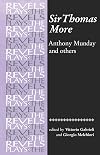
I read the Revels Plays edition edited by Vittorio Gabrieli and Giorgio Melchiori, which proves to be an excellent guide for the interested reader. The introduction, painstakingly yet fairly precisely takes the reader through all the amendments and interventions to Anthony Munday's fair copy. It surmises on the date order of the amendments and the probable reasons as to why they were made. It is an excellent example of its kind, holding the reader interest and giving food for thought on possible additional reading or enquiry. The notes that appear on the same page as the text are detailed and support the information given in the introduction. There are appendices that show amendments that were never included and also details of the source material that was used. It really is an excellent package and enhanced my reading of the play, which is one where the history of the production is as fascinating as the play itself. All in all a five star read. show less
As the title suggests this Elizabethan play underwent a complicated history of production and although a fair copy was eventually made by Anthony Munday, apparently it never made it onto a London Stage. Although many hands were involved the actual finished item (if it was ever finished) reads very well indeed. Claims have been made that it is one of the best of the Elizabethan history plays and the form in which it can be read today demonstrates that it is stage worthy: ie that it would work well enough without major adjustments. In addition to this there are three pages of the manuscripts that have show more been confidently identified by some, as being by William Shakespeare's own hand and these seem to be the only pages of a manuscript written by Shakespeare that have come down to us. All this points to it being a bit of a mystery as to why it is not better known.
The play based on incidents in the life of Sir Thomas More falls fairly neatly into two parts; depicting his rise to power and then his dramatic fall and execution. The intense anti-foreigner feeling expressed in the first part of the play more than echoes the anti immigrant convictions of the majority of people in The UK, in America and in Europe today, perhaps it's topicality is one aspect of it's failure for being considered for a serious modern revival. Governments today are still shy of appearing as out and out racists, while at the same time encouraging their people to be so. In Henry VII's England the people of London rioted against the foreigners living in the city, they lived in enclaves that were seen to have economic and social advantages over the native population. In the play this comes down to an incident where foreigners are forcibly taking food from a London artisan, who is not deemed worthy enough to appreciate the delicacies and then also taking his wife into the bargain. Preachers at Spitalfields encourage the anger against the foreigners and it is Thomas More's intervention when he was an under Sheriff that persuaded the rioters to return to their homes. Thomas More is knighted and he becomes chancellor to king Henry VIII. This part of the story is skilfully conflated by the authors and there follows a scene midway through the play where Sir Thomas is entertaining dignitaries at his London home and provides a troupe of players to provide the entertainment. This play within a play entitled "the marriage of wit and wisdom" provides a sort of hiatus in the proceedings. It is included to demonstrate the wit of Sir Thomas, because the troupe are a player short and Sir Thomas himself offers to play a part. The final two acts of the five act play, show More's fall from power when he refuses to sign the articles that make the King the supreme head of the church. This part of the play shows Sir Thomas as a martyr to his faith. Going to his execution with equanimity joking to the last and confident in himself and his family. It is poignant but without actually saying so points to the king as merciless and a villain.
Sir Thomas More was one of the few Elizabethan plays to be based on recent history; Elizabeth I was Henry VIII 's daughter and so it was no surprise that the play would run into censorship problems and it is well documented that the Master of the Revels Edmund Tilney; became involved and sent the original copy back for rewriting. Anthony Munday was a fierce anti-catholic involved in priest hunting and so it would seem that he would make the necessary adjustments, but although some were made, Sir Thomas More is still very much the hero. Perhaps then it was never politically suitable to be played during Elizabeths reign. It might be more ( the play is full of puns) appropriate today with its anti foreigner messages.
Act scene iii is the portion written in Shakespeare's hand and contains the speech of Thomas More that quells the riot. It certainly gives no quarter to the rioters, reminding them that they are the kings subjects, under his protection and reminding them that they owe allegiance to the king. More is able to convince them to desist, because he is seen as an honest man and one who does not necessarily wish to take revenge on the common man. The writing does not particularly stand out from all that has gone before or all that follows, because the writing is of a good standard throughout. This modern spelling edition makes for an enjoyable and entertaining read for anyone interested in Elizabethan drama.
I read the Revels Plays edition edited by Vittorio Gabrieli and Giorgio Melchiori, which proves to be an excellent guide for the interested reader. The introduction, painstakingly yet fairly precisely takes the reader through all the amendments and interventions to Anthony Munday's fair copy. It surmises on the date order of the amendments and the probable reasons as to why they were made. It is an excellent example of its kind, holding the reader interest and giving food for thought on possible additional reading or enquiry. The notes that appear on the same page as the text are detailed and support the information given in the introduction. There are appendices that show amendments that were never included and also details of the source material that was used. It really is an excellent package and enhanced my reading of the play, which is one where the history of the production is as fascinating as the play itself. All in all a five star read. show less
I'm not sure how much of this Shakespeare is actually supposed to have written, but it's on my list for the “All of Shakespeare in a Year” challenge, so I read it. And, to be fair, it's not terrible. Beats Edward III or Two Gentlemen of Verona, that's for sure. The individual components of the story – the riot and its fall-out, the family scenes, the noble choice of death over moral compromise – are all fine, but they don't seem to hold together in any sort of compelling whole. It's more like “scenes from a life,” but there's no dramatic tension. The anti-immigrant riots seemed particularly topical, but the rioters, once in custody, are so thoroughly repentant and content to be paying the price (hanging) for disturbing the show more King's Peace as to be... disappointing. While it may have served a didactic purpose to have miscreants so fully recognize the error of their disobedient ways, a little outrage over their “betrayal” by More (who promised them that if they surrendered he would obtain pardons for them) would have seemed more plausible. The family scenes, while establishing More as a Nice Guy, who is neither stuffy nor moralizing, are... pretty dull. It seems to me that a big problem is the choice (however politically prudent or necessary from the perspective of the acting company) to Not describe at all the articles of the king which More refused to endorse (presumably the Oath of Supremacy, declaring Henry VIII head of the C of E, or the Oath of Succession). When a play is about a man choosing to die for his religious convictions, failing to mention those convictions at All leaves kind of a gaping HOLE. We're left with a pleasant guy choosing to die with complete placidity rather than sign some paper which isn't even worth mentioning. That's the kind of storytelling challenge that even some lines by Shakespeare aren’t' going to fix. show less
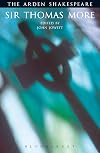
A very good, thorough edition of this collaborative play from the 1600s, to which William Shakespeare contributed. The introduction does a good job of exploring both the play as a work, and also the complex situation that led to its creation. The main text has a battle on its hands, since it's a very rare example of a play found in manuscript form, so words are missing, scenes are divided between authors or occasionally between original and censored texts, and so on. Very thoroughly done. And the thick appendices explore the nature of the text, which is very useful in this odd instance. Very glad the Arden Third Series has incorporated this into the body of Shakespeare scholarship, and looking forward to the rest of their high-quality show more run over the next few years. show less
Interesting take on Thomas More, a play written during a period where his role in opposing Henry VIII’s divorce, which led to the English Reformation, would have surely drawn the attention of the censors.
L'edizione critica molto ben curata di un'opera poco conosciuta, ma che diverte e fa riflettere.
Dec 8, 2023Italian
Ratings
Members
- Recently Added By
Author Information
22+ Works 284 Members
20+ Works 286 Members

81+ Works 1,225 Members
Dekker was a popular, prolific writer who had a hand in at least 40 plays, which he wrote for Philip Henslowe, the theatrical entrepreneur. In the plays that seem to be completely by Dekker, he shows himself as a realist of London life, but even his most realistic plays have a strong undertone of romantic themes and aspirations. The Shoemaker's show more Holiday (1600), for example, glorifies the gentle craft of the shoemaker, and the character Simon Eyre speaks in an extravagant, hyperbolic style that is far from realistic. Dekker also wrote such prose pamphlets as the Bellman of London (1608) and The Gull's Hornbook (1609), the latter an entertaining account of the behavior of a country yokel and dupe in London. He died in debt. (Bowker Author Biography) show less

67+ Works 565 Members
Heywood is a good example of the professional dramatist who worked for Philip Henslowe, the theatrical manager, both as a playwright and an actor. By his own admission, Heywood claimed to have "either an entire hand or at least the main finger" in 220 plays, of which less than 30 survive. His best-known play, A Woman Killed with Kindness (1603), show more exemplifies domestic tragedy, in which sentiment and homely details are equally mingled. Heywood wrote an eloquent defense of the theater against Puritan attack called An Apology for Actors (1607--08). (Bowker Author Biography) show less

6,076+ Works 441,998 Members
William Shakespeare, 1564 - 1616 Although there are many myths and mysteries surrounding William Shakespeare, a great deal is actually known about his life. He was born in Stratford-Upon-Avon, son of John Shakespeare, a prosperous merchant and local politician and Mary Arden, who had the wealth to send their oldest son to Stratford Grammar School. show more At 18, Shakespeare married Anne Hathaway, the 27-year-old daughter of a local farmer, and they had their first daughter six months later. He probably developed an interest in theatre by watching plays performed by traveling players in Stratford while still in his youth. Some time before 1592, he left his family to take up residence in London, where he began acting and writing plays and poetry. By 1594 Shakespeare had become a member and part owner of an acting company called The Lord Chamberlain's Men, where he soon became the company's principal playwright. His plays enjoyed great popularity and high critical acclaim in the newly built Globe Theatre. It was through his popularity that the troupe gained the attention of the new king, James I, who appointed them the King's Players in 1603. Before retiring to Stratford in 1613, after the Globe burned down, he wrote more than three dozen plays (that we are sure of) and more than 150 sonnets. He was celebrated by Ben Jonson, one of the leading playwrights of the day, as a writer who would be "not for an age, but for all time," a prediction that has proved to be true. Today, Shakespeare towers over all other English writers and has few rivals in any language. His genius and creativity continue to astound scholars, and his plays continue to delight audiences. Many have served as the basis for operas, ballets, musical compositions, and films. While Jonson and other writers labored over their plays, Shakespeare seems to have had the ability to turn out work of exceptionally high caliber at an amazing speed. At the height of his career, he wrote an average of two plays a year as well as dozens of poems, songs, and possibly even verses for tombstones and heraldic shields, all while he continued to act in the plays performed by the Lord Chamberlain's Men. This staggering output is even more impressive when one considers its variety. Except for the English history plays, he never wrote the same kind of play twice. He seems to have had a good deal of fun in trying his hand at every kind of play. Shakespeare wrote 154 sonnets, all published on 1609, most of which were dedicated to his patron Henry Wriothsley, The Earl of Southhampton. He also wrote 13 comedies, 13 histories, 6 tragedies, and 4 tragecomedies. He died at Stratford-upon-Avon April 23, 1616, and was buried two days later on the grounds of Holy Trinity Church in Stratford. His cause of death was unknown, but it is surmised that he knew he was dying. (Bowker Author Biography) show less
Some Editions
Series
Belongs to Publisher Series
Work Relationships
Common Knowledge
- Canonical title
- Sir Thomas More
- Original title
- Sir Thomas More
- Alternate titles
- The Book of Sir Thomas More
- Original publication date
- 1844 (first book publication) (first book publication)
- People/Characters
- Thomas More
- Important places
- England, UK
- Important events
- 16th century
Classifications
Statistics
- Members
- 131
- Popularity
- 248,819
- Reviews
- 5
- Rating
- (3.15)
- Languages
- 5 — Catalan, English, Italian, Multiple languages, Spanish
- Media
- Paper, Ebook
- ISBNs
- 20
- ASINs
- 3