On This Page
Description
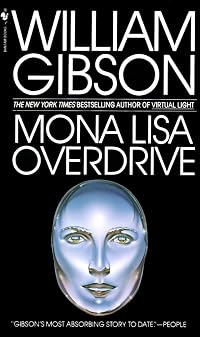
William Gibson, author of the extraordinary multiaward-winning novel Neuromancer, has written his most brilliant and thrilling work to date . . .The Mona Lisa Overdrive.Enter Gibson's unique world—lyric and mechanical, sensual and violent, sobering and exciting—where multinational corporations and high tech outlaws vie for power, traveling into the computer-generated universe known as cyberspace. Into this world comes Mona, a young girl with a murky past and an uncertain future show more whose life is on a collision course with internationally famous Sense/Net star Angie Mitchell. Since childhood, Angie has been able to tap into cyberspace without a computer. Now, from inside cyberspace, a kidnapping plot is masterminded by a phantom entity who has plans for Mona, Angie, and all humanity, plans that cannot be controlled . . . or even known. And behind the intrigue lurks the shadowy Yazuka,... show less
Tags
Recommendations
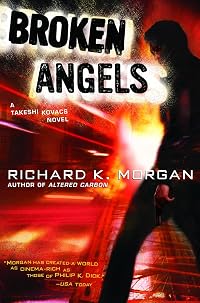
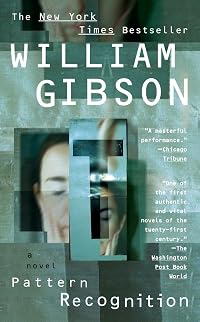
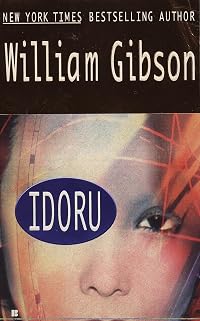
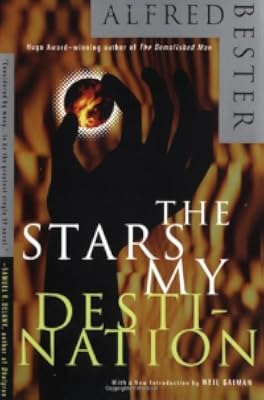

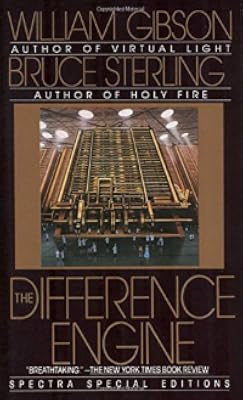
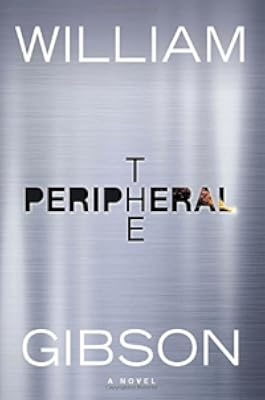
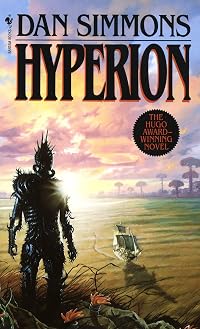


Member Recommendations
Member Reviews
And the last of the Sprawl trilogy. You can see Gibson growing as a writer and you can see him knocking up against the limitations of cyberpunk - once you've left the meat behind and taken up residence in the matrix what is there for you to do? Yeah, he gives us an answer, but it's an answer that takes him out of his sphere of interest, out of the human, or even the post-human. Post-humanity's always been Bruce Sterling's thing, anyway. Gibson's fascination is with the present, the now, the fulcrum where people and technology turn and change and the wonderful, unexpected strangeness that is often utterly unpredictable.
Mona Lisa Overdrive - the Sprawl books have the best titles - rounds up the dangling threads from the first two books show more and weaves them together. Heck, it even gives Case an offhand happy ending. We have the daughter of a Yakuza boss sent to London for her own safety, where she meets a formidable woman with mirrors over her eyes, but not, apparently, retractable claws in her nails, which signifies some sort of growth and maturity, if not any actual aversion to swiftly delivered violence. Sally, Molly as was, is not and never has been and never will be a nice person. There is Mona, a sweet, naive, teenage junkie prostitute sold by her pimp to men who are interested in her resemblance to sim star Angie Mitchell. There's Angie Mitchell herself, saved by Turner in Count Zero, now a famous star just out of rehab. She used to be able to talk to the voodoo gods of cyberspace thanks to the bio-chips in her head, but they haven't come to her for years, and her boyfriend is missing and someone left drugs in her coat pocket. And Slick Henry, way out in the toxic junkyard of Dog Solitude, building his kinetic sculptures to deal with the prison program that leaves him susceptible to short-term memory loss, is asked by Kid Africa to look after a body wrapped in bandages and hooked up to a mysterious machine called an LF.
What's interesting is all the POV characters are innocents, even super-celebrity Angie. They've all suffered, used and abused by life, by others, by the system, by circumstances, and now forces they do not understand or comprehend are moving around them and coming for them, and often what saves them is their own lack of malice or cynicism. Others are mad, obsessive, violent and duplicitous, but these four just want to be themselves, whatever that might be.
A great book, a satisfying ending to a great, groundbreaking, decade-defining trilogy. These books are still the best way to re-experience the eighties, to remember the energy and the attitude, and, whatever bits of it we brought with us to the now, be glad they're left safely in the past. show less
Mona Lisa Overdrive - the Sprawl books have the best titles - rounds up the dangling threads from the first two books show more and weaves them together. Heck, it even gives Case an offhand happy ending. We have the daughter of a Yakuza boss sent to London for her own safety, where she meets a formidable woman with mirrors over her eyes, but not, apparently, retractable claws in her nails, which signifies some sort of growth and maturity, if not any actual aversion to swiftly delivered violence. Sally, Molly as was, is not and never has been and never will be a nice person. There is Mona, a sweet, naive, teenage junkie prostitute sold by her pimp to men who are interested in her resemblance to sim star Angie Mitchell. There's Angie Mitchell herself, saved by Turner in Count Zero, now a famous star just out of rehab. She used to be able to talk to the voodoo gods of cyberspace thanks to the bio-chips in her head, but they haven't come to her for years, and her boyfriend is missing and someone left drugs in her coat pocket. And Slick Henry, way out in the toxic junkyard of Dog Solitude, building his kinetic sculptures to deal with the prison program that leaves him susceptible to short-term memory loss, is asked by Kid Africa to look after a body wrapped in bandages and hooked up to a mysterious machine called an LF.
What's interesting is all the POV characters are innocents, even super-celebrity Angie. They've all suffered, used and abused by life, by others, by the system, by circumstances, and now forces they do not understand or comprehend are moving around them and coming for them, and often what saves them is their own lack of malice or cynicism. Others are mad, obsessive, violent and duplicitous, but these four just want to be themselves, whatever that might be.
A great book, a satisfying ending to a great, groundbreaking, decade-defining trilogy. These books are still the best way to re-experience the eighties, to remember the energy and the attitude, and, whatever bits of it we brought with us to the now, be glad they're left safely in the past. show less
Probably the most convoluted of the trilogy, but still excellent. The final entry in the Sprawl trilogy was definitely the most emotional or sappy of them, with much more attention paid to individuals' struggles and pains. But I think some of the character work was a touch weaker than before. I think a lot of the "intrigue" was needlessly complicated, whereas the previous entries it all did seem to meld together at the end. But all of this is more me nitpicking an otherwise excellent book just because I was so enamored with the previous entries. I still really loved "Mona Lisa Overdrive" and Gibson's personal interpretation of cyberpunk will remain my favorite.
Mona Lisa Overdrive is the story of three women who are entrapped and escape to lose themselves in larger cages. Mona frees herself from drug addiction and the sex trade, but her simstim stardom may be another form of addictive illusion. Kumiko escapes from the domination of her gangster-industrialist family with the help of Molly. In so doing, she achieves independence but enters her brave new life without direction, skill, or help from her broken technology. Angie merges with the cosmic AI mind, but we are left to wonder whether she is any better off than crazy 3Jane.
In the end, I root for the lovers, Cherry and Slick, refugees from the Sprawl, making their way through the industrial waste of Dog Solitude.
In the end, I root for the lovers, Cherry and Slick, refugees from the Sprawl, making their way through the industrial waste of Dog Solitude.
A couple of things, in case I come back in a decade to read these again: 1. No, they aren’t standalone books. Read them in order, and soon enough after each other that you can remember how people feel. 2. The plot... well, doesn’t matter? The characters matter... but really? These books are about moments. The moments work, largely. 3. This was the first one he wrote on a computer. On an Apple IIc. William Gibson invented the future before it existed. It’s wild. 4. I like the feel of reading these books. It’s not about any particular element--not the gritty futurism, or dramatic moments—that’s all fine, but surface level. The Sprawl has a feeling. It’s worth returning, just for that feeling. Don’t read the plot summaries show more or the back cover. Just open them and go. 5. This is the weakest of the three... it almost tumbled over into shallow nonsense in a couple of places—but a chapter in, I was happy to be there, again, in the worlds and moments appearing around me, seeing it all through the eyes of some new character. Worth it. Recommended for anyone who liked the first two. show less
Probably best read in quick succession after the first two novels, but a worthy end to the trilogy. Molly/Sally from Neuromancer and the Count from Count Zero are brought together in a tangled plot involving 3Jane. Gibson fills the story with eccentric characters and intriguing predictions of future technology, but as always, the punchy, thoughtful writing is what carries the action.
Gibson is getting really good at what he does here; interweaving plotlines, the way pop culture feeds into tech and the other way around, post-humanism, all of it delivered in a prose that's always more clear about where you are (or aren't) than what the hell is going on.
Cyberpunk as a genre has always been about the blurred line between simulation, simulacra, and the bloody real. Mona Lisa Overdrive is four novellas masquerading as a novel, with interesting bits scattered through an undifferentiated mass.
Decades after Count Zero, various people are trying to make sense of When It Changed, when Neuromancer took place and cyberspace gained sentience. Our focal characters (none of them rise to the stakes of protagonist) are Angie Mitchell, Sense/Net star, sacred to the cyber-loa, and kicking a drug habit. Kumiko is daughter of a Yakuza boss sent to London to protect her from corporate war. Slick Henry lives in a toxic wasteland in New Jersey and builds immense Survival Research Labshref> style robots to show more deal with consequences of jail sentence that removed his short-term memory. And Mona Lisa herself is a teenage prostitute who looks just like Angie, and is could be used to replace her.
There's some kind of scheme involving Molly and 3Jane, plots and scores in the Yakuza and Sense/Net and inhuman goals of the AI, and yet none of it really matters at all. The invocation of brands and artifacts comes off as rote Gibsonian pastiche, rather than a view into an alternate consumer culture where the street finds it own use for technology. Gibson is bored with the Sprawl, and it shows. show less
Decades after Count Zero, various people are trying to make sense of When It Changed, when Neuromancer took place and cyberspace gained sentience. Our focal characters (none of them rise to the stakes of protagonist) are Angie Mitchell, Sense/Net star, sacred to the cyber-loa, and kicking a drug habit. Kumiko is daughter of a Yakuza boss sent to London to protect her from corporate war. Slick Henry lives in a toxic wasteland in New Jersey and builds immense Survival Research Labshref> style robots to show more deal with consequences of jail sentence that removed his short-term memory. And Mona Lisa herself is a teenage prostitute who looks just like Angie, and is could be used to replace her.
There's some kind of scheme involving Molly and 3Jane, plots and scores in the Yakuza and Sense/Net and inhuman goals of the AI, and yet none of it really matters at all. The invocation of brands and artifacts comes off as rote Gibsonian pastiche, rather than a view into an alternate consumer culture where the street finds it own use for technology. Gibson is bored with the Sprawl, and it shows. show less
Members
- Recently Added By
Lists

Best Science Fiction Novels
816 works; 430 members

Best Dystopias
280 works; 277 members
Survey of Classic Science Fiction
171 works; 48 members

Dystopian and Apocalyptic Literature
350 works; 74 members

20th Century Literature
1,161 works; 55 members

Best Cyberpunk
41 works; 7 members

Speculative Fiction to Read
706 works; 32 members
Speculative Fiction: The Award Winners
27 works; 6 members
Science Fiction and Fantasy
63 works; 4 members

Books Read in 2021
5,361 works; 114 members

Unread books
1,063 works; 87 members

Simulated Reality in Fiction
124 works; 7 members

Saiyuki Reload Best Summer Reads
159 works; 2 members
Books tagged unread
41 works; 1 member

Larry McCaffery's 20th Century Greatest Hits: 100 English-Language Books
103 works; 12 members

1980s
356 works; 23 members

Favourite Books
1,819 works; 316 members

Books to Recommend to My Niece/Nephew (The late teenage years)
29 works; 3 members

Books Read in 2026
1,959 works; 66 members
Talk Discussions
Past Discussions
Found: Science Fiction - Stimming = direct brain stimulation - cyber space in Name that Book (October 2024)
Author Information

82+ Works 95,912 Members
William Gibson was born on March 17, 1948 in Conway, South Carolina. He dropped out of high school and moved to Canada, where he eventually graduated from the University of British Columbia in 1977. He is the author of Mona Lisa Overdrive, The Peripheral, and Neuromancer, which won the Phillip K. Dick Award, the Hugo Award, and the Nebula Award. show more He also wrote the screenplay for the film Johnny Mnemonic. (Bowker Author Biography) show less
Some Editions
Awards and Honors
Awards
Series

Belongs to Publisher Series
Work Relationships
Common Knowledge
- Canonical title*
- Mona Lisa Overdrive
- Original title
- Mona Lisa Overdrive; Mona Lisa overdrive
- Original publication date
- 1988
- People/Characters
- Molly Millions (Sally Shears); Angela Mitchell (Angie); Bobby Newmark (Count Zero); Thomas Trail Gentry; Kumiko Yanaka (Kumi); Cherry-Lee Chesterfield (show all 15); Slick Henry; Mona Lisa; Eddy; Prior; Petal; Roger Swain; Tick; Little Bird; Hilton Swift
- Important places
- California, USA; The Factory (Dog Solitude); London, England, UK; Los Angeles County, California, USA; Malibu, California, USA; The Sprawl (BAMA - Boston-Atlanta Metropolitan Axis) (show all 7); Gentleman Loser (bar)
- Dedication
- To my sister,
Fran Gibson,
with amazement and love... - First words
- The ghost was her father's parting gift, presented by a black-clad secretary in a departure lounge at Narita.
- Quotations
- The world hadn't ever had so many moving parts or so few labels. [Mona: 231]
- Last words
- (Click to show. Warning: May contain spoilers.)"Be there in a New York minute," said the Finn, "no shit."
- Original language
- English
- Canonical DDC/MDS
- 813.087628
*Some information comes from Common Knowledge in other languages. Click "Edit" for more information.
Classifications
- Genres
- Science Fiction, Fiction and Literature
- DDC/MDS
- 813.087628 — Literature & rhetoric American literature in English American fiction in English By type Genre fiction Adventure fiction Speculative fiction Science fiction Cyberpunk
- LCC
- PS3557 .I2264 .M65 — Language and Literature American literature American literature Individual authors 1961-
- BISAC
Statistics
- Members
- 8,065
- Popularity
- 1,395
- Reviews
- 66
- Rating
- (3.78)
- Languages
- 19 — Czech, Danish, Dutch, English, Finnish, French, German, Greek, Hungarian, Italian, Japanese, Polish, Portuguese, Romanian, Russian, Serbian, Spanish, Swedish, Turkish
- Media
- Paper, Audiobook, Ebook
- ISBNs
- 60
- ASINs
- 26