On This Page
Description
This comic book provides a detailed look at the history, meaning, and art of comics and cartooning.Tags
Recommendations
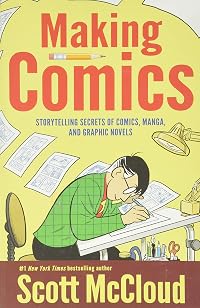
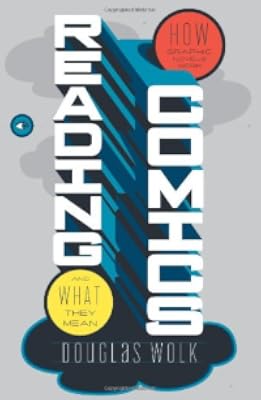
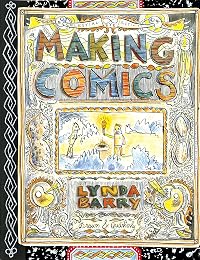
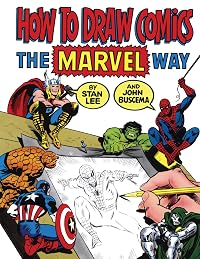
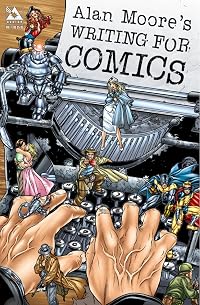

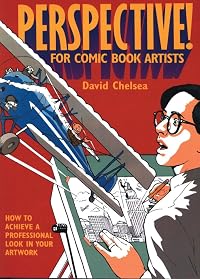

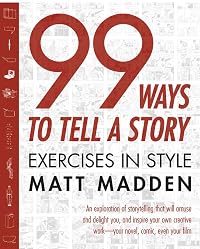
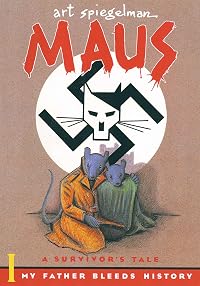
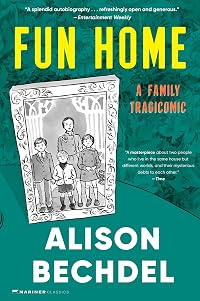
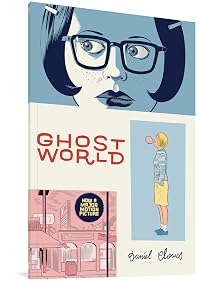
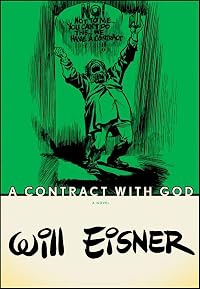

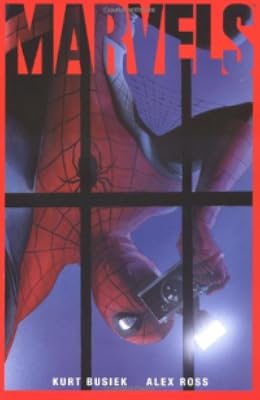
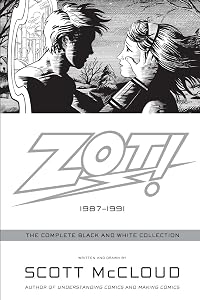
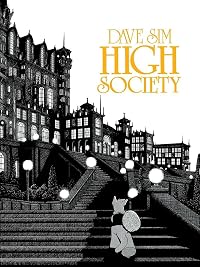
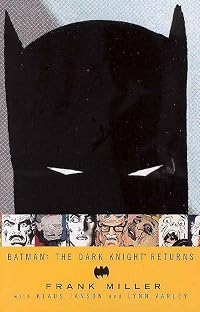


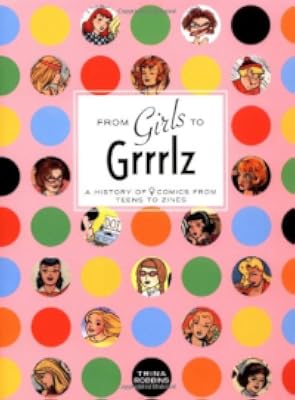
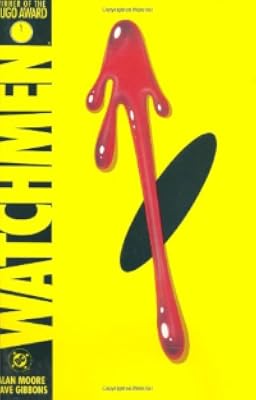
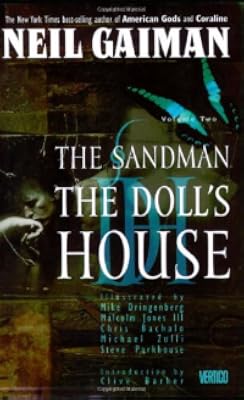
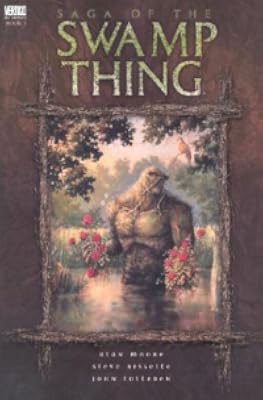
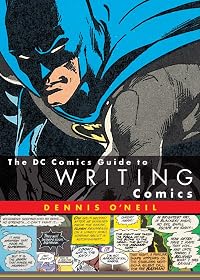

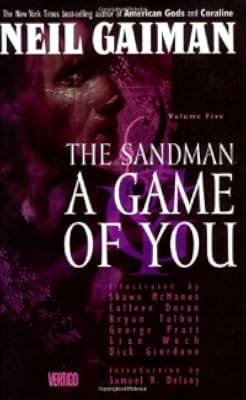
Member Recommendations
Drawing Words and Writing Pictures: Making Comics: Manga, Graphic Novels, and Beyond by Jessica Abel
misericordia Move from theory to practice.
Katya0133 "Adventures in Cartooning" is like "Understanding Comics," but for second graders.

Member Reviews
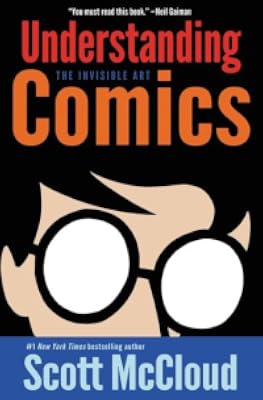
A theoretical vocabulary for comics! Callooh callay! in some ways this should have been called "Making Comics", with the heavy focus on the creative process and creative integrity, especially in the later chapters (I see McCloud has a later book actually called that, so I guess it's clear he continued to think in those terms). But the first chapters almost have a claim to style themselves "Understanding the Protagonist" or even "Understanding the Self", with all the stuff about masking and seeing other people as photorealistic but keeping the image of the self suspended as a cartoon. It's true, I say. And I like the way he can be theoretical like that and still break it down for us on topics like panel transitions in anime v. western show more comics, or the origin of the four-colour process in technological and price constraints. Overall this makes me wish I'd never read a comic, so I could pick one up and see what it'd be like to go in fresh, armed only with this as a manual. show less
I'd been meaning to read this one since it was first published in 1993, when a number of people I knew who were really into comics kept recommending it very strongly. Well, I am glad to have finally gotten around it it, even if I am a few decades late!
I was sort of expecting most of this to be an explanation of the nitty-gritty details of how the comics format works. How comics artists incorporate speech bubbles or arrange panels to draw your eye in the right direction, that sort of thing. There is some of that, but it's actually much, much broader in scope, looking at comics (or "sequential art") as an art form, placing it in the history of art, talking about the unique features of the format and how we perceive them and the wide array show more of things artists can do with them. McCloud gets very philosophical in places, and I'm not sure how I feel about all of his ideas, but they're all at least really thought-provoking and interesting. And well and engagingly presented, too. McCloud uses the format itself to aptly demonstrate his points, as well as including examples from the work of others.
I can see why people who care passionately about comics as an art form regarded it as a must-read (and probably still do, although I imagine it no longer stands nearly alone as a serious discussion of comics as art, the way it did in the 90s). And even for someone like me, who is a much more casual and occasional sampler of comics and graphic novels, it's still definitely worth reading. Or, you know, doing all the complicated perceptual things that happen in my brain when perusing this combination of pictures and words. show less
I was sort of expecting most of this to be an explanation of the nitty-gritty details of how the comics format works. How comics artists incorporate speech bubbles or arrange panels to draw your eye in the right direction, that sort of thing. There is some of that, but it's actually much, much broader in scope, looking at comics (or "sequential art") as an art form, placing it in the history of art, talking about the unique features of the format and how we perceive them and the wide array show more of things artists can do with them. McCloud gets very philosophical in places, and I'm not sure how I feel about all of his ideas, but they're all at least really thought-provoking and interesting. And well and engagingly presented, too. McCloud uses the format itself to aptly demonstrate his points, as well as including examples from the work of others.
I can see why people who care passionately about comics as an art form regarded it as a must-read (and probably still do, although I imagine it no longer stands nearly alone as a serious discussion of comics as art, the way it did in the 90s). And even for someone like me, who is a much more casual and occasional sampler of comics and graphic novels, it's still definitely worth reading. Or, you know, doing all the complicated perceptual things that happen in my brain when perusing this combination of pictures and words. show less
Published in the early nineties, McCloud's discussion of comics takes the form of a comic itself, and both the discussion and the use of the form to enhance that discussion are brilliant. He defines comics, explores the language of comics, and illustrates how comics work, including the ways they suggest and manipulate movement and time. McCloud also explores briefly the history of comics, both as the average American might perceive them (think comic books) and as we might identify them as an art form stretching back thousands of years. The discussion of how modern comics have developed differently in the west and in Japan is especially interesting. Anyone who has ever read a comic book or even the funny papers probably has some show more understanding of how comics work, but this book does an excellent job taking the form apart and pinpointing exactly what is going on narratively, visually, and artistically when we read them. Recommended for anyone, really, but especially to anyone interested in comics, visual art, or narrative. show less
Briefly put, this book is a comic book about comic books. The book goes through a brief history of comics and then describes the technical aspects of the medium to explain how comics function and why they appeal to us. There’s some pretty interesting nuggets in there, particularly the idea of closure he describes in detail, although sometimes I think McCloud is a bit difficult to understand or just off the mark a little. I appreciate that he takes a broad definition of comics, so he includes Lynd Ward’s works in comics history, among other works not generally considered to be comics. I take some issue with the subtitle “the invisible art.” I get McCloud’s argument that comics ask readers to fill in a lot that isn’t actually show more on the page (although I disagree that only comics do this), but “invisible art” sounds negative, so I would prefer if he used a different term. Overall, it’s an interesting (and relatively quick) read, of interest for anyone who likes comic books (and arguably, even for those who don’t). show less
If you pause for the briefest of moments while reading this, and try to push beyond the tricky, hyperbolic rhetoric and through the ungrounded intuitive assumptions, there's really not much there. His arguments are sadly uncritical, unsubstantiated, and poorly made. The real value this book has is that a lot of comics scholars have responded to the sloppy thinking and slippery points with intelligent, sophisticated articles of their own. It's as though McCloud wasn't aware there was a large body of work on aesthetics, communications, literature in society, pop culture, or film studies when he wrote this book. And its format (presentation as a comic) does not in and of itself validate its content, despite the rhetorical tricks at play.
Summary: Understanding Comics is a comic... about comics. It sets out first to define comics, and then to explore some of their history. From there, it gets into the language of comic books - the power of the symbols they use, how panelling is used in conveying a message, the relationship (or lack thereof) between the words and pictures, how they use a purely visual medium to convey information to all of the senses, and how they use a static medium to convey motion and time. Throughout, McCloud treats comics as an art form, and argues for their potential as communication devices that create a detailed interplay between the immaginations of the author and of the reader.
Review: I am not a huge comics aficionado, but I feel like I've got a show more reasonable grounding in the genre. Enough so that while I didn't recognize every one (or even most) of the examples that McCloud used, I was certainly familiar with many of the concepts. Or, rather, once he presented them, I was able to go "oh, yes, I've seen instances of that before," even though I lack any kind of background in art theory. Where McCloud succeeds is in formalizing the language of comics and placing it into that kind of theoretical framework... and where he *really* succeeds is in making it readily accessible to novice readers. I'll admit that there were a few places that got kind of dense, and a few ideas that probably went over my head. But, for the most part, ideas are presented in a clear and straightforward way, starting with the familiar and building it up to the more abstract, all while making excellent use of the visual nature of his medium, and injecting more than a little humor throughout.
The thing is, now I want to go back and re-read every graphic novel I've ever read to look for the concepts that McCloud talks about. How does the panelling in Sandman create a sense of time? What is it about the art in Fables that I find so appealing? How does the interplay between words and dialogue in Watchmen affect what the panels can show? How much of the action in Buffy is actually on the page, and how much am I filling in? From here on out, not only will I have the vocabulary to describe these things, I suspect I will also be much more aware of them. No more just reading the words and glancing at the pretty pictures for me! And, I suspect, by better understanding how comics authors and artists can use the medium, I will be better able to appreciate when it's done well - that is, I will be better able to appreciate the comics as an art form, which seems to me to be the outcome that Mr. McCloud was aiming for. 4.5 out of 5 stars.
Recommendation: Strongly recommended for comic book (or graphic novel, if you'd rather) fans, of course. I don't know how good it would be for someone who's brand-spanking new to the genre - it does assume that the reader is at least passingly familiar with the style. But, on the other hand, while McCloud focuses on comics, a lot of what he has to say is relevant to anyone interested in art, art theory, or art history, so I think even non-comics fans should open their minds - and their definitions - a bit, and take a chance and read it. show less
Review: I am not a huge comics aficionado, but I feel like I've got a show more reasonable grounding in the genre. Enough so that while I didn't recognize every one (or even most) of the examples that McCloud used, I was certainly familiar with many of the concepts. Or, rather, once he presented them, I was able to go "oh, yes, I've seen instances of that before," even though I lack any kind of background in art theory. Where McCloud succeeds is in formalizing the language of comics and placing it into that kind of theoretical framework... and where he *really* succeeds is in making it readily accessible to novice readers. I'll admit that there were a few places that got kind of dense, and a few ideas that probably went over my head. But, for the most part, ideas are presented in a clear and straightforward way, starting with the familiar and building it up to the more abstract, all while making excellent use of the visual nature of his medium, and injecting more than a little humor throughout.
The thing is, now I want to go back and re-read every graphic novel I've ever read to look for the concepts that McCloud talks about. How does the panelling in Sandman create a sense of time? What is it about the art in Fables that I find so appealing? How does the interplay between words and dialogue in Watchmen affect what the panels can show? How much of the action in Buffy is actually on the page, and how much am I filling in? From here on out, not only will I have the vocabulary to describe these things, I suspect I will also be much more aware of them. No more just reading the words and glancing at the pretty pictures for me! And, I suspect, by better understanding how comics authors and artists can use the medium, I will be better able to appreciate when it's done well - that is, I will be better able to appreciate the comics as an art form, which seems to me to be the outcome that Mr. McCloud was aiming for. 4.5 out of 5 stars.
Recommendation: Strongly recommended for comic book (or graphic novel, if you'd rather) fans, of course. I don't know how good it would be for someone who's brand-spanking new to the genre - it does assume that the reader is at least passingly familiar with the style. But, on the other hand, while McCloud focuses on comics, a lot of what he has to say is relevant to anyone interested in art, art theory, or art history, so I think even non-comics fans should open their minds - and their definitions - a bit, and take a chance and read it. show less
it's one of the best examples i've found of someone writing so specifically about a topic that the observations and implications become absolutely universal.
think about it: hamlet is completely consumed in his little world, and the stakes are all about what will happen to denmark and only denmark. and centuries later, we still perform the play and read it and think that that is us up there struggling with our problems, just with a different name.
this is what mccloud achieves here: he is so fixated and clear in talking about comics that the scope of his thought travels to all corners of creativity, art, and human endeavor.
this is not only a testament to the validity of comics as an artform and mccloud's mastery of it, but also to the show more microscopic differences between the various supposedly discreet arts and vocabularies thereof when viewed from the vantage of a close and sensitive read of any one of them in particular.
a book that renews your faith in people's ability to communicate with (and 'understand?') each other. show less
think about it: hamlet is completely consumed in his little world, and the stakes are all about what will happen to denmark and only denmark. and centuries later, we still perform the play and read it and think that that is us up there struggling with our problems, just with a different name.
this is what mccloud achieves here: he is so fixated and clear in talking about comics that the scope of his thought travels to all corners of creativity, art, and human endeavor.
this is not only a testament to the validity of comics as an artform and mccloud's mastery of it, but also to the show more microscopic differences between the various supposedly discreet arts and vocabularies thereof when viewed from the vantage of a close and sensitive read of any one of them in particular.
a book that renews your faith in people's ability to communicate with (and 'understand?') each other. show less
Members
- Recently Added By
Lists

Recommended Comics / Graphic Novels
595 works; 120 members

TED 2013 Summer Reading List
190 works; 13 members

Books to Recommend to My Niece/Nephew (The late teenage years)
29 works; 3 members

Best Library Reads of 2013
114 works; 1 member

Bret Victor's Five-Star List
46 works; 5 members

Independent Reading Suggestions
69 works; 3 members

1990s
309 works; 16 members

Read
293 works; 4 members

The Great Courses: Visual Literacy Skills
53 works; 1 member

Five star books
1,755 works; 107 members

Books Read in 2016
4,666 works; 197 members

Books Read in 2022
5,164 works; 113 members

Top-Rated Books on LibraryThing
272 works; 117 members
Best Graphic Novel Nonfiction
199 works; 101 members

Books recommended by Calgary Public Library staff
1,588 works; 4 members
Books recommended in the history category on FiveBooks.com
329 works; 4 members
Author Information

38+ Works 10,910 Members
Scott McCloud was born Scott McLeod on June 10, 1960 in Boston. He decided he wanted to be a comics artist in 1975. He attended and graduated from Syracuse University with a Bachelor of Fine Arts degree in 1982. He created the light-hearted science fiction/superhero comic book series Zot! in 1984. His other print comics include Destroy!!, the show more graphic novel The New Adventures of Abraham Lincoln, 12 issues writing DC Comics' Superman Adventures, and the three-issue limited series Superman: Strength. He is best known as a comics theorist following the publication in 1993 of Understanding Comics, a wide-ranging exploration of the definition, history, vocabulary, and methods of the medium of comics, itself in comics form. He created a comic book that formed the press release introducing Google's web browser, Google Chrome, which was published on September 1, 2008. McCloud was the principal author of the Creator's Bill of Rights, a 1988 document with the stated aim of protecting the rights of comic book creators and help aid against the exploitation of comic artists. In 2015, he made The New York Times Best Seller List with his title The Sculptor. (Bowker Author Biography) show less
All Editions
Awards and Honors
Awards
Series

Belongs to Publisher Series
Work Relationships
Is contained in
Has as a student's study guide
Common Knowledge
- Canonical title
- Understanding Comics: The Invisible Art
- Original title
- Understanding Comics: The Invisible Art
- Original publication date
- 1993
- People/Characters
- Scott McCloud
- First words
- My old pal Matt Feazell called the other day.
- Last words
- (Click to show. Warning: May contain spoilers.)At least you're not married to him. I get this all the time!
- Blurbers
- Eisner, Will; Lee, Jim; Spiegelman, Art; Gaiman, Neil; Schultz, Diana; Sim, Dave (show all 11); Moore, Alan; Trudeau, Garry; Groening, Matt; Gurney, James; Ballantine, Ian
Classifications
- Genres
- Literature Studies and Criticism, Nonfiction, Graphic Novels & Comics
- DDC/MDS
- 741.5 — Arts & recreation Drawing & decorative arts Drawing Comic books, graphic novels, fotonovelas, cartoons, caricatures, comic strips
- LCC
- PN6710 .M335 — Language and Literature Literature (General) Literature (General) Collections of general literature Comic books, strips, etc.
- BISAC
Statistics
- Members
- 5,751
- Popularity
- 2,260
- Reviews
- 107
- Rating
- (4.31)
- Languages
- 17 — Czech, Danish, Dutch, English, Finnish, French, German, Galician, Hungarian, Italian, Korean, Polish, Portuguese, Russian, Slovenian, Spanish, Swedish
- Media
- Paper, Ebook
- ISBNs
- 35
- UPCs
- 1
- ASINs
- 19