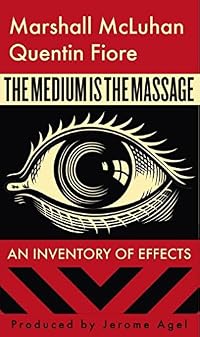
The Medium is the Massage: An Inventory of Effects
by Marshall McLuhan, Quentin Fiore
On This Page
Description
30 years after its publication Marshall McLuhan's The Medium is the Massage remains his most entertaining, provocative, and piquant book. With every technological and social "advance" McLuhan's proclamation that "the media work us over completely" becomes more evident and plain. In his words, so pervasive are they in their personal, political, economic, aesthetic, psychological, moral, ethical and social consequences that they leave no part of us untouched, unaffected, or unaltered'. show more McLuhan's remarkable observation that "societies have always been shaped more by the nature of the media by which men communicate than by the content of the communication" is undoubtedly more relevant today than ever before. With the rise of the internet and the explosion of the digital revolution there has never been a better time to revisit Marshall McLuhan. show lessTags
Recommendations






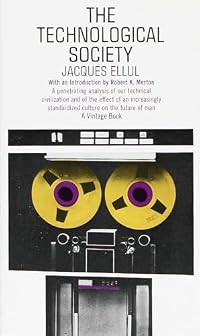
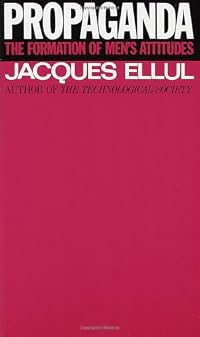
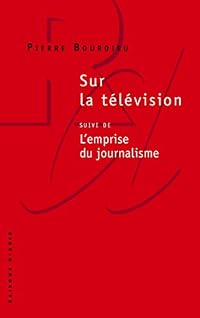
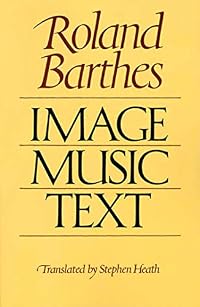









Member Recommendations
PghDragonMan To effectively communicate, you must understand the medium you are using and fully use its potential. You must also select a medium appropriate to the message to successfully communicate.
Member Reviews
I finally got around to reading McLuhan's The Medium is the Massage. It was enjoyable, and seems fairly forward-thinking for 1967. I can see why it is so heavily cited in new media composition studies, and I enjoyed its collage multimodal style. There were various points where I thought McLuhan was just plain wrong, but there were various moments of insight that I liked, particularly in regards to audience participants, electric cities, and challenges to the public/private dichotomy.
I finally got around to reading the classic last night, and what was I waiting for? It is witty, insightful, and very entertaining. Much credit must be given to graphic designer Quentin Fiore. His designs of the 1960s are mixed text and images, different sizes of type and other unconventional devices like mirror writing to create dynamic pages that reflect the tumultuous spirit of the time. In the words of critic Steven Heller, Fiore was "as anarchic as possible while still working within the constraints of bookmaking". McLuhan seems to be on a zealous mission to provoke the idea that conventional text ossifies the mind and these disruptive pages, many of which have little to no text, are as koans to break patterns of thought and show more challenge the reader. I especially like the quotes from John Cage and William Massey:
“Whence did the wond'rous mystic art arise, / Of painting SPEECH, and speaking to the eyes? / That we by tracing magic lines are taught, / How to embody, and to colour THOUGHT?”
Not just 18th Century poets, but even the seminal Socrates is on McLuhan's side seeing deadly rigidity in a line of text:
"The discovery of the alphabet will create forgetfulness in the learner’s souls, because they will not use their memories; they will trust to the external written characters and not remember of themselves. You give your disciples not truth but only the semblance of truth; they will be heroes of many things, and will have learned nothing; they will appear to be omniscient and will generally know nothing."
— Socrates, Phaedrus, cited by Marshall McLuhan here
McLuhan then sounded like someone railing against 24-hr cable news, unedited blogs, and face-down tweeting:
"The family circle has widened. The worldpool of information fathered by the electric media—movies, Telstar, flight—far surpasses any possible influence mom and dad can now bring to bear. Character no longer is shaped by only two earnest, fumbling experts. Now all the world's a sage."
And what he resisted in the 60s make me think his head would explode now, or maybe now we will listen?
"Electric circuitry has overthrown the regime of ‘time’ and ‘space’ and pours upon us instantly and continuously the concerns of all other men. It has reconstituted dialogue on a global scale. Its message is Total Change, ending psychic, social, economic, and political parochialism. The old civic, state, and national groupings have become unworkable. Nothing can be further from the spirit of the new technology than ‘a place for everything and everything in its place.’ You can’t go home again."
It seems, and appropriately enough, McLuhan's thesis was best summarized in a New Yorker cartoon presented here without comment near the very end with this quip:
"You see, Dad, Professor McLuhan says that the environment that man creates becomes his medium for defining his role in it. The invention of type created linear, or sequential thought, separating thought from action. Now, with TV and folk singing, thought and action are closer and social involvement is greater. We again live in a village. Get it?"
The New Yorker Magazine 1966 show less
“Whence did the wond'rous mystic art arise, / Of painting SPEECH, and speaking to the eyes? / That we by tracing magic lines are taught, / How to embody, and to colour THOUGHT?”
Not just 18th Century poets, but even the seminal Socrates is on McLuhan's side seeing deadly rigidity in a line of text:
"The discovery of the alphabet will create forgetfulness in the learner’s souls, because they will not use their memories; they will trust to the external written characters and not remember of themselves. You give your disciples not truth but only the semblance of truth; they will be heroes of many things, and will have learned nothing; they will appear to be omniscient and will generally know nothing."
— Socrates, Phaedrus, cited by Marshall McLuhan here
McLuhan then sounded like someone railing against 24-hr cable news, unedited blogs, and face-down tweeting:
"The family circle has widened. The worldpool of information fathered by the electric media—movies, Telstar, flight—far surpasses any possible influence mom and dad can now bring to bear. Character no longer is shaped by only two earnest, fumbling experts. Now all the world's a sage."
And what he resisted in the 60s make me think his head would explode now, or maybe now we will listen?
"Electric circuitry has overthrown the regime of ‘time’ and ‘space’ and pours upon us instantly and continuously the concerns of all other men. It has reconstituted dialogue on a global scale. Its message is Total Change, ending psychic, social, economic, and political parochialism. The old civic, state, and national groupings have become unworkable. Nothing can be further from the spirit of the new technology than ‘a place for everything and everything in its place.’ You can’t go home again."
It seems, and appropriately enough, McLuhan's thesis was best summarized in a New Yorker cartoon presented here without comment near the very end with this quip:
"You see, Dad, Professor McLuhan says that the environment that man creates becomes his medium for defining his role in it. The invention of type created linear, or sequential thought, separating thought from action. Now, with TV and folk singing, thought and action are closer and social involvement is greater. We again live in a village. Get it?"
The New Yorker Magazine 1966 show less
It is difficult to remember that this book was first published in 1967, as the message of the "massage" is as relevant today as it was then. The use of images to make its point should not detract from the prose, even though it is minimal. McLuhan's "allatonceness" and "global village" take on new resonance in the Internet age. Where it diverges is in thinking we privilege acoustic space--I don't believe that is true. I think we are still largely beholden to the visual, and when in 1967 McLuhan writes: "At the high speeds of electric communication, purely visual means of apprehending the world are no longer possible; they are just too slow to be relevant or effective..." we know that he could not have foreseen social media. But as many show more have noted, much of what McLuhan says holds up in our age.
This edition is wonderful and beautifully produced, from the Shepard Fairey cover (probably the most apt choice), to the self-referential New Yorker cartoon on the last page. It is both a (brief) history of media, and a harbinger of the future. Quentin Fiore's contributions are stunning, particularly in retrospect, and seem far less counter-culture now than they did in the 1960s. The use of visual images, creative typesetting, and lack of regular pagination help drive home McLuhan's point in this "inventory of effects." We get pulled into the "electrically-configured whirl" no less now than we did then, even if the medium has changed. One wonders if we aren't still "march[ing] backwards into the future." Media continue to be "extensions of some human faculty"--and in that, we see both the frailty and fecundity of our ideas. show less
This edition is wonderful and beautifully produced, from the Shepard Fairey cover (probably the most apt choice), to the self-referential New Yorker cartoon on the last page. It is both a (brief) history of media, and a harbinger of the future. Quentin Fiore's contributions are stunning, particularly in retrospect, and seem far less counter-culture now than they did in the 1960s. The use of visual images, creative typesetting, and lack of regular pagination help drive home McLuhan's point in this "inventory of effects." We get pulled into the "electrically-configured whirl" no less now than we did then, even if the medium has changed. One wonders if we aren't still "march[ing] backwards into the future." Media continue to be "extensions of some human faculty"--and in that, we see both the frailty and fecundity of our ideas. show less
In the 1960s, McLuhan presaged the communications age through his studies of “electronic media.” His thoughts shone light on the way forward and are now standards of understanding today. For instance, he coined the term “global village” in showing the ways of globalization.
This work consists of much more than text. Published in black-and-white, it portrays a series of images that move the reader through the contention that media – particularly electronic media – “massages” messages to us. McLuhan squarely places the focus on the nature of the media.
He looks to history to see how Gutenberg transformed the world through the advent of print media. He contends that television, movies, and other pictorial media begun the show more transform the world in the 1950s and 1960s. It made the world a smaller place, a global village, where people in far-flung places of the world borrow and learn from each other.
To him, electronic media are non-linear, unlike books. Rather, they unite thought and action in a way that books do not. This allows fields like psychology to flourish as instant reactions become more important. In its production, each page is adorned with images that reinforce McLuhan’s message. While such things are commonplace over fifty years later, this type of presentation was pioneered in these works. We can now observe through studying contemporary discourse that this work was spot-on in its predictions.
For me, as a software developer and student of culture, this work simply reinforces what I see around me. I spend a lot of my time on the computer and Internet. I see first-hand that McLuhan’s theses worked out. Still, I found this image-oriented book very stimulating. All of the poignant pictures tired out my eyes. It reminded me of the electronic media that are now standard, like the electronic news or even Facebook and Instagram.
This work continues to inform the intellectual class and students of culture. Those interested in the history of ideas will be particularly attracted to this work. Those, like me, who are concerned with the role of computers in society will find this work compelling. As commonly said, we live in the Information Age, and this book sketched the outlines, fifty-plus years ago, of what that would look like. Many say that it is the most mature expression of McLuhan’s thought. For that reason, it’s worth attending to his perspective today. show less
This work consists of much more than text. Published in black-and-white, it portrays a series of images that move the reader through the contention that media – particularly electronic media – “massages” messages to us. McLuhan squarely places the focus on the nature of the media.
He looks to history to see how Gutenberg transformed the world through the advent of print media. He contends that television, movies, and other pictorial media begun the show more transform the world in the 1950s and 1960s. It made the world a smaller place, a global village, where people in far-flung places of the world borrow and learn from each other.
To him, electronic media are non-linear, unlike books. Rather, they unite thought and action in a way that books do not. This allows fields like psychology to flourish as instant reactions become more important. In its production, each page is adorned with images that reinforce McLuhan’s message. While such things are commonplace over fifty years later, this type of presentation was pioneered in these works. We can now observe through studying contemporary discourse that this work was spot-on in its predictions.
For me, as a software developer and student of culture, this work simply reinforces what I see around me. I spend a lot of my time on the computer and Internet. I see first-hand that McLuhan’s theses worked out. Still, I found this image-oriented book very stimulating. All of the poignant pictures tired out my eyes. It reminded me of the electronic media that are now standard, like the electronic news or even Facebook and Instagram.
This work continues to inform the intellectual class and students of culture. Those interested in the history of ideas will be particularly attracted to this work. Those, like me, who are concerned with the role of computers in society will find this work compelling. As commonly said, we live in the Information Age, and this book sketched the outlines, fifty-plus years ago, of what that would look like. Many say that it is the most mature expression of McLuhan’s thought. For that reason, it’s worth attending to his perspective today. show less
McLuhan proclaims that electronic media technology can bring the world together and unite thought and action in a way that print technology made separate. He doesn’t argue these points as much as issues provocations, complimented by the book’s sleek design and imagery. A generous reading is that he’s trying to stir thought, to get the reader to come to their own conclusions and connect the dots. Others might say that he avoids making arguments because his ideas are weak, and he cannot back them up. I fall into the latter camp.
He critiques printing, which partially revolves around the technology of the alphabet. Allegedly, the alphabet trains us to see things in a connected and continuous way. Since the alphabet and words involve show more breaking things down and constructing meaning, he says that this fragmenting is how humanity now thinks.
Fragmented compared to what? My admittedly limited understanding of non-literate people is that they tend to have ideas about the world that are “connected.” How could one move about the world not believing things are connected? What does “continuous” mean anyways? Also, modern communications technologies don’t function too different from the alphabet, if any have supplanted it at all. For instance, memes take images out of their context and use them to represent a mood, idea, opinion, etc. Isn’t this breaking things down and constructing meaning through fragmenting?
He points out that the printing press was the first instance of mass production and alleges that reading facilitates a private point-of-view involving detachment and a cult of individualism. He’s arguing that networked society brings us back into oral dialogue of the village, since we all have access to communicate with each other instantly. Hence, the “global village.”
The critique of the printing press is probably fair, and I can understand detachment and individualism resulting from solitary reading. But where does reading aloud fit into this, or talking about a book with others? Reading can facilitate dialogue or be as individualistic as listening to someone talk on TV. Printing and reading are surely worth critique, but nothing like the rigorous dialogue of ancient Greece has come about since the spread of TV and the internet. Instead, attention spans have declined while our understandings of things have become shallower, as Nicholas Carr puts it.
Furthermore, though communications media has brought people the ability to communicate across the world, we are living in a period where nationalism and racism are surging. Perhaps our situation mirrors the “global village” McLuhan heralds, but Othering has remained. Rather than virtual distance and communication technology, this ugly human tendency is likely rooted in politics, the economy, and psychology.
He believes the discord between generations in the Sixties results from society’s expectations that older technologies are expected to solve contemporary problems. He homes in on schooling, which deploys older strategies for imparting fragmented knowledge, meanwhile children receive a wider image of the adult world simply by watching TV.
He argues that electric technology fosters involvement and participation. He probably meant it in a good way, but this reminds me of the computer application Slack, which acts as a chatroom for workplace “teams”. Prior to Slack, there was not expectations for a work colleagues to be in constant communication. Instead, you would do your work, and talk to co-workers when you needed to.
Slack brings co-workers together in a space paid by the employer, who have the possibility of surveilling and reviewing the communications. Employees know this. Slack then acts as a centralization tool. The participation and involvement are synonymous with increased productivity. We are always there, always in-tune to the details of the work, and always available for informal communication.
McLuhan argues that instead of “the public,” electrical technology supposedly creates “the mass” who use multiple “modes of exploration” rather than walking around with ones’ own fixed POV. Here it is obvious how McLuhan doesn’t make arguments, he issues proclamations. What is a “mode of exploration”? Is it just that I think the masses’ ideas instead of those brought to me by the schoolteacher or book? That just seems like groupthink.
If printing caused fixed POVs, how does this vague “mass” offer new modes? What new modes? How are they able to break the fixed POV? Aren’t TV shows and movies also shown from the same POVs: first-person, third-person, ensemble, etc?
Overall, I think McLuhan was onto big societal transformations taking place in the Sixties. He just exaggerated the responsibility and role of media technology in bringing it about. He was right to point out the importance of the media/medium, but his mistake was being optimistic about it. show less
He critiques printing, which partially revolves around the technology of the alphabet. Allegedly, the alphabet trains us to see things in a connected and continuous way. Since the alphabet and words involve show more breaking things down and constructing meaning, he says that this fragmenting is how humanity now thinks.
Fragmented compared to what? My admittedly limited understanding of non-literate people is that they tend to have ideas about the world that are “connected.” How could one move about the world not believing things are connected? What does “continuous” mean anyways? Also, modern communications technologies don’t function too different from the alphabet, if any have supplanted it at all. For instance, memes take images out of their context and use them to represent a mood, idea, opinion, etc. Isn’t this breaking things down and constructing meaning through fragmenting?
He points out that the printing press was the first instance of mass production and alleges that reading facilitates a private point-of-view involving detachment and a cult of individualism. He’s arguing that networked society brings us back into oral dialogue of the village, since we all have access to communicate with each other instantly. Hence, the “global village.”
The critique of the printing press is probably fair, and I can understand detachment and individualism resulting from solitary reading. But where does reading aloud fit into this, or talking about a book with others? Reading can facilitate dialogue or be as individualistic as listening to someone talk on TV. Printing and reading are surely worth critique, but nothing like the rigorous dialogue of ancient Greece has come about since the spread of TV and the internet. Instead, attention spans have declined while our understandings of things have become shallower, as Nicholas Carr puts it.
Furthermore, though communications media has brought people the ability to communicate across the world, we are living in a period where nationalism and racism are surging. Perhaps our situation mirrors the “global village” McLuhan heralds, but Othering has remained. Rather than virtual distance and communication technology, this ugly human tendency is likely rooted in politics, the economy, and psychology.
He believes the discord between generations in the Sixties results from society’s expectations that older technologies are expected to solve contemporary problems. He homes in on schooling, which deploys older strategies for imparting fragmented knowledge, meanwhile children receive a wider image of the adult world simply by watching TV.
He argues that electric technology fosters involvement and participation. He probably meant it in a good way, but this reminds me of the computer application Slack, which acts as a chatroom for workplace “teams”. Prior to Slack, there was not expectations for a work colleagues to be in constant communication. Instead, you would do your work, and talk to co-workers when you needed to.
Slack brings co-workers together in a space paid by the employer, who have the possibility of surveilling and reviewing the communications. Employees know this. Slack then acts as a centralization tool. The participation and involvement are synonymous with increased productivity. We are always there, always in-tune to the details of the work, and always available for informal communication.
McLuhan argues that instead of “the public,” electrical technology supposedly creates “the mass” who use multiple “modes of exploration” rather than walking around with ones’ own fixed POV. Here it is obvious how McLuhan doesn’t make arguments, he issues proclamations. What is a “mode of exploration”? Is it just that I think the masses’ ideas instead of those brought to me by the schoolteacher or book? That just seems like groupthink.
If printing caused fixed POVs, how does this vague “mass” offer new modes? What new modes? How are they able to break the fixed POV? Aren’t TV shows and movies also shown from the same POVs: first-person, third-person, ensemble, etc?
Overall, I think McLuhan was onto big societal transformations taking place in the Sixties. He just exaggerated the responsibility and role of media technology in bringing it about. He was right to point out the importance of the media/medium, but his mistake was being optimistic about it. show less
In one of the most interestingly presented books I have seen, socio-cultural theorist, Marshall McLuhan, and graphics designer and artist, Quentin Fiore, present The Medium is the Massage, a book that, while written in the 1960s, has more direct application to our contemporary times than it did during its inception.
Taking its cue from the saying, "the medium is the message" and altering it to fit their own message, McLuhan and Fiore present the argument of how the electronic media is slowly lulling us into not realizing the dramatic changes and new perspectives this technology is creating.
Their 'writing style', if it can be called such, is a provocative, visually-impacting array of photographs, unique texts, quotes, humorous cartoons, show more and other images to give the reader a better understanding of the ideas being presented. While there is a slight danger of their message being lost in its unorthodox presentation, (two pages, for example, are printed with the text upside-down), their argument is solid and restated in unique ways throughout.
The book is revolutionary in the way it shows how electric technology is continually changing our government, our families, our jobs, and our social relationships. While the evidence and the way it is presented does reveal its origination in the earlier part of this technological movement, the words nonetheless show its relevance to our time period. show less
Taking its cue from the saying, "the medium is the message" and altering it to fit their own message, McLuhan and Fiore present the argument of how the electronic media is slowly lulling us into not realizing the dramatic changes and new perspectives this technology is creating.
Their 'writing style', if it can be called such, is a provocative, visually-impacting array of photographs, unique texts, quotes, humorous cartoons, show more and other images to give the reader a better understanding of the ideas being presented. While there is a slight danger of their message being lost in its unorthodox presentation, (two pages, for example, are printed with the text upside-down), their argument is solid and restated in unique ways throughout.
The book is revolutionary in the way it shows how electric technology is continually changing our government, our families, our jobs, and our social relationships. While the evidence and the way it is presented does reveal its origination in the earlier part of this technological movement, the words nonetheless show its relevance to our time period. show less
The title of this book does come from a typo of the most famous phrase coined by McLuhan. He decided to keep it as it fits the context that medium does "massage" our mind; it shapes how we perceive and make sense of our world. This one is like a distillation of ideas from Understanding Media, combined with graphic design by Quentin Fiore that will enrich our reading experience.
McLuhan argues that people are often engulfed in the medium's content that it blinds them from the medium's actual effect. The way that we transmit and receive information is more important than the information itself. In Understanding Media, he wrote that it is the "medium that shapes and controls the scale and form of human association and action." The medium is show more the extension of ourselves or the environment, and the content is just 'a juicy piece of meat carried by the burglar to distract the watchdog of the mind'.
In similarity to my previous reading, Carr argues in The Shallows that the internet has changed our brain's structure due to its malleability. We're now more prone to skimming and multi-tasking so that we're on the brink of losing the ability to think deeply too. In How to Stay Sane, Shafak argues that the social media's echo chamber has led us to be more apathetic towards each other, and we're slowly losing the sense of democracy. For McLuhan, watching television changed the way we looked at the world and created an interconnected global village. It became the extension of our mind and senses. "It is impossible to understand social and cultural changes without a knowledge of the workings of media."
Now that we know what the media does to us, regardless of their contents, we should be more critical to which extent these extensions of our senses will benefit us. "There is absolutely no inevitability as long as there is a willingness to contemplate what is happening." I think we can balance both the technophile & the luddite within ourselves when using media or technologies. They do help us, undoubtedly more so now that we're striving in the middle of the pandemic. Yet, it doesn't hurt to step back and ponder how we use the technology not to be controlled by it instead. show less
McLuhan argues that people are often engulfed in the medium's content that it blinds them from the medium's actual effect. The way that we transmit and receive information is more important than the information itself. In Understanding Media, he wrote that it is the "medium that shapes and controls the scale and form of human association and action." The medium is show more the extension of ourselves or the environment, and the content is just 'a juicy piece of meat carried by the burglar to distract the watchdog of the mind'.
In similarity to my previous reading, Carr argues in The Shallows that the internet has changed our brain's structure due to its malleability. We're now more prone to skimming and multi-tasking so that we're on the brink of losing the ability to think deeply too. In How to Stay Sane, Shafak argues that the social media's echo chamber has led us to be more apathetic towards each other, and we're slowly losing the sense of democracy. For McLuhan, watching television changed the way we looked at the world and created an interconnected global village. It became the extension of our mind and senses. "It is impossible to understand social and cultural changes without a knowledge of the workings of media."
Now that we know what the media does to us, regardless of their contents, we should be more critical to which extent these extensions of our senses will benefit us. "There is absolutely no inevitability as long as there is a willingness to contemplate what is happening." I think we can balance both the technophile & the luddite within ourselves when using media or technologies. They do help us, undoubtedly more so now that we're striving in the middle of the pandemic. Yet, it doesn't hurt to step back and ponder how we use the technology not to be controlled by it instead. show less
Members
- Recently Added By
Lists

Filosofía - Clásicos
217 works; 1 member

Books Read in 2013
1,629 works; 51 members

Books Read in College
80 works; 5 members
Author Information

60+ Works 8,708 Members
A poetry professor turned media theorist---or media guru, as some in the press called him at the time---Marshall McLuhan startled television watchers during the 1960's with the notion that the medium they were enthralled by was doing more than transmitting messages---it was the message: Its rapid-fire format, mixing programs and advertisements, show more conveyed as much as---or more than---any single broadcast element. McLuhan grew up in the prairie country of the Canadian West and studied English at the University of Manitoba and Cambridge University. As television entered a period of huge growth during the 1950's, McLuhan, then a college professor, became interested in advertising. He thought of it as something to be taken seriously as a new culture form, beyond its obvious capability of selling products. That interest led to his increasing speculation about what media did to audiences. In his unpredictable modern poetry classes at the University of Toronto, he spoke more and more of media. The students he taught were the television generation, the first to grow up with the medium. Many were fascinated by McLuhan's provocative observations that a medium of communication radically alters the experience being communicated. A society, he said, is shaped more by the style than by the content of its media. Thus, the linear, sequential style of printing established a linear, sequential style of thinking, in which one thing is considered after another in orderly fashion: it shaped a culture in which (objective) reason predominated and experience was isolated, compartmentalized, and repeatable. In contrast, the low-density images of television, composed of a mosaic of light and dark dots, established a style of response in which it is necessary to unconsciously reconfigure the dots immediately in order to derive meaning from them. It has shaped a culture in which (subjective) emotion predominates and experience is holistic and unrepeatable. Since television (and the other electronic media) transcends space and time, the world is becoming a global village---a community in which distance and isolation are overcome. McLuhan was crisp and assured in his pronouncements and impatient with those who failed to grasp their import. McLuhan's most famous saying, "the medium is the message," was explicated in the first chapter of his most successful book, "Understanding Media," published in 1966 and still in print. It sold very well for a rather abstruse book and brought McLuhan widespread attention in intellectual circles. The media industry responded by seeking his advice and enthusiastically disseminating his ideas in magazines and on television. These ideas caused people to perceive their environment, particularly their media environment, in radically new ways. It was an unsettling experience for some, liberating for others. Though McLuhan produced some useful insights, he was given to wild generalizations and flagrant exaggerations. Some thought him a charlatan, and he always felt himself an outcast at the university, at least partly because of his disdain for print culture and opposition to academic conventions. He never seemed quite as energetic after an operation in 1967 to remove a huge brain tumor, but he continued to work and teach until he suffered a stroke in 1979. He died a year later. Though today his writings are not discussed as much by the general public, his thesis is still considered valid and his ideas have become widely accepted. (Bowker Author Biography) show less

6+ Works 2,699 Members
All Editions
Some Editions
Awards and Honors
Series
Belongs to Publisher Series
Common Knowledge
- Canonical title
- The Medium is the Massage: An Inventory of Effects
- Original title
- The Medium is the Massage: An Inventory of Effects
- Original publication date
- 1967
- First words
- Good morning!
The medium, or process, of our time--electric technology--is reshaping and restructuring patterns of social interdependence and every aspect of our personal life. - Quotations
- Ours is a brand-new world of allatonceness. "Time" has ceased, "space" has vanished. We now live in a global village...a simultaneous happening. [63]
- Last words
- (Click to show. Warning: May contain spoilers.)In his amusement born of rational detachment of his own situation, Poe's mariner in "The Descent into the Maelstrom" staved off disaster by understanding the action of the whirlpool. His insight offers a possible stratagem for understanding our predicament, our electrically-configured whirl.
"It is the business of the future to be dangerous." -- A.N. Whitehead. - Original language*
- Inglés
*Some information comes from Common Knowledge in other languages. Click "Edit" for more information.
Classifications
Statistics
- Members
- 2,401
- Popularity
- 8,105
- Reviews
- 36
- Rating
- (3.83)
- Languages
- 7 — Chinese, English, German, Hungarian, Italian, Spanish, Portuguese (Portugal)
- Media
- Paper, Ebook
- ISBNs
- 22
- ASINs
- 33