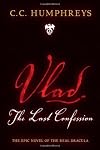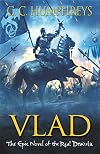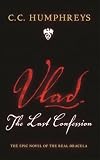
Vlad: The Last Confession
by C. C. Humphreys
On This Page
Description
Vlad: The Last Confession is a novel about the real man behind the Bram Stoker myth. It tells of the Prince, the warrior, the lover, the torturer, the survivor and, ultimately, the hero.Dracula. A name of horror, depravity and the darkest sensuality. Yet the real Dracula was just as alluring, just as terrifying, his tale not one of a monster but of a man...and a contradiction.
His tale is told by those who knew him best. The only woman he ever loved...and whom he has to sacrifice. His show more closest comrade... and traitor. And his priest, betraying the secrets of the confessional to reveal the mind of the man history would forever remember as The Impaler.
This is the story of the man behind the legend ... as it has never been told before.
"Trust nothing that you've heard."
Winter 1431, a son is born to the Prince of Transylvania.
His father christened him "Vlad."
His people knew him as "The Dragon's Son."
His enemies reviled him as "Tepes"-The Impaler.
He became the hero of a nation.
We know him as Dracula.
. show less
Tags
Recommendations



















Member Recommendations
Member Reviews
Vlad Tepes is the victim of gossip and propaganda. Vilified during his lifetime, Bram Stoker slammed the proverbial nail into the coffin by making him one of the most recognized and well-known villains of all time. Yet, how much of the stories that persist today are fact and how much is simply history rewritten by the victors? In Vlad: The Last Confession, C. C. Humphreys successfully steps inside the mind of Vlad the Impaler, a.k.a. Vlad Dracula, in an attempt to sift through the fact with the fiction, presenting this notorious ruler in a more human light.
As one might expect of any novel about Vlad Dracula, it is not for the faint of heart. All historians are in agreement that Vlad was one brutal ruler. He earned and deserved his show more nickname, even if the total numbers or specifics have been lost over time. Yet, as Humphreys' research proves, he was not doing anything out of the ordinary for the times. His life-long enemies, the Turks, practiced similarly brutal methods of punishment and torture as has been attributed to Vlad. With this in mind, there are some simply awful scenes to read. While the torture and descriptions are not explicit, it is often what Humphreys does not say that lingers with the reader. For those who may be squeamish or not comfortable with the brutality of humanity, then please be warned.
Humphreys definitely did his homework. Vlad: The Last Confession is well-researched, and it shows in every description. The reader has no difficulties imagining life in Wallachia or Turkey, no matter how foreign and historical the situation. Humphreys uses his detailed research to present a plausible alternative to Vlad's story, one that shows him more as a victim of circumstances and pawn to greater men than a true villain. This humanity is surprising and yet welcome as a counterpoint to history books.
There is a reason why the story of Vlad Dracula has lasted for over 600 years. By all accounts, he was extremely charismatic and a truly remarkable man. Humphreys captures this magnetism and uses it to full advantage. More than average intelligence, distinctive features, a profound sense of family, honor and duty combined to create a man who is more than memorable but almost mythical. Vlad's personality, while considered by Humphreys, oozes through each page, and readers better understand the fascination. Better yet, rather than ignore it, Humphreys nods to the Dracula myth several times throughout the story, recognizing one of the key factors which has added to Vlad's mystique.
Vlad: The Last Confession is an honest, dark, and yet engaging hypothesis on the "true" story of Vlad Dracula. C.C. Humphreys' excellent research brings this infamous man to life. Flitting back and forth between Vlad's lifetime and after his death, the reader experiences Vlad's struggles and the state of affairs once he is gone. Through Humphreys' careful portrayal, Vlad Tepes loses some of the infamy that surrounds his name and becomes sympathetic in a way that is not obvious on the surface. A reader is forced to ask him or herself of just how s/he would react if put into similar situations as Vlad experienced. A relationship between Vlad and the reader develops through grudging admiration of this man, who was forced into situations that would break most people. Vlad: The Last Confession allows the reader to develop an entirely new image of the name, Dracula.
Thank you to Jen for sending me her copy! show less
As one might expect of any novel about Vlad Dracula, it is not for the faint of heart. All historians are in agreement that Vlad was one brutal ruler. He earned and deserved his show more nickname, even if the total numbers or specifics have been lost over time. Yet, as Humphreys' research proves, he was not doing anything out of the ordinary for the times. His life-long enemies, the Turks, practiced similarly brutal methods of punishment and torture as has been attributed to Vlad. With this in mind, there are some simply awful scenes to read. While the torture and descriptions are not explicit, it is often what Humphreys does not say that lingers with the reader. For those who may be squeamish or not comfortable with the brutality of humanity, then please be warned.
Humphreys definitely did his homework. Vlad: The Last Confession is well-researched, and it shows in every description. The reader has no difficulties imagining life in Wallachia or Turkey, no matter how foreign and historical the situation. Humphreys uses his detailed research to present a plausible alternative to Vlad's story, one that shows him more as a victim of circumstances and pawn to greater men than a true villain. This humanity is surprising and yet welcome as a counterpoint to history books.
There is a reason why the story of Vlad Dracula has lasted for over 600 years. By all accounts, he was extremely charismatic and a truly remarkable man. Humphreys captures this magnetism and uses it to full advantage. More than average intelligence, distinctive features, a profound sense of family, honor and duty combined to create a man who is more than memorable but almost mythical. Vlad's personality, while considered by Humphreys, oozes through each page, and readers better understand the fascination. Better yet, rather than ignore it, Humphreys nods to the Dracula myth several times throughout the story, recognizing one of the key factors which has added to Vlad's mystique.
Vlad: The Last Confession is an honest, dark, and yet engaging hypothesis on the "true" story of Vlad Dracula. C.C. Humphreys' excellent research brings this infamous man to life. Flitting back and forth between Vlad's lifetime and after his death, the reader experiences Vlad's struggles and the state of affairs once he is gone. Through Humphreys' careful portrayal, Vlad Tepes loses some of the infamy that surrounds his name and becomes sympathetic in a way that is not obvious on the surface. A reader is forced to ask him or herself of just how s/he would react if put into similar situations as Vlad experienced. A relationship between Vlad and the reader develops through grudging admiration of this man, who was forced into situations that would break most people. Vlad: The Last Confession allows the reader to develop an entirely new image of the name, Dracula.
Thank you to Jen for sending me her copy! show less
This historical fiction is an account of the life of Vlad The Impaler, told from the perspective of the three people closest to him: his lover, his closest friend and 2IC, and his confessor. We meet Vlad as a young Prince, being held hostage by the Turks in the early 1400s. In this period it is customary to hold the sons of a war lord hostage as a deterrent for attacking or invading your enemies. Devoutly Christian, Vlad receives tutelage in the Muslim faith with his younger brother Radu. When Vlad meets the young Sultan Mehmet their mutual hatred is born.
Vlad is soon separated from his brother and suffers cruel treatment at the hands of the Turks, and is forced to learn and practice horrific torture techniques. It is at this time that show more Vlad learns the motto "we torture others so they cannot torture us" and we see a significant change in his attitude to torture, and the development of his view on impalement relating to the Crucifixion of Christ. The author is careful not to justify Vlad's actions, but rather reveal the nature of his upbringing and his struggles and conflicts from the perspective of the three confessors.
There is much war, action, torture and conflict throughout the book, but it is surprisingly complex at the same time, with a complicated love story and heart breaking relationship with his 2IC and betrayal by his younger brother. There was also a lot of falconry which I enjoyed!
At one point in the book, Vlad takes control of Wallachia and punishes every law breaker - regardless of the severity of the crime - with impalement. This punishment acts as a deterrent, and within a short time the crime in Wallachia plummets, travellers and traders begin to cross the territory again and the people flourish and grow rich. Two years prior, Vlad had voiced his desire to be able to put a golden bejeweled cup on the edge of the well, and the townspeople would not be tempted to steal it. Vlad accomplished this and said that he couldn't make his people love him, but he could make them fear him. It was this particular aspect of the book that had the most lasting impact on me. Both the nature in which he used fear to reign, but also how his people prospered under this regime, which hadn't occurred to me before.
I absolutely loved this book and was enthralled by the history in the region at this time, and the ongoing struggle between the Muslims and Christians. This is definitely a book for those interested in historical fiction. Anyone interested in reading about vampires should look elsewhere. This is a serious book, with hard hitting issues and a twist at the end. show less
Vlad is soon separated from his brother and suffers cruel treatment at the hands of the Turks, and is forced to learn and practice horrific torture techniques. It is at this time that show more Vlad learns the motto "we torture others so they cannot torture us" and we see a significant change in his attitude to torture, and the development of his view on impalement relating to the Crucifixion of Christ. The author is careful not to justify Vlad's actions, but rather reveal the nature of his upbringing and his struggles and conflicts from the perspective of the three confessors.
There is much war, action, torture and conflict throughout the book, but it is surprisingly complex at the same time, with a complicated love story and heart breaking relationship with his 2IC and betrayal by his younger brother. There was also a lot of falconry which I enjoyed!
At one point in the book, Vlad takes control of Wallachia and punishes every law breaker - regardless of the severity of the crime - with impalement. This punishment acts as a deterrent, and within a short time the crime in Wallachia plummets, travellers and traders begin to cross the territory again and the people flourish and grow rich. Two years prior, Vlad had voiced his desire to be able to put a golden bejeweled cup on the edge of the well, and the townspeople would not be tempted to steal it. Vlad accomplished this and said that he couldn't make his people love him, but he could make them fear him. It was this particular aspect of the book that had the most lasting impact on me. Both the nature in which he used fear to reign, but also how his people prospered under this regime, which hadn't occurred to me before.
I absolutely loved this book and was enthralled by the history in the region at this time, and the ongoing struggle between the Muslims and Christians. This is definitely a book for those interested in historical fiction. Anyone interested in reading about vampires should look elsewhere. This is a serious book, with hard hitting issues and a twist at the end. show less
When I was pitched this book, it almost sounded to good to be, well . . . good.
How many times have you bought a book (or asked for a review copy) and wanted it to be as good as the blurb, yet past let-downs jaded your hope?
I’ve never been so happy to be disappointed.
Historical Fiction can be a challenging genre to read if the author hasn’t take care to do their research. It also takes skill to weave that knowledge into a story seamlessly, never allowing it to detract from the overall storytelling, but to enhance it. When done well, it entertains and informs, tells a story of history with enough credibility behind the fiction to support and feed it.
Humphreys does this with his main character as well. Vlad, known by other names show more including ‘Dracula’, is a man many think they know much about, but in reality, the truth is overshadowed by unflattering propaganda. He fictionalizes Vlad’s life using as much truth as he could gather. He uses it in a way to be as fair as possible to the man while clarifying the forces which drove him to such brutal extremes in order to do what he felt was best for his country, his people, his faith.
This brutality was not innate. At least this is what the reader comes away with after reading Vlad’s story. It was learned, then reflected back at those who had used it against him as well as his enemies. This is the hardest part of the read and very disturbing.
Although Humphreys does not go into a great amount of detail, still, the heinous acts perpetrated upon Vlad, and the ones he inflicted on others is shocking. As much as I was prepared for it, it still had a powerful impact. It gives a complexity to the man that forces a re-evaluation of all that you have learned previously.
The most interesting aspect of this novel is the narration. It is told using the third person however, it is actually three people – those who knew Vlad best who are telling it. The writer mixes each voice to become one: Vlad, making his voice strong throughout.
The story is told in a linear fashion, allowing the reader to grow in understanding as Vlad descends in depravity. Not that it is to be excused, but at least there is a basis for it – a method to this dark Prince’s madness. The reader is left to decide if Dracula deserves his infamy, is misunderstood, or in a way a bit of both.
I have to warn you, this is a challenging read, not so much for some of its content, but the feelings that remain afterward. It makes you think harder about what it good, what is evil, and what happens when the two collide and combine within the soul.
I love this book. One of the best historical fiction novels I’ve read. It gets my highest rating and a strong recommendation. show less
How many times have you bought a book (or asked for a review copy) and wanted it to be as good as the blurb, yet past let-downs jaded your hope?
I’ve never been so happy to be disappointed.
Historical Fiction can be a challenging genre to read if the author hasn’t take care to do their research. It also takes skill to weave that knowledge into a story seamlessly, never allowing it to detract from the overall storytelling, but to enhance it. When done well, it entertains and informs, tells a story of history with enough credibility behind the fiction to support and feed it.
Humphreys does this with his main character as well. Vlad, known by other names show more including ‘Dracula’, is a man many think they know much about, but in reality, the truth is overshadowed by unflattering propaganda. He fictionalizes Vlad’s life using as much truth as he could gather. He uses it in a way to be as fair as possible to the man while clarifying the forces which drove him to such brutal extremes in order to do what he felt was best for his country, his people, his faith.
This brutality was not innate. At least this is what the reader comes away with after reading Vlad’s story. It was learned, then reflected back at those who had used it against him as well as his enemies. This is the hardest part of the read and very disturbing.
Although Humphreys does not go into a great amount of detail, still, the heinous acts perpetrated upon Vlad, and the ones he inflicted on others is shocking. As much as I was prepared for it, it still had a powerful impact. It gives a complexity to the man that forces a re-evaluation of all that you have learned previously.
The most interesting aspect of this novel is the narration. It is told using the third person however, it is actually three people – those who knew Vlad best who are telling it. The writer mixes each voice to become one: Vlad, making his voice strong throughout.
The story is told in a linear fashion, allowing the reader to grow in understanding as Vlad descends in depravity. Not that it is to be excused, but at least there is a basis for it – a method to this dark Prince’s madness. The reader is left to decide if Dracula deserves his infamy, is misunderstood, or in a way a bit of both.
I have to warn you, this is a challenging read, not so much for some of its content, but the feelings that remain afterward. It makes you think harder about what it good, what is evil, and what happens when the two collide and combine within the soul.
I love this book. One of the best historical fiction novels I’ve read. It gets my highest rating and a strong recommendation. show less
Thanks to Bram Stoker when most people hear the name Dracula they think of a vampire from Transylvania. The myth, I think has become more famous than the real man. C.C. Humphreys uses his novel to delve into the life of the real Dracula; the man who has come down through history as Vlad the Impaler. A real man with a story that is not easy to read.
The period in history when Vlad was fighting for his throne in the small kingdom of Wallachia (which is now part of Romania) is not exactly noted for it's gentility. The Roman Catholic church was warring with the Greek Orthodox church and the Ottoman Empire was trying to take over them both. Sins could be eliminated by killing the "infidel." So they all went about killing as many infidels as show more they could.
The book is set up in an interesting way; the three people who knew Vlad best are brought together in a sort of tribunal to tell his tale. To show how his life played out to see if his excesses could be somehow forgiven. To see if his reputation could be repaired. His best friend and right hand man throughout life, his love and his confessor.
The tale starts with Vlad's stay as a hostage in the "care" of Murad where he is taught the way of the Koran and the Turk. It moves through his life and loves and shows the whys of his actions. The author does an excellent job of dealing with the horror of a man who reputedly impaled up to 100,000 people and yet making him still seem somewhat human. Mad, yes but human all the same.
As I said at the beginning it was a hard book to read but one I found I could not put down. The story is very compelling and while I suspected the one part of the ending it still was very satisfying. Mr. Humphreys writes in a compelling way that brings the character and time to life and even though you want to turn away you also want to know more. This was an excellent book about a very disturbing man. show less
The period in history when Vlad was fighting for his throne in the small kingdom of Wallachia (which is now part of Romania) is not exactly noted for it's gentility. The Roman Catholic church was warring with the Greek Orthodox church and the Ottoman Empire was trying to take over them both. Sins could be eliminated by killing the "infidel." So they all went about killing as many infidels as show more they could.
The book is set up in an interesting way; the three people who knew Vlad best are brought together in a sort of tribunal to tell his tale. To show how his life played out to see if his excesses could be somehow forgiven. To see if his reputation could be repaired. His best friend and right hand man throughout life, his love and his confessor.
The tale starts with Vlad's stay as a hostage in the "care" of Murad where he is taught the way of the Koran and the Turk. It moves through his life and loves and shows the whys of his actions. The author does an excellent job of dealing with the horror of a man who reputedly impaled up to 100,000 people and yet making him still seem somewhat human. Mad, yes but human all the same.
As I said at the beginning it was a hard book to read but one I found I could not put down. The story is very compelling and while I suspected the one part of the ending it still was very satisfying. Mr. Humphreys writes in a compelling way that brings the character and time to life and even though you want to turn away you also want to know more. This was an excellent book about a very disturbing man. show less
Three people are called to confess: his best friend, his mistress, and his confessor. These three will recount the tale of the one known as the Impaler Prince. These three, who were closest to him, will tell the tale of Vlad Dracula.
C.C. Humphreys offers not the story of the monster akin to the Devil, as Vlad's very name suggests, but of the contradictory man, victim of his own life experiences. To that end, all three narratives are interwoven so fluidly that it was as if only the subject of the novel were telling the story.
The reader first follows a young Vlad, a prince's son, hostage to the Turkish Sultan Murad. Under the reader's watchful eye, Vlad metamorphoses from the highly intelligent, quiet, and just youth to the ruler and show more legend he will become, the result of his upbringing.
Conflict and betrayal are woven throughout the tale.Vlad’s inner conflict, the intimate conflict he has with his betrayers, and the broader conflict he has with those endeavouring and all too often succeeding in overthrowing him, eventually including the Church he supports, all contribute to the tale in a well-constructed, intriguing way. Vlad’s trust and faith in the integrity of others is gradually eroded completely by such betrayals. He is later betrayed by his younger brother Radu, who seeks to claim the crown under the guidance of the new Sultan Mehmet, his own nobles, Ilona and finally Ion himself. All this will shape his desire for cruelty and revenge, concluding that ruling by fear is much more effective than winning the heart and loyalty of his subjects. The reasons behind their behavior are explained as they make their confessions, but at the time of the incidents, even those are not enough to calm a man so used to betrayals, and intolerant of them in any style, shape or form.
Vlad would refer to all this as his kismet, or destiny, but it is evident that his experiences and repeated betrayals lead him to a life of violence, cruelty and torture. Upon reading this novel, one cannot utterly characterize him as monster, but as an intriguing, compelling, multi-faceted man who excelled at the lessons he was taught. show less
C.C. Humphreys offers not the story of the monster akin to the Devil, as Vlad's very name suggests, but of the contradictory man, victim of his own life experiences. To that end, all three narratives are interwoven so fluidly that it was as if only the subject of the novel were telling the story.
The reader first follows a young Vlad, a prince's son, hostage to the Turkish Sultan Murad. Under the reader's watchful eye, Vlad metamorphoses from the highly intelligent, quiet, and just youth to the ruler and show more legend he will become, the result of his upbringing.
Conflict and betrayal are woven throughout the tale.Vlad’s inner conflict, the intimate conflict he has with his betrayers, and the broader conflict he has with those endeavouring and all too often succeeding in overthrowing him, eventually including the Church he supports, all contribute to the tale in a well-constructed, intriguing way. Vlad’s trust and faith in the integrity of others is gradually eroded completely by such betrayals. He is later betrayed by his younger brother Radu, who seeks to claim the crown under the guidance of the new Sultan Mehmet, his own nobles, Ilona and finally Ion himself. All this will shape his desire for cruelty and revenge, concluding that ruling by fear is much more effective than winning the heart and loyalty of his subjects. The reasons behind their behavior are explained as they make their confessions, but at the time of the incidents, even those are not enough to calm a man so used to betrayals, and intolerant of them in any style, shape or form.
Vlad would refer to all this as his kismet, or destiny, but it is evident that his experiences and repeated betrayals lead him to a life of violence, cruelty and torture. Upon reading this novel, one cannot utterly characterize him as monster, but as an intriguing, compelling, multi-faceted man who excelled at the lessons he was taught. show less
I began this book expecting not to like it. My name and heritage are such that I know a little bit about Vlad Țepeș, and I know a few words of Romanian, and have visited some of the locations talked about in the book - always a set up to be disappointed. And my experience with historical novels that reproduce the life of a historical figure has been mixed. But I'm glad to say that I enjoyed this considerably more than I expected.
The novel is a fictionalization of the life of Vlad Țepeș "the Impaler", a 15th century Wallachian prince and one of the inspirations for Stoker's Dracula. There's little known about him aside from a few major events, so maybe that's why the novel works: it gives the author room to create his own show more character(s) and their own motivations. And he does this pretty well. They were compelling and fairly real. Bringing 15th century Romania to life was a little less successful (compared to, for example, Sansom's success in bringing 16th century London to life in the Shardlake novels) but not a major impediment.
I have a few niggly complaints: the lack of diacritical marks for all the foreign words (Romanian, Hungarian, Turkish) is distracting for those of us who expect them and know that they actually help us pronounce the words correctly. And I have not figured out what the author was doing with some of these words. For instance the major church in Tîrgovişte, where some of the action takes place, is the Biserica Domneascǎ which is consistently called the Bisierica Domnesc. Is this a mistake? If not, then what am I missing? And the fortress of Giurgiu! OMG! In three pages it's spelled three different ways (Giurgiu, Guirgui, Giurgui) and this continues throughout the book. At first I thought it was bad copy editing, but now I think the author must be foolin' with us. If so, I wish he would let us in on the joke.
Anyway, minor distractions aside, it was enjoyable. Oh, by the way. If you are thinking of reading it, you better have a strong stomach. Vlad was not a nice guy and if you can't stomach descriptions of impalement and other tortures you might want to give this book a pass. show less
The novel is a fictionalization of the life of Vlad Țepeș "the Impaler", a 15th century Wallachian prince and one of the inspirations for Stoker's Dracula. There's little known about him aside from a few major events, so maybe that's why the novel works: it gives the author room to create his own show more character(s) and their own motivations. And he does this pretty well. They were compelling and fairly real. Bringing 15th century Romania to life was a little less successful (compared to, for example, Sansom's success in bringing 16th century London to life in the Shardlake novels) but not a major impediment.
I have a few niggly complaints: the lack of diacritical marks for all the foreign words (Romanian, Hungarian, Turkish) is distracting for those of us who expect them and know that they actually help us pronounce the words correctly. And I have not figured out what the author was doing with some of these words. For instance the major church in Tîrgovişte, where some of the action takes place, is the Biserica Domneascǎ which is consistently called the Bisierica Domnesc. Is this a mistake? If not, then what am I missing? And the fortress of Giurgiu! OMG! In three pages it's spelled three different ways (Giurgiu, Guirgui, Giurgui) and this continues throughout the book. At first I thought it was bad copy editing, but now I think the author must be foolin' with us. If so, I wish he would let us in on the joke.
Anyway, minor distractions aside, it was enjoyable. Oh, by the way. If you are thinking of reading it, you better have a strong stomach. Vlad was not a nice guy and if you can't stomach descriptions of impalement and other tortures you might want to give this book a pass. show less
I bought this a while ago & in my continuing 2013 quest to read some of the lingerers on my Kindle, I tore into this one. I do have something of a fascination with Vlad (not the vampire) & really enjoyed reading a fictional recounting of his final confession as told through three closest to him. I really had hoped it would be something like Vlad's own words speaking to us in found journals or from the great beyod but I really came to enjoy the points of view of those closest to him. I think the main character is well known enough that I don't need to recount them here but I will say that the author spared nothing in the bloodfest & ruthless campaigning that was done. I thought it was necessary & certainly well written & ultimately does show more give one a lot to think about when trying to reconcile the man with his deeds. I don't think the author was giving Vlad a pass for anything but simply laying out the complexities of the man & that made for a good read for me. I'm glad that I read it but I probably wouldn't read it again (not a 5 star for me) but I will definitely read more by Humphreys. show less
Members
- Recently Added By
Author Information

31+ Works 2,015 Members
Common Knowledge
- Original title
- Vlad. The Last Confession
- Original publication date
- 2008
- People/Characters
- Vlad Dracula; Radu Dracula; Ion Tremblac; Ilona Ferenc; Hamza pasha; Murad Han (show all 9); Mehmet Fatih; Black Ilie; Stoica
- Important places
- Wallachia
- Epigraph
- I am a man. Nothing human is alien to me. -- Terence
- Dedication
- To Alma Lee, lady of letters, adviser and inspiration. and In memory of Kate Jones, the very best of literary agents, and of friends. Sorely missed.
- First words
- All was still in the forest.
- Last words
- (Click to show. Warning: May contain spoilers.)And then he flung out his arm.
- Blurbers
- Scarrow, Simon
Classifications
Statistics
- Members
- 426
- Popularity
- 72,004
- Reviews
- 17
- Rating
- (3.85)
- Languages
- 7 — Czech, English, German, Polish, Portuguese, Russian, Spanish
- Media
- Paper, Audiobook, Ebook
- ISBNs
- 25
- UPCs
- 1
- ASINs
- 6