Mistress Shakespeare
by Karen Harper
On This Page
Description
Spanning half a century of Elizabethan and Jacobean history and sweeping from the lowest reaches of society to the royal court, this richly textured novel tells the real story of Shakespeare in love.Tags
Recommendations









Member Recommendations
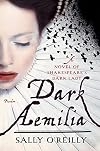
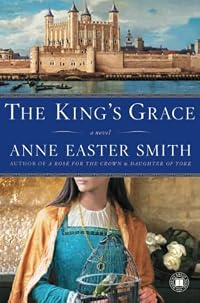
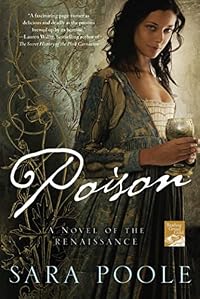
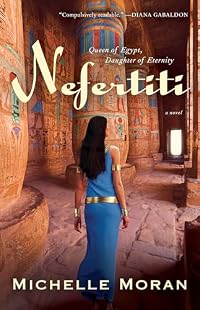
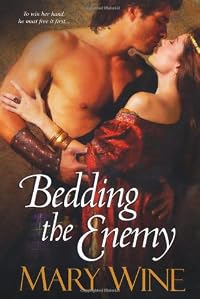
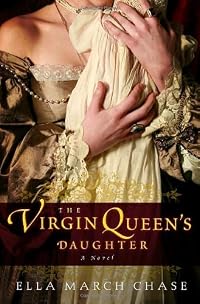
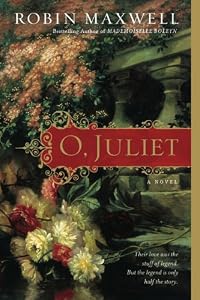
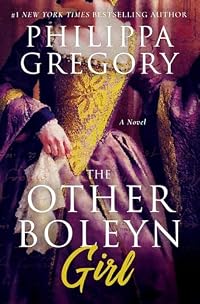
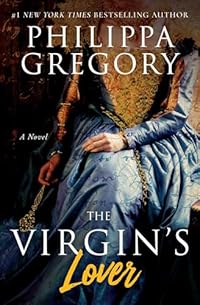
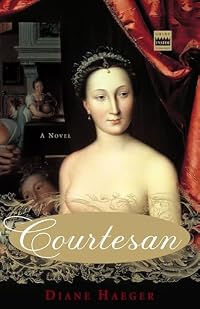
BookshelfMonstrosity Who was the "dark lady" that inspired Shakespeare's famous sonnets? Each of these lush, romantic, and splendidly detailed historical novels explores that question in twisting tales of love, life, and courtly intrigue during the glory days of Queen Elizabeth I.
Member Reviews
Mistress Shakespeare is the fictional story of William Shakespeare and his lifelong love affair with Anne Whateley--not his official wife, but his intended wife. Centered primarily on their relationship together, through many historical events and personal tragedies, successes and rifts of the heart, the book also describes how Shakespeare came to be the poet and playwright of fame and distinction. Author Karen Harper based her story on some actual events and created the rest imaginatively and believably from her own talent. I very much enjoyed the book. Harper's writing is straight forward with a subtle romantic undertone. Never too dramatic or sweet, her story illuminates one of historic England's most adored creative geniuses. A+ for show more effort, (her research was boundless and exacting)creativity, and charm. A genuinely satisfying read. show less
Summary: The Episcopal register of Worcester has two entries of interest to any Shakespearean scholar: the first, on 27 November 1582, is a marriage license issued to "Wm Shaxpere and Anne Whateley of Temple Grafton", the second, one day later, is a marriage bond to "Willm Shagspere and Anne Hathwey of Stratford". Many scholars believe this to be a clerical error, but Karen Harper takes a different tack: that Anne Whateley did exist, and that Shakespeare entered into a handfast marriage with her on the day before being bullied into a shotgun wedding with the substantially older Anne Hathaway.
Mistress Shakespeare is written a memoir from the point of view of "the first" Anne, who was Shakespeare's childhood friend and sweetheart, and show more later his wife, if not the one he publicly acknowledged. Though the course of true love ne'er did run smooth, and Anne had to endure the humiliation of having the marriage she considers valid kept secret, bitter arguments over Will's jealousy, and the turbulent religious and political currents of the late sixteenth century, she makes her way through Shakespeare's London as his one true love, and the inspiration for his greatest works.
Review: I went through a fairly protracted phase of Shakespeareaphilia in high school and college, but that mostly involved reading his plays - I knew only the basic outlines of his life and the social and political situations that affected him and his work. This book does an excellent job in rectifying that, even if its central premise is one that most scholars reject. It's a captivating story of a life-long romance, and Harper breathes enough life into the character of Anne Whateley to make her convincingly real, no matter what those pesky scholars say. Shakespeare, too, gets a touch of the humanizing treatment, although since it's told from Anne's point of view, he's never as fully fleshed out as she is.
The writing is mostly well-done, effectively evoking a Renaissance atmosphere while still being easy to read for a modern audience. Anne and Will's early life together (and then apart) is well-detailed, and events flow smoothly. Once Will becomes established in London, however, things get a little jumpier, and there were times when the narrative tricks used to skim over large swaths of time were awkwardly done enough to distract me from the story. I also wish that "the second Anne", Anne Hathaway, had been a more developed character; seeing Will's other relationship might have provided the story with a little more moral meat and kept the later parts from feeling like a history pageant of Shakespeare's life.
While on the whole I quite enjoyed this story, I don't think it's for everyone. Presumably the people that would pick this up are those with some interest in, and therefore prior knowledge of, Shakespeare's life and works. It's good that most of the connections are kept subtle, but those without a passing familiarity with most of Shakespeare's plays are going to miss a lot of the meaning of the story. Likewise, details about Shakespeare's life and times are frequently referenced without being explained - for instance, readers who didn't know that Shakespeare's will left Anne Hathaway their "second-best bed" will be left in the dark by the page and a half Anne Whateley spends talking about shipping mattresses around England. 4 out of 5 stars.
Recommendation: A vivid, entertaining read for anyone who likes historical fiction, Elizabethan England, or Shakespeariana, although if you're not up on your Shakespeare trivia, a few minutes' refresher course on Wikipedia prior to starting wouldn't go amiss. show less
Mistress Shakespeare is written a memoir from the point of view of "the first" Anne, who was Shakespeare's childhood friend and sweetheart, and show more later his wife, if not the one he publicly acknowledged. Though the course of true love ne'er did run smooth, and Anne had to endure the humiliation of having the marriage she considers valid kept secret, bitter arguments over Will's jealousy, and the turbulent religious and political currents of the late sixteenth century, she makes her way through Shakespeare's London as his one true love, and the inspiration for his greatest works.
Review: I went through a fairly protracted phase of Shakespeareaphilia in high school and college, but that mostly involved reading his plays - I knew only the basic outlines of his life and the social and political situations that affected him and his work. This book does an excellent job in rectifying that, even if its central premise is one that most scholars reject. It's a captivating story of a life-long romance, and Harper breathes enough life into the character of Anne Whateley to make her convincingly real, no matter what those pesky scholars say. Shakespeare, too, gets a touch of the humanizing treatment, although since it's told from Anne's point of view, he's never as fully fleshed out as she is.
The writing is mostly well-done, effectively evoking a Renaissance atmosphere while still being easy to read for a modern audience. Anne and Will's early life together (and then apart) is well-detailed, and events flow smoothly. Once Will becomes established in London, however, things get a little jumpier, and there were times when the narrative tricks used to skim over large swaths of time were awkwardly done enough to distract me from the story. I also wish that "the second Anne", Anne Hathaway, had been a more developed character; seeing Will's other relationship might have provided the story with a little more moral meat and kept the later parts from feeling like a history pageant of Shakespeare's life.
While on the whole I quite enjoyed this story, I don't think it's for everyone. Presumably the people that would pick this up are those with some interest in, and therefore prior knowledge of, Shakespeare's life and works. It's good that most of the connections are kept subtle, but those without a passing familiarity with most of Shakespeare's plays are going to miss a lot of the meaning of the story. Likewise, details about Shakespeare's life and times are frequently referenced without being explained - for instance, readers who didn't know that Shakespeare's will left Anne Hathaway their "second-best bed" will be left in the dark by the page and a half Anne Whateley spends talking about shipping mattresses around England. 4 out of 5 stars.
Recommendation: A vivid, entertaining read for anyone who likes historical fiction, Elizabethan England, or Shakespeariana, although if you're not up on your Shakespeare trivia, a few minutes' refresher course on Wikipedia prior to starting wouldn't go amiss. show less
This is a historical work of fiction about William Shakespeare's *other* Anne, based on an actual note in the official documented records, showing that the day before Shakespeare was to marry the pregnant Anne Hathaway, he filed for a marriage certificate (a *bond*) to Anne Whateley of Temple Grafton. Author Karen Harper uses this as her jumping off point to recreate the story, told in Whateley's voice, of her life as Shakespeare's muse. This is more than just a romantic novel, though. The story is filled with historical information, facts, details about life in those years: the politics of Elizabethan England, the conditions of daily living, the dread and devastation of the Plague, all interspersed with documented and known facts about show more Shakespeare's life, how and when he wrote his plays, etc. There are, of course, quotes from the plays and sonnets and much alluding to Whateley as his muse, his *Dark Lady*. I really did enjoy this book.
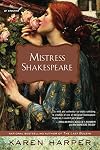
If I have one bone to pick, though, it is with the cover. Right from the beginning of the book, and mentioned several times throughout, was the fact that Anne Whateley is dark-haired, dark-complexioned. In fact, that is a significant piece of the story. Yet the cover shows a red-head, fair-skinned woman. Rather incongruous, I think. Who decides these things anyhow? show less
If I have one bone to pick, though, it is with the cover. Right from the beginning of the book, and mentioned several times throughout, was the fact that Anne Whateley is dark-haired, dark-complexioned. In fact, that is a significant piece of the story. Yet the cover shows a red-head, fair-skinned woman. Rather incongruous, I think. Who decides these things anyhow? show less
I know little about the actual historical basis for this novel, but certainly enjoyed this take on Shakespeare in love. Ann Whateley is a strong woman in the cast of Elizabeth I herself, and her independence and creativity serve as Shakespeare's inspiration for many of his works. I was less delighted with her willingness to accept the poor behavior meted out by her true love, though the author did do a good job capturing the duality of Anne's feelings of love and hate.
Will Shakespeare is presented as a flawed man first, undeniable genius second. His efforts to write while earning enough to support his growing family are complicated by the complex political situation that thrives on suspicion and uncertainty. In the end, Shakespeare show more chooses to live in London and to write with his love, but he never really seems to acknowledge the harm he has done to both of the women in his life.
At heart, this novel is a love story, and it succeeds as such. Unfortunately, Harper falls into the trap of attempting quasi-period speech and her efforts fall flat. I found that when the characters lapsed into period language, the entire momentum of the narrative came to a halt. If it hadn't been for the language, I would have gone 4 stars, but as it is can only give this novel 3.5 stars. show less
Will Shakespeare is presented as a flawed man first, undeniable genius second. His efforts to write while earning enough to support his growing family are complicated by the complex political situation that thrives on suspicion and uncertainty. In the end, Shakespeare show more chooses to live in London and to write with his love, but he never really seems to acknowledge the harm he has done to both of the women in his life.
At heart, this novel is a love story, and it succeeds as such. Unfortunately, Harper falls into the trap of attempting quasi-period speech and her efforts fall flat. I found that when the characters lapsed into period language, the entire momentum of the narrative came to a halt. If it hadn't been for the language, I would have gone 4 stars, but as it is can only give this novel 3.5 stars. show less
I loved this title and I normally hate cheating in books. This book made me root for Shakespeare and Anne Whateley to end up together, even though you know they probably won’t. The feelings I got when I read this book were similar to the feelings you get when you watch The Notebook or Titanic.
The novel tells of their childhood friendship that blossomed to love. They plan to marry in secret because their parents would not approve the match and then the monkey wrench of another woman pregnant kills everyone’s dreams.
It was such a sad story, but not only did I love this as a possible theory, I love the idea that Anne Whateley could have been Shakespeare’s muse and that his great works were inspired by his unending love for her. show more (Plus, Anne Hathaway is portrayed as quite the shrew; doesn’t help with getting me on her side.)
I just wanted to root for them every time there were together because they clearly belonged together, each line of a sonnet or play that they weren’t on together was more romantic and more magical, and each absence more heartbreaking. I could not put this book down.
There were some great plot twists, including a couple scenes with Shakespeare’s brother and even his daughter by Anne Hathaway. There is even a letter from his father to Anne Whaeley that brought me to tears. This book made me fall in love with Shakespeare all over again, and it’s historical fiction like this is why I’m in love with words. I would suggest this book to everyone, but don’t forget the tissues.
I will be checking out more from this author. show less
The novel tells of their childhood friendship that blossomed to love. They plan to marry in secret because their parents would not approve the match and then the monkey wrench of another woman pregnant kills everyone’s dreams.
It was such a sad story, but not only did I love this as a possible theory, I love the idea that Anne Whateley could have been Shakespeare’s muse and that his great works were inspired by his unending love for her. show more (Plus, Anne Hathaway is portrayed as quite the shrew; doesn’t help with getting me on her side.)
I just wanted to root for them every time there were together because they clearly belonged together, each line of a sonnet or play that they weren’t on together was more romantic and more magical, and each absence more heartbreaking. I could not put this book down.
There were some great plot twists, including a couple scenes with Shakespeare’s brother and even his daughter by Anne Hathaway. There is even a letter from his father to Anne Whaeley that brought me to tears. This book made me fall in love with Shakespeare all over again, and it’s historical fiction like this is why I’m in love with words. I would suggest this book to everyone, but don’t forget the tissues.
I will be checking out more from this author. show less
Those studying Elizabethan times have discovered something odd in the historical records. William Shakespeare has two entries in the marriage registry on two consecutive days: on November 27, 1582 to Anne Whateley of Temple Grafton and on November 28, 1582 to Anne Hathaway of Stratford. The general consensus has been that Anne Whateley and Anne Hathaway are the same person and the odd registry entries are the result of a careless clerk. In “Mistress Shakespeare,” however, Karen Harper posits that Shakespeare’s two Annes were not the same woman, and that Anne Whateley was his true love and secret wife.
Harper’s Anne Whateley was a completely delightful and strong woman, without seeming completely out of her own time period. I show more found her relationship with Shakespeare to be very realistic as well. When he was forced to marry Anne Hathaway the day after his secretive ceremony with Anne, she was realistically and understandable furious and hurt. Her ability to eventually at least partially forgive him and their complicated life seemed completely natural. I also loved the political aspects of the book, including the complication of the Shakespeare family’s Catholicism in Elizabeth’s England.
Not only did I really enjoy this book, but so did one of my coworkers. She saw it on my desk the day I got it and asked if she might borrow it when I was finished with it. Within a week, we had both finished it. Generally I like my historical fiction to be about real people: kings, queens, playwrights. This, however, worked perfectly for me and provided great insight into the world of Elizabethan England outside of the court. show less
Harper’s Anne Whateley was a completely delightful and strong woman, without seeming completely out of her own time period. I show more found her relationship with Shakespeare to be very realistic as well. When he was forced to marry Anne Hathaway the day after his secretive ceremony with Anne, she was realistically and understandable furious and hurt. Her ability to eventually at least partially forgive him and their complicated life seemed completely natural. I also loved the political aspects of the book, including the complication of the Shakespeare family’s Catholicism in Elizabeth’s England.
Not only did I really enjoy this book, but so did one of my coworkers. She saw it on my desk the day I got it and asked if she might borrow it when I was finished with it. Within a week, we had both finished it. Generally I like my historical fiction to be about real people: kings, queens, playwrights. This, however, worked perfectly for me and provided great insight into the world of Elizabethan England outside of the court. show less
There are two different records filed within days of each other showing William Shakespeare's marriage. One of the records lists a marriage to an Anne Whateley, and the other to an Anne Hathaway. Anne Hathaway is known to be Shakespeare's wife, and the mother of his children, but the reason for the other record remains a mystery. Is it a misspelling, a misprint, or some other mistake? In Mistress Shakespeare Karen Harper puts forth a very convincing theory that Shakespeare actually had another woman, Anne Whateley, whom he married first, and then, upon finding Anne Hathaway pregnant, the first marriage was kept a secret.
Mistress Shakespeare is told through the eyes of the first, and unrecognized, Anne. From her meeting of Will near show more their homes as young teens, through his rise to fame and fortune, Anne is there. A very strong woman character, limited but not daunted by the restrictions put on women in her time, Anne pushes her way through life with incredible passion and compassion. William Shakespeare is her love and life, and much of the book covers his life, but Anne herself is not eclipsed by him, and feels just as real as does her non-fictional husband.
This book was very well written and researched. Especially enjoyable were the refrences to Shakespeare's sonnets and lines from his plays, and how they fit into that time in Shakespeare's life. So many things came to life for me while reading this book: the English countryside; London in all of its darkness and brilliance; the hardships of the times including sickening infant mortality rates, early old age, religious persecution, and the black plague. I very much appreciate historical fiction which does not idealize the past, or figures from history. Karen Harper manages a compelling novel, full of easily digestible and realistic history. show less
Mistress Shakespeare is told through the eyes of the first, and unrecognized, Anne. From her meeting of Will near show more their homes as young teens, through his rise to fame and fortune, Anne is there. A very strong woman character, limited but not daunted by the restrictions put on women in her time, Anne pushes her way through life with incredible passion and compassion. William Shakespeare is her love and life, and much of the book covers his life, but Anne herself is not eclipsed by him, and feels just as real as does her non-fictional husband.
This book was very well written and researched. Especially enjoyable were the refrences to Shakespeare's sonnets and lines from his plays, and how they fit into that time in Shakespeare's life. So many things came to life for me while reading this book: the English countryside; London in all of its darkness and brilliance; the hardships of the times including sickening infant mortality rates, early old age, religious persecution, and the black plague. I very much appreciate historical fiction which does not idealize the past, or figures from history. Karen Harper manages a compelling novel, full of easily digestible and realistic history. show less
Members
- Recently Added By
Lists

KayStJ's to-read list
1,616 works; 11 members

Authors from the United States
245 works; 3 members
Author Information

84+ Works 9,487 Members
Karen Harper is also the author of a number of contemporary suspense & historical novels. She lives in Columbus, Ohio, & Naples, Florida. (Publisher Provided) Karen Harper was born on April 6, 1945 in Toledo, Ohio. She attended Ohio University in Athens and earned her undergraduate degree. She went on to Ohio State University in Columbus for her show more graduate degree. She landed a teaching position in English at Ohio State University. She soon began writing historical and contemporary fiction. Her first book, Sweet Passion's Pain, was published in 1984. It was later published as The First Princess of Wales in 2006. She has written several series including: The Maplecreek Series, The Home Valley Series, The Queen Elizabeth I Series and Cold Creek Series. Her titles often make the New York Times and USA Today Bestsellers List. (Bowker Author Biography) show less
Common Knowledge
- Original title
- Mistress Shakespeare
- Alternate titles
- Shakespeare's Mistress
- Original publication date
- 2009-02-05
- People/Characters
- William Shakespeare; Anne Whateley; Anne Hathaway; Elizabeth I, Queen of England; Christopher Marlowe; Susannah Shakespeare
- Important places
- London, England, UK; Stratford-upon-Avon, Warwickshire, England, UK; England, UK
- First words
- When I opened my door at mid-morn and saw the strange boy, I should have known something was wrong.
- Disambiguation notice
- US title Mistress Shakespeare; UK title Shakespeare's Mistress
Classifications
- Genres
- Fiction and Literature, General Fiction, Historical Fiction, Romance
- DDC/MDS
- 813.54 — Literature & rhetoric American literature in English American fiction in English 1900-1999 1945-1999
- LCC
- PS3558 .A624792 .M57 — Language and Literature American literature American literature Individual authors 1961-
- BISAC
Statistics
- Members
- 443
- Popularity
- 68,883
- Reviews
- 21
- Rating
- (3.51)
- Languages
- English
- Media
- Paper, Audiobook, Ebook
- ISBNs
- 12
- ASINs
- 6