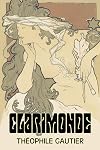
The Dead Woman in Love
by Théophile Gautier
On This Page
Description
Forbidden love drives the plot of the classic short story Clarimonde, which some historians describe as one of the earliest gothic vampire tales. When a man's lost love is miraculously brought back to life, he views the shift in circumstances as a divine gift. But when the grisly secret behind his beloved's survival is revealed, everything changes..
Tags
Recommendations




















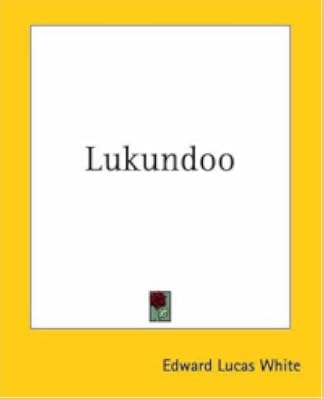

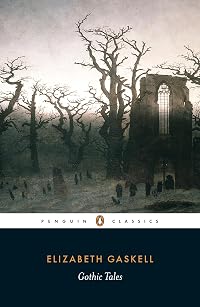





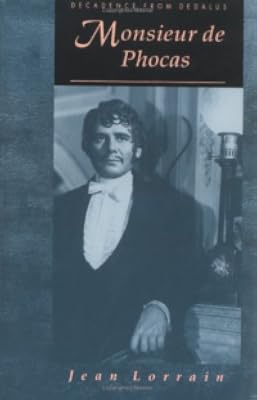
Member Recommendations

Member Reviews
Finally reaching the 19th century in my French reading and I'm not sure there was too many better ways to start with this classic Gothic short story by French romantic Théophile Gautier. La Morte amoureuse is the tale of a priest tempted from a life of monastic solace by a vision of a woman so beautiful and alluring he is unable to release himself from her spell - but as it turns out there's much more going on than it first appears. Gautier's writing style in this is florid and overpowering, a heady concoction that made me long for the kind of love depicted therein. Despite being an early precursor of its sort of fiction, La Morte amoureuse ends up subverting a lot of the expectations one would later carry into such a story, especially show more in its depiction of femme fatale Clarimonde who is really if anything the dark heroine of the piece in comparison to the drudgery and austerity of the priesthood and the weak will and double identity of Romaulde. Romantic with both a capital and a lowercase r, atmospheric and incredibly dreamy/subjective PoV in a manner that feels very ahead of its time, this might be my new favourite short work of fiction and I know I'll be going over it for some time in my head. show less
An overwrought but still finely written vampire story by the French romantic author Theophile Gauthier in 1836. It has its historical importance for its themes but the theme of sexual desire coming up against clerical duty is very much of its era.
Although this work is far from pornographic, it reminds one that anticlericalism was a theme of pornography under the Ancien Regime and in the early nineteeenth century and the story taps into a fascination with the inhumanity of a devotion to God that expects abnegation of the flesh.
Gauthier takes the side of God in this story insofar as Clarimonde is presented as a monster and yet few young male readers might not have secretly preferred Clarimonde to the prospect of a chaste curacy in a show more country parish. Subversive even if its subversion may mean little to us now show less
Although this work is far from pornographic, it reminds one that anticlericalism was a theme of pornography under the Ancien Regime and in the early nineteeenth century and the story taps into a fascination with the inhumanity of a devotion to God that expects abnegation of the flesh.
Gauthier takes the side of God in this story insofar as Clarimonde is presented as a monster and yet few young male readers might not have secretly preferred Clarimonde to the prospect of a chaste curacy in a show more country parish. Subversive even if its subversion may mean little to us now show less
On the very day of his ordination, the young priest Romuald sees, and is instantly smitten by, a radiant young woman; the titular Clarimonde and beautiful vampire of various English translations.
Their story is told, decades later, by a now sixty-six year old Romuald, and avowedly sympathizes with his priestly vows and condemns Clarimonde as an infernal temptress. The reader is likely to be led to the opposite sympathy however, as Clarimonde appears to be perfectly sincere in her devotion to him - the original French title translates as "the dead woman in love", strengthening this interpretation.
Their story is told, decades later, by a now sixty-six year old Romuald, and avowedly sympathizes with his priestly vows and condemns Clarimonde as an infernal temptress. The reader is likely to be led to the opposite sympathy however, as Clarimonde appears to be perfectly sincere in her devotion to him - the original French title translates as "the dead woman in love", strengthening this interpretation.
A little on the slow side, but the overblown romantic language is a treat to get lost in.
i'm honestly kind of sad for the guy. it seems like the dream was the better life; like she really did love him
Südfrankreich 1847
Der junge Mönch Romuald wird des Nachts an das Lager einer Sterbenden gerufen. Zwar kommt er zu spät, um ihr noch die letzte Ölung zu spenden, jedoch willigt er ein, wenigstens die Totenwache zu halten. Allein in dem prunkvollen Schlafgemach erkennt er in der Toten die Kurtisane Clarimonde wieder, deren Schönheit ihm seit dem Tag seiner Priesterweihe nicht mehr aus dem Sinn geht…
Der junge Mönch Romuald wird des Nachts an das Lager einer Sterbenden gerufen. Zwar kommt er zu spät, um ihr noch die letzte Ölung zu spenden, jedoch willigt er ein, wenigstens die Totenwache zu halten. Allein in dem prunkvollen Schlafgemach erkennt er in der Toten die Kurtisane Clarimonde wieder, deren Schönheit ihm seit dem Tag seiner Priesterweihe nicht mehr aus dem Sinn geht…
Jul 15, 2009German
Ratings
Members
- Recently Added By
Lists

Books Read By artturnerjr - 2016
30 works; 1 member
Talk Discussions
Past Discussions
THE DEEP ONES: "La Morte Amoureuse" by Theophile Gautier in The Weird Tradition (April 2016)
Author Information

Theophile Gautier (1811-1872) was a French author whose works encompassed horror and the supernatural.
Some Editions
Work Relationships
Is contained in
Has the adaptation
Common Knowledge
- Canonical title
- Clarimonde [short story]; The Dead Woman in Love
- Original title
- La Morte amoureuse; La Morte Amoureuse
- Alternate titles
- Clarimonde; The Dreamland Bride; The Dead Leman; The Beautiful Vampire
- Original publication date
- 1836 (original French) (original French); 1908 (by Lafcadio Hearn, as 'Clarimonde') (by Lafcadio Hearn, as 'Clarimonde'); 1927 (English translation) (English translation)
- People/Characters
- Clarimonde; Romuald; Sérapion; Barbara; Margheritone
- Important places
- Concini Palace, Italy; Venice, Veneto, Italy
- First words
- Brother, you ask me if I have ever loved.
- Last words
- (Click to show. Warning: May contain spoilers.)Never gaze upon a woman, and walk abroad only with eyes ever fixed upon the ground; for however chaste and watchful one may be, the error of a single moment is enough to make one lose eternity. lose eternity.
- Original language
- French
- Disambiguation notice
- This Work is intended to be Gautier's single story, La morte amoureuse. Please distinguish it from any similarly-named anthology. Note that the story has been published under multiple titles in English, including "Th... (show all)e Beautiful Vampire" and "Clarimonde". Thank you.
Classifications
- Genres
- Fiction and Literature, General Fiction, Horror, Fantasy
- DDC/MDS
- 840 — Literature & rhetoric French Literature French literature and literatures of related Romance languages
- LCC
- PQ1136 .G277 — Language and Literature French, Italian, Spanish and Portuguese literatures French literature Collections General
- BISAC
Statistics
- Members
- 115
- Popularity
- 283,143
- Reviews
- 6
- Rating
- (3.83)
- Languages
- 6 — Catalan, English, French, German, Greek, Spanish
- Media
- Paper, Audiobook, Ebook
- ISBNs
- 41
- ASINs
- 12