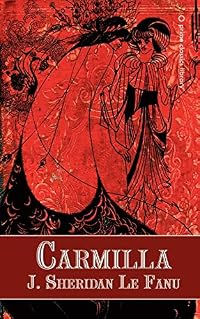
Carmilla: A Vampyre Tale
by Sheridan Le Fanu, Karl Wurf (Introduction)
On This Page
Description
In Joseph Sheridan Le Fanu's Gothic novella "Carmilla" (1872), a lonely young woman named Laura befriends a strange woman who is staying at her father's Castle while she recovers from a carriage accident. In time, the strange woman named Carmilla begins to make romantic advances toward Laura while refusing to share any details about her life. When Laura begins to have nightmares about a black cat entering her room, her suspicion is aroused that Carmilla may have evil intentions. One of the show more early works of vampire fiction, Carmilla predated Dracula by 26 years and strongly influenced Bram Stoker. show lessTags
Recommendations

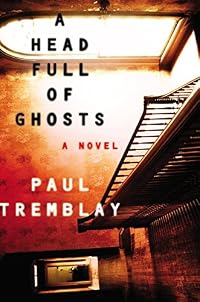
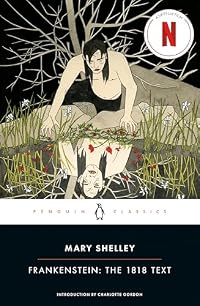
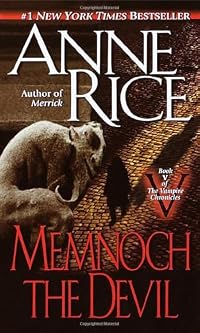
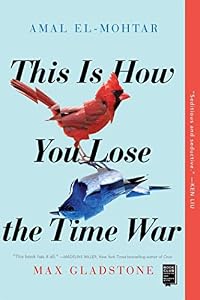

Member Recommendations


Member Reviews
I was originally introduced to the story of Carmilla via the web series of the same name that came out on YouTube in 2014. I have been wanting to read the original novella, the "gay" vampire story, the inspiration for Dracula, since first watching the web series. And finally, I have done it!
I loved this book. It was the perfect October read, especially with a cup of tea and creepy classical music playing in the background. The gothic vibes were well crafted, the story was fun and spooky, and the relationship between Laura and Carmilla was spicy, to say the least. Knowing when the book came out, I went into the story expecting to have to do some digging into the subtext to find the sapphic elements. But no digging was required! It was show more so much gayer than I could have possibly expected. The kissing, the descriptions of lips and breasts and beauty, the orgasmic description of the feedings, my GOD. I'm sure some historians would love to say that this is just how it is when gals are pals, but they'd be wrong. This is a gothic romance through and through.
The only disappointment was the ending, which seemed to go too fast and without enough full closure. I wish there had been a final goodbye, or a summation of some sort to the growing love between Carmilla and Laura, or at least a reflection from Laura on the love and affection and what it all meant. However, I think this critique is a very modern one, and, given the date of publication, it might be unfair for me to want that. But I still do. I guess it's time to go rewatch the web series show less
I loved this book. It was the perfect October read, especially with a cup of tea and creepy classical music playing in the background. The gothic vibes were well crafted, the story was fun and spooky, and the relationship between Laura and Carmilla was spicy, to say the least. Knowing when the book came out, I went into the story expecting to have to do some digging into the subtext to find the sapphic elements. But no digging was required! It was show more so much gayer than I could have possibly expected. The kissing, the descriptions of lips and breasts and beauty, the orgasmic description of the feedings, my GOD. I'm sure some historians would love to say that this is just how it is when gals are pals, but they'd be wrong. This is a gothic romance through and through.
The only disappointment was the ending, which seemed to go too fast and without enough full closure. I wish there had been a final goodbye, or a summation of some sort to the growing love between Carmilla and Laura, or at least a reflection from Laura on the love and affection and what it all meant. However, I think this critique is a very modern one, and, given the date of publication, it might be unfair for me to want that. But I still do. I guess it's time to go rewatch the web series show less
A young woman named Laura lives alone with her father in a remote Austrian castle, lonely because her only friend of her age and class recently died under mysterious circumstances. She’s delighted when a carriage overturns near the castle and a young woman named Carmilla must stay with them for a few months while she recovers. Carmilla won’t share any information about her past, does not participate in family prayers, and sleeps most of the day. Laura and Carmilla grow very close, physically and emotionally, and Laura realizes Carmilla looks exactly like her ancient ancestor Countess Mircalla. Young women in the nearby village are dying, and Laura falls ill, so her father takes her out of town for a few days. There they learn the show more true fate of Laura’s dead friend, at the hands (or teeth) of a new acquaintance named Millarca.
A fun, short read. So many of the modern-day tropes about vampires are explicit here, 25 years before Dracula was written. A female vampire is not something that was seen often for the next century, and her vampirism is also sexual, but in a very different way from that of traditional male vampires - she’s very emotional, often telling Laura how much they need each other and how they’ll die without each other. The vampirism itself is also much more focused on Carmilla hugging Laura’s neck than the penetration itself. Historically interesting, but also just entertaining and an easy read! If you haven’t read it before, you really should. The audiobook, read by Megan Follows, was excellent. show less
A fun, short read. So many of the modern-day tropes about vampires are explicit here, 25 years before Dracula was written. A female vampire is not something that was seen often for the next century, and her vampirism is also sexual, but in a very different way from that of traditional male vampires - she’s very emotional, often telling Laura how much they need each other and how they’ll die without each other. The vampirism itself is also much more focused on Carmilla hugging Laura’s neck than the penetration itself. Historically interesting, but also just entertaining and an easy read! If you haven’t read it before, you really should. The audiobook, read by Megan Follows, was excellent. show less
The first time I heard of this book was when I discovered the webseries adaptation that uses the same name. After that, I saw a lot of jokes online about how it was ‘Dracula but gayer’, so I was intrigued, to say the least. After doing some of my own research and reading the book for the first time in 2014, I ended up enjoying it so much that I wrote a chapter in my undergraduate dissertation about the book and the webseries adaptation.
So people weren’t wrong when they said that this is Dracula but older and gayer. It was actually written 27 years before Dracula was, and is much shorter, yes, but it also holds a lot of inspiration for what Dracula would later become. I also find it hilariously coincidental that both Sheridan le show more Fanu and Stoker are Irish.
So the novel is a first-person retelling, about eight years after the events of the main story, told by Laura, a young daughter of a single British father. Her mother, Austrian nobility, died a long time ago, and Laura lives in an isolated castle in the middle of Upper Styria. She makes a point of noting that the nearest inhabited village is miles away, making it clear to us that there is another village in between them, but it has been abandoned for about a century.
Laura is incredibly lonely, especially after one of her best friends (or rather, her only close friend) dies mysteriously and suddenly. As luck would have it, she soon makes a new friend in a companion who ends up staying with them for about three months – a young countess by the name of Carmilla.
Carmilla is beautiful, languid, and strange. She has moods and fits of excitability and then goes quiet suddenly. She sleeps all night and all day, waking up long past noon. And while she’s around, Laura’s health deteriorates. Oh, and there’s the nightmares, of course.
I always find it so hilarious how characters in vampire novels have no knowledge of vampires at all. Like, it’s a legend that has preceded the written word for centuries, and you’ve never heard of them? Really? How can you not tell that Carmilla’s behaviour is vampiric? For crying out loud, she never eats either. Like, literally, Laura can’t remember ever seeing Carmilla eat anything that isn’t chocolate, most of the time. (Although that part is super relatable.)
The novella goes quite smoothly, in terms of story – they discover the vampire, they kill the vampire, they move on, and Laura still occasionally dreams of the woman who seduced her. Maybe that last part isn’t so ‘normal’, but it is quite interesting that it happens. (More on this in a bit.)
It’s a classic vampire tale, before all these vampire love stories started becoming mainstream. It just so happens to be really gay.
It kind of makes sense that vampires would be gay, really. They’re already creatures that defy God and nature, why wouldn’t they also be deviant in that sense as well? Keep in mind, most classic vampire literature was written at a time when homosexuality wasn’t only frowned upon, it was considered a criminal offence. Vampires were a symbol of The Other in literature – the thing we do not understand and are afraid of. How more ‘Other’ can you get than homosexuality in the 19th century?
What is interesting, though, is Laura’s reaction to the whole thing. It could be because she grows up so isolate from everyone and not in England that she never actually learns about homosexuality in general, but by the end of the novel Laura hasn’t actually let go of her latent homosexual feelings – rather, she’s embraced them. She knows that she is attracted to women and that she was attracted to Carmilla, and she doesn’t ever change her perception of this fact. Yes, Carmilla was a vampire who wanted to suck her dry, but before she knew that, Laura did have a soft spot for her no matter how strange she thought she was, and the fact that she ends the novella telling us that she still dreams of Carmilla coming with her to bed shows us a lot about how Laura never tried to actively repress her own emotions.
Which, for the 19th century, is a pretty big deal.
All in all, this short pleasurable read gets a 3/5 from me. It’s a bit too short for my liking, and sometimes I got a bit lost in the narration of it, but I do enjoy the story immensely! show less
So people weren’t wrong when they said that this is Dracula but older and gayer. It was actually written 27 years before Dracula was, and is much shorter, yes, but it also holds a lot of inspiration for what Dracula would later become. I also find it hilariously coincidental that both Sheridan le show more Fanu and Stoker are Irish.
So the novel is a first-person retelling, about eight years after the events of the main story, told by Laura, a young daughter of a single British father. Her mother, Austrian nobility, died a long time ago, and Laura lives in an isolated castle in the middle of Upper Styria. She makes a point of noting that the nearest inhabited village is miles away, making it clear to us that there is another village in between them, but it has been abandoned for about a century.
Laura is incredibly lonely, especially after one of her best friends (or rather, her only close friend) dies mysteriously and suddenly. As luck would have it, she soon makes a new friend in a companion who ends up staying with them for about three months – a young countess by the name of Carmilla.
Carmilla is beautiful, languid, and strange. She has moods and fits of excitability and then goes quiet suddenly. She sleeps all night and all day, waking up long past noon. And while she’s around, Laura’s health deteriorates. Oh, and there’s the nightmares, of course.
I always find it so hilarious how characters in vampire novels have no knowledge of vampires at all. Like, it’s a legend that has preceded the written word for centuries, and you’ve never heard of them? Really? How can you not tell that Carmilla’s behaviour is vampiric? For crying out loud, she never eats either. Like, literally, Laura can’t remember ever seeing Carmilla eat anything that isn’t chocolate, most of the time. (Although that part is super relatable.)
The novella goes quite smoothly, in terms of story – they discover the vampire, they kill the vampire, they move on, and Laura still occasionally dreams of the woman who seduced her. Maybe that last part isn’t so ‘normal’, but it is quite interesting that it happens. (More on this in a bit.)
It’s a classic vampire tale, before all these vampire love stories started becoming mainstream. It just so happens to be really gay.
It kind of makes sense that vampires would be gay, really. They’re already creatures that defy God and nature, why wouldn’t they also be deviant in that sense as well? Keep in mind, most classic vampire literature was written at a time when homosexuality wasn’t only frowned upon, it was considered a criminal offence. Vampires were a symbol of The Other in literature – the thing we do not understand and are afraid of. How more ‘Other’ can you get than homosexuality in the 19th century?
What is interesting, though, is Laura’s reaction to the whole thing. It could be because she grows up so isolate from everyone and not in England that she never actually learns about homosexuality in general, but by the end of the novel Laura hasn’t actually let go of her latent homosexual feelings – rather, she’s embraced them. She knows that she is attracted to women and that she was attracted to Carmilla, and she doesn’t ever change her perception of this fact. Yes, Carmilla was a vampire who wanted to suck her dry, but before she knew that, Laura did have a soft spot for her no matter how strange she thought she was, and the fact that she ends the novella telling us that she still dreams of Carmilla coming with her to bed shows us a lot about how Laura never tried to actively repress her own emotions.
Which, for the 19th century, is a pretty big deal.
All in all, this short pleasurable read gets a 3/5 from me. It’s a bit too short for my liking, and sometimes I got a bit lost in the narration of it, but I do enjoy the story immensely! show less
Le Fanu's 'Carmilla' (1872) is a short vampire tale that is interesting for two reasons other than that it works as story-telling. It is a bridge between the vampire lore of Eastern Europe as it had started to appear in English literature and 'Dracula'. It also has an unusual erotic aspect for the time.
It easily breaks into two halves. The first is the account of a vampire incursion in a Gothic setting where the reader can work out what is happening fairly quickly but not the human protagonists. The second unfolds the horror as explanation, leading to the necessary decapitation of the monster.
Le Fanu manages to make the story both English and foreign by having the family under threat as minor aristocratic tea-drinkers of ultimately show more English extraction who have settled in mysterious Styria after the father's service in the Austrian interest.
European aristocratic expectations and norms, including a protective attitude towards young daughters and 'wards', drive the story along but it is also clear that the predator species is of even higher local aristocratic lineage.
The imperial service class is threatened by the ghosts of a more ancient independent aristocracy without moral bounds and interested only in their own pleasures. The seeds of Anne Rice's vampires are here although Le Fanu's Anglo-Irish descent is probably of more interest.
The story undoubtedly influenced another Anglo-Irish writer, Bram Stoker, whose 'Dracula', a quarter of a century later, would further develop some of the motifs of this tale, weakening and transferring the eroticism from a female to male predator from an even darker barbaric aristocratic background.
There is much written (exaggerated in my view) about vampirism as metaphor for the relationship between England and Ireland in the mid-nineteenth century but Anglo-Irish ambivalence about the English ruling class to which it played a supporting role may have been a factor here.
What is more interesting is that the story is highly emotional. The old general who uncovers the vampiric evil appears to lose his reason (he does not) in hunting it down. There is tenderness, warmth and love within the households on which the vampire prey.
But the most intense emotion is the most ambiguous - the undoubted erotic charge between predator vampire (a woman presenting as a girl) and its victims, very young and vulnerable women. The predator offers something that disturbs and attracts at the same time. It is obviously sexual.
Le Fanu is exploring the disruptive power of desire. The vampires usually just take what they want as clinical murderous blood-sucking but (it seems) periodically (this was adopted by Stoker in 'Dracula'), they become obsessively interested in one beautiful victim who they 'groom'.
It is this process of 'grooming' that becomes fascinating because the account, ostensibly about a vampire, is, in fact, about seduction in Victorian society and, equally, about the vulnerability of 'innocence' in a world that is so good that it cannot recognise evil when it presents itself.
As readers we do not have to be enormously bright to get what is happening but, equally, there is no reason for the protagonists to identify evil when evil is not part of their cosy and kindly world of mutual care and regard. When tragedy strikes, it is beyond understanding. It shatters survivors.
The reader sits horrified as evil seduces the innocent in a way that makes the grand guignol of the final decapitation relatively trivial as horror. The innocent are only a 'kiss' or touch away from death - or would it be a 'fate worse than death' as Victorian culture understood this concept?
Loss of sexual innocence in the middle classes and existence as the undead are brought into alignment as 'fates worse than death', made all the more terrifying by Le Fanu's ability to reproduce the pleasures of seduction and the modes of grooming alongside an implication of an evil eternal life.
Incidentally, the Hammer Horror 'Karnstein Trilogy' based on 'Carmilla' is camp fun with 'The Vampire Lovers' (1970), the first in the series, not quite faithful to the original story and a 'cult favourite' if only because it goes wonderfully overboard with its portrayal of the lesbian erotic. show less
It easily breaks into two halves. The first is the account of a vampire incursion in a Gothic setting where the reader can work out what is happening fairly quickly but not the human protagonists. The second unfolds the horror as explanation, leading to the necessary decapitation of the monster.
Le Fanu manages to make the story both English and foreign by having the family under threat as minor aristocratic tea-drinkers of ultimately show more English extraction who have settled in mysterious Styria after the father's service in the Austrian interest.
European aristocratic expectations and norms, including a protective attitude towards young daughters and 'wards', drive the story along but it is also clear that the predator species is of even higher local aristocratic lineage.
The imperial service class is threatened by the ghosts of a more ancient independent aristocracy without moral bounds and interested only in their own pleasures. The seeds of Anne Rice's vampires are here although Le Fanu's Anglo-Irish descent is probably of more interest.
The story undoubtedly influenced another Anglo-Irish writer, Bram Stoker, whose 'Dracula', a quarter of a century later, would further develop some of the motifs of this tale, weakening and transferring the eroticism from a female to male predator from an even darker barbaric aristocratic background.
There is much written (exaggerated in my view) about vampirism as metaphor for the relationship between England and Ireland in the mid-nineteenth century but Anglo-Irish ambivalence about the English ruling class to which it played a supporting role may have been a factor here.
What is more interesting is that the story is highly emotional. The old general who uncovers the vampiric evil appears to lose his reason (he does not) in hunting it down. There is tenderness, warmth and love within the households on which the vampire prey.
But the most intense emotion is the most ambiguous - the undoubted erotic charge between predator vampire (a woman presenting as a girl) and its victims, very young and vulnerable women. The predator offers something that disturbs and attracts at the same time. It is obviously sexual.
Le Fanu is exploring the disruptive power of desire. The vampires usually just take what they want as clinical murderous blood-sucking but (it seems) periodically (this was adopted by Stoker in 'Dracula'), they become obsessively interested in one beautiful victim who they 'groom'.
It is this process of 'grooming' that becomes fascinating because the account, ostensibly about a vampire, is, in fact, about seduction in Victorian society and, equally, about the vulnerability of 'innocence' in a world that is so good that it cannot recognise evil when it presents itself.
As readers we do not have to be enormously bright to get what is happening but, equally, there is no reason for the protagonists to identify evil when evil is not part of their cosy and kindly world of mutual care and regard. When tragedy strikes, it is beyond understanding. It shatters survivors.
The reader sits horrified as evil seduces the innocent in a way that makes the grand guignol of the final decapitation relatively trivial as horror. The innocent are only a 'kiss' or touch away from death - or would it be a 'fate worse than death' as Victorian culture understood this concept?
Loss of sexual innocence in the middle classes and existence as the undead are brought into alignment as 'fates worse than death', made all the more terrifying by Le Fanu's ability to reproduce the pleasures of seduction and the modes of grooming alongside an implication of an evil eternal life.
Incidentally, the Hammer Horror 'Karnstein Trilogy' based on 'Carmilla' is camp fun with 'The Vampire Lovers' (1970), the first in the series, not quite faithful to the original story and a 'cult favourite' if only because it goes wonderfully overboard with its portrayal of the lesbian erotic. show less
I was intrigued by the idea of a lesbian vampire story that predated Dracula, but once I started reading it I triple faked myself out. First, there was the modern introduction that provided a Gothic framing for the story -- written as a modern academic providing evidence that while this story was perceived as fiction when first released, recent diaries, etc., have suggested that the entire thing could have been based on real accounts the author personally knew!
This introduction was perhaps far too clever and had opposite its intended effect. Paired with the fact that the only author photo and bio on the back cover was that of the modern author of the introduction, and not Le Fanu himself, I developed this conviction that the entire show more thing was a con. That Machado had written it all. Even visiting the Wikipedia pages for the book and Le Fanu couldn't shake my feeling of unreality. Add on the very modern illustrations, and I just couldn't read this as a pre-Dracula Gothic tale, but it felt modern throughout.
Which isn't necessarily a bad thing? After I emerged from the mists of this novel and dug a little deeper on the research, it became clear that this book was what it said it was. (Minus the gloss of it being a true if barely obscured account of a real vampire. Probably.) And that's kind of fascinating -- that it could have still felt so modern. Maybe just because so little period fiction with lesbian sensibilities survived to be handed down across ages.
Fun, but I would have preferred it without the introduction. show less
This introduction was perhaps far too clever and had opposite its intended effect. Paired with the fact that the only author photo and bio on the back cover was that of the modern author of the introduction, and not Le Fanu himself, I developed this conviction that the entire show more thing was a con. That Machado had written it all. Even visiting the Wikipedia pages for the book and Le Fanu couldn't shake my feeling of unreality. Add on the very modern illustrations, and I just couldn't read this as a pre-Dracula Gothic tale, but it felt modern throughout.
Which isn't necessarily a bad thing? After I emerged from the mists of this novel and dug a little deeper on the research, it became clear that this book was what it said it was. (Minus the gloss of it being a true if barely obscured account of a real vampire. Probably.) And that's kind of fascinating -- that it could have still felt so modern. Maybe just because so little period fiction with lesbian sensibilities survived to be handed down across ages.
Fun, but I would have preferred it without the introduction. show less
You have heard, no doubt, of the appalling superstition that prevails in Upper and Lower Styria, in Moravia, Silesia, in Turkish Serbia, in Poland, even in Russia; the superstition, so we must call it, of the Vampire.
This was a delight. Atmospheric, sensual, brooding, and wonderfully written, a true gem of Gothic literature. Carmilla manages to retain its spookiness all these decades later, because even though we’ve reached a level of vampire supersaturation in the media that J. Sheridan Le Fanu probably wouldn’t have thought possible, the central horror of the story—inviting someone into your home who is not what they appear to be—is still scary.
This is also a situation where the thin line between wanting someone and wanting show more to be someone that often exists for gay people is used to great effect.
”I wonder whether you feel as strangely drawn towards me as I do to you...”
There is much discussion about just how gay this novella is, but I’m not interested so much in analysing the exact authorial intent as I am with praising how well the final result has turned out. Carmilla is drawn towards Laura, both out of loneliness and desire, and at the same time she is bound to consume and destroy her. Laura represents both Carmilla’s idealised love interest and the person that she wishes she could be (innocent, mortal, guileless... heterosexual?) and yet knows she can never return to. Finding the woman you most want to be, falling in love with her, destroying her, being destroyed. Psychosexual to the max. The tragic erotic potential of the vampire is fully realised here, despite the relative chasteness of the story itself.
I have to laud Le Fanu’s prose too, because his descriptions—especially of landscapes—are so evocative I could picture them all in my mind with incredible clarity. The writing is wonderful the whole way through, always with a current of unease and feverishness, and even though you’ll see the ending coming from a mile away, getting there is great fun.
Read it for free here! show less
This was a delight. Atmospheric, sensual, brooding, and wonderfully written, a true gem of Gothic literature. Carmilla manages to retain its spookiness all these decades later, because even though we’ve reached a level of vampire supersaturation in the media that J. Sheridan Le Fanu probably wouldn’t have thought possible, the central horror of the story—inviting someone into your home who is not what they appear to be—is still scary.
This is also a situation where the thin line between wanting someone and wanting show more to be someone that often exists for gay people is used to great effect.
”I wonder whether you feel as strangely drawn towards me as I do to you...”
There is much discussion about just how gay this novella is, but I’m not interested so much in analysing the exact authorial intent as I am with praising how well the final result has turned out. Carmilla is drawn towards Laura, both out of loneliness and desire, and at the same time she is bound to consume and destroy her. Laura represents both Carmilla’s idealised love interest and the person that she wishes she could be (innocent, mortal, guileless... heterosexual?) and yet knows she can never return to. Finding the woman you most want to be, falling in love with her, destroying her, being destroyed. Psychosexual to the max. The tragic erotic potential of the vampire is fully realised here, despite the relative chasteness of the story itself.
I have to laud Le Fanu’s prose too, because his descriptions—especially of landscapes—are so evocative I could picture them all in my mind with incredible clarity. The writing is wonderful the whole way through, always with a current of unease and feverishness, and even though you’ll see the ending coming from a mile away, getting there is great fun.
Read it for free here! show less
I liked this so much more than Dracula. For one thing, it's shorter. Another, not nearly as misogynistic. Third, the writing is truly beautiful. There also wasn't the whole romance plot in the middle about the marriage and the blah blah blah. This romance was sapphic and sinister (there's got to be some meaning that it's best we not unpack in the 21st century) and the whole thing was deliciously gloomy. If you're going to be inspired by a book and essentially create an entire genre based on it, it might as well be this one!
Members
- Recently Added By
Lists

Favourite 19th century fiction
257 works; 60 members

Classics you know you should have read but probably haven't
421 works; 407 members

Best Gothic Fiction
110 works; 31 members

Pre-1969 LGBTQ Literature
182 works; 69 members

Best Fantasy Novels
821 works; 361 members

NPR Reader Poll: 100 Best Horror Novels and Stories
100 works; 20 members
Scary Stories for the Season
160 works; 94 members

Favourite Books
1,817 works; 308 members
Bloody Good Vampire Books
394 works; 26 members

Survey of Classic Fantastic Fiction
36 works; 8 members

19th Century
190 works; 16 members
Mythical Monsters of the World
199 works; 76 members

Gothicissisme I : Classics
24 works; 3 members

Houses and Buildings as Characters in Fiction
182 works; 28 members

LGBTQIA Horror
172 works; 7 members

LGBTQ+ Speculative Fiction
818 works; 51 members

Books Read in 2014
2,341 works; 86 members

Best Horror Mega-List
342 works; 6 members

Authors from Ireland
17 works; 1 member
Overdue Podcast
803 works; 9 members

Good LGBT fiction for LGBT folk and friends
537 works; 50 members

Books Read in 2022
5,164 works; 113 members

al.vick-wishlist-scifi-fant
180 works; 2 members

Reedsydiscovery 100 Best Horror Books of All Time
100 works; 5 members

Short Stories, Tales and Novellas
31 works; 1 member

Phoebe Bridgers
29 works; 1 member

BlackDog's Complete Paperbacks From Hell List
639 works; 3 members
el
1,139 works; 1 member

Books Read in 2025
4,090 works; 97 members

Every Lesbian Book I read
13 works; 1 member
Sapph-Lit
78 works; 4 members
Global Reads: Books Set in Western Europe
186 works; 10 members

Anti-heroines in fiction
59 works; 9 members

Top Five Books of 2024
795 works; 264 members

Best of Irish Literature
37 works; 7 members

ScaredyKIT 2024
13 works; 1 member
Best Vampire & Werewolf Fiction
221 works; 146 members
Horror Then & Now
44 works; 4 members
Kate & Cheyanne's Horror Extravaganza
144 works; 6 members
horror
11 works; 1 member

Books Read in 2024
4,623 works; 126 members

Books Read in 2019
4,052 works; 110 members

SFF standalone novellas with female protagonists
101 works; 4 members

Horror (Owned TBR)
60 works; 1 member
Talk Discussions
Past Discussions
Sheridan Le Fanu's Carmilla in Gothic Literature (February 2019)
THE DEEP ONES: "Carmilla" by J. Sheridan Le Fanu in The Weird Tradition (June 2017)
Author Information

263+ Works 12,233 Members
The greatest author of supernatural fiction during the nineteenth century was undoubtedly J. Sheridan Le Fanu. Le Fanu was born in Dublin and, as with so many other English popular fiction authors of his time, entered the genre of fiction by way of journalism, working on such publications as the Evening Mail and the Dublin University Magazine. Le show more Fanu came from a middle-class background; his family was of Huguenot descent. He graduated from Trinity College and married in 1844. After his wife died in 1858, until his own death, Le Fanu was known as a recluse, creating his ghost fiction late at night in bed. Probably he began writing ghost fiction in 1838; his earliest supernatural story is often cited as being either "The Ghost and the Bone-Setter" or the "Fortunes of Sir Robert Ardagh," both of which were later collected in the anthology entitled The Purcell Papers (1880). Writing most effectively in the short story form, Le Fanu's tales such as "Carmilla" (a vampire story that is thought possibly to have influenced Bram Stoker's Dracula) and the problematic "Green Tea" are considered by many literary scholars to be classics of the supernatural genre. His lengthy Gothic novels, such as Uncle Silas (1864), though less highly regarded than his shorter fiction, are nonetheless wonderfully atmospheric. Le Fanu's particular brand of literary horror tends toward the refined, subtle fright rather than the graphic sensationalism of Matthew Gregory Lewis. His work influenced other prominent horror fiction authors, including M. R. James. (Bowker Author Biography) show less
Some Editions
Awards and Honors
Awards
Notable Lists
Series
Belongs to Publisher Series
Work Relationships
Is contained in
100 Books You Must Read Before You Die (Genuine List): How many have you read? (Kindle) by Fei Yang (indirect)
Nun vidro misterioso, vol. 2: O familiar, O xuíz Harbotte e Carmilla, unha historia de vampiros by Sheridan Le Fanu
Chloe Plus Olivia: An Anthology of Lesbian Literature from the 17th Century to the Present by Lillian Faderman
Great Classic Horror Stories: Frankenstein, the Signalman Carmilla, Dr. Jekyll and Mr. Hyde the Yellow Wallpaper, Dracula by Alison Larkin
Vampiricon: 50 Vampire Books, Stories, and Poems (Dracula, Dracula's Guest, Carmilla, Varney, The Vampyre, More) by James Malcolm Rymer
The Collected Supernatural and Weird Fiction of J. Sheridan Le Fanu: Volume 1-Including Two Novels, 'The Haunted Baronet' and 'The Evil Guest, ' One N by Sheridan Le Fanu
Carmilla: WITH Passage in the Secret History of an Irish Countess AND Strange Event in the Life of Schalken the Painter by Sheridan Le Fanu
Is retold in
Has the adaptation
Is abridged in
Inspired
Common Knowledge
- Canonical title
- Carmilla: A Vampyre Tale
- Original title
- Carmilla: A Vampyre Tale
- Alternate titles
- Carmilla
- Original publication date
- 1872
- People/Characters
- Carmilla; Laura (narrator); General Spielsdorf; Madame Perrodon; Mademoiselle De Lafontaine; Bertha Rheinfeldt (show all 18); Doctor Spielsberg; Millarca; Mircalla, Countess Karnstein; Baron Vordenburg; Laura's father; Carmilla's mother; Matska; Doctor Hesselius; Peter Fontenot (doctor, Carmen Maria Machado edition); Veronika Hausle (made-up inspiration for Laura, née Archer, Carmen Maria Machado edition); Marcia Marén (made-up inspiration for Carmilla, anagram of "Carmen Maria", Carmen Maria Machado edition); Jane Leight (doctor, Carmen Maria Machado edition)
- Important places
- Styria, Austria; Karnstein Castle, Styria, Austria; Austria
- Related movies
- The Vampire Lovers (1970 | IMDb); Vampyr (1932 | IMDb); Et mourir de plaisir (1960 | IMDb); La cripta e l'incubo (1964 | IMDb); La novia ensangrentada (1972 | IMDb); Carmilla (2014 | IMDb)
- First words
- Upon a paper attached to the Narrative which follows, Doctor Hesselius has written a rather elaborate note, which he accompanies with a reference to his Essay on the strange subject which the MS. illuminates.
[Prologue]
Upon a paper attached to the following narrative, Doctor Hesselius has written a rather elaborate note, which he accompanies with a reference to his essay on the strange subject which the manuscript illuminates.
[Prologue,... (show all) Carmen Maria Machado edition)
In Styria, we, though by no means magnificent people, inhabit a castle, or schloss.
[Chapter 1]
In Styria, we—though by no means magnificent people—inhabit a manor-house.
[Chapter 1, Carmen Maria Machado edition] - Last words
- (Click to show. Warning: May contain spoilers.)It was long before the terror of recent events subsided; and to this hour the image of Carmilla returns to memory with ambiguous alternations—sometimes the playful, languid, beautiful girl; sometimes the writhing fiend I saw in the ruined church; and often from a reverie I have started, fancying I heard the light step of Carmilla at the drawing room door.
(Click to show. Warning: May contain spoilers.)It was long before the terror of recent events subsided. And to this hour the image of Carmilla returns to my memory with ambiguous alternations—sometimes the playful, languid, beautiful girl; sometimes the writhing fiend I saw in the ruined church. Sometimes I start from a reverie, certain I heard the light step of Carmilla at the drawing-room door.
[Carmen Maria Machado edition] - Blurbers
- Hall, Jordan; McBrayer, Mary Kay; Brown, Amelia; Coldiron, Katharine
- Original language
- English
- Canonical DDC/MDS
- 823.087381
- Canonical LCC
- PR4879.L7
- Disambiguation notice
- In the 2019 Carmen Maria Machado edition, "The text is edited to reflect a more modern grammatical sensibility where necessary."
Classifications
- Genres
- Horror, Fiction and Literature, LGBTQ+, General Fiction, Fantasy
- DDC/MDS
- 823.087381 — Literature & rhetoric English & Old English literatures English fiction By type Genre fiction Adventure fiction Horror and ghost fiction Horror fiction Vampires and the undead
- LCC
- PR4879 .L7 — Language and Literature English English Literature 19th century , 1770/1800-1890/1900
- BISAC
Statistics
- Members
- 4,702
- Popularity
- 3,030
- Reviews
- 187
- Rating
- (3.74)
- Languages
- 15 — Catalan, Chinese, Czech, English, French, German, Greek, Hungarian, Italian, Polish, Russian, Spanish, Swedish, Turkish, Portuguese (Portugal)
- Media
- Paper, Audiobook, Ebook
- ISBNs
- 319
- ASINs
- 101
