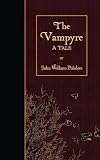
The Vampyre
by John William Polidori
On This Page
Description
The Vampyre is a short story written by John William Polidori and first published in 1819. Christopher Frayling wrote that it was "the first story successfully to fuse the disparate elements of vampirism into a coherent literary genre." The work quickly became a popular success, exploiting the public's penchant for gothic horror and transforming the mythology of the vampire from a creature of folklore to an aristocratic fiend preying on society..
Tags
Recommendations














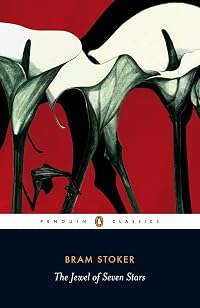
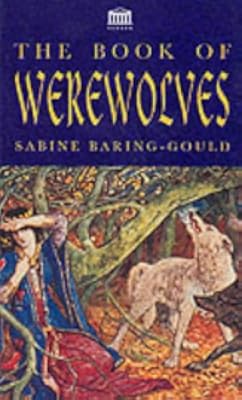
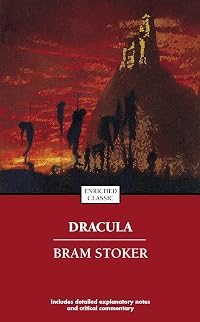
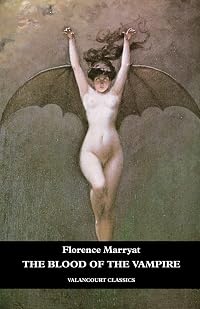








Member Recommendations

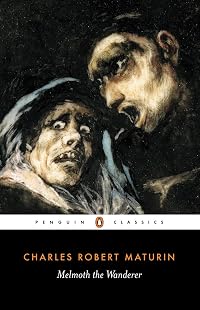
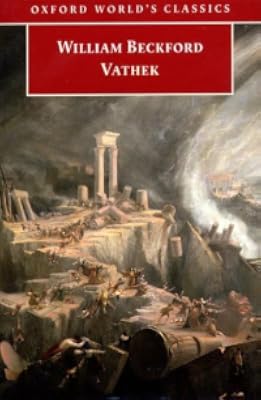
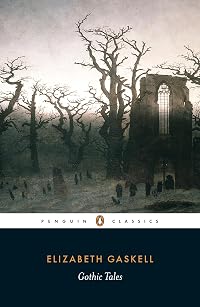
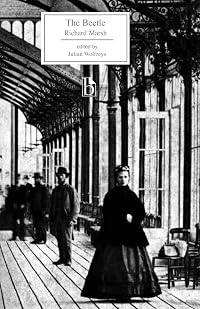
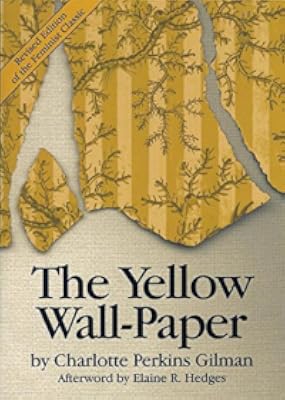
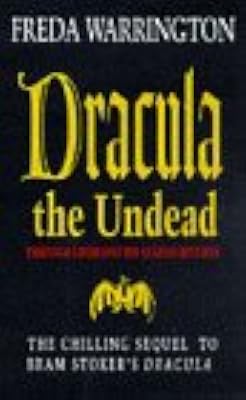
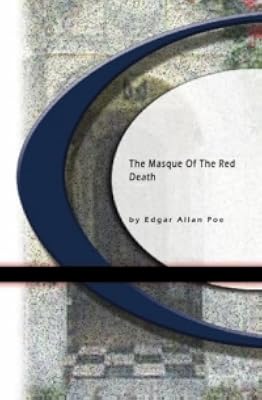
Andibook Polidori's The Vampyre is one of, if not the, oldest vampire novel. His ‘gentleman vampire,’ diverging from the more zombie-like vampire of folklore, influenced the entire genre – including the famous vampire Dracula.
20
Member Reviews
I found *The Vampyre* more interesting as a literary artifact than as a vampire novel.
The first twenty pages introduce Lord Ruthven, but they often feel less concerned with building a vampire and more concerned with John Polidori working through his disillusionment with Lord Byron. Ruthven is clearly modeled on the Byronic aristocrat: charismatic, admired, morally suspect, and seemingly capable of attracting followers despite leaving damage in his wake. Reading the opening, I frequently felt that Polidori was less interested in telling a horror story than in explaining why a man like Byron should not be admired.
Once the story shifts fully into vampire territory, it becomes more engaging. Lord Ruthven is revealed as the titular Vampyre, show more and the novella begins to resemble the work that would influence generations of vampire fiction. The idea of a charming aristocratic predator hiding in plain sight is powerful, and it is easy to see why later writers would build upon Polidori's foundation.
However, the novel never fully convinced me that Ruthven works as a character independent of his real-world inspiration. We learn surprisingly little about him beyond his corruption, his cruelty, and his supernatural nature. Much of the story's tension comes not from vampirism itself, but from Aubrey's inability to expose him. In fact, several of the plot's central devices could function almost unchanged in a non-supernatural story.
The ending is also somewhat shaky. Ruthven's final actions do not entirely align with the behavior established earlier in the novella, and some of the tragedy feels engineered to maximize Aubrey's suffering rather than arising naturally from Ruthven's character. Yet I can understand why the ending has endured. It provides a form of dark satisfaction, bringing Aubrey's fears to their inevitable conclusion and reinforcing the sense that evil can triumph when society refuses to see it.
As a vampire novel, *The Vampyre* is less compelling than the works it inspired. As the birthplace of the aristocratic vampire and a fascinating glimpse into Polidori's complicated relationship with Byron, it remains well worth reading. show less
The first twenty pages introduce Lord Ruthven, but they often feel less concerned with building a vampire and more concerned with John Polidori working through his disillusionment with Lord Byron. Ruthven is clearly modeled on the Byronic aristocrat: charismatic, admired, morally suspect, and seemingly capable of attracting followers despite leaving damage in his wake. Reading the opening, I frequently felt that Polidori was less interested in telling a horror story than in explaining why a man like Byron should not be admired.
Once the story shifts fully into vampire territory, it becomes more engaging. Lord Ruthven is revealed as the titular Vampyre, show more and the novella begins to resemble the work that would influence generations of vampire fiction. The idea of a charming aristocratic predator hiding in plain sight is powerful, and it is easy to see why later writers would build upon Polidori's foundation.
However, the novel never fully convinced me that Ruthven works as a character independent of his real-world inspiration. We learn surprisingly little about him beyond his corruption, his cruelty, and his supernatural nature. Much of the story's tension comes not from vampirism itself, but from Aubrey's inability to expose him. In fact, several of the plot's central devices could function almost unchanged in a non-supernatural story.
The ending is also somewhat shaky. Ruthven's final actions do not entirely align with the behavior established earlier in the novella, and some of the tragedy feels engineered to maximize Aubrey's suffering rather than arising naturally from Ruthven's character. Yet I can understand why the ending has endured. It provides a form of dark satisfaction, bringing Aubrey's fears to their inevitable conclusion and reinforcing the sense that evil can triumph when society refuses to see it.
As a vampire novel, *The Vampyre* is less compelling than the works it inspired. As the birthplace of the aristocratic vampire and a fascinating glimpse into Polidori's complicated relationship with Byron, it remains well worth reading. show less
I am no fan of Halloween, but this is a good time of year to read a Gothic horror story. This short story first published in 1819 was originally wrongly attributed to Byron. Despite the attribution of Henry Colburn in this edition, he was the publisher and the author was actually John William Polidori, a companion of Byron at one of the most famous literary encounters in history on the shores of Lake Geneva, with the Shelleys, as a result of which Mary Shelley wrote Frankenstein. This short story is believed to be the earliest work depicting what later became the classic prototype of a vampire in literature, pre-dating by over 50 years Sheridan Le Fanu's Carmilla and by nearly 80 years Bram Stoker's Dracula. It's quite atmospheric and show more sparsely written, wearing its horror very lightly, but building a sense of mystery around the figure of Lord Ruthven. An important piece of genre fiction. show less
i enjoyed this! aubrey's naivete and ruthven's eagerness to capitalize on it makes for some delicious character dynamics. plus the inherent homoeroticism of a vampire and his companion
I am very glad I Polidori's "The Vampyre". (It is available as a free download through Gutenberg.) Polidori was not a writer by profession & it shows; however, reading from the historical context (that it was written the same time/place/event where Frankenstein was written) & the fact that it was the first vampire story written in English make it pretty interesting. Common opinion is that Lord Ruthven (the vampire in the story) is a thinly veiled version of Lord Byron (Polidori's boss). I find it quite amusing that Polidori created a cunning, charismatic entity of pure evil that's based off of Lord Byron (the gossip page star of his day). These days, if someone wants to complain about his boss, he posts a rant on FB or something. I show more think Polidori's way is much classier (and long-lasting), lol. I'd love to know what Byron thought of it. If he was even partly as evil as Lord Ruthven is, I think Byron must have taken a certain amount of gleeful pride in being the basis for such a magnetic devil. ;-) Either way, read it for the historical aspect, especially if you have or plan to read Dracula or other vampire-inspired tales. show less
Far from being a literary masterpiece, this short story by Polidori (published in 1819) is only notable for being the first true vampire story in the English language and perhaps for its satire on Lord Byron as the villainous female seducer and killer Lord Ruthven.
It was, however, highly influential triggering variants of the 'meme' across Europe as well as setting the tone for the classic vampire tale which has aristocratic evil stalking the innocent in order to rejuvenate and continue living.
The story owes a little to Byron insofar as the latter began a similar tale apparently written in 1816 at the Villa Deodati with Polidori present (as well as the Shelleys). This was released as a fragment in 1819 but the story is fundamentally show more Polidori's as far as its development is concerned.
Polidori was only 21 when he arrived at Villa Deodati on Lake Geneva as companion to Byron but he was clearly of difficult temperament and the two did not get on. This may explain the desire to satirise his erstwhile patron but the central point is that horror starts its journey amongst the very young.
In 1819, Mary Shelley was only 19 when she 'invented' Frankenstein. Matthew Lewis was only 21 when he wrote 'The Monk'. William Beckford was quite old at 26 when he wrote 'Vathek'. The problem is that, even at this young age, they could all write well. Polidori is less proficient.
Still, the sense of evil in the story is palpable. The gaps in the narrative create, possibly accidentally, some sense of mystery. The ending is courageous enough not to be a happy one. And accounts of his time at the Villa suggest that he was an intellectual trigger for Mary Shelley's tale.
Polidori died in 1821 (aged 26), probably but not certainly of suicide, suffering from depression and with significant gambling debts. He was uncle 'post mortem' of the Rossetti children. However, one suspects that he would never have had an illustrious literary career based on this particular story. show less
It was, however, highly influential triggering variants of the 'meme' across Europe as well as setting the tone for the classic vampire tale which has aristocratic evil stalking the innocent in order to rejuvenate and continue living.
The story owes a little to Byron insofar as the latter began a similar tale apparently written in 1816 at the Villa Deodati with Polidori present (as well as the Shelleys). This was released as a fragment in 1819 but the story is fundamentally show more Polidori's as far as its development is concerned.
Polidori was only 21 when he arrived at Villa Deodati on Lake Geneva as companion to Byron but he was clearly of difficult temperament and the two did not get on. This may explain the desire to satirise his erstwhile patron but the central point is that horror starts its journey amongst the very young.
In 1819, Mary Shelley was only 19 when she 'invented' Frankenstein. Matthew Lewis was only 21 when he wrote 'The Monk'. William Beckford was quite old at 26 when he wrote 'Vathek'. The problem is that, even at this young age, they could all write well. Polidori is less proficient.
Still, the sense of evil in the story is palpable. The gaps in the narrative create, possibly accidentally, some sense of mystery. The ending is courageous enough not to be a happy one. And accounts of his time at the Villa suggest that he was an intellectual trigger for Mary Shelley's tale.
Polidori died in 1821 (aged 26), probably but not certainly of suicide, suffering from depression and with significant gambling debts. He was uncle 'post mortem' of the Rossetti children. However, one suspects that he would never have had an illustrious literary career based on this particular story. show less
Ahhh, "The Vampyre". One of those old, Gothic Stories that's billed as "coming before Dracula was even a thing", and a must-read for those who liked Dracula, or those that claim that its better than Dracula for a lot of various reasons. After finishing "Carmilla" and enjoying it a lot, I was looking forward to picking this up for a weekend read. I even bought wine, brie, and grapes to read all fancily while huddled under a blanket with baroque music playing to set the mood!
Was it as good as many others claim it was? Well... not really. The cheese, wine, and grapes were good, but it wasn't quite as much of a fanciful read as I was led to believe, and honestly, it wasn't even that scary or horrifying. Some parts of it felt like a slog, show more others not, and in some parts I was somewhat left bewildered, but not in an entertained way. Let me explain below!
Pros
There are really not many pros I can say. While this isn't deserving of a 1-star rating, I don't think it's a 3-star either, as that implies it was at least a good story beneath some of the problems.
One positive I can say is that historically, it is important in gothic vampire fiction, having been one of the first narratives that turned vampires from small village folklore to evil, captivating monsters that people are drawn to. Lord Ruthven isn't a backwoods hillbilly preying on neighbors, but an active, charming threat that maneuvers through high society preying on those whose trust he gains. This was one of the first depictions of vampires as suave, sophisticated monsters that would come to define later vampires such as Carmilla, Count Dracula, Lestat, and other popular vampires. Plus, it's surprising that Lord Ruthven is just less of a bastard than Lord Byron, though that might be because we don't really get to see him all that much aside from Aubrey's growing disillusionment.
Another positive is that Polidori does do a good job of describing the world that Aubrey wanders through, from England to Italy to Greece and back again, even if it's sort of brief. I just wish I could say the same on his characterization of Ianthe and his sister and others.
Plus, it is thankfully short, at just 40 pages, it doesn't overstay its welcome. Even if the edition I had read had 120 pages, and gave historical context to the story in relation to Polidori's connection to Mary Shelley, Lord Byron, and others.
Cons
Personally I didn't think the story was all that good. While I understand that it's one of the first stories to center on a vampire as an antagonist, I didn't really find Lord Ruthven to be all that compelling as a villain.
For starters, his whole thing is that he's kind of a quiet, if domineering man who everyone wants to be around for some reason, and his bad characteristics aren't really revealed until Aubery goes on tour with him to Greece. While I won't spoil anything, the bad characteristics of the man weren't... really that bad. I suppose to the Victorians, they might have been, but to a modern man it just felt more like Ruthven enjoyed having a weekend to unwind a little bit. Although his treatment of women on the trip is inexcusable and perhaps the one thing I took away from his character is that he is wholly without redemption.
Spoilers below.
Plus, the whole reason that Aubrey went insane made no real sense to me as well. Ruthven begged Aubrey not to reveal his death or character for a year and a day, and then died and was buried. Yet he came back, and Aubrey, not revealing the whole thing, was driven insane. Why though? There could have been better ways that Aubrey could have revealed that Ruthven was not to be trusted to his Sister as well as confidants. A simple "Oh, Ruthven likes to gamble, take advantage of women, and is actually violent when no one is looking, don't trust him" wouldn't reveal the man's death, and it was well known that Aubrey went with Ruthven to mainland Europe and came back fully changed. Had Aubrey taken the time, he'd discover there were ways to bypass his oath and save his Sister. It just felt that Aubrey HAD to be mad to get to the end when there were ways he could have avoided his fate.
Tough, upon thinking about it, there wouldn't be a story if the characters did the smart thing, so maybe that's just me being nitpicky.
Overall, I'm not really sold on Lord Ruthven being a vampire, other than just being a mean dude. Carmilla was evil because she was insidious and used Laura and her family to hunt, all under the guise of being a sweet, innocent young woman. Dracula was evil because he exercised his power to actively harm people, and we're even shown his evil in action.
Final Thoughts
Overall, I thought the premise was good, but it wasn't as well-executed as it could have been. I understand it's an older book from the early 1800s, but there are plenty of other Gothic stories from that era that are better paced and have stronger narration and prose.
Historically, "The Vampyre" is good as a foundation to read for those who are interested in Vampire lore and where a lot of our modern conceptions of the vampire comes from. It's thankfully only around ~40 pages, and one could conceivably get through it in a day or two, depending on how well they can push through the chunky narrative. However, if you're looking for something actually entertaining and fun, I'd skip it entirely and just go on to "Carmilla" and "Dracula" since those are better written and more entertaining, with actually scarier vampires in them.
While I did enjoy the several days I spent reading The Vampyre, it was more from historical interest than genuine enjoyment of the story. Hopefully, anyone who reads this review and decides to read it afterwards gets more enjoyment from the story than I did. show less
Was it as good as many others claim it was? Well... not really. The cheese, wine, and grapes were good, but it wasn't quite as much of a fanciful read as I was led to believe, and honestly, it wasn't even that scary or horrifying. Some parts of it felt like a slog, show more others not, and in some parts I was somewhat left bewildered, but not in an entertained way. Let me explain below!
Pros
There are really not many pros I can say. While this isn't deserving of a 1-star rating, I don't think it's a 3-star either, as that implies it was at least a good story beneath some of the problems.
One positive I can say is that historically, it is important in gothic vampire fiction, having been one of the first narratives that turned vampires from small village folklore to evil, captivating monsters that people are drawn to. Lord Ruthven isn't a backwoods hillbilly preying on neighbors, but an active, charming threat that maneuvers through high society preying on those whose trust he gains. This was one of the first depictions of vampires as suave, sophisticated monsters that would come to define later vampires such as Carmilla, Count Dracula, Lestat, and other popular vampires. Plus, it's surprising that Lord Ruthven is just less of a bastard than Lord Byron, though that might be because we don't really get to see him all that much aside from Aubrey's growing disillusionment.
Another positive is that Polidori does do a good job of describing the world that Aubrey wanders through, from England to Italy to Greece and back again, even if it's sort of brief. I just wish I could say the same on his characterization of Ianthe and his sister and others.
Plus, it is thankfully short, at just 40 pages, it doesn't overstay its welcome. Even if the edition I had read had 120 pages, and gave historical context to the story in relation to Polidori's connection to Mary Shelley, Lord Byron, and others.
Cons
Personally I didn't think the story was all that good. While I understand that it's one of the first stories to center on a vampire as an antagonist, I didn't really find Lord Ruthven to be all that compelling as a villain.
For starters, his whole thing is that he's kind of a quiet, if domineering man who everyone wants to be around for some reason, and his bad characteristics aren't really revealed until Aubery goes on tour with him to Greece. While I won't spoil anything, the bad characteristics of the man weren't... really that bad. I suppose to the Victorians, they might have been, but to a modern man it just felt more like Ruthven enjoyed having a weekend to unwind a little bit. Although his treatment of women on the trip is inexcusable and perhaps the one thing I took away from his character is that he is wholly without redemption.
Spoilers below.
Plus, the whole reason that Aubrey went insane made no real sense to me as well. Ruthven begged Aubrey not to reveal his death or character for a year and a day, and then died and was buried. Yet he came back, and Aubrey, not revealing the whole thing, was driven insane. Why though? There could have been better ways that Aubrey could have revealed that Ruthven was not to be trusted to his Sister as well as confidants. A simple "Oh, Ruthven likes to gamble, take advantage of women, and is actually violent when no one is looking, don't trust him" wouldn't reveal the man's death, and it was well known that Aubrey went with Ruthven to mainland Europe and came back fully changed. Had Aubrey taken the time, he'd discover there were ways to bypass his oath and save his Sister. It just felt that Aubrey HAD to be mad to get to the end when there were ways he could have avoided his fate.
Tough, upon thinking about it, there wouldn't be a story if the characters did the smart thing, so maybe that's just me being nitpicky.
Overall, I'm not really sold on Lord Ruthven being a vampire, other than just being a mean dude. Carmilla was evil because she was insidious and used Laura and her family to hunt, all under the guise of being a sweet, innocent young woman. Dracula was evil because he exercised his power to actively harm people, and we're even shown his evil in action.
Final Thoughts
Overall, I thought the premise was good, but it wasn't as well-executed as it could have been. I understand it's an older book from the early 1800s, but there are plenty of other Gothic stories from that era that are better paced and have stronger narration and prose.
Historically, "The Vampyre" is good as a foundation to read for those who are interested in Vampire lore and where a lot of our modern conceptions of the vampire comes from. It's thankfully only around ~40 pages, and one could conceivably get through it in a day or two, depending on how well they can push through the chunky narrative. However, if you're looking for something actually entertaining and fun, I'd skip it entirely and just go on to "Carmilla" and "Dracula" since those are better written and more entertaining, with actually scarier vampires in them.
While I did enjoy the several days I spent reading The Vampyre, it was more from historical interest than genuine enjoyment of the story. Hopefully, anyone who reads this review and decides to read it afterwards gets more enjoyment from the story than I did. show less
That infamous night, sometime in 1816 at Byron's Villa Diodati, when the assembled guests were challenged to tell a ghost story resulted in Mary Shelley's [Frankenstein] It also led to the publication of The Vampyre , the first vampire tale to feature an aristocrat as a blood sucking fiend. The story's inception and it later publication history is probably more intriguing than the short story itself. John Polidori was a working guest at the villa; apparently Byron's physician and it is probably Byron's story that ended up being published by Polidori although it did originally appear under Byron's name. Byron later claimed not to have written it. A clever deception then by Polidori is enhanced by an extract from a so-called anonymous show more letter, that appears before the introduction to the book. The letter tells a little about that night at the villa Diodati and then intriguingly paints a portrait of Lord Byron himself:
I have gathered from
their accounts some excellent traits of his lordship's character,
which I will relate to you at some future opportunity. I must,
however, free him from one imputation attached to him--of having in
his house two sisters as the partakers of his revels. This is, like
many other charges which have been brought against his lordship,
entirely destitute of truth. His only companion was the physician I
have already mentioned...... I found a servant there who had lived with him;
she, however, gave me but little information. She pointed out his
bed-chamber upon the same level as the saloon and dining-room, and
informed me that he retired to rest at three, got up at two, and
employed himself a long time over his toilette; that he never went to
sleep without a pair of pistols and a dagger by his side, and that he
never eat animal food.
The above makes Byron sound like a candidate for being a vampire and Polidori followed this up with a quote from Byron's poem [Giaour]:
But first on earth, as Vampyre sent,
Thy corse shall from its tomb be rent;
Then ghastly haunt the native place,
And suck the blood of all thy race;
There from thy daughter, sister, wife,
At midnight drain the stream of life;
Yet loathe the banquet which perforce
Must feed thy livid living corse,
Thy victims, ere they yet expire,
Shall know the demon for their sire;............
The anonymous letter is steeped in irony and adds greatly to the mystery of the tale. If Polidori thought he could shift copies of his little book by continual references to Byron then he was not wrong. The Vampyre sold well and the central character Lord Ruthven was a dead ringer for Lord Byron. An aristocrat who feeds off the charms of young virginal women and who succeeds in tormenting the young Aubrey into despair and madness; when he kills Aubrey's innocent Greek girlfriend and then schemes to marry his innocent sister. The story has some of the elements that you would expect in a vampire tale and it is well told, it is mysterious and dark and inexorably moves to its conclusion. It is worth reading and I would rate it at 3.5 stars mainly because of the mystery in which it is surrounded. show less
I have gathered from
their accounts some excellent traits of his lordship's character,
which I will relate to you at some future opportunity. I must,
however, free him from one imputation attached to him--of having in
his house two sisters as the partakers of his revels. This is, like
many other charges which have been brought against his lordship,
entirely destitute of truth. His only companion was the physician I
have already mentioned...... I found a servant there who had lived with him;
she, however, gave me but little information. She pointed out his
bed-chamber upon the same level as the saloon and dining-room, and
informed me that he retired to rest at three, got up at two, and
employed himself a long time over his toilette; that he never went to
sleep without a pair of pistols and a dagger by his side, and that he
never eat animal food.
The above makes Byron sound like a candidate for being a vampire and Polidori followed this up with a quote from Byron's poem [Giaour]:
But first on earth, as Vampyre sent,
Thy corse shall from its tomb be rent;
Then ghastly haunt the native place,
And suck the blood of all thy race;
There from thy daughter, sister, wife,
At midnight drain the stream of life;
Yet loathe the banquet which perforce
Must feed thy livid living corse,
Thy victims, ere they yet expire,
Shall know the demon for their sire;............
The anonymous letter is steeped in irony and adds greatly to the mystery of the tale. If Polidori thought he could shift copies of his little book by continual references to Byron then he was not wrong. The Vampyre sold well and the central character Lord Ruthven was a dead ringer for Lord Byron. An aristocrat who feeds off the charms of young virginal women and who succeeds in tormenting the young Aubrey into despair and madness; when he kills Aubrey's innocent Greek girlfriend and then schemes to marry his innocent sister. The story has some of the elements that you would expect in a vampire tale and it is well told, it is mysterious and dark and inexorably moves to its conclusion. It is worth reading and I would rate it at 3.5 stars mainly because of the mystery in which it is surrounded. show less
Members
- Recently Added By
Lists

Best Gothic Fiction
110 works; 31 members
Bloody Good Vampire Books
394 works; 28 members

Lovecraft's 'Supernatural Horror in Literature' Reading List
216 works; 8 members
Jones & Newman: Best Horror Books Further Recommended Reading
577 works; 4 members

Internationale Romantik
15 works; 1 member

Horror: Creature Features
70 works; 9 members
Kate & Cheyanne's Horror Extravaganza
144 works; 6 members

Reading LIst
648 works; 1 member

el
1,139 works; 1 member
Author Information

33+ Works 1,470 Members
Some Editions
Series
Belongs to Publisher Series
Work Relationships
Is contained in
Has the adaptation
Inspired
Common Knowledge
- Canonical title
- The Vampyre
- Original title
- The Vampyre; A Tale
- Original publication date
- 1819
- People/Characters
- Lord Ruthven; Lady Mercer; Aubrey
- Important places
- London, England, UK; England, UK; UK; Greece
- First words
- It happened that in the midst of the dissipations attendant upon a London winter, there appeared at the various parties of the leaders of the ton a nobleman, more remarkable for his singularities, than his rank.
- Last words
- (Click to show. Warning: May contain spoilers.)Lord Ruthven had disappeared, and Aubrey's sister had glutted the thirst of a VAMPYRE!
- Original language
- English
Classifications
Statistics
- Members
- 767
- Popularity
- 36,534
- Reviews
- 34
- Rating
- (3.11)
- Languages
- 13 — Catalan, Danish, Dutch, English, Finnish, French, German, Italian, Norwegian (Bokmål), Portuguese, Spanish, Swedish, Turkish
- Media
- Paper, Audiobook, Ebook
- ISBNs
- 121
- ASINs
- 35