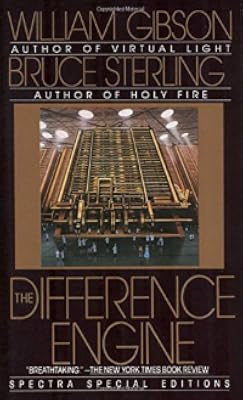
The Difference Engine
by William Gibson, Bruce Sterling
On This Page
Description
1855: The Industrial Revolution is in full and inexorable swing, powered by steam-driven cybernetic Engines. Charles Babbage perfects his Analytical Engine and the computer age arrives a century ahead of its time. And three extraordinary characters race toward a rendezvous with history--and the future:Sybil Gerard--a fallen woman, politician's tart, daughter of a Luddite agitator
Edward "Leviathan" Mallory--explorer and paleontologist
Laurence Oliphant--diplomat, mystic, and spy.
Their show more adventure begins with the discovery of a box of punched Engine cards of unknown origin and purpose. Cards someone wants badly enough to kill for....
Part detective story, part historical thriller, The Difference Engine is the collaborative masterpiece by two of the most acclaimed science fiction authors writing today. Provocative, compelling, intensely imagined, it is a startling extension of Gibson's and Sterling's unique visions--and the beginning of movement we know today as "steampunk!"
From the Paperback edition.
. show less
Tags
Recommendations
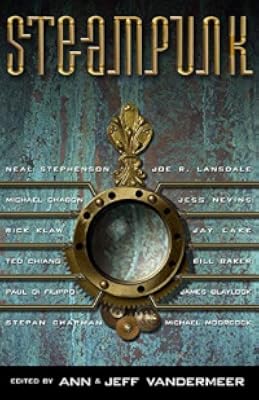
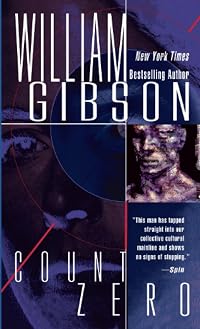
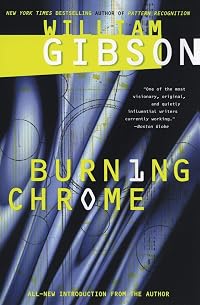
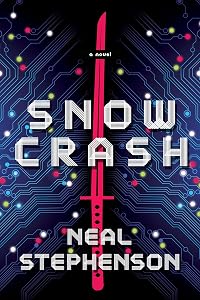

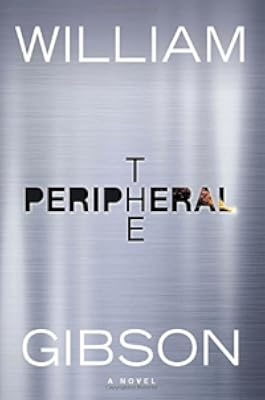
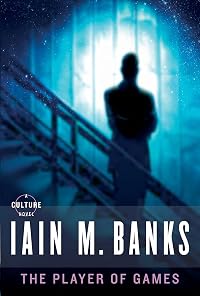
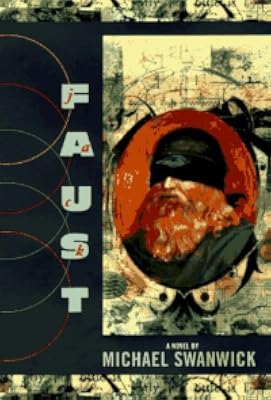
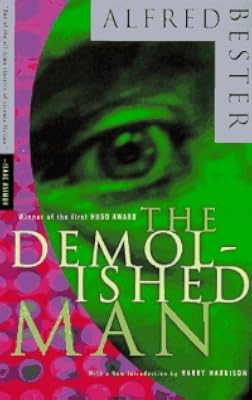

Member Recommendations
Cecilturtle also set in late XIXth century with challenged scientific views.
03
Member Reviews
On the one hand, the world-building part of it is excellent and even believable (at least in an "i buy it as fiction" way). Computers happen to be invented 100 years earlier so that the industrial revolution and the information revolution coincide; now you have Victorians in 1850s London trying to make sense of a world where hackers (or rather "clackers", given that nobody's invented plastic, magnetic tape or transistors yet) control the information...
"But that's theft!"
" 'Borrowing,' according to him. Says he'll give me back my cards, as soon as he's had 'em copied. That way I don't lose nothin', you see?"
Sybil felt dazed. Was he teasing her? "But isn't that stealing, somehow?"
"Try arguing that with Samuel bloody Houston! He stole a show more whole damn country once, stole it clean and picked it to the bone!"
...where the United States quickly fell apart into several warring nations thanks to the UK's automated intelligence service, where rationalism has taken over completely (Lord Babbage, Lord Darwin, etc - Disraeli is just a hack writer) and the Luddites have become not only enemies of the state but outright terrorists - thoughtcrime, du-du-du-dudu-du. And they write it all like a saucier Englisher Jule Verne novel, complete with mustache-twirling villains and upright gentleman "heroes" saying things like
"Some folk pass their very lives in the mud of the Thames."
"Who's that then?" asked Tom.
"Mudlarks," Fraser told him, picking his way. "Winter and summer, they slog up to their middles, in the mud o' low tide. Hunting lumps o' coal, rusty nails, any river-rubbish that will fetch a penny."
"Are you joking?" Tom asked.
"Children mostly," Fraser persisted calmly, "and a deal of feeble old women."
"I don't believe you," Brian said. "If you told me Bombay or Calcutta, I might grant it. But not London!"
"I didn't say the wretches were British," Fraser said. "Your mudlarks are foreigners, mostly. Poor refugees."
"Well, then," Tom said, relieved.
...so that you have to keep your eyes open to notice that it's actually women doing most of the heavy lifting in the novel, with Ada Lovelace the original clacker, despite still being thought of as lesser creatures. It's two paradigm shifts at once. Or probably more than that.
Unfortunately, the plot is convoluted to say the least (or possibly just badly thought out). It's told in several interlocking storylines that don't really interlock, that don't really feel like they get resolved. Plus, with most of the characters being rather stuck-up unlikable fools in a lot of ways, it's difficult to find one to latch on to - especially since they tend to get written out for a few hundred pages. It's entertaining as hell up to a point, but when everything just drags on, I start to lose interest.
Fascinating effort though, and I'll never not like the idea of steampunk. I might have to go back to this one at some point. show less
"But that's theft!"
" 'Borrowing,' according to him. Says he'll give me back my cards, as soon as he's had 'em copied. That way I don't lose nothin', you see?"
Sybil felt dazed. Was he teasing her? "But isn't that stealing, somehow?"
"Try arguing that with Samuel bloody Houston! He stole a show more whole damn country once, stole it clean and picked it to the bone!"
...where the United States quickly fell apart into several warring nations thanks to the UK's automated intelligence service, where rationalism has taken over completely (Lord Babbage, Lord Darwin, etc - Disraeli is just a hack writer) and the Luddites have become not only enemies of the state but outright terrorists - thoughtcrime, du-du-du-dudu-du. And they write it all like a saucier Englisher Jule Verne novel, complete with mustache-twirling villains and upright gentleman "heroes" saying things like
"Some folk pass their very lives in the mud of the Thames."
"Who's that then?" asked Tom.
"Mudlarks," Fraser told him, picking his way. "Winter and summer, they slog up to their middles, in the mud o' low tide. Hunting lumps o' coal, rusty nails, any river-rubbish that will fetch a penny."
"Are you joking?" Tom asked.
"Children mostly," Fraser persisted calmly, "and a deal of feeble old women."
"I don't believe you," Brian said. "If you told me Bombay or Calcutta, I might grant it. But not London!"
"I didn't say the wretches were British," Fraser said. "Your mudlarks are foreigners, mostly. Poor refugees."
"Well, then," Tom said, relieved.
...so that you have to keep your eyes open to notice that it's actually women doing most of the heavy lifting in the novel, with Ada Lovelace the original clacker, despite still being thought of as lesser creatures. It's two paradigm shifts at once. Or probably more than that.
Unfortunately, the plot is convoluted to say the least (or possibly just badly thought out). It's told in several interlocking storylines that don't really interlock, that don't really feel like they get resolved. Plus, with most of the characters being rather stuck-up unlikable fools in a lot of ways, it's difficult to find one to latch on to - especially since they tend to get written out for a few hundred pages. It's entertaining as hell up to a point, but when everything just drags on, I start to lose interest.
Fascinating effort though, and I'll never not like the idea of steampunk. I might have to go back to this one at some point. show less
from Todd:
This seminal steampunk novel details a compellingly realistic alternative history of a 19th century high-tech civilization in Great Britain, realized on the Victorian macro-industrial level, and full of class and colonial tensions with political intrigue. The best parts detail what might have happened to society if a real historical invention (Charles Babbage's sophisticated data calculation machine, the “difference engine”) had actually been recognized for its implications for power and wealth and properly developed for all spheres of endeavor.
The novel weaves together odd fictional characters with real historical figures who were ahead of their time in terms of their advanced thinking about mathematics and technology. show more The culture depicted – though immersed in higher technology – has all the pernicious ills and glorious eccentricities of real Victorian society, which I think makes it more realistic. This is not a steampunk fairytale or stylish dystopia. It is about flawed people in a fractured world of broken dreams. The story has interesting threads that don't get fully developed, and this might be due to the dual authorship of the book. All in all, one must read it for the substantial creativity that went into it. show less
This seminal steampunk novel details a compellingly realistic alternative history of a 19th century high-tech civilization in Great Britain, realized on the Victorian macro-industrial level, and full of class and colonial tensions with political intrigue. The best parts detail what might have happened to society if a real historical invention (Charles Babbage's sophisticated data calculation machine, the “difference engine”) had actually been recognized for its implications for power and wealth and properly developed for all spheres of endeavor.
The novel weaves together odd fictional characters with real historical figures who were ahead of their time in terms of their advanced thinking about mathematics and technology. show more The culture depicted – though immersed in higher technology – has all the pernicious ills and glorious eccentricities of real Victorian society, which I think makes it more realistic. This is not a steampunk fairytale or stylish dystopia. It is about flawed people in a fractured world of broken dreams. The story has interesting threads that don't get fully developed, and this might be due to the dual authorship of the book. All in all, one must read it for the substantial creativity that went into it. show less
The Difference Engine is closer to being a collaborative writing exercise than anything approaching a novel. As such, the plot meanders between three points of view, with one climatic scene coming midway through the novel. The structure and pacing suffers. Fortunately, the style is of two cyberpunk masters at the peak of their abilities. Their London is a place of vivid vice, ambition, and stenches. The other major sin is that this book is in some way responsible for inspiring 'steampunk culture', aka 'goths discover brown while whitewashing the sins of empire.' I'm note sure how much fault can be laid on Gibson and Sterling for that.
Steampunk Cosplay from VICE, "If Steampunk Is the Future, Please Kill Me Now"
The Difference Engine is an show more alternative history with two linked points of departure. The first is that Charles Babbage's primitive computing device of the same name works much better than it actually did. The second is a political transformation in England, where the Industrial Radical Party rules, having overthrown the Tory military dictatorship under General Wellington. Lead by Lord Byron, now a politician rather than a poet, this new society is not some Victorian fancy of petticoats and cogs. The Rads are hard-eyed bourgeois utopians, in the model of Robespierre, St. Just, and Danton, and unlike in our reality they allied with the proletarians rather than the aristocracy when the crisis came (for a fuller explanation, see the Revolutions podcast on 1848 for what actually happened). But for all the Progress, unrest simmers in London, and it comes to a head one summer.
The first plot thread follows Sybil Gerard, daughter of a Luddite leader turned dollymop. She joins up as an apprentice adventureress with the publicist for General Sam Houston, president of Texas-in-Exile. Sybil becomes entangled with a sudden violence, and a set of strange Babbage engine cards, which might have incredible power.
The cards reappear as McGuffin in the second arc, following paleontologist Edward Miller, recently returned from Wyoming. A chance encounter with street tough sees Miller in possession of the cards from Lady Ada Byron, the Queen of Engines, and a mortal enemy of a street lout named Swing. As the Stench, a massive public sanitation failure overtakes London, Miller find himself facing down this Captain Swing in the midst of anarchist revolt. There's a gunfight, Miller triumphs, and goes on to a long and successful career.
The third arc follows Oliphant, a journalist and spy, as he attempts to clean up the threads from the first two. Olipahnt's surface problems of political factions and Lady Ada's debts may conceal something deeper, the Modus. This program is alleged to be many things, first a system for breaking games of chance, and then possibly a self-improving algorithm, a form of machine life. The book closes with a series of literary fragments, building towards of a future of panopticonic surveillance in the gears.
The Difference Engine is immensely stylish, and far smarter than the steampunk fashion which apes the era without understanding its radicalism. But it's also fundamentally about information technology circa 1991, made strange by being gears and punchcards rather than DOS PCs and BBS forums. show less
Steampunk Cosplay from VICE, "If Steampunk Is the Future, Please Kill Me Now"
The Difference Engine is an show more alternative history with two linked points of departure. The first is that Charles Babbage's primitive computing device of the same name works much better than it actually did. The second is a political transformation in England, where the Industrial Radical Party rules, having overthrown the Tory military dictatorship under General Wellington. Lead by Lord Byron, now a politician rather than a poet, this new society is not some Victorian fancy of petticoats and cogs. The Rads are hard-eyed bourgeois utopians, in the model of Robespierre, St. Just, and Danton, and unlike in our reality they allied with the proletarians rather than the aristocracy when the crisis came (for a fuller explanation, see the Revolutions podcast on 1848 for what actually happened). But for all the Progress, unrest simmers in London, and it comes to a head one summer.
The first plot thread follows Sybil Gerard, daughter of a Luddite leader turned dollymop. She joins up as an apprentice adventureress with the publicist for General Sam Houston, president of Texas-in-Exile. Sybil becomes entangled with a sudden violence, and a set of strange Babbage engine cards, which might have incredible power.
The cards reappear as McGuffin in the second arc, following paleontologist Edward Miller, recently returned from Wyoming. A chance encounter with street tough sees Miller in possession of the cards from Lady Ada Byron, the Queen of Engines, and a mortal enemy of a street lout named Swing. As the Stench, a massive public sanitation failure overtakes London, Miller find himself facing down this Captain Swing in the midst of anarchist revolt. There's a gunfight, Miller triumphs, and goes on to a long and successful career.
The third arc follows Oliphant, a journalist and spy, as he attempts to clean up the threads from the first two. Olipahnt's surface problems of political factions and Lady Ada's debts may conceal something deeper, the Modus. This program is alleged to be many things, first a system for breaking games of chance, and then possibly a self-improving algorithm, a form of machine life. The book closes with a series of literary fragments, building towards of a future of panopticonic surveillance in the gears.
The Difference Engine is immensely stylish, and far smarter than the steampunk fashion which apes the era without understanding its radicalism. But it's also fundamentally about information technology circa 1991, made strange by being gears and punchcards rather than DOS PCs and BBS forums. show less
Gibson & Sterling's The Difference Engine was about as I remembered it. Not the details: these I almost always forget, and here the authors truly shone in their inventiveness and world-making. Factual descriptions of Babbage's Analytical Engine (design, operation, sheer massive presence), geopolitical trends and alternate history, and yes, compulsive delight in sharing fashion and other period detail -- these were glorious fun and more rewarding than I allowed myself to expect. Overall, though, it was a solid but not spectacular story. Today I gather there are reams of steampunk tales; when first I read this novel, I don't think I knew of any other, and that was enough to recommend it.
The Difference Engine itself is a classic show more MacGuffin: crucial to the story, but mostly offstage. The plot focuses not so much on the Engines in use as about all the people running around them. A mysterious deck of punchcards provides the excuse to tour various parts of London, visit various members of different classes involved in cultural and political conflict. This set of punchcards amounts to a virus, perhaps the first of the age: no one central to the story is much aware of that, however, or even the possibility of it.
//
The final chapter an epistolary appendix: reports, articles, diary entries mostly focused on backstory not the plot. One revelation is that the punchcards sabotaged the Napolean not mechanically (jamming the gears) but algorithmically, preventing the engine from completing the operation, with some higher functions consequently dedicated endlessly to the program. It's not clear who did it. Was the Napolean targeted specifically, or were the cards intended for any engine? Was the virus a sincere effort to answer a legitimate question only the program failed, or was the virus created deliberately?
//
Some of my favourite parts mirror a subtheme of Rosencrantz & Guildenstern Are Dead, in which familiar scientific discoveries are skewered good-naturedly. Gibson & Sterling have a character ridicule the concept of a map usefully identifying the source of a cholera outbreak; Disraeli is imagined not as PM but a journalist; Byron is PM and linked to radical politics. The origins of moving pictures are memorably joined with PowerPoint slides, and the innovation is rued as much in that world as in ours. show less
The Difference Engine itself is a classic show more MacGuffin: crucial to the story, but mostly offstage. The plot focuses not so much on the Engines in use as about all the people running around them. A mysterious deck of punchcards provides the excuse to tour various parts of London, visit various members of different classes involved in cultural and political conflict. This set of punchcards amounts to a virus, perhaps the first of the age: no one central to the story is much aware of that, however, or even the possibility of it.
//
The final chapter an epistolary appendix: reports, articles, diary entries mostly focused on backstory not the plot. One revelation is that the punchcards sabotaged the Napolean not mechanically (jamming the gears) but algorithmically, preventing the engine from completing the operation, with some higher functions consequently dedicated endlessly to the program. It's not clear who did it. Was the Napolean targeted specifically, or were the cards intended for any engine? Was the virus a sincere effort to answer a legitimate question only the program failed, or was the virus created deliberately?
//
Some of my favourite parts mirror a subtheme of Rosencrantz & Guildenstern Are Dead, in which familiar scientific discoveries are skewered good-naturedly. Gibson & Sterling have a character ridicule the concept of a map usefully identifying the source of a cholera outbreak; Disraeli is imagined not as PM but a journalist; Byron is PM and linked to radical politics. The origins of moving pictures are memorably joined with PowerPoint slides, and the innovation is rued as much in that world as in ours. show less
So I'm teaching a course on Steampunk and Philosophy this coming spring semester (team-teaching, to be more precise), and I'm admittedly not an expert in Steampunk literature. I am, however, somewhat more expert in science fiction as literature, thus my involvement. I thought it would be a good idea to reread this Gibson novel I'd read but didn't remember well. I might as well have been reading it for the first time, I remembered so little of it.
What a gobsmackingly good book, this. Like his other novels, Gibson is not always easy to read, and not in the deceptive complexity I've come to expect from Le Guin or even the deceptively not-simple prose of Dick. He can be dense, and is here. But it is so worth it. Really, it's not the love of show more polysyllabic language that Neal Stephenson suffers from on occasion, either, but something else. In Difference Engine, it's the choice of alternative history as his SF form, his fragmented narrative and shifting perspectives, his decision to have not only the setting in Victorian England but also the narration reflect certain sensibilities. I don't know. It's late for me, and I've only just finished. It will hopefully make more sense later before I have to talk about it with younguns. There were times when I asked myself "what the hell is going on here," only to giggle later as I asked again, "what the hell is going on here, indeed!" Honestly, by the time I finished the book (an hour ago), I was enjoying the ambiguities so much I almost didn't want the final collection of artifacts that give more context to the history the narrative exists in. Almost.
It all pays off, in the way that alt histories often do for me. I of course thought of The Man in the High Castle, although the discomfort of the "true" mixed with the fiction of the narrative is really the only point of comparison so far. Maybe more will come later, and I certainly will be thinking on this point in the future, but both Dick and Gibson (yes, I know there is a co-author, but honestly the only voice I heard was Gibson's (no, I haven't read anything else by the other guy (yes, I know that's not fair (no, I don't care (yes, right now I'm just playing around with parentheses))))) make good use of this reader's discombobulation. Dick deals more with the metaphysical aspects of authenticity and reality, though, and Gibson seems more interested in the traditional "what-if" aspect of both alt-history and SF generally. Ok, I'm getting off track here.
Regardless, this book is very much in keeping with Gibson's other writing, his other persistent themes and subject matter-- the latter of which is fascinating given the technological differences present. I very much enjoyed it, and very much look forward to it's role in my coming class. show less
What a gobsmackingly good book, this. Like his other novels, Gibson is not always easy to read, and not in the deceptive complexity I've come to expect from Le Guin or even the deceptively not-simple prose of Dick. He can be dense, and is here. But it is so worth it. Really, it's not the love of show more polysyllabic language that Neal Stephenson suffers from on occasion, either, but something else. In Difference Engine, it's the choice of alternative history as his SF form, his fragmented narrative and shifting perspectives, his decision to have not only the setting in Victorian England but also the narration reflect certain sensibilities. I don't know. It's late for me, and I've only just finished. It will hopefully make more sense later before I have to talk about it with younguns. There were times when I asked myself "what the hell is going on here," only to giggle later as I asked again, "what the hell is going on here, indeed!" Honestly, by the time I finished the book (an hour ago), I was enjoying the ambiguities so much I almost didn't want the final collection of artifacts that give more context to the history the narrative exists in. Almost.
It all pays off, in the way that alt histories often do for me. I of course thought of The Man in the High Castle, although the discomfort of the "true" mixed with the fiction of the narrative is really the only point of comparison so far. Maybe more will come later, and I certainly will be thinking on this point in the future, but both Dick and Gibson (yes, I know there is a co-author, but honestly the only voice I heard was Gibson's (no, I haven't read anything else by the other guy (yes, I know that's not fair (no, I don't care (yes, right now I'm just playing around with parentheses))))) make good use of this reader's discombobulation. Dick deals more with the metaphysical aspects of authenticity and reality, though, and Gibson seems more interested in the traditional "what-if" aspect of both alt-history and SF generally. Ok, I'm getting off track here.
Regardless, this book is very much in keeping with Gibson's other writing, his other persistent themes and subject matter-- the latter of which is fascinating given the technological differences present. I very much enjoyed it, and very much look forward to it's role in my coming class. show less
TL;DR version: Gibson and Sterling combined their skills to craft an exquisitely detailed world, but failed to come up with a story worthy of the setting.
Ugh! What a disappointment! I should've just abandoned this early on. I kept going with it, hoping that somewhere along the way it would improve, but it didn't. I can't believe that these two put all this effort into creating this world—every, and I do mean every, single detail gets some kind of mention even if it's a list of items on a table or how each and every single person is dressed—but forgot to write a cohesive storyline. The world itself requires some suspension of disbelief, but that isn't the problem here. The storytelling is the problem.
The blurb informs us that we have show more three main characters in this book. But don't assume that their stories are told co-currently or are entwined in such a way as to reach a dramatic climax. Their stories are told one at a time, but they don't flow into one another. In fact, they seem like they could've been three different ideas for how this novel could've been approached. Rather than picking one or finding a way to tie them together, they're just carelessly pasted into the manuscript.
Sybil is up first. Her story slowly builds up to a dramatic conflict, and then she fades off the stage with only a fleeting encounter with the MacGuffin (the box of punched Engine cards). We're told that she spends her days from here out in Paris.
Mallory is up next. Early on, he stumbles into the MacGuffin after a brief altercation with a thug at the racetrack. Said thug turns out to be Mallory's antagonist and later develops offstage into some kind of Moriarty-type villain. Meanwhile, Mallory puts the MacGuffin somewhere safe, and we don't hear of it again. We're introduced to Oliphant, whose purpose seems to be to warn Mallory that he's messing with some serious people, but Mallory...I don't know where his head is. He seems to be incredulous all the time that these things are happening. His story climaxes during the "Great Stink," a real eco-disaster. Then Mallory's story is done, and we're told how he dies decades hence.
Finally, Oliphant takes control of the narrative. He's investigating something and lets it be known that Mallory is over in China digging up fossils. We kinda learn the fate of the MacGuffin and Oliphant is off to Paris to recruit Sybil into taking down a politically dangerous man whom she has a personal vendetta against. And then that's it; Oliphant's story is done. The story ends with a whimper.
The last thirty pages of the book are a collection of narrative chunks of various topics that amount to nothing more than discarded bits of backstory, character development, and storyline. Did they not know how to weave this into the story, or is it filler to bump up the page count?
All-in-all, a complete waste of time, unless you're researching a steampunk setting and need help with the details.
1.5 stars rounded to down to 1 for letting a great idea spoil like that bottle of milk in your fridge that's a month past the expiration date. show less
Ugh! What a disappointment! I should've just abandoned this early on. I kept going with it, hoping that somewhere along the way it would improve, but it didn't. I can't believe that these two put all this effort into creating this world—every, and I do mean every, single detail gets some kind of mention even if it's a list of items on a table or how each and every single person is dressed—but forgot to write a cohesive storyline. The world itself requires some suspension of disbelief, but that isn't the problem here. The storytelling is the problem.
The blurb informs us that we have show more three main characters in this book. But don't assume that their stories are told co-currently or are entwined in such a way as to reach a dramatic climax. Their stories are told one at a time, but they don't flow into one another. In fact, they seem like they could've been three different ideas for how this novel could've been approached. Rather than picking one or finding a way to tie them together, they're just carelessly pasted into the manuscript.
Sybil is up first. Her story slowly builds up to a dramatic conflict, and then she fades off the stage with only a fleeting encounter with the MacGuffin (the box of punched Engine cards). We're told that she spends her days from here out in Paris.
Mallory is up next. Early on, he stumbles into the MacGuffin after a brief altercation with a thug at the racetrack. Said thug turns out to be Mallory's antagonist and later develops offstage into some kind of Moriarty-type villain. Meanwhile, Mallory puts the MacGuffin somewhere safe, and we don't hear of it again. We're introduced to Oliphant, whose purpose seems to be to warn Mallory that he's messing with some serious people, but Mallory...I don't know where his head is. He seems to be incredulous all the time that these things are happening. His story climaxes during the "Great Stink," a real eco-disaster. Then Mallory's story is done, and we're told how he dies decades hence.
Finally, Oliphant takes control of the narrative. He's investigating something and lets it be known that Mallory is over in China digging up fossils. We kinda learn the fate of the MacGuffin and Oliphant is off to Paris to recruit Sybil into taking down a politically dangerous man whom she has a personal vendetta against. And then that's it; Oliphant's story is done. The story ends with a whimper.
The last thirty pages of the book are a collection of narrative chunks of various topics that amount to nothing more than discarded bits of backstory, character development, and storyline. Did they not know how to weave this into the story, or is it filler to bump up the page count?
All-in-all, a complete waste of time, unless you're researching a steampunk setting and need help with the details.
1.5 stars rounded to down to 1 for letting a great idea spoil like that bottle of milk in your fridge that's a month past the expiration date. show less
I usually love Gibson but although I thought it was incredibly creative, I just couldn't get in the groove with this book
Members
- Recently Added By
Published Reviews
In de vorige eeuw werd door Charles Babbage een mechanische computer ontworpen, die echter bij gebrek aan technologische kennis en de juiste materialen niet gebouwd kon worden. Deze roman speelt zich af in een Engeland waar dat wel kon, met als gevolg dat al rond 1850 de maatschappij diepgaand veranderd is door computertechnologie. Ook andere zaken zijn in die wereld anders dan de onze: zo is show more de dichter Byron premier van Engeland geworden en de Verenigde Staten zijn nooit verenigd. De plot betreft een politieke intrige, draaiend om een stel computerponskaarten die een blauwdruk vormen voor een nieuwe generatie computers: niet langer mechanisch maar elektrisch. De auteurs zijn coryfeeën van de 'cyberpunk': science fiction die gaat over de toekomstige ontwikkelingen van de informatica. Hier hebben ze een roman geschreven zoals een 19e-eeuws auteur van cyberpunk die had kunnen schrijven. In dit opzicht is het een tour-de-force. Bovendien is het spannend en goed geschreven. Enige kennis van het 19e-eeuwse Engeland maakt de lezing van het boek nog aardiger, want het bevat talloze toespelingen op kunst en politiek uit de 19e eeuw. show less
added by karnoefel
Lists

Best Alternate History
111 works; 60 members

Favourite Steampunk Books
80 works; 16 members

S.F. Masterworks (Complete)
229 works; 15 members

Top 100 to Read before you Die
109 works; 7 members

Readers Guide to Steampunk
65 works; 1 member

Speculative Fiction to Read
706 works; 32 members

Unread books
1,063 works; 87 members

Read These Too
458 works; 9 members

Cryptology - non-fiction and fiction
57 works; 4 members

SF Masterworks
193 works; 8 members

Big Data
52 works; 2 members
Recommended AltHist
24 works; 1 member

Reading Glasses Podcast
410 works; 3 members
School Made Us Read It
380 works; 196 members
Author Information

82+ Works 95,912 Members
William Gibson was born on March 17, 1948 in Conway, South Carolina. He dropped out of high school and moved to Canada, where he eventually graduated from the University of British Columbia in 1977. He is the author of Mona Lisa Overdrive, The Peripheral, and Neuromancer, which won the Phillip K. Dick Award, the Hugo Award, and the Nebula Award. show more He also wrote the screenplay for the film Johnny Mnemonic. (Bowker Author Biography) show less

131+ Works 20,969 Members
Bruce Sterling is a recent winner of the Nebula Award and the author of the nonfiction book "The Hacker Crackdown" as well as novels and short story collections. He co-authored, with William Gibson, the critically acclaimed novel "The Difference Engine." He lives in Austin, Texas, with his wife and daughter. (Publisher Provided)
Some Editions
Awards and Honors
Awards
Series
Belongs to Publisher Series
Work Relationships
Is contained in
Contains
Was inspired by
Inspired
Common Knowledge
- Canonical title
- The Difference Engine
- Original title
- The Difference Engine
- Original publication date
- 1990
- People/Characters
- Edward Mallory; Sybil Gerard; Ada Byron Lovelace; Charles Babbage; Laurence Oliphant; Captain Swing (show all 7); John Keats
- Important places
- London, England, UK
- First words
- Composite image, optically encoded by escort-craft of the trans-Channel airship Lord Brunel: aerial view of surburban Cherbourg, October 14th, 1905.
- Last words
- (Click to show. Warning: May contain spoilers.)In this City's center, a thing grows, an auto-catalytic tree, in almost-life, feeding through the roots of thought on the rich decay of its own shed images, and ramifying, through myriad lightning-branches, up, up, toward the hidden light of vision, Dying to be born,
The light is strong,
The light is clear;
The Eye at last must see itselfMyself...
I see:
I see,
I see
! - Blurbers
- Scott, Ridley
- Original language
- English
Classifications
Statistics
- Members
- 6,385
- Popularity
- 1,921
- Reviews
- 97
- Rating
- (3.29)
- Languages
- 12 — Czech, Dutch, English, French, German, Hungarian, Italian, Japanese, Polish, Portuguese, Russian, Spanish
- Media
- Paper, Audiobook, Ebook
- ISBNs
- 44
- UPCs
- 1
- ASINs
- 26