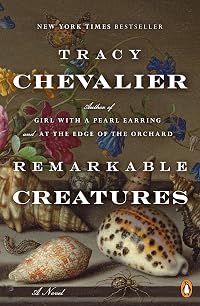
Remarkable Creatures
by Tracy Chevalier
On This Page
Description
When Mary Anning uncovers an unusual fossilized skeleton in the cliffs near her home on the English coast, she sets the religious fathers on edge, the townspeople to vicious gossip, and the scientific world alight. Luckily, Mary finds an unlikely champion in prickly Elizabeth Philpot, and in the struggle to be recognized in the wider world, Mary and Elizabeth discover that friendship is their greatest ally.Tags
Recommendations







Member Recommendations
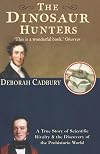
The Dinosaur Hunters: A True Story of Scientific Rivalry and the Discovery of the Prehistoric World by Deborah Cadbury
souloftherose Remarkable Creatures is a fictional account of Mary Anning and her fossils. The Dinosaur Hunters is a very readable factual account of the people hunting for fossils in the early 19th century which included Mary Anning.
20


by Fliss88
Member Reviews
Being so far advanced in terms of paleontology from the setting here, it's amazing anyone had to wrestle with the idea of extinction, but wrestle they did. On the Origin of Species had yet to be published, but you can see the evidence for natural selection with every fossil found. Literal bones of creatures never seen by humans made everyone have fits to the point of willful denials and wishful thinking. The idea that "god" didn't keep track of every creature and especially cherishing humans was unthinkable despite the rise of Deism and the Enlightenment giving way to more flexible ideas. Sigh. In many ways we haven't progressed at all and so many are still bound by superstition and ignorance. But anyway...about the book. I like the way show more the story is told and the wry humor in Elizabeth's thoughts and observations. Both she and Mary Anning were real life historical figures, but because they lacked dangly bits (oh so important those) they were ignored, shunted aside, taken advantage of and ultimately forgotten. Very glad for Chevalier's research to bring them back to life in this way. show less
The title, “Remarkable Creatures” refers both to the two women whom this tale is about and to the fossils that they collect, which many call monsters. Elizabeth Philpot, a spinster of middle income, moves to Lyme Regis with her two single sisters to have a place more affordable than London. The reason Lyme Regis is selected is because of the beach cliffs which regularly disgorge the fossils that Elizabeth studies and collects. Upon moving there, she makes the acquaintance of Mary Anning, child of the working class, who hunts fossils to sell to the tourists. Mary has the eye for finding them, as did her father who taught her. At this point, she knows very little about the creatures she hunts. Paleontology is a fairly new science this show more point in history; it’s still considered a part of geology. And Mary is poor and illiterate.
The woman and the girl find commonality in hunting the fossils. Elizabeth teaches Mary to read so that Mary can learn more from books. Most of the fossils found are ammonites and the like, but occasionally a dinosaur is unearthed- to the villagers, a monster, a crocodile. Through the years Mary finds several of these and her name becomes known in the geology world. She is not only a good hunter but has the knack of cleaning and preserving the specimens so they will last once exposed. But her abilities remove her from the marriage market of the small town. Marriage is to pass both Elizabeth and Mary by, but they form a friendship that will last many years and endure despite bad times and estrangements. This is the backbone of the story: the friendship between two women that does not constrain either of them but allows them to grow. These women are extraordinary for their time; during their lives, women were not even allowed onto the premises of the Geological Society much less allowed to be a member.
The novel avoids dates and seems to telescope time; years collapse into mere paragraphs. It sometimes moves in dreamlike fashion from one event to another. The two women’s voices alternate chapters in the first person, and I found the book compulsively readable. The women are both real, historic people, as are the men who impact their lives-Professor Buckland, Rev Conybear, James Birch, and Monsieur Cuvier, all fossil collectors. The people, the conditions endured while fossil hunting, and the era are brought vividly to life by Chevalier. show less
The woman and the girl find commonality in hunting the fossils. Elizabeth teaches Mary to read so that Mary can learn more from books. Most of the fossils found are ammonites and the like, but occasionally a dinosaur is unearthed- to the villagers, a monster, a crocodile. Through the years Mary finds several of these and her name becomes known in the geology world. She is not only a good hunter but has the knack of cleaning and preserving the specimens so they will last once exposed. But her abilities remove her from the marriage market of the small town. Marriage is to pass both Elizabeth and Mary by, but they form a friendship that will last many years and endure despite bad times and estrangements. This is the backbone of the story: the friendship between two women that does not constrain either of them but allows them to grow. These women are extraordinary for their time; during their lives, women were not even allowed onto the premises of the Geological Society much less allowed to be a member.
The novel avoids dates and seems to telescope time; years collapse into mere paragraphs. It sometimes moves in dreamlike fashion from one event to another. The two women’s voices alternate chapters in the first person, and I found the book compulsively readable. The women are both real, historic people, as are the men who impact their lives-Professor Buckland, Rev Conybear, James Birch, and Monsieur Cuvier, all fossil collectors. The people, the conditions endured while fossil hunting, and the era are brought vividly to life by Chevalier. show less
Presumptuous it may be to weave a tale out of real characters and events, but Chevalier uncovers a period distant enough that we might otherwise overlook the pulsing human emotions within its scientific advances. And animates them through two compelling characters, hidebound by class, culture and gender; but ultimately liberating themselves from these restraints, as perhaps women have throughout history. Often, that tale goes unrecorded; but here, we have it weaved into a wonderful story, by Chevalier’s inventiveness and imaginativeness. Great writing.
Here’s another historical novel from Tracy Chevalier (Girl With a Pearl Earring, The Lady And the Unicorn, others) that I found interesting, though not compelling. It’s the carefully researched story of two British women who played key and largely forgotten roles in the discovery of multiple dinosaur skeletons in the English coastal town of Lyme Regis.
In the early 19th century, most people, even those who were highly educated, believed the Bible was the best accounting of history. God created the Earth in seven days as a sort of fixed entity that never changed. Concepts like evolution and species extinction were not yet part of mainstream discussion. Nor were women considered suitable for any kind of scientific inquiry.
Nevertheless, show more here come Mary Anning and Elizabeth Philpot. Mary is a child of poverty, who has a knack for spotting fossils along the beach. Elizabeth is a middle class “spinster” with an interest in fish fossils. Initially, they believe they are collecting the remains of species that still live.
Despite their different backgrounds, their shared interests create a strong bond and Elizabeth becomes a kind of protector for Mary. Many more famous and recognized fossil collectors (all male, of course) come and go, buying Mary’s fossils for nominal fees and then (surprise, surprise!) taking credit for their discovery.
But when Mary discovers several complete skeletons of much larger beings, she and Elizabeth are among the first to notice that these remains seem different than any creatures that still live. Trying to get others to consider that possibility means going against the established scientific and religious orders of the day.
Their struggle to gain recognition for their ideas and work is really the center of this story. That sounds fascinating, right? But somehow it came off as a bit on the dry side to me.
I enjoyed learning about yet another example where women played an important, but uncredited role, in some major human discovery. One that is later ascribed to “scientific” MEN of learning. No shortage of these stories around these days.
One interesting aspect that DID hold my attention throughout was the way class dominated British society in everyday life. Who you were allowed to socialize with? Who was proper to invite to your home? Who was considered too far below you to acknowledge when passing on the street? And, of course, what women were allowed to do on their own, especially if unchaperoned? It is clear that a big part of getting Mary any recognition had to do with her humble origins.
If you have an interest in the subject matter you may enjoy this one. It’s not a long book. And you WILL no doubt learn something new. I just wish the book had done a better job of communicating the drama inherent to this story. show less
In the early 19th century, most people, even those who were highly educated, believed the Bible was the best accounting of history. God created the Earth in seven days as a sort of fixed entity that never changed. Concepts like evolution and species extinction were not yet part of mainstream discussion. Nor were women considered suitable for any kind of scientific inquiry.
Nevertheless, show more here come Mary Anning and Elizabeth Philpot. Mary is a child of poverty, who has a knack for spotting fossils along the beach. Elizabeth is a middle class “spinster” with an interest in fish fossils. Initially, they believe they are collecting the remains of species that still live.
Despite their different backgrounds, their shared interests create a strong bond and Elizabeth becomes a kind of protector for Mary. Many more famous and recognized fossil collectors (all male, of course) come and go, buying Mary’s fossils for nominal fees and then (surprise, surprise!) taking credit for their discovery.
But when Mary discovers several complete skeletons of much larger beings, she and Elizabeth are among the first to notice that these remains seem different than any creatures that still live. Trying to get others to consider that possibility means going against the established scientific and religious orders of the day.
Their struggle to gain recognition for their ideas and work is really the center of this story. That sounds fascinating, right? But somehow it came off as a bit on the dry side to me.
I enjoyed learning about yet another example where women played an important, but uncredited role, in some major human discovery. One that is later ascribed to “scientific” MEN of learning. No shortage of these stories around these days.
One interesting aspect that DID hold my attention throughout was the way class dominated British society in everyday life. Who you were allowed to socialize with? Who was proper to invite to your home? Who was considered too far below you to acknowledge when passing on the street? And, of course, what women were allowed to do on their own, especially if unchaperoned? It is clear that a big part of getting Mary any recognition had to do with her humble origins.
If you have an interest in the subject matter you may enjoy this one. It’s not a long book. And you WILL no doubt learn something new. I just wish the book had done a better job of communicating the drama inherent to this story. show less
Historical fiction based on the lives of real people, amateur paleontologists Elizabeth Philpot and Mary Anning, in the early 1800s in Lyme Regis, England. Elizabeth is an educated lady who has relocated from London, and Mary is a working-class daughter of an impoverished cabinet maker. They become unlikely friends, bonding over their love of fossils and searching for them by the sea. When Mary unearths a skeleton of what appears to be a large crocodile, it ultimately leads to their interaction with well-known male paleontologists of the day.
The narrative alternates perspectives between Elizabeth and Mary. They are based on real people and Chevalier writes them into life, complete with obsessions and idiosyncrasies. The two women face a show more number of obstacles, including a male-dominated society that minimizes the role of women and church officials that do not support the concept of extinction. The reader can feel a sense of injustice when Mary is not even given credit for discovering the skeleton. The period is portrayed beautifully. I particularly liked how the authors shows the tremendous gap in scientific knowledge at the time the fossils are initially discovered.
This book weaves together history, science, unconventional women, and a solid storyline, so it is no surprise that I enjoyed it tremendously. It vividly portrays the thrill of discovery and inspired me to research the people behind the story. I have read three of Chevalier’s novels and this one is my favorite by far. show less
The narrative alternates perspectives between Elizabeth and Mary. They are based on real people and Chevalier writes them into life, complete with obsessions and idiosyncrasies. The two women face a show more number of obstacles, including a male-dominated society that minimizes the role of women and church officials that do not support the concept of extinction. The reader can feel a sense of injustice when Mary is not even given credit for discovering the skeleton. The period is portrayed beautifully. I particularly liked how the authors shows the tremendous gap in scientific knowledge at the time the fossils are initially discovered.
This book weaves together history, science, unconventional women, and a solid storyline, so it is no surprise that I enjoyed it tremendously. It vividly portrays the thrill of discovery and inspired me to research the people behind the story. I have read three of Chevalier’s novels and this one is my favorite by far. show less
This is my first try with Tracy Chevalier, and I'm floored by the excellence I find. The book blurb doesn't come close to doing the story justice.
Chapters alternate the voices of the two main characters. Elizabeth Philpot stands out immediately by her practice of discerning which body part each person "leads with." What a fascinating concept!
This is rich historical fiction. At the very beginning of the study of paleontology, society wrestles with the scientific and religious repercussions of these remarkable finds. Adding in the fact that two of the early finders are women, the theme of womens' place in society, and economic place as well, adds value on every page. These women's voices sound authentic to the times.
I'll be reading more show more of Chevalier. show less
Chapters alternate the voices of the two main characters. Elizabeth Philpot stands out immediately by her practice of discerning which body part each person "leads with." What a fascinating concept!
This is rich historical fiction. At the very beginning of the study of paleontology, society wrestles with the scientific and religious repercussions of these remarkable finds. Adding in the fact that two of the early finders are women, the theme of womens' place in society, and economic place as well, adds value on every page. These women's voices sound authentic to the times.
I'll be reading more show more of Chevalier. show less
Mary Anning was one of those women in history who was not appreciated in her time and was given little or no credit for her remarkable talents. She was an uneducated person with a unique talent for finding prehistoric bones of extinct creatures in the cliffs around her home in Lyme. Her friend, and someone who did indeed recognize Mary’s skills, was Elizabeth Philpot, a spinster with higher rank in society and a much higher education level. Together, they contributed greatly to the scientific knowledge that led to an important shift in how men viewed God’s creation and how they viewed themselves within it.
The facts of this story are augmented with very realistic suppositions as to the rest of the story. Chevalier has almost show more certainly gotten much of it right, and with the rest her guess is as good as an informed guess could be. This is historical fiction at its finest. All the characters, real and imagined, are painted with a deft hand and ring completely true. It was inspiring to see how these two women carved out unique places in the society that disapproved of them simply because they wished for more than being a wife and mother. At this moment in history, intellectual property was the purview of men, and if you have ever been treated with condescension from a person who knew less than you did on a subject, you will feel the frustration of these characters as they attempt to deal with the men who usurp their accomplishments. If you have ever earned anyone’s true respect, you will also feel their triumphs.
Thoroughly enjoyed this novel, as I have done with several other of Chevalier’s works. Even if you don’t think you have any interest in fossils and the history of life, you will find something worth your time here. What Chevalier is unearthing is really the history of man. show less
The facts of this story are augmented with very realistic suppositions as to the rest of the story. Chevalier has almost show more certainly gotten much of it right, and with the rest her guess is as good as an informed guess could be. This is historical fiction at its finest. All the characters, real and imagined, are painted with a deft hand and ring completely true. It was inspiring to see how these two women carved out unique places in the society that disapproved of them simply because they wished for more than being a wife and mother. At this moment in history, intellectual property was the purview of men, and if you have ever been treated with condescension from a person who knew less than you did on a subject, you will feel the frustration of these characters as they attempt to deal with the men who usurp their accomplishments. If you have ever earned anyone’s true respect, you will also feel their triumphs.
Thoroughly enjoyed this novel, as I have done with several other of Chevalier’s works. Even if you don’t think you have any interest in fossils and the history of life, you will find something worth your time here. What Chevalier is unearthing is really the history of man. show less
Members
- Recently Added By
Published Reviews
ThingScore 50
Unless you have a deep and unabiding passion for fossils, you'll want to leave this specimen alone.
added by Shortride
Giant marine reptiles are not the only remarkable creatures in this book. Chevalier turns a warming spotlight on a friendship cemented by shared obsession and mutual respect across profound class fissures; a friendship between two women who were indirectly responsible for several male careers and ultimately (partially, very indirectly) for Darwin's insights. She also gives it what Darwin show more himself considered mandatory in a novel, a happy ending - or happy enough. show less
added by kathrynnd
Lists

Best Historical Fiction
620 works; 261 members

Historical Fiction
889 works; 91 members

Top Five Books of 2013
1,562 works; 715 members

Best 21st Century Books (So Far)
670 works; 85 members

Fiction Featuring Real People
81 works; 17 members

One Book, Many Authors
441 works; 40 members

Books To Get From The Library
115 works; 5 members

Books Read in 2015
3,299 works; 126 members

Books Read in 2021
5,361 works; 114 members

Recommended Nature Writing
346 works; 180 members

Books Read in 2019
4,052 works; 110 members

Authors from the United States
245 works; 3 members

Books Read in 2018
4,360 works; 110 members

Unmarried women
66 works; 6 members

BingoDOG - Scientists in Fiction
111 works; 17 members

Books Read in 2013
1,630 works; 51 members

Books Read in 2025
4,091 works; 97 members
Author Information

27+ Works 43,046 Members
Tracy Chevalier was born on October 19, 1962 in Washington, D.C. After receiving a B.A. in English from Oberlin College, she moved to England in 1984 where she worked several years as a reference book editor. Leaving her job in 1993, she began a year-long M.A in creative writing at the University of East Anglia. She is the author of several novels show more including The Virgin Blue, Burning Bright, Remarkable Creatures, and The Last Runaway. Her novel Girl with a Pearl Earring was made into a film starring Colin Firth and Scarlett Johansson. (Bowker Author Biography) show less
Some Editions
Awards and Honors
Series
Belongs to Publisher Series
Work Relationships
Common Knowledge
- Canonical title*
- Strane creature
- Original publication date
- 2009
- People/Characters
- Elizabeth Philpot; Mary Anning; Colonel Birch; William Buckland; Margaret Philpot; Henry De la Beche (show all 12); Charles Lyell; Henry Hoste Henly; William Conybeare; Molly Anning; Joseph Anning; Louise Philpot
- Important places
- Lyme Regis, Dorset, England, UK; England, UK; Dorset, England, UK; London, England, UK
- Dedication
- This is for my son, Jacob
- First words
- Lightning has struck me all my life.
- Quotations
- 'but dying was no drama. Dying was cold and hard and painful, and dull. It went on too long. I was exhausted and growing bored with it.'
I felt like a stocking turned inside out.
Then I opened my eyes, and it feels like they haven't been shut since.
I feel an echo of the lightning each time I find a fossil, a little jolt that says, "Yes, Mary Anning, you are different from all the rocks on the beach." That is why I am a hunter: to feel that bolt of lightning, and that di... (show all)fference, every day.
Mary Anning leads with her eyes.
And so I am stuck with my strong jaw that puts people off, set in stone like the fossils I collect.
But Fanny couldn't think like that and would hold on to her fear. I've met plenty of others the same—frightened of what they don't understand.
He made me feel an idiot, even when I knew he was a bigger one than I.
By March Margaret had always faded like a threadbare nightgown worn for too long.
It was hard arguing with Mr. Buckland, for his enthusiasm ran roughshod over everything.
There were so many stars now that I couldn't count them. I felt very small, pinned to the ground under the knowledge of them all.
My life led up to that moment, then led away again, like the tide making it's highest mark on the beach and then retreating.
"Everything is so big and old and far away," I said, sitting up with the force of it. "Good help me, for it does scare me."
It is not easy to let someone go, even when they have said unforgivable things to you.
Collectors have a list of items to be obtained, a cabinet
of curiosities to be filled by others' work. They might go
out onto the beach sometimes and walk along, frowning
at the cliffs as if looking at an exhibition ... (show all)of dull paintings.
They cannot concentrate, for the rocks all look the same to them: quartz looks like flint, beeflike bones. They find little more than a few bits of broken ammonite and belemnite and call themselves experts. Then they buy from the hunters what they need to make up their list. They have little true understanding of what they collect, or even that much interest. They know it is fashionable, and that is enough for them.
Hunters spend hour after hour, day after day out in all
weather, our faces sunburned, our hair tangled by the wind,
our eyes in a permanent squint, our nails ragged and our
fingertips torn, our hands chapped. Our boots are trimmed
with mud and stained with sea water. Our clothes are filthy by the end of the day. Often we find nothing, but we are patient and hard-working and not put off by coming back empty-handed. We may have our special interest - an intact brittle star, a belemnite with its sac attached, a fossil fish with every scale in place - but we pick up other things too, and are open to what the cliffs and beach offer us. - Last words
- (Click to show. Warning: May contain spoilers.)We are silent together, each in her own world, knowing the other is just at her back.
- Original language
- English
*Some information comes from Common Knowledge in other languages. Click "Edit" for more information.
Classifications
Statistics
- Members
- 3,549
- Popularity
- 4,634
- Reviews
- 237
- Rating
- (3.86)
- Languages
- 12 — Catalan, Danish, Dutch, English, French, German, Italian, Portuguese, Romanian, Serbian, Spanish, Swedish
- Media
- Paper, Audiobook, Ebook
- ISBNs
- 72
- ASINs
- 29
