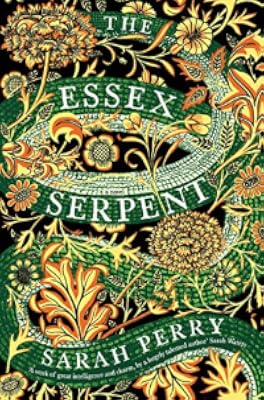
The Essex Serpent
by Sarah Perry
On This Page
Description
Set in Victorian London and an Essex village in the 1890's, and enlivened by the debates on scientific and medical discovery which defined the era, The Essex Serpent has at its heart the story of two extraordinary people who fall for each other, but not in the usual way. They are Cora Seaborne and Will Ransome. Cora is a well-to-do London widow who moves to the Essex parish of Aldwinter, and Will is the local vicar. They meet as their village is engulfed by rumours that the mythical Essex show more Serpent, once said to roam the marshes claiming human lives, has returned. Cora, a keen amateur naturalist is enthralled, convinced the beast may be a real undiscovered species. But Will sees his parishioners' agitation as a moral panic, a deviation from true faith. Although they can agree on absolutely nothing, as the seasons turn around them in this quiet corner of England, they find themselves inexorably drawn together and torn apart. Told with exquisite grace and intelligence, this novel is most of all a celebration of love, and the many different guises it can take. show lessTags
Recommendations
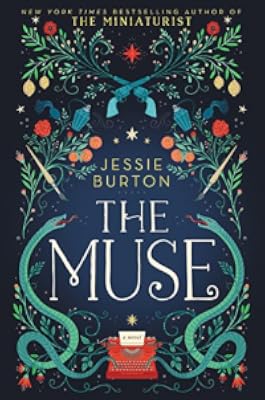
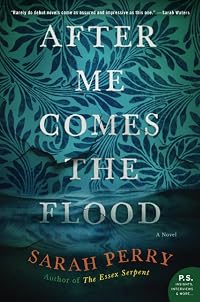
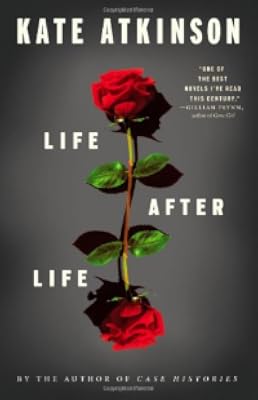
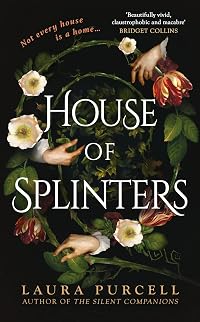






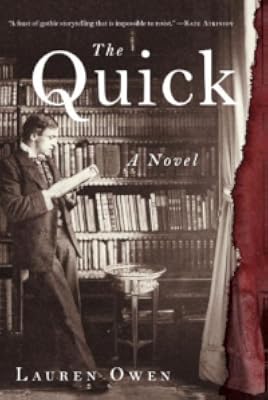
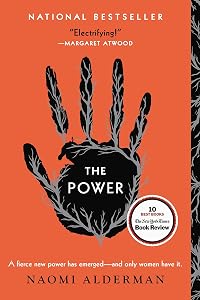

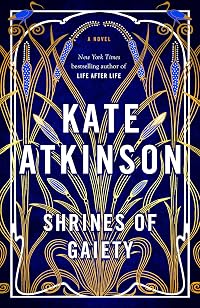
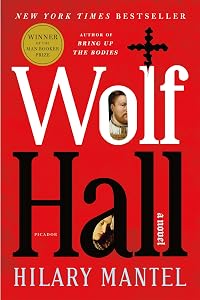
Member Recommendations

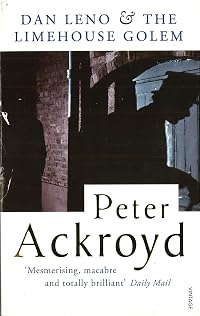
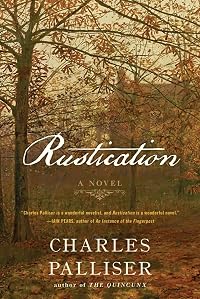
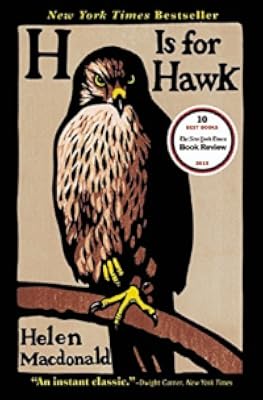
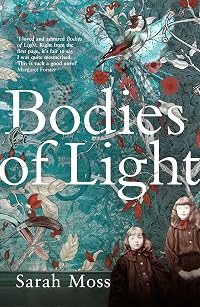
wandering_star Something about the writing style of The Clocks In This House... really reminded me of The Essex Serpent, but I couldn't quite put my finger on it. Then I saw a tweet from Sarah Perry saying how much she enjoyed The Clocks In This House... - so there must have been something to it!
Member Reviews
The story takes place in the 1890’s, and has the feel of a Victorian novel, not just a novel written as an historical novel. It explores science and medical advances vs. religion; a women’s place in society; politics and the treatment of the poor and their substandard housing, all things that still resonate today. It also looks at love and friendship. Cora Seaborne is recently widowed and feels freed from an abusive marriage. She sets about finding herself and allowing herself to follow her love of science. She moves from London to an Essex village called Aldwinter, and there forgoes trying to be beautiful, dresses in a man’s coat and boots and gets down and dirty in the mud alongside the water of the Blackwater River where the show more mythical Essex Serpent has been rumored to have returned. She is introduced through friends to the the local vicar Will Ransome and his beautiful sickly wife Stella. Cora and Will strike up an odd friendship where his religious beliefs and her scientific beliefs clash and cause discussions that pull them together rather than push them apart. The many secondary characters are as interesting as the main characters, and the underlying fear of the unknown “serpent” adds an atmosphere that pulled me along through the story. I am very glad that I read it.
Read July 2018 show less
Read July 2018 show less
When Cora Seaborne’s husband dies, no one in the household is sorry. He was a sadistic and abusive man, who leaves Cora with scars both physical and mental to remember him by. But he also leaves her with a bit of money, so she no longer has to stay in the mansion with the bad memories; she, her autistic son Francis, and her socialist companion Martha move to a village in Essex, where she hopes to find fossils like Mary Anning is doing. There she meets the Ransomes: William the vicar, his wife Stella, and their three children. Cora and Stella immediately take to each other as if they had grown up together; Cora and William find themselves in a different sort of friendship, arguing in a jovial way, frequently via letter. But all is not show more fun and games in Aldwinter; the legendary Essex sea monster (a real bit of Essex folklore) seems to be back, drowning young men, stealing goats, and generally scaring the people silly even though no one has seen it.
This is a book you climb into and live in with the characters. The descriptions of nature, of people, and especially of Stella are the literary equivalent of pre-Raphaelite paintings; exquisitely detailed and saturated with life. There is a great cast of characters, and intellectual and social issues are explored. I loved this novel; there is a lot of depth to it. Five stars. show less
This is a book you climb into and live in with the characters. The descriptions of nature, of people, and especially of Stella are the literary equivalent of pre-Raphaelite paintings; exquisitely detailed and saturated with life. There is a great cast of characters, and intellectual and social issues are explored. I loved this novel; there is a lot of depth to it. Five stars. show less
 This review was written for LibraryThing Early Reviewers.
To all intents and purposes this is a nineteenth century novel but it is one written with a modern sensibility. The text is divided into a prologue set on (an unspecified) New Year’s Eve followed by four parts split into unevenly distributed sections which are titled consecutively January to September and then finally November, all interspersed with letters written between the characters.
In it the recently (happily) widowed Cora Seaborne with her son Frankie – who seems to have OCD or at the least autistic traits – and his childhood nurse Martha travel to Colchester to get away from London. The doctor who attended her husband’s death bed, Luke Garrett, has meanwhile formed an unreciprocated attraction to her. An earthquake show more eight years before the book starts has, according to rumour, let loose again the Essex Serpent which for a short time in 1669 roamed the waters of the Essex coast. Every local mishap or disappearance is now blamed on it. In the Blackwater estuary village of Aldwinter, there is a representation of the serpent carved onto a pew in All Saints Church. Through a mutual acquaintance an introduction is arranged between its vicar, William Ransome, and Cora, who has an interest in ancient creatures inspired by Mary Anning. Both Cora and Ransome erroneously imagine the other to be a stereotype of their respective statuses. They first meet by accident while rescuing a sheep from the muddy river bank but on further introduction strike up an intellectual, if verbally combative, friendship. Ransome is at odds with his congregation in being unwilling to address or assuage their belief in the creature. Ransome’s wife, Stella, is a consumptive, who is pleased by, even encourages, the friendship between her husband and Cora, and herself befriends Frankie.
The ingredients are here for a tale of forbidden love (or two eternal triangles even) set against a backdrop of supernatural horror but Perry does not play that game. She is more subtle – and too good a writer. Yet something about the enterprise nevertheless misses the mark.
The prologue mentions the banks of the River Blackwater in its first sentence. Having once lived by that river’s banks myself – but way upstream not near the estuary – I was therefore disposed to like the book, but as time went by I grew increasingly frustrated by it. It is not that it is not accomplished in its way or fails to provide memorable characters - even the relatively minor ones are rounded and all too human. There was just something about it that felt askew. About halfway through the thought crystallised.
Perry has yet to learn economy. Accumulation of detail normally lends verisimilitude, but she overdoes it. Descriptions frequently contain at least one observation too many. There is too much telling, too many extended ruminations by the various characters. And is Cora just a little too modern in her attitudes? In this regard the sub-theme of the problem of social housing and high rents also seemed to be straining for contemporary relevance. And - this last was actually a grace note, so not infelicitous as such - I did wonder if Martha had been named solely so as that another character might say to her, “‘Martha, my dear.’”
A pointer to Perry’s intentions for the novel may be found when she puts into the mouth of Will Ransome the thought, “‘far from being one truth alone there may be several truths,’” but we are never in any doubt that there is only one reality here. In that regard the putative fantasy element of the serpent promises more than it delivers.
While Perry has a facility with character and behaviour and The Essex Serpent has much to recommend it, it is more than a touch overwritten. show less
In it the recently (happily) widowed Cora Seaborne with her son Frankie – who seems to have OCD or at the least autistic traits – and his childhood nurse Martha travel to Colchester to get away from London. The doctor who attended her husband’s death bed, Luke Garrett, has meanwhile formed an unreciprocated attraction to her. An earthquake show more eight years before the book starts has, according to rumour, let loose again the Essex Serpent which for a short time in 1669 roamed the waters of the Essex coast. Every local mishap or disappearance is now blamed on it. In the Blackwater estuary village of Aldwinter, there is a representation of the serpent carved onto a pew in All Saints Church. Through a mutual acquaintance an introduction is arranged between its vicar, William Ransome, and Cora, who has an interest in ancient creatures inspired by Mary Anning. Both Cora and Ransome erroneously imagine the other to be a stereotype of their respective statuses. They first meet by accident while rescuing a sheep from the muddy river bank but on further introduction strike up an intellectual, if verbally combative, friendship. Ransome is at odds with his congregation in being unwilling to address or assuage their belief in the creature. Ransome’s wife, Stella, is a consumptive, who is pleased by, even encourages, the friendship between her husband and Cora, and herself befriends Frankie.
The ingredients are here for a tale of forbidden love (or two eternal triangles even) set against a backdrop of supernatural horror but Perry does not play that game. She is more subtle – and too good a writer. Yet something about the enterprise nevertheless misses the mark.
The prologue mentions the banks of the River Blackwater in its first sentence. Having once lived by that river’s banks myself – but way upstream not near the estuary – I was therefore disposed to like the book, but as time went by I grew increasingly frustrated by it. It is not that it is not accomplished in its way or fails to provide memorable characters - even the relatively minor ones are rounded and all too human. There was just something about it that felt askew. About halfway through the thought crystallised.
Perry has yet to learn economy. Accumulation of detail normally lends verisimilitude, but she overdoes it. Descriptions frequently contain at least one observation too many. There is too much telling, too many extended ruminations by the various characters. And is Cora just a little too modern in her attitudes? In this regard the sub-theme of the problem of social housing and high rents also seemed to be straining for contemporary relevance. And - this last was actually a grace note, so not infelicitous as such - I did wonder if Martha had been named solely so as that another character might say to her, “‘Martha, my dear.’”
A pointer to Perry’s intentions for the novel may be found when she puts into the mouth of Will Ransome the thought, “‘far from being one truth alone there may be several truths,’” but we are never in any doubt that there is only one reality here. In that regard the putative fantasy element of the serpent promises more than it delivers.
While Perry has a facility with character and behaviour and The Essex Serpent has much to recommend it, it is more than a touch overwritten. show less
I was caught off guard at first, being so used to books stating everything plainly like, 'look, here's the deal'. I thought I must have gotten distracted and missed things after reading the first chapter and went back and reread it, but no, that's really just how it was. Subtly showing the reader more often than telling. You're almost collecting clues to string together for meaning. Or handed puzzle pieces and it's up to you to arrange them into the correct picture. It is very different from most books! Some 'reading between the lines' required, but it's worth it. I think people are probably likely to either feel dumb and lost, or feel clever and intrigued. For me, it was a very nice break from being beaten over the head with an show more author's point, 'and once more for the people who missed it the first three times!...'. It was almost like a vote of confidence shown in the intelligence of her readers.
The tone is a bit sobering I think, sometimes a little raw feeling, but life isn't all sanitized and easy and joyful all the time, so I appreciated the truth of it. The start was a bit slow for me, but it got increasingly more interesting. There was also a poetry in the words chosen and arranged. I am impressed.
Also Juanita McMahon does a wonderful reading in the audiobook! show less
The tone is a bit sobering I think, sometimes a little raw feeling, but life isn't all sanitized and easy and joyful all the time, so I appreciated the truth of it. The start was a bit slow for me, but it got increasingly more interesting. There was also a poetry in the words chosen and arranged. I am impressed.
Also Juanita McMahon does a wonderful reading in the audiobook! show less
Set in Victorian times, the Essex Serpent brings together a diverse cast of characters--carrying them from London’s busy streets to a quiet village on the Essex marshes--then stirs, simmers and repeats. There’s a child who can’t relate to the world’s assumptions, a widow who’s really not in search of a new husband, a pastor whose perfect family hides a hint of tragedy, a doctor, a philanthropist, politics and more. All are woven together with evocative description and hints of mystery. Why doesn’t she want to remarry? Why might the pastor be tempted? And what lies hidden in the mist?
Essex fog parallels the fog of human emotions in this tale. Essex legend parallels human assumptions. And Essex reality is as vivid in the book show more as it was when I lived there. The story is slow, haunting, and oddly beautiful. The serpent is like the elephant in the living rooms of dreams, and the tensions between scientific investigation, faithful conviction, and human need are beautifully depicted. I enjoyed this novel for its faith vs science hints and its foreshadowing of modern days. But I also enjoyed the slowly growing mystery and resolution. A very neat telling of a very tortuous tale!
Disclosure: I needed something to read on a train in England, and it fit the bill perfectly. show less
Essex fog parallels the fog of human emotions in this tale. Essex legend parallels human assumptions. And Essex reality is as vivid in the book show more as it was when I lived there. The story is slow, haunting, and oddly beautiful. The serpent is like the elephant in the living rooms of dreams, and the tensions between scientific investigation, faithful conviction, and human need are beautifully depicted. I enjoyed this novel for its faith vs science hints and its foreshadowing of modern days. But I also enjoyed the slowly growing mystery and resolution. A very neat telling of a very tortuous tale!
Disclosure: I needed something to read on a train in England, and it fit the bill perfectly. show less
The Essex Serpent by Sarah Perry is a beautifully written story. So many quirky, yet lovable characters, and such an array of feelings. One moment I almost felt as if I had picked up a volume of poetry, so beautifully written, one moment a lovely scene, and the next, darkness looms. This book takes us on a journey through a year in the lives of an assortment of people, whose strengths and weaknesses make them so very real. The unexpected happens often, hearts are broken and lives are mended. And the ending is nothing short of a work of art. The ending can make or break a book, and there is nothing broken in this story of Cora and Martha, Will, Francis, and all of the others whose lives touch, with Cora as the connector of them all. I show more loved it. show less
Set in the Victorian era, Cora Seaborne is a widow who has never known freedom. With her son in tow, she'll move to a small village in Essex, seeking adventure in nature and good company. An introspective and character-driven story; a book about opposites co-existing; what conflict it presents, flows out from the flaws of good folk.
• Well-rounded cast of characters, whose perspectives and peculiarities seem to grow naturally from the lives they'd led.
• Vibrant and at times eccentric narration that does both setting and characters justice. Uses grammar as a tool, rather than a restriction, with pace and mood reigning supreme.
• What it purports to be its core plot (the Essex Serpent), acts more the part of set dressing.
This isn't show more a book I expected to enjoy, but it won me over rather quickly. Highly recommend, for empathetic and nostalgic readers who don't need much in the way of plot. Perhaps Gothic, but definitely neither horror nor mystery. show less
• Well-rounded cast of characters, whose perspectives and peculiarities seem to grow naturally from the lives they'd led.
• Vibrant and at times eccentric narration that does both setting and characters justice. Uses grammar as a tool, rather than a restriction, with pace and mood reigning supreme.
• What it purports to be its core plot (the Essex Serpent), acts more the part of set dressing.
This isn't show more a book I expected to enjoy, but it won me over rather quickly. Highly recommend, for empathetic and nostalgic readers who don't need much in the way of plot. Perhaps Gothic, but definitely neither horror nor mystery. show less
Members
- Recently Added By
Published Reviews
Volatility infects the politics of the novel: the narrative, moving restlessly between the city and the marshes, concerns itself increasingly with “the problem of London”, the relationship between governance, business and poverty summed up in slum renting, slum life – the endless, insoluble matter of how privilege can be persuaded to act outside its own interests, or even see beyond its show more own limits. In the tenement dwellers of Bethnal Green, Charles Ambrose – otherwise, we are led to believe, a decent man – sees “not equals separated from him only by luck and circumstance, but creatures born ill-equipped to survive the evolutionary race”. From this distance it seems impossible to give him the benefit of the doubt. Perry extends her considerable generosity not just to her characters but to the whole late Victorian period, with its fears for the present and curious faith in the future; show less
added by KayCliff
Lists

Historical Fiction
889 works; 90 members

Best 21st Century Books (So Far)
670 works; 86 members

Female Author
1,235 works; 67 members

Top Five Books of 2018
802 works; 264 members

Global Reads: Books Set in the United Kingdom and Ireland
109 works; 5 members
Top Five Books of 2017
757 works; 231 members

Books Read in 2017
4,249 works; 129 members

BBC Radio 4 Bookclub
340 works; 13 members

Mythical Monsters of the World
199 works; 79 members

Top Five Books of 2016
795 works; 229 members
Contemporary Fiction
109 works; 7 members

One Book, Many Authors
441 works; 40 members

Kirkus Starred Fiction Reviews of Books Published in 2017
412 works; 7 members

tell me where it hurts
36 works; 7 members

2017 Baileys Women's Prize for Fiction
16 works; 7 members
Animals in the Title
498 works; 11 members

Favorite Books from the 2010s
75 works; 3 members

Five star books
1,757 works; 107 members
Books Read in 2016
4,666 works; 197 members
The Hive Recommends
62 works; 2 members

Library TBR
64 works; 1 member

Books Read in 2019
4,052 works; 108 members

2010s
241 works; 3 members

Best Mysteries With a Historical Setting
292 works; 160 members

Books Read in 2025
4,091 works; 97 members
Author Information

7+ Works 6,162 Members
Some Editions
Awards and Honors
Awards
Distinctions
Notable Lists
Common Knowledge
- Canonical title
- The Essex Serpent
- Original title
- The Essex Serpent
- Original publication date
- 2016
- People/Characters
- Cora Seaborne; Francis Seaborne; Martha (former nanny to Francis, and companion to Cora Seaborne); William Ransome; Stella Ransome; Joanna Ransome (show all 16); Naomi Banks; Mr. Banks; Katherine Ambrose; Charles Ambrose; Cracknell; Luke Garrett; George Spencer (London doctor); Edward Burton; Thomas Taylor (legless begger in Aldwinter, Lancashire); Samuel Hall (former coworker and enemy of Edward Burton)
- Important places
- Essex, England, UK
- Related movies
- The Essex Serpent (2022 | IMDb)
- Epigraph
- If you press me to say why I loved him, I can say no more than because he was he, and I was I.
Michel de Montaigne, On Friendship - Dedication
- For Stephen Crowe
- First words
- A young man walks down by the banks of the Blackwater under the full cold moon.
- Last words
- (Click to show. Warning: May contain spoilers.)I am torn and I am mended — I want everything and need nothing — I love you and I am content without you.
Even so, come quickly!
CORA SEABORNE - Blurbers
- Macdonald, Helen; Burton, Jessie; Burnside, John; Waters, Sarah; Rentzenbrink, Cathy
- Original language
- English
- Canonical DDC/MDS
- 823.92
- Canonical LCC
- PR6116.E776
Classifications
Statistics
- Members
- 4,121
- Popularity
- 4,079
- Reviews
- 180
- Rating
- (3.63)
- Languages
- 15 — Chinese, Czech, Danish, Dutch, English, Estonian, French, German, Italian, Portuguese, Croatian, Spanish, Swedish, Turkish, Ukrainian
- Media
- Paper, Audiobook, Ebook
- ISBNs
- 62
- ASINs
- 15
