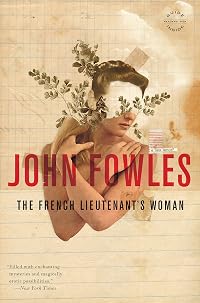
The French Lieutenant's Woman
by John Fowles
On This Page
Description
Perhaps the most beloved of John Fowles's internationally bestselling works, The French Lieutenant's Woman is a feat of seductive storytelling that effectively invents anew the Victorian novel. The novel inspired the hugely successful 1981 film starring Meryl Streep and Jeremy Irons and is today universally regarded as a modern classic.Tags
Recommendations






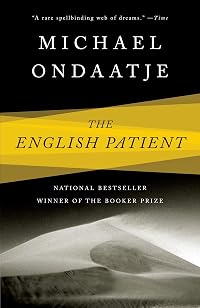

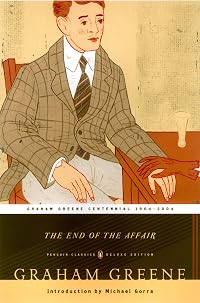
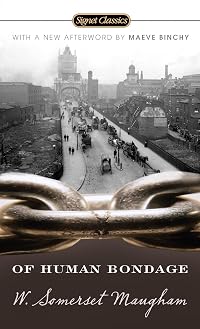
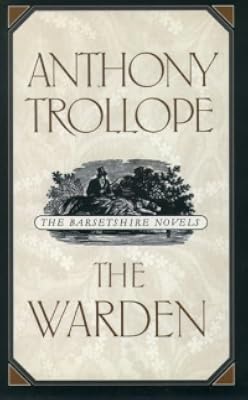


Member Recommendations
kitzyl Man engaged to conventional society finds himself attracted to an outcast who challenges the rigidity and hypocrisy of the era.
Member Reviews
I had a memory of reading and enjoying this novel many years ago, perhaps in my teens, but discovered that I remembered very little about it.
I was expecting a straightforward historical novel, a story set entirely in a very different time from when it was it was written. Actually this is a very 20th century novel, with a 1960s author-narrator telling a story set in 1867. He continually interrupts his story to comment on and discuss his characters, their actions, attitudes and values, and those of the Victorian society they live in.
Charles is an educated gentleman, preparing to meet social expectations of a man of his class, planning to marry Ernestina, daughter of a wealthy businessman. He becomes curious about Sarah, a servant and show more former governess with a mysterious but probably scandalous back story, nicknamed "the French lieutenant's woman", and a habit of walking along the cliffs in Lyme Regis, looking out to sea.
I am quite intrigued that Fowles claimed to be a feminist and that it was debated as a feminist novel. There is a lot for feminists to discuss here but all female characters (and nearly all characters) are seen through the eyes of the author-narrator whose story is in turn filtered through the view of his gentleman protagonist Charles.
The novel is packed with Victorian cultural and literary references, including Charles Darwin (whose theories of evolution were considered quite shocking in his time), Thomas Hardy, William Thackeray, Matthew Arnold and Gabriel Dante Rossetti.
This is not quite the Victorian love story that I expected, but something enjoyably odd and thought provoking, with many digressions and rabbit holes, including alternative storylines presented by the narrator.
A film was made of this novel in 1981, with a screenplay by Harold Pinter, and my Vintage Classics copy includes the writer's afterword on the difficulties of adaptation. show less
I was expecting a straightforward historical novel, a story set entirely in a very different time from when it was it was written. Actually this is a very 20th century novel, with a 1960s author-narrator telling a story set in 1867. He continually interrupts his story to comment on and discuss his characters, their actions, attitudes and values, and those of the Victorian society they live in.
Charles is an educated gentleman, preparing to meet social expectations of a man of his class, planning to marry Ernestina, daughter of a wealthy businessman. He becomes curious about Sarah, a servant and show more former governess with a mysterious but probably scandalous back story, nicknamed "the French lieutenant's woman", and a habit of walking along the cliffs in Lyme Regis, looking out to sea.
I am quite intrigued that Fowles claimed to be a feminist and that it was debated as a feminist novel. There is a lot for feminists to discuss here but all female characters (and nearly all characters) are seen through the eyes of the author-narrator whose story is in turn filtered through the view of his gentleman protagonist Charles.
The novel is packed with Victorian cultural and literary references, including Charles Darwin (whose theories of evolution were considered quite shocking in his time), Thomas Hardy, William Thackeray, Matthew Arnold and Gabriel Dante Rossetti.
This is not quite the Victorian love story that I expected, but something enjoyably odd and thought provoking, with many digressions and rabbit holes, including alternative storylines presented by the narrator.
A film was made of this novel in 1981, with a screenplay by Harold Pinter, and my Vintage Classics copy includes the writer's afterword on the difficulties of adaptation. show less
An excellent book all the way around. Fowles succeeds as a stylist both in his novel's "fictoin" sections, which are a pitch-perfect recreation of nineteenth century prose and its "non-fiction" sections, which are lucid, warm, and occasionally witty. The novel is well-constructed, effectively showing how Victorian morality and a harshly divided economic system hamstrung many of the people unlucky enough to live unconventional lives. Fowles research for this book was meticulous to a fault, and I learned a great deal about a typical Victorian's ideas about science, God, geography and love by reading this novel. Lastly, this novel succeeds as a po-mo experiment, bringing the unspoken assumptions that form the background of every Victorian show more novel you've ever read to the foreground. It's a testament to Fowles skill as a writer that this novel's characters come off as people rather than constructs, even when Fowles presents them to his readers as literary inventions. The novel is full of scenes of great emotional power and tenderness, and even readers completely uninterested in Fowles writerly experiments will likely enjoy this book's romantic elements.
Still, I can't say I loved this book, but that's because "The French Lieutenant's Woman," like so many stories of star-crossed Victorian love, is more or less suffused with a sense of impending doom from the very first page. You know these characters will make poor decisions, and, since Fowles makes sure you know the brutal constraints of the society in which they live, you know they'll pay dearly for them. Reading through the end of the novel, then, is not unlike watching trapped insects wiggle helplessly under the beam of a gigantic magnifying glass until they expire. I got the same sensation reading "Jude the Obscure," and, truth be told, I didn't enjoy it much then, either. Even so, I'll recommend this one to any reader out there. show less
Still, I can't say I loved this book, but that's because "The French Lieutenant's Woman," like so many stories of star-crossed Victorian love, is more or less suffused with a sense of impending doom from the very first page. You know these characters will make poor decisions, and, since Fowles makes sure you know the brutal constraints of the society in which they live, you know they'll pay dearly for them. Reading through the end of the novel, then, is not unlike watching trapped insects wiggle helplessly under the beam of a gigantic magnifying glass until they expire. I got the same sensation reading "Jude the Obscure," and, truth be told, I didn't enjoy it much then, either. Even so, I'll recommend this one to any reader out there. show less
I cannot decide whether I loved this book or was annoyed by it. Fowles wrote this Victorian era novel in the 1960s, but it never struck me as historical fiction. I guess it felt more like a writing exercise with really well thought out characters. Fowles inserts himself into the book, exploring his control or lack thereof over the characters, and comments on Victorian era psyche from the perspective of the 1960s. He also supplies 3 different endings to the book, never really saying which he feels is the right one.
I found this all interesting and annoying at the same time. I think it was even more annoying because the characters are so interesting and the plot so familiar (at the beginning at least) that I kind of wanted it to just be a show more straight ahead Victorian novel. I think it's kind of brilliant that Fowles was able to mesh these two things but it was also kind of jarring to read.
This is one of those books that I'll have to think about for awhile. show less
I found this all interesting and annoying at the same time. I think it was even more annoying because the characters are so interesting and the plot so familiar (at the beginning at least) that I kind of wanted it to just be a show more straight ahead Victorian novel. I think it's kind of brilliant that Fowles was able to mesh these two things but it was also kind of jarring to read.
This is one of those books that I'll have to think about for awhile. show less
A very emotional novel. Simultaneously I wanted Charles to have a successful life, either with Ernestina or with Sarah, and wanted him to fall flat on his face for being the ignoramus he was. The early descriptions of Sarah’s downfall at the hands of a cruel and deceitful Frenchman are well drawn, but somehow they ring false. Sarah is not as complimentary of her ex-lover as she might have been when describing her ensnarement and seduction. She keeps him below her, describing a rather uneducated man who was transparently false and manipulative. How on earth could a woman who was described as having the ability to at a glance discern the true character of anyone she meets fall for this character? Sarah explains when she tells Charles show more that she cannot reasonably hope to marry an equal, so therefore she must marry shame. How altruistic. Sarah’s daily life with the cruel, hypocritical and bigoted harpy Mrs. Poulteney makes us sympathetic all over again though and we think that indeed Sarah must be a bit mentally unstable after all.
At first I wanted to believe Sarah was a wronged woman just trying to survive in the ghastly restrictive Victorian world. I wanted to believe that Charles loved her. Then when he’s presented with logical reasons to the contrary, I wanted him to take Dr. Grogan’s advice and quit her; the scheming wench. He should have let the conventions of the day protect him. In one ‘ending’ he does this and he and Ernestina marry and have a relatively successful (if not quite happy) life together. One breathes a sigh of relief at the bullet dodge. But then there is a lot more novel to get through and we’re immediately told that this might not be really what happens. I found Sam’s betrayal of Charles to be quite cruel despite Charles kind of deserving it.
The scene where Charles leaves Ernestina is the most gut-wrenching of them all. She is palpably in pain and believes that Charles could have made her a better person and in return she would give him the ultimate bridal gift; faith in himself. That nearly made me cry because she totally nailed it. Charles lacks self-esteem in all but the most superficial way. He is a man of his time; liberally educated, an amateur scientist, a doubter of religious dogma, a gentleman of sufficiently independent means and will almost surely inherit an estate from a bachelor uncle. He knows that Ernestina is beneath him socially, but thinks that marriage is something he should do and she will do as well as any; at least she has wealth as a bonus.
His perceived moral and social expectations drive most of his behavior. He wants to be normal, respected and liked. It’s only when he allows himself to become emotional about Sarah, do we see him act outside his catechism. Though even then he views himself as munificent savior as Sarah herself assigns him this role. He feels gallant and romantic envisioning her rescue and elevation to his social rank. In the final ending, she eschews this even after her deliberate turning of the knife in his wound. She maintains that she will never marry and prefers to live with their child as a purported widow, drawing on the kindness of her new benefactor. She denies she ever intended to be cruel and destroy his life, but she is unconvincing. Charles leaves this final vignette as a broken and defeated man. It’s not as satisfying as I thought it would be. I still harbor sympathy for fallible, old Charles and his delusions.
Because this is the longest ending, I think it’s the one Fowles most wanted the reader to accept. Some people were annoyed with this device and the other where Fowles editorializes the story along the way, commenting on differences between his modern era of 1969 and that of the story; 1867. I found it very interesting and diverting. Why should every storyteller tell his story in exactly the same way? The enigmatic quality to the solution adds to its overall worth and if it was done in a more straightforward way would surely leave a less seismic impression. show less
At first I wanted to believe Sarah was a wronged woman just trying to survive in the ghastly restrictive Victorian world. I wanted to believe that Charles loved her. Then when he’s presented with logical reasons to the contrary, I wanted him to take Dr. Grogan’s advice and quit her; the scheming wench. He should have let the conventions of the day protect him. In one ‘ending’ he does this and he and Ernestina marry and have a relatively successful (if not quite happy) life together. One breathes a sigh of relief at the bullet dodge. But then there is a lot more novel to get through and we’re immediately told that this might not be really what happens. I found Sam’s betrayal of Charles to be quite cruel despite Charles kind of deserving it.
The scene where Charles leaves Ernestina is the most gut-wrenching of them all. She is palpably in pain and believes that Charles could have made her a better person and in return she would give him the ultimate bridal gift; faith in himself. That nearly made me cry because she totally nailed it. Charles lacks self-esteem in all but the most superficial way. He is a man of his time; liberally educated, an amateur scientist, a doubter of religious dogma, a gentleman of sufficiently independent means and will almost surely inherit an estate from a bachelor uncle. He knows that Ernestina is beneath him socially, but thinks that marriage is something he should do and she will do as well as any; at least she has wealth as a bonus.
His perceived moral and social expectations drive most of his behavior. He wants to be normal, respected and liked. It’s only when he allows himself to become emotional about Sarah, do we see him act outside his catechism. Though even then he views himself as munificent savior as Sarah herself assigns him this role. He feels gallant and romantic envisioning her rescue and elevation to his social rank. In the final ending, she eschews this even after her deliberate turning of the knife in his wound. She maintains that she will never marry and prefers to live with their child as a purported widow, drawing on the kindness of her new benefactor. She denies she ever intended to be cruel and destroy his life, but she is unconvincing. Charles leaves this final vignette as a broken and defeated man. It’s not as satisfying as I thought it would be. I still harbor sympathy for fallible, old Charles and his delusions.
Because this is the longest ending, I think it’s the one Fowles most wanted the reader to accept. Some people were annoyed with this device and the other where Fowles editorializes the story along the way, commenting on differences between his modern era of 1969 and that of the story; 1867. I found it very interesting and diverting. Why should every storyteller tell his story in exactly the same way? The enigmatic quality to the solution adds to its overall worth and if it was done in a more straightforward way would surely leave a less seismic impression. show less
The French Lieutenant's Woman is one of those novels that challenges the reader in his or her understanding of the Victorian era and of the idea of the novel itself. The descriptions of each person's role, down to the buttons on the coat, are exacting and precise. The visual descriptions are breath-taking and leave little to the imagination. Yet, this is as much a novel about the Victorian era as it is a comparison of modern society, or that in the 1960s when it was written, to that era. The comparisons and contemporary asides that draw the reader's attention to the differences, while startling at first, do force the reader to put aside modern sensibilities and allow the reader to appreciate those differences in a "how far we've come" show more fashion.
Having read this among my book club, there was discussion about the idea of role reversal between Sarah and Charles. Charles ends up being the character who wants the traditional life, marriage and children, career and contentment, while Sarah chooses to blaze her own path and not follow tradition or what society deems appropriate. Of even more importance than the gender roles is the idea of happiness. In each of the three possible endings, either they are both miserable, they are both happy, or one is miserable and the other is content, if not happy. Happiness, in Fowles' world, is more than following set rules, or not following them as the case may be. Rather, it is something that is not guaranteed no matter which path one might choose.
Speaking of the three endings, yes, there are three possible endings. Fowles presents each of them by including himself in the actual cast of characters, not as the omniscient narrator but as an actual character who interacts with Charles directly. It is this inclusion of himself into the novel and the three potential conclusions that creates the most confusion and ire among readers. For myself, I appreciate what Fowles was trying to accomplish. Life is a lot messier than choosing one path or another and knowing that all will end well no matter what. Sometimes, life takes us down a path that we neither want nor expect. It does not result in pat endings where all story lines are concluded neatly and nicely but rather often leaves more questions than answers. This true-to-life approach to The French Lieutenant's Woman makes the novel more realistic and profound.
The synopsis above lists The French Lieutenant's Woman as a love story. I am not certain I agree with this assessment. In fact, one could make a very clear argument that Sarah was never in love with Charles but rather in love with her freedom. This makes her actions more explanatory, if not acceptable. If she is in love with Charles, her actions become a lot more difficult to explain and understand.
The French Lieutenant's Woman is a beautiful story in and of itself. The reader can all but smell the sea air, hear the rustling of silk and satin, and feel the breeze on one's face through Fowles' gorgeous prose. The story itself unfolds quickly and clearly, without the need for extraneous words that so depicts Victorian-era novels. There are enough quirks, however, that allows the reader to understand that this is anything but a Victorian-era novel but rather a modern novel written about the Victorian era. This distinction is key to one's enjoyment of the novel. show less
Having read this among my book club, there was discussion about the idea of role reversal between Sarah and Charles. Charles ends up being the character who wants the traditional life, marriage and children, career and contentment, while Sarah chooses to blaze her own path and not follow tradition or what society deems appropriate. Of even more importance than the gender roles is the idea of happiness. In each of the three possible endings, either they are both miserable, they are both happy, or one is miserable and the other is content, if not happy. Happiness, in Fowles' world, is more than following set rules, or not following them as the case may be. Rather, it is something that is not guaranteed no matter which path one might choose.
Speaking of the three endings, yes, there are three possible endings. Fowles presents each of them by including himself in the actual cast of characters, not as the omniscient narrator but as an actual character who interacts with Charles directly. It is this inclusion of himself into the novel and the three potential conclusions that creates the most confusion and ire among readers. For myself, I appreciate what Fowles was trying to accomplish. Life is a lot messier than choosing one path or another and knowing that all will end well no matter what. Sometimes, life takes us down a path that we neither want nor expect. It does not result in pat endings where all story lines are concluded neatly and nicely but rather often leaves more questions than answers. This true-to-life approach to The French Lieutenant's Woman makes the novel more realistic and profound.
The synopsis above lists The French Lieutenant's Woman as a love story. I am not certain I agree with this assessment. In fact, one could make a very clear argument that Sarah was never in love with Charles but rather in love with her freedom. This makes her actions more explanatory, if not acceptable. If she is in love with Charles, her actions become a lot more difficult to explain and understand.
The French Lieutenant's Woman is a beautiful story in and of itself. The reader can all but smell the sea air, hear the rustling of silk and satin, and feel the breeze on one's face through Fowles' gorgeous prose. The story itself unfolds quickly and clearly, without the need for extraneous words that so depicts Victorian-era novels. There are enough quirks, however, that allows the reader to understand that this is anything but a Victorian-era novel but rather a modern novel written about the Victorian era. This distinction is key to one's enjoyment of the novel. show less
I first read this brilliant and captivating novel by the complex and gifted writer John Fowles in a British Literature college class some 4 decades ago. A recent re-read brought back all the pleasure and fascination of this immersive examination of Victorian society, the nature of science, the nature of instinct, the nature of sexuality, and the nature of art. So many themes are explored here through vivid portrayals. An author often considered "verbose and overly complex" (no doubt especially in these current times of non-existent attention spans), Fowles is nonetheless a captivating literary genius. There were so many aspects I'd forgotten or under appreciated at the time, it was a joy to re-read. The Magus, which I've read at least show more three times, is Fowles' other great masterpiece. "The novelist is still a god. . . " show less
First time (at least, self-aware first time) with an explicitly unreliable and downright ornery narrator. Talk about a mindf*ck -- I remember getting to the point where the chronology got messed up, where the relationship with Sarah turns out not to be what it was all Victorian-ishly cracked up to be, and where Mr. Fowles himself appears, leaning on a tree outside someone's brownstone. I really think that must have been the moment when I realized just how paradoxically necessary and yet unnecessary "Rules" were in writing. It was such a trip; and since that literally was one of the most exciting moments in my life, I think I must be a huge nerd.
Members
- Recently Added By
Lists

1001 Books You Must Read Before You Die
1,448 works; 1,136 members

The Guardian's 1000 Novels Everyone Must Read
1,005 works; 549 members

Best Historical Fiction
620 works; 261 members

Classics you know you should have read but probably haven't
421 works; 409 members

Radcliffe's 100 Best Novel of the 20th Century
100 works; 32 members

Read the book and saw the movie
1,170 works; 193 members
Best of British Literature
226 works; 41 members

Historical Fiction
889 works; 91 members

Metafiction
86 works; 23 members
20th Century Literature
1,161 works; 55 members
Larry McCaffery's 20th Century Greatest Hits: 100 English-Language Books
103 works; 12 members

Best Psychological Fiction
81 works; 16 members

Top Five Books of 2013
1,562 works; 715 members

Sense of place
156 works; 13 members
1960s, Best books published therein
254 works; 22 members

Favorite Literary Love Stories
182 works; 101 members
Favourite Books
1,820 works; 308 members
Time Magazine's "All-Time 100"
113 works; 15 members

Slipstream or Interstitial Fiction
160 works; 19 members

Significant works of postmodern fiction
86 works; 25 members
Love and Marriage
93 works; 10 members

Unread books
1,063 works; 87 members
Unreliable Narrators
170 works; 43 members

Experimental Literature
141 works; 19 members
LibraryThingers' 1001 Books You Must Read Before You Die
442 works; 30 members

Best Love Stories
107 works; 14 members
Time's All-Time 100 Novels
100 works; 27 members
Banned or Challenged Books
402 works; 43 members

Anthony Burgess 99 Post War Novels
99 works; 7 members

Books Set in Great Britain
191 works; 13 members

1970s
657 works; 23 members
Literature About Women and Girls
426 works; 40 members
1,001 BYMRBYD Concensus
723 works; 27 members

1960s
281 works; 16 members

Story Within a Story
65 works; 17 members

Speculative Fiction: Slipstream Literature
166 works; 16 members

A Novel Cure
742 works; 23 members

Victorian Period
113 works; 10 members
Love Triangles in Literature
108 works; 15 members

Books You Read During High School (For School)
301 works; 52 members
Elegant Prose
80 works; 4 members

Existentialism
90 works; 11 members

Allie's Favourite 150 Books
145 works; 3 members

Books about the ordinary family members of interesting sounding people.
20 works; 2 members
Five star books
1,767 works; 110 members

Publisher's Weekly Bestsellers - Part II - 1940 - 1979
355 works; 6 members

SHOULD Read Books!
354 works; 9 members
United Kingdom
82 works; 5 members

Favourite Books by Male Authors
29 works; 2 members

Favourite Books
50 works; 1 member
Literature About Adultery
69 works; 10 members
My favourite books
96 works; 3 members

Books That Changed Our Perspective
423 works; 168 members

Recommended Reading : 600 Classics Reviewed, Editors of Salem Press, 2015
634 works; 6 members

Books Read in 2025
4,128 works; 98 members

Read with a Friend
17 works; 1 member

Tagged 19th Century
104 works; 7 members

Mustich's 1000 Books to Read Before You Die: A Life Changing List
1,001 works; 20 members

Novels/Poems/Short Stories/Anything Storytelling Related
112 works; 2 members
My TBR
371 works; 3 members

KayStJ's to-read list
1,616 works; 11 members
Best books I read in 2013
152 works; 3 members

Fiction With Familiar Settings
280 works; 94 members
Talk Discussions
Past Discussions
1001 Group Read - June, 2013: The French Lieutenant's Woman in 1001 Books to read before you die (November 2013)
Author Information

62+ Works 26,204 Members
John Fowles was born in Essex, England, in 1926. He attended the University of Edinburgh for a short time, left to serve in the Royal Marines, and then returned to school at Oxford University, where he received a B.A. in French in 1950. Fowles taught English in France and Greece, as well as at St. Godric's College in London. Although the main show more theme in all Fowles's fiction is freedom, there are few other similarities in his books. He has deliberately chosen to explore a different style or genre for each novel: The Collector, his first novel, is an intellectual thriller; The Magus is an adolescent learning novel, tracing the emotional development of the central character; Daniel Martin tries, in the modernist style, to depict psychological reality; Mantissa is a comedic allegory that takes place entirely inside the narrator's head; Maggot combines mystery, science fiction, and history; and The Ebony Tower is a collection of short stories. Fowles explored yet another genre, historical fiction, with his best-known novel, The French Lieutenant's Woman, which received the W. H. Smith Literary Award in 1970 and was made into a movie, starring Meryl Streep and Jeremy Irons, in 1981. An intriguing feature of this novel is that it has three different endings. Fowles's nonfiction includes Aristos: A Self Portrait in Ideas; Poems; and Wormholes: Essays and Other Occasional Writings. In addition, he has written the text for several books of photographs, including The Tree, for which Fowles received the Christopher Award in 1982. He died on November 5, 2005 at the age of 79. (Bowker Author Biography) show less
Some Editions
Awards and Honors
Awards
Distinctions
Notable Lists
Series
Belongs to Publisher Series
Work Relationships
Is contained in
Has the adaptation
Is abridged in
Has as a student's study guide
Common Knowledge
- Canonical title
- The French Lieutenant's Woman
- Original title
- The French Lieutenant's Woman
- Alternate titles*
- De minnares
- Original publication date
- 1969
- People/Characters
- Sarah Woodruff; Charles Smithson; Ernestina Freeman
- Important places
- Lyme Regis, Dorset, England, UK; England, UK
- Related movies
- The French Lieutenant's Woman (1981 | IMDb)
- Epigraph
- Every emancipation is a restoration of the human
world and of human relationships to man himself
Marx, Zur Judenfrage (1844) - First words
- An easterly is the most disagreeable wind in Lyme Bay - Lyme Bay being that largest bite from the underside of England's outstretched south-western leg - and a person of curiosity could at once have deduced several strong pos... (show all)sibilities about the pair who began to walk down the quay at Lyme Regis, the small but ancient eponym of the inbite, one incisively sharp and blustery morning in the late March of 1867.
- Quotations
- "Fiction usually pretends to conform to the reality: the writer puts the conflicting wants and then describes the fight - but in fact fixes the fight, letting the want he himself favors win. And we judge writers of fiction bo... (show all)th by the skill they show in fixing the fights (in other words in persuading us that they were not fixed) and by the kind of fighter they fix in favor of: the good one, the tragic one, the evil one, the funny one and so on."
"That is the great distinction between the sexes. Men see objects, women see the relationship between objects. Whether the objects need each other, love each other, match each other. It is an extra dimension of feeling we men are without and one that makes war abhorrent to all real women—and absurd . . . War is a psychosis caused by an inability to see relationships."
When Charles left Sarah on her cliff ledge, I ordered him to walk straight back to Lyme Regis. But he did not; he gratuitously turned and went down to the Dairy.
- p. 81 - Last words
- (Click to show. Warning: May contain spoilers.)And out again, upon the unplumb'd, salt, estranging sea.
- Original language
- English
*Some information comes from Common Knowledge in other languages. Click "Edit" for more information.
Classifications
Statistics
- Members
- 7,110
- Popularity
- 1,665
- Reviews
- 109
- Rating
- (3.84)
- Languages
- 22 — Catalan, Czech, Danish, Dutch, English, Estonian, Finnish, French, German, Hebrew, Hungarian, Italian, Lithuanian, Norwegian (Bokmål), Polish, Portuguese, Romanian, Russian, Slovenian, Spanish, Swedish, Turkish
- Media
- Paper, Audiobook, Ebook
- ISBNs
- 129
- UPCs
- 1
- ASINs
- 105