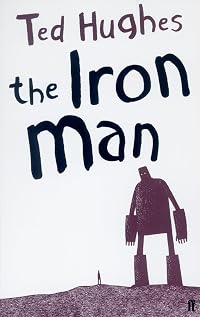
On This Page
Description
The fearsome iron giant becomes a hero when he challenges a huge space monster.Tags
Recommendations







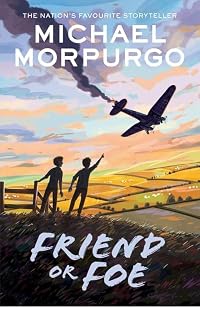

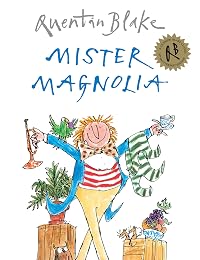
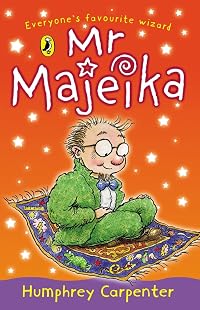

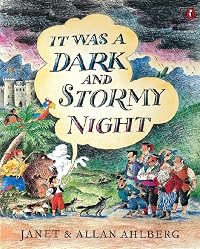



Member Recommendations

Member Reviews
One of my favorite animated films is The Iron Giant so when I discovered that it was based off of a book by the same name...well I had to read it didn't I? Ted Hughes, late poet laureate, created something truly special with this book. It's incredibly short (79 pages to be exact) but so much is crammed within those pages that it spoke more to me than some books three times that length. It is the tale of an Iron Giant/Man who arrives in a small town and begins wreaking havoc among the farmers by eating all of their metal machinery. At first, the farmers believe he is a monster and they trap him in a pit. However, when he escapes a little boy named Hogarth speaks upon the Iron Giant's behalf and comes up with a compromise. For a time, show more there is peace. And then (here's where the movie deviates) a creature born from a star lands on Australia. This creature is gigantic and shaped like a dragon and it demands to be fed living things. The people of earth decide to go to war against this creature instead. (Remember this is a "children's" book and it has already tackled prejudice (the farmers against the Iron Giant) and now it's taking human beings predilection for warfare head-on.) The weapons unleashed are unparalleled in their ferocity and yet the creature only smiles. It delivers an ultimatum and the people of earth are terrified. Once again, Hogarth (and yet just like a children's book to put the power in the hands of a child) has an idea. He asks the Iron Giant for help. A challenge of strength is issued which the dragon creature accepts.
I don't want to give away the ending. In fact, I feel slightly bad having said as much as I already have. I do hope you'll check this book out. It's worth your time (it took me no time at all to read it), I promise. It's lauded as an exceptionally brilliant read for a reason. There is so much to be gleaned from the story. show less
I don't want to give away the ending. In fact, I feel slightly bad having said as much as I already have. I do hope you'll check this book out. It's worth your time (it took me no time at all to read it), I promise. It's lauded as an exceptionally brilliant read for a reason. There is so much to be gleaned from the story. show less
You know how they say that adults can't see fairies, but kids can? That adults outgrow that magic ability? I think this book is a bit like that, referring to the storyline, anyway. What it does offer for adults are its poetic rhythms and a general sense of suspend-your-disbelief type wonder. It would be great fun to read aloud to a wide-eyed innocent.
Hm. Perhaps I do feel a twinge of fairy dust magic tingles.
Hm. Perhaps I do feel a twinge of fairy dust magic tingles.
First let me say that I will not accept this as SF. It's a great story, a parable, a fable, a fantasy... but SF would keep track of relative sizes at the very least! And what about all that consumption; where is the matter going?
Second, I coulda sworn that I read it before. I know I enjoyed the movie. And of course the movie is very different (though also quite good). But I thought I read the story, and yet almost nothing rings a bell.
In any case, this oversized, artistically designed edition gives the story great metaphysical & poetic weight & import, as one would expect from the poet Hughes even in his prose. I don't particularly care for this kind of art, speaking for myself, but here it's both effective and appropriate.
Highly show more recommended. show less
Second, I coulda sworn that I read it before. I know I enjoyed the movie. And of course the movie is very different (though also quite good). But I thought I read the story, and yet almost nothing rings a bell.
In any case, this oversized, artistically designed edition gives the story great metaphysical & poetic weight & import, as one would expect from the poet Hughes even in his prose. I don't particularly care for this kind of art, speaking for myself, but here it's both effective and appropriate.
Highly show more recommended. show less
Well, this was certainly a pleasant surprise. I found this loverly illustrated gift edition at my local Indie the other evening, and I'm a huge fan of the film version directed by Brad Bird that was released several years ago so I thought I'd pick this edition up. While there are some significant changes from the book to the film (instead of saving a small town from an atomic bomb as seen in the movie, the Iron Giant helps save the Earth from a large space-dragon), the message of peace is still essentially the same. I can understand why Brad Bird made the changes to the movie that he did, as I don't think this version of the story would have translated well to film, but I like the story that Ted Hughes tells just as much. Taken on their show more own, each version of this story is excellent. show less
An Iron Giant, who has had to reconstruct itself, travels through the ocean to a small farming community and eats metal objects until a boy named Hogarth manages to trap him in a pit. After the iron giant escapes, Hogarth befriends him and takes him to a junkyard to eat happily until a giant space dragon, who eats living things but cannot be destroyed by humans, arrives and must be defeated by the iron giant.
Ted Hughes published his short novel The Iron Giant with Random House in 1968. The text includes marvelous images of the iron giant through the similes used to describe the machine. Fore example, on page 41, the iron giant chose “a greasy black stove and chewed it like toffee.” Even with Hughes’s fun use of similes, the story show more falls short of perfection. The iron giant, a central character first speaks on page 61, over two-thirds of the way through the story. Perhaps the machine’s characterization would be better served if he spoke earlier to Hogarth. What is more, he story contains themes encouraging world peace and unity. While good, the implied lesson may be too heavy handed for some readers. show less
Ted Hughes published his short novel The Iron Giant with Random House in 1968. The text includes marvelous images of the iron giant through the similes used to describe the machine. Fore example, on page 41, the iron giant chose “a greasy black stove and chewed it like toffee.” Even with Hughes’s fun use of similes, the story show more falls short of perfection. The iron giant, a central character first speaks on page 61, over two-thirds of the way through the story. Perhaps the machine’s characterization would be better served if he spoke earlier to Hogarth. What is more, he story contains themes encouraging world peace and unity. While good, the implied lesson may be too heavy handed for some readers. show less
British Poet Laureate Ted Hughes’s classic novella The Iron Giant has seen a lot of changes and adaptations over the years. It was originally titled The Iron Man: A Children’s Story in Five Nights, but that was changed in the 1968 American version to avoid confusion with the comic book Iron Man. Fans of Brad Bird’s (The Incredibles, Ratatouille) 1999 film version may initially be put off by the difference between the stories; gone are the Cold War allegories and the development of friendship between young boy Hogarth and the titular giant that made the movie version so poignant. They will likely also be confused by the cover photo, which matches the animation style of the movie. Within the novel, however, are illustrations by show more Andrew Davidson, who first contributed to the book in 1985. Still, readers should enjoy the wonder and fantasy of the tale and will likely root for the Iron Giant to triumph regardless.
Hughes’s story focuses on the giant, whose appearance matches his name and who begins his journey by stumbling, crashing, falling to pieces and reassembling himself all within the first chapter. After literally pulling himself together, he inadvertently terrorizes a small British town by munching away on all their metal: barbed wire fences and farm equipment alike. Eventually the townspeople find peace with the giant and give him a way to quench his hunger for metal, but soon this is interrupted by the appearance of a giant--even more giant than the Iron Giant--dragon from outer space. The dragon is set on world-wide destruction and consumption, and only the Iron Giant can save the people of Earth from this evil.
The text of The Iron Giant is simplistic and accessible for children just transitioning to reading chapter books. It is a modern fairy tale at it’s finest, simultaneously highly imaginative and yet very familiar. show less
Hughes’s story focuses on the giant, whose appearance matches his name and who begins his journey by stumbling, crashing, falling to pieces and reassembling himself all within the first chapter. After literally pulling himself together, he inadvertently terrorizes a small British town by munching away on all their metal: barbed wire fences and farm equipment alike. Eventually the townspeople find peace with the giant and give him a way to quench his hunger for metal, but soon this is interrupted by the appearance of a giant--even more giant than the Iron Giant--dragon from outer space. The dragon is set on world-wide destruction and consumption, and only the Iron Giant can save the people of Earth from this evil.
The text of The Iron Giant is simplistic and accessible for children just transitioning to reading chapter books. It is a modern fairy tale at it’s finest, simultaneously highly imaginative and yet very familiar. show less
Ted Hughes's The Iron Man served as the inspiration for the 1999 Warner Bros. film The Iron Giant. Hughes's story, originally published in 1968, features the titular Iron Man who terrorizes a town by eating their metal products, and the boy Hogarth, who finds a way to talk to him. Unlike the animated film, the story is set in Hughes's native England, and, though set around the time in which it was written, it contains a certain timeless quality that will appeal to all readers.
The second half of the book did not make it into the film, as a "space-bat-angel-dragon" appears out of a star that moved to just within the moon's orbit and lands on Australia, demanding humanity feed it living things or it will take it upon itself to devour show more cities. Naturally, the Iron Man fights it, but I won't go in to details in order to avoid spoiling his methods and the ending. Hughes's story, like the Cold War setting in the animated adaptation, serves as a message of peace in the face of war. The overall effect is one of a truly enjoyable children's book that, like its later adaptation, will live on as a classic for readers of all ages. show less
The second half of the book did not make it into the film, as a "space-bat-angel-dragon" appears out of a star that moved to just within the moon's orbit and lands on Australia, demanding humanity feed it living things or it will take it upon itself to devour show more cities. Naturally, the Iron Man fights it, but I won't go in to details in order to avoid spoiling his methods and the ending. Hughes's story, like the Cold War setting in the animated adaptation, serves as a message of peace in the face of war. The overall effect is one of a truly enjoyable children's book that, like its later adaptation, will live on as a classic for readers of all ages. show less
Members
- Recently Added By
Lists

Puffin Books 70th anniversary handbook recommendations
537 works; 10 members

Books Read in 2016
4,666 works; 199 members

Tonikat reading completed on Librarything journals
329 works; 2 members

Books Read in 2023
5,638 works; 147 members

Best Sellers / Popular 1968
237 works; 5 members
Author Information

150+ Works 13,907 Members
Ted Hughes was born on August 17, 1930 in England and attended Cambridge University, where he became interested in anthropology and folklore. These interests would have a profound effect on his poetry. In 1956, Hughes married famed poet Sylvia Plath. He taught at the University of Massachusetts at Amherst from 1957 until 1959, and he stopped show more writing altogether for several years after Plath's suicide in 1963. Hughes's poetry is highly marked by harsh and savage language and depictions, emphasizing the animal quality of life. He soon developed a creature called Crow who appeared in several volumes of poetry including A Crow Hymn and Crow Wakes. A creature of mythic proportions, Crow symbolizes the victim, the outcast, and a witness to life and destruction. Hughes's other works also created controversy because of their style, manner, and matter, but he has won numerous honors, including the Somerset Maugham Award in 1960, and the Queen's Medal for Poetry in 1974. His greatest honor came in 1984, when he was named Poet Laureate of England. Ted Hughes died in 1998. (Bowker Author Biography) show less
Some Editions
Awards and Honors
Awards
Notable Lists
Series

Belongs to Publisher Series
Work Relationships
Has the adaptation
Common Knowledge
- Canonical title
- The Iron Man
- Original title
- The Iron Man
- Alternate titles
- The Iron Giant
- Original publication date
- 1968
- People/Characters
- the Iron Man; Hogarth (The Iron Man)
- Related movies
- The Iron Giant (1999 | IMDb)
- Dedication
- To Frieda, Nicholas and Shura
- First words
- The Iron Man came to the top of the cliff.
- Last words
- (Click to show. Warning: May contain spoilers.)All they wanted to do was to have peace to enjoy this strange, wild, blissful music from the giant singer in space.
- Disambiguation notice
- This work is a book written by Ted Hughes, not the related movie "The Iron Giant" presented by Warner Bros. Pictures.
Classifications
- Genres
- Fiction and Literature, Children's Books
- DDC/MDS
- 823.914 — Literature & rhetoric English & Old English literatures English fiction 1900- 1901-1999 1945-1999
- LCC
- PZ7 .H87398 .I — Language and Literature Fiction and juvenile belles lettres Fiction and juvenile belles lettres Juvenile belles lettres
- BISAC
Statistics
- Members
- 1,628
- Popularity
- 13,833
- Reviews
- 33
- Rating
- (3.76)
- Languages
- 13 — Danish, English, Finnish, German, Greek, Italian, Norwegian (Bokmål), Polish, Portuguese, Spanish, Swedish, Turkish, Welsh
- Media
- Paper, Audiobook, Ebook
- ISBNs
- 65
- ASINs
- 11