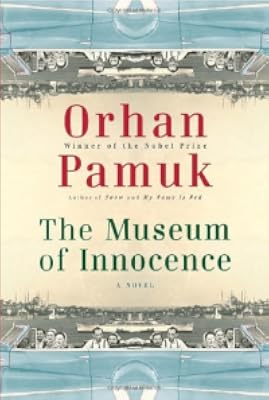
The Museum of Innocence
by Orhan Pamuk
On This Page
Description
It is 1975, a perfect spring in Istanbul. Kemal, scion of one of the city's wealthiest families, is about to become engaged to Sibel, daughter of another prominent family, when he encounters Fusun, a beautiful shopgirl and a distant relation. Thus begins an obsessive but tragic love affair that will transform itself into a compulsive collection of objects--a museum of one man's broken heart--that chronicle Kemal's lovelorn progress and his afflicted heart's reactions.Tags
Recommendations











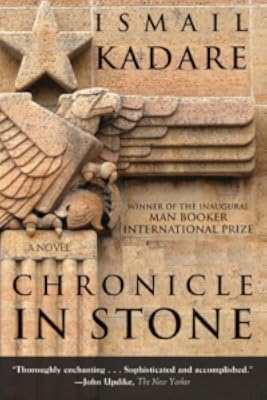
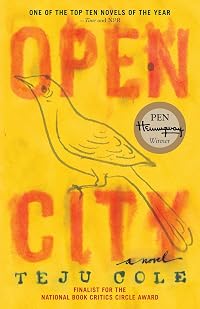
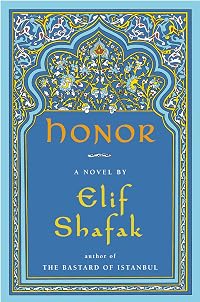
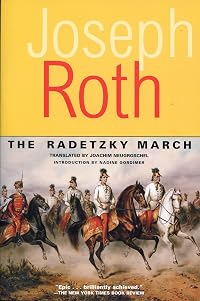


Member Recommendations

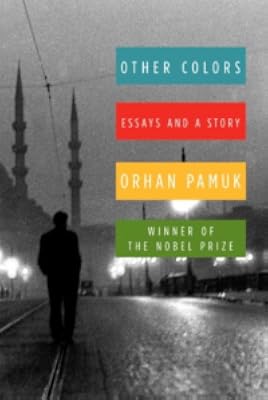
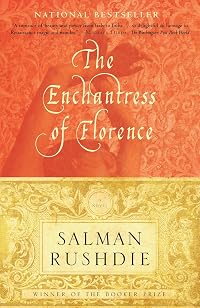
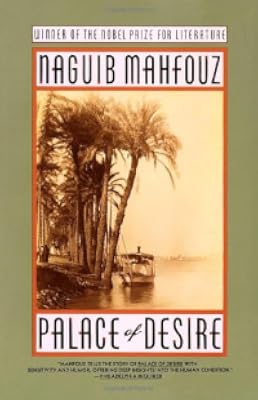
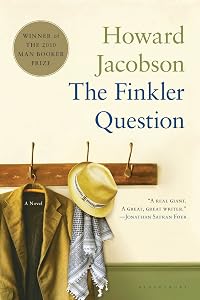
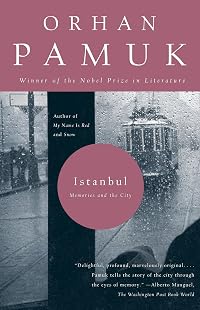
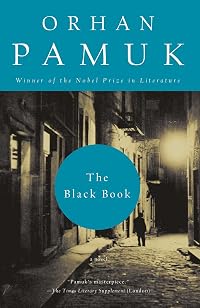
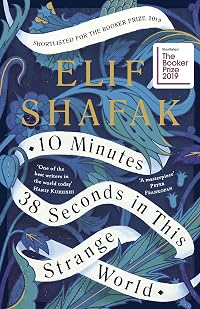
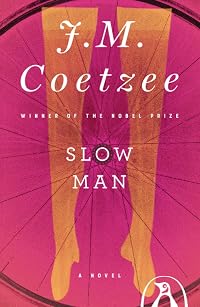
shaunie Not a positive recommendation I'm afraid - both feel interminably long and very little happens in either, although both are beautifully written.
Member Reviews
Several years ago a neighbour gave me a bag of books, all of which I immediately discarded except this. It sat on my to read shelf for a year or so, until a long haul voyage, even worse, a long haul voyage with flu, was about to happen. Wondering what was possessing me, I put this in my bag. Now or never. Worst case it would find a new home in Australia. Best....
Well, best, it turned out, was amazing. Despite having the flu, despite seats right next to the toilet (really disgusting, just don't do it), I couldn't put down this book. It is a fascinating account of Istanbul in the fifties through seventies and worth reading just for that. A small, but topical aside, is the reminder that Islamic terrorism against Westernisation has always show more existed. It is part of the backdrop of this story. It means physical danger, it means for women, harassment as they try to shake off oppression. It is about the divide that people on social media would have you think is new: urban vs rural, when it has always been there. How could one think otherwise?
There is graphic detail here of simple things like how it was going to the cinema - Pamuk is willing to lavish any number of words to paint his pictures. Minimalist he is not. But extravagantly sitting over all this is the story. The story of how a sexist wealthy Turk in the normal course of affairs thinking that he could have a wife on the one hand and his love on the other, discovers that he can't. He is split asunder and suffers such pain when he realises his terrible mistake that he is willing to surrender the rest of his life to trying to fix the situation, turn back the clock, and pick his mistress for his wife. She, meanwhile, has married lovelessly, the whole thing is senseless pain and anguish and a knot in your stomach for God knows, hundreds and hundreds of pages.
rest here: https://alittleteaalittlechat.wordpress.com/2017/06/21/the-museum-of-innocence-b... show less
Well, best, it turned out, was amazing. Despite having the flu, despite seats right next to the toilet (really disgusting, just don't do it), I couldn't put down this book. It is a fascinating account of Istanbul in the fifties through seventies and worth reading just for that. A small, but topical aside, is the reminder that Islamic terrorism against Westernisation has always show more existed. It is part of the backdrop of this story. It means physical danger, it means for women, harassment as they try to shake off oppression. It is about the divide that people on social media would have you think is new: urban vs rural, when it has always been there. How could one think otherwise?
There is graphic detail here of simple things like how it was going to the cinema - Pamuk is willing to lavish any number of words to paint his pictures. Minimalist he is not. But extravagantly sitting over all this is the story. The story of how a sexist wealthy Turk in the normal course of affairs thinking that he could have a wife on the one hand and his love on the other, discovers that he can't. He is split asunder and suffers such pain when he realises his terrible mistake that he is willing to surrender the rest of his life to trying to fix the situation, turn back the clock, and pick his mistress for his wife. She, meanwhile, has married lovelessly, the whole thing is senseless pain and anguish and a knot in your stomach for God knows, hundreds and hundreds of pages.
rest here: https://alittleteaalittlechat.wordpress.com/2017/06/21/the-museum-of-innocence-b... show less
Beautiful, beautiful.
OK, nothing happens, really, but each description, each sentence, each plot construction is completely ordinary and completely beautiful. So often I found myself internally cheering at one plot construction or another, one description or another. And it is so ... strong. We know (again) in the book's first sentence what the entire book will encompass, but 100's of pages are spent on just everyday life.
I read this in Turkish. I doubt that much was lost in any translation into other languages.
I could write many things, but I will add just one: Amongst many other things, this book is everything that is not ever included in a Turkish film. Years (100s of pages) of longing, watching TV, accidental oppression, the show more detritus of obsession. But the aspects that are in Turkish films - big conflicts, the power of money, successful winning over of loved ones, tears upon abandoment - are skipped over, effectively not included. show less
OK, nothing happens, really, but each description, each sentence, each plot construction is completely ordinary and completely beautiful. So often I found myself internally cheering at one plot construction or another, one description or another. And it is so ... strong. We know (again) in the book's first sentence what the entire book will encompass, but 100's of pages are spent on just everyday life.
I read this in Turkish. I doubt that much was lost in any translation into other languages.
I could write many things, but I will add just one: Amongst many other things, this book is everything that is not ever included in a Turkish film. Years (100s of pages) of longing, watching TV, accidental oppression, the show more detritus of obsession. But the aspects that are in Turkish films - big conflicts, the power of money, successful winning over of loved ones, tears upon abandoment - are skipped over, effectively not included. show less
The Museum of Innocence is a wonderful book that needs some serious cutting. I listened to the audio version. The book works well in that form because there's plenty of repetition. If something distracts the listener, he or she can count on the idea that was missed being repeated at least a few times. But that said, the book is fascinating in countless ways.
The notes from the publisher call it, “...a stirring exploration of the nature of romance.” A line like that makes me wonder if the publicist read the book. This would be better – “...a stirring condemnation of a self-centered, self declared romanticist.” It was clear Orhan Pamuk was condemning someone or something, but tricky to figure out who or what. It could simply be show more the main character, Kemal. But it could also be Kemal's wealthy family, since his father had a similar affair and his mother looked the other way both times. Or it could be Turkish culture in general. Pamuk often mentions the difference between westernized culture and traditional culture in Turkey. The Wikipedia entry on the book centers on this, but I find the lover's misogyny to be the most interesting aspect and something that can be found in other cultures. Pamuk's writing is so detailed, and carefully constructed, he was probably thinking of all these aspects.
Kemal claims a great love for Fusun, but he seems to be in love with the way she moves her wrist or the way she walks, never with her ideas or her goals or her opinions. Appropriately, the book opens with a sex act which is in one of the least intimate positions possible. Kemal declares the day this happened as the happiest moment of his life. He is consumed with the idea of a woman as a work of art rather than a living person and from that focus comes the idea of preserving her in a museum.
As I said, I think the book is too repetitious, but what I loved about it greatly outweighs my opinion on that one aspect.
Steve Lindahl – author of Motherless Soul and White Horse Regressions show less
The notes from the publisher call it, “...a stirring exploration of the nature of romance.” A line like that makes me wonder if the publicist read the book. This would be better – “...a stirring condemnation of a self-centered, self declared romanticist.” It was clear Orhan Pamuk was condemning someone or something, but tricky to figure out who or what. It could simply be show more the main character, Kemal. But it could also be Kemal's wealthy family, since his father had a similar affair and his mother looked the other way both times. Or it could be Turkish culture in general. Pamuk often mentions the difference between westernized culture and traditional culture in Turkey. The Wikipedia entry on the book centers on this, but I find the lover's misogyny to be the most interesting aspect and something that can be found in other cultures. Pamuk's writing is so detailed, and carefully constructed, he was probably thinking of all these aspects.
Kemal claims a great love for Fusun, but he seems to be in love with the way she moves her wrist or the way she walks, never with her ideas or her goals or her opinions. Appropriately, the book opens with a sex act which is in one of the least intimate positions possible. Kemal declares the day this happened as the happiest moment of his life. He is consumed with the idea of a woman as a work of art rather than a living person and from that focus comes the idea of preserving her in a museum.
As I said, I think the book is too repetitious, but what I loved about it greatly outweighs my opinion on that one aspect.
Steve Lindahl – author of Motherless Soul and White Horse Regressions show less
Writing about Vladimir Nabokov's novel Ada, Orhan Pamuk said that "Nabokov reminds us that our memories allow us to carry our childhood with us, and with it the golden age we thought we had left behind." This is not that dissimilar from the memories of the narrator of Orhan Pamuk's scintillating novel The Museum of Innocence. It is with a memory of love, obsessive and passionate, inflamed by Eros that Kemal, the narrator of the story, begins his tale.
It is a tale that reminded me of Socrates discussion of the myth of the chariot in The Phaedrus. The charioteer is filled with warmth and desire as he gazes into the eyes of the one he loves. Ultimately he is torn by a sort of divine madness. In the novel Kemal tells how "I first began to show more feel fissures opening in my soul, wounds of the sort that plunge men into a deep dark, lifelong loneliness for which there is no cure." (pp 52-3)
Fairly soon into the story Kemal throws over the perfection of his fiance, Sibel, whose "perfect placement of every pearl" cannot compete with the hold that Eros has over him in his overwhelming passion of the young girl Fusun.
Now if this is all there was to this story the novel would be short, semi-sweet, and in spite of the beautiful prose of the author not worthy of much further comment. But, as you may suspect there is more to this novel than this simple, albeit passionate, tale of a Turkish love triangle. No, the Museum of Innocence plumbs the depths of illusion. There is the illusion of love, the illusion of time, and ultimately the illusion of life.
The malleability of time is evidence of what the narrator calls "the illusion that is time." (p 282) It is compared to the difference between the personal life we each live within and the "official" time that we share with others. Kemal's obsessive love controlled his personal time even as the clock on the wall in Fusun's home ticked off the "time". The reader experiences a similar sensation when the regularity of short chapters of the novel is suddenly broken by chapter 24, "The Engagement Party", which is almost five times longer than the average length of those preceding. You must discover for yourself what intimacies of plot detail warrant a slowing of the flow of the story. Kemal's obsessive love is also illusory and leads him through memories of a life that is just as much illusion as he is blinded to the reality of the individuals who people his world.
Ultimately the narrative succeeds in communicating the complexity of what Kemal calls "the strange and mysterious spirit" of his days spent pursuing the illusion of life through obsessive love. The suspense keeps building as the novel progresses to the point where you begin to feel like those actors on the stage who wait for the next direction. The novel becomes a collection of episodes in the life of a collector - someone whose passions make for exceptional reading. show less
It is a tale that reminded me of Socrates discussion of the myth of the chariot in The Phaedrus. The charioteer is filled with warmth and desire as he gazes into the eyes of the one he loves. Ultimately he is torn by a sort of divine madness. In the novel Kemal tells how "I first began to show more feel fissures opening in my soul, wounds of the sort that plunge men into a deep dark, lifelong loneliness for which there is no cure." (pp 52-3)
Fairly soon into the story Kemal throws over the perfection of his fiance, Sibel, whose "perfect placement of every pearl" cannot compete with the hold that Eros has over him in his overwhelming passion of the young girl Fusun.
Now if this is all there was to this story the novel would be short, semi-sweet, and in spite of the beautiful prose of the author not worthy of much further comment. But, as you may suspect there is more to this novel than this simple, albeit passionate, tale of a Turkish love triangle. No, the Museum of Innocence plumbs the depths of illusion. There is the illusion of love, the illusion of time, and ultimately the illusion of life.
The malleability of time is evidence of what the narrator calls "the illusion that is time." (p 282) It is compared to the difference between the personal life we each live within and the "official" time that we share with others. Kemal's obsessive love controlled his personal time even as the clock on the wall in Fusun's home ticked off the "time". The reader experiences a similar sensation when the regularity of short chapters of the novel is suddenly broken by chapter 24, "The Engagement Party", which is almost five times longer than the average length of those preceding. You must discover for yourself what intimacies of plot detail warrant a slowing of the flow of the story. Kemal's obsessive love is also illusory and leads him through memories of a life that is just as much illusion as he is blinded to the reality of the individuals who people his world.
Ultimately the narrative succeeds in communicating the complexity of what Kemal calls "the strange and mysterious spirit" of his days spent pursuing the illusion of life through obsessive love. The suspense keeps building as the novel progresses to the point where you begin to feel like those actors on the stage who wait for the next direction. The novel becomes a collection of episodes in the life of a collector - someone whose passions make for exceptional reading. show less
Thanks Nur-Kr for your review, that makes a lot of sense.
Whilst reading this I did get a "Lost in Translation" feeling. Firstly, it did seem as though Pamuk is making a criticism of the cutural values of westernised, would be sophisiticated Turks, and suggesting that the pull to older cultural stereotypes (the obssession with virginity, seeing women only as objects of desire, an obsession with symbols not with substance) is far from broken. Secondly, there did seem to be a tie to the structure of melodramatic Turkish movies, which feature heavily. Thirdly, the civil disorder leading to the 1980 coup all happens in the background, and when it is mentioned it is only as a mild inconvenience - there are curfews to be avoided, roads that show more cant be crossed - which is surely a condemnation of the passivity with which sophisticated elites, caught up with their own trivial obsessions, greeted these events. Fourthly the casualness with which tragedy is reported (people are crushed by runaway trucks, characters die and are removed from the narrative with scarcely a word of farewell) again shows the insularity and fecklessness of people like Kemal
So for me, Kemal's obsession with Fusun, and before that his obsession with nightclubbing and similar frivolities at the expense of his business, came across as a methaphor for and condemnation of the shallowness of a whole generation - one of which he is a part, for surely there are traces of Pamuk's ownexperience here. He is well known as a walker of Istanbul, and Kemal is constantly prowling the less fashionable neighbourhoods
Of course I am probably wrong; I don't know enough about Turkish history or culture to know if there's any validity to this argument. But that's how it read to me
Because as a simple love story, or simple obsession with love story, it doesn't really work. As others have mentioned, the detail is really too obsessive, and too long winded and Pamuk is too good a writer not to recognise this. No narrative needs Kemal visiting Fusun's family for dinner every night for 8 years, stealing the occasional glance and many objects from her house, unless the point is to show Kemal's (and by extension Kemal's class) blindness to what is going on around him.
Kemal fritters his life away on obsessions, symbols, and his pointless "museum". But as far as he is concerned, he's had "a happy life". In fact it is Kemal, ultimately, who is The Innocent. And the Museum in question refers to the Innocence and shallowness of a whole generation and a whole way of life, which Pamuk has captured.
As such I think this is a brilliant literary achievement; not always easy to read, and at times almost dull. But something that makes you think, rare these days show less
Whilst reading this I did get a "Lost in Translation" feeling. Firstly, it did seem as though Pamuk is making a criticism of the cutural values of westernised, would be sophisiticated Turks, and suggesting that the pull to older cultural stereotypes (the obssession with virginity, seeing women only as objects of desire, an obsession with symbols not with substance) is far from broken. Secondly, there did seem to be a tie to the structure of melodramatic Turkish movies, which feature heavily. Thirdly, the civil disorder leading to the 1980 coup all happens in the background, and when it is mentioned it is only as a mild inconvenience - there are curfews to be avoided, roads that show more cant be crossed - which is surely a condemnation of the passivity with which sophisticated elites, caught up with their own trivial obsessions, greeted these events. Fourthly the casualness with which tragedy is reported (people are crushed by runaway trucks, characters die and are removed from the narrative with scarcely a word of farewell) again shows the insularity and fecklessness of people like Kemal
So for me, Kemal's obsession with Fusun, and before that his obsession with nightclubbing and similar frivolities at the expense of his business, came across as a methaphor for and condemnation of the shallowness of a whole generation - one of which he is a part, for surely there are traces of Pamuk's ownexperience here. He is well known as a walker of Istanbul, and Kemal is constantly prowling the less fashionable neighbourhoods
Of course I am probably wrong; I don't know enough about Turkish history or culture to know if there's any validity to this argument. But that's how it read to me
Because as a simple love story, or simple obsession with love story, it doesn't really work. As others have mentioned, the detail is really too obsessive, and too long winded and Pamuk is too good a writer not to recognise this. No narrative needs Kemal visiting Fusun's family for dinner every night for 8 years, stealing the occasional glance and many objects from her house, unless the point is to show Kemal's (and by extension Kemal's class) blindness to what is going on around him.
Kemal fritters his life away on obsessions, symbols, and his pointless "museum". But as far as he is concerned, he's had "a happy life". In fact it is Kemal, ultimately, who is The Innocent. And the Museum in question refers to the Innocence and shallowness of a whole generation and a whole way of life, which Pamuk has captured.
As such I think this is a brilliant literary achievement; not always easy to read, and at times almost dull. But something that makes you think, rare these days show less
Okay, I'm going to tell it as it is. Nobel-winning writer aside, this book is insufferable. I frankly don't understand the hype, the glowing reviews, attention from the New Yorker - this book is bad. Really bad.
The story revolves around a privileged man in Istanbul who has a short affair with a shopgirl and proceeds to become completely obsessed with her. So obsessed is he that after the girl marries someone else, he ends up sitting at their dinner table for the next 8 years.
When Kemal is not hopping around the latest upper-class Istanbul hotspots, he's becoming an expert kleptomaniac, pocketing everything around Füsun's house. He reports back about his activities with glee - "After having taken all those matchboxes, and Fusun's show more cigarette butts, and the saltshakers, the coffee cups, the hairpins, and the barrettes - things not difficult to pick up, because people rarely notice them missing - I began to set my sights on things like ashtrays, cups, and slippers…" Several pages later, we find out that "during my eight years of going to the Keskins' for supper, I was able to squirrel away 4,213 of Fusun's cigarette buts. Each one of these had touched her rosy lips and entered her mouth, some even touching her tongue and becoming moist [shock of all shocks!] as I would discover when I put my finger on the filter soon after she had stubbed the cigarette out; the stubs, reddened by her lovely lipstick, bore the unique impress of her lips at some moment whose memory was laden with anguish or bliss…"
There are plenty of signs that Kemal's obsession is not well received. Going back to cigarette stubbing, we find out that "sometimes she would stub it out with evident anger, sometimes with impatience. I had seen her stub out a cigarette in anger many times, and this caused me disquiet."
This might be an interesting storyline if it wasn't the same old hogwash repeating itself for 560 pages. There are entire chapters of this. Allow me to list out some chapter names for you: "The Melancholy of Autumn" is followed by "Cold and Lonely November Days". A few chapters later, there is a chapter titled "An Indignant and Broken Heart Is of No Use to Anyone."
Other reviewers have tried to find beauty in this book by its descriptions of Istanbul in the 1970's. Some have claimed that Pamuk's "museum" is a commemoration of a time and a place in Istanbul and that the book tries to showcase a lost culture. I disagree. Sure there are a few pages scattered here and there about Istanbul, and sure, the writing does shine in a few small segments. But the vast majority of the book is about Fusun's lips, tears, anger, family, dinners, cigarette butts, marriage, saltshakers, eyes, expressions and words. These discourses have only the most tangential relation to anything enlightening about 1970's Istanbul.
There is a disconcerting conceit about the author, when he introduces himself as a character - "This is how I came to seek out the esteemed Orhan Pamuk, who has narrated the story in my name and with my approval… I had also heard that he was a man lovingly devoted to his work and who took storytelling seriously." There is a lot more self-advertising in this book, but I won't delve into it. Suffice it to say that I really suffered through this book and would have abandoned it were it not so bad that I spent most of my time thinking about how I would justify such a critical review of such a well-hyped book. show less
The story revolves around a privileged man in Istanbul who has a short affair with a shopgirl and proceeds to become completely obsessed with her. So obsessed is he that after the girl marries someone else, he ends up sitting at their dinner table for the next 8 years.
When Kemal is not hopping around the latest upper-class Istanbul hotspots, he's becoming an expert kleptomaniac, pocketing everything around Füsun's house. He reports back about his activities with glee - "After having taken all those matchboxes, and Fusun's show more cigarette butts, and the saltshakers, the coffee cups, the hairpins, and the barrettes - things not difficult to pick up, because people rarely notice them missing - I began to set my sights on things like ashtrays, cups, and slippers…" Several pages later, we find out that "during my eight years of going to the Keskins' for supper, I was able to squirrel away 4,213 of Fusun's cigarette buts. Each one of these had touched her rosy lips and entered her mouth, some even touching her tongue and becoming moist [shock of all shocks!] as I would discover when I put my finger on the filter soon after she had stubbed the cigarette out; the stubs, reddened by her lovely lipstick, bore the unique impress of her lips at some moment whose memory was laden with anguish or bliss…"
There are plenty of signs that Kemal's obsession is not well received. Going back to cigarette stubbing, we find out that "sometimes she would stub it out with evident anger, sometimes with impatience. I had seen her stub out a cigarette in anger many times, and this caused me disquiet."
This might be an interesting storyline if it wasn't the same old hogwash repeating itself for 560 pages. There are entire chapters of this. Allow me to list out some chapter names for you: "The Melancholy of Autumn" is followed by "Cold and Lonely November Days". A few chapters later, there is a chapter titled "An Indignant and Broken Heart Is of No Use to Anyone."
Other reviewers have tried to find beauty in this book by its descriptions of Istanbul in the 1970's. Some have claimed that Pamuk's "museum" is a commemoration of a time and a place in Istanbul and that the book tries to showcase a lost culture. I disagree. Sure there are a few pages scattered here and there about Istanbul, and sure, the writing does shine in a few small segments. But the vast majority of the book is about Fusun's lips, tears, anger, family, dinners, cigarette butts, marriage, saltshakers, eyes, expressions and words. These discourses have only the most tangential relation to anything enlightening about 1970's Istanbul.
There is a disconcerting conceit about the author, when he introduces himself as a character - "This is how I came to seek out the esteemed Orhan Pamuk, who has narrated the story in my name and with my approval… I had also heard that he was a man lovingly devoted to his work and who took storytelling seriously." There is a lot more self-advertising in this book, but I won't delve into it. Suffice it to say that I really suffered through this book and would have abandoned it were it not so bad that I spent most of my time thinking about how I would justify such a critical review of such a well-hyped book. show less
I did not enjoy this book a great deal. I did read the whole thing, and I am unsure why. For long stretches, I simply detested the narrator and wondered why the same pattern of obsessive, stupid behavior justified my continued attention.
In the end, I believe I continued reading because I felt certain (and judicious foreshadowing implied) that the narrator would suffer in the end, and I admit that I really wanted him to suffer, and I wanted to see it. This made me feel dirty inside.
The narrator is a conceited, self-absorbed, foolish individual. He never grows out of adolescence. To be in his presence is misery, and in fact, most of his friends leave him behind.
The narrator never sees his "beloved" as a person. He never recognizes that show more his passion for Fusun is mere narcissism, that he loves "himself loving her," not her for herself. In the end, everyone and everything is a means to an end (self-flattery) and his "beloved" Fusun is simply the most important means at his disposal.
Pamuk executed an amazing character study of a most miserable character. But as with any art form, the experience of consuming a very "technical" performance -- is not always a pleasant experience.
This book would best suit a reader who wants to read the complete works of Pamuk, or else a literature students who want to use this work for the purposes of writing a literary critical piece. For an introduction to Pamuk's writing, try almost anything else. show less
In the end, I believe I continued reading because I felt certain (and judicious foreshadowing implied) that the narrator would suffer in the end, and I admit that I really wanted him to suffer, and I wanted to see it. This made me feel dirty inside.
The narrator is a conceited, self-absorbed, foolish individual. He never grows out of adolescence. To be in his presence is misery, and in fact, most of his friends leave him behind.
The narrator never sees his "beloved" as a person. He never recognizes that show more his passion for Fusun is mere narcissism, that he loves "himself loving her," not her for herself. In the end, everyone and everything is a means to an end (self-flattery) and his "beloved" Fusun is simply the most important means at his disposal.
Pamuk executed an amazing character study of a most miserable character. But as with any art form, the experience of consuming a very "technical" performance -- is not always a pleasant experience.
This book would best suit a reader who wants to read the complete works of Pamuk, or else a literature students who want to use this work for the purposes of writing a literary critical piece. For an introduction to Pamuk's writing, try almost anything else. show less
Members
- Recently Added By
Published Reviews
ThingScore 100
"The Museum of Innocence" deeply and compellingly explores the interplay between erotic obsession and sentimentality -- and never once slips into the sentimental. There is a master at work in this book.
added by Shortride
"The Museum of Innocence" is a deeply human and humane story. Masterfully translated, spellbindingly told, it is resounding confirmation that Orhan Pamuk is one of the great novelists of his generation. With this book, he literally puts love into our hands.
added by SqueakyChu
Lists

1001 Books You Must Read Before You Die
1,448 works; 1,133 members

Top Five Books of 2020
982 works; 350 members

Nobel Price Winners
222 works; 20 members

Middle East Fiction
179 works; 16 members

Literature in Translation
113 works; 5 members

Dim Sum Lunch Reading
43 works; 2 members

Best turkish novels of 21th century
6 works; 1 member
Author Information

107+ Works 32,936 Members
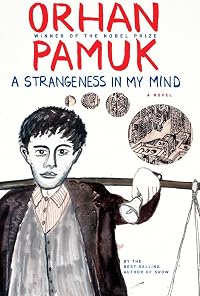
Orhan Pamuk was born in Istanbul, Turkey on June 7, 1952. After graduating from Robert College in Istanbul, he studied architecture at the Istanbul Technical University. After three years, he decided to become a writer and graduated from the Institute of Journalism at the University of Istanbul in 1976. In 1982, he published his first novel Cevdet show more Bey and His Sons, which received both the Orhan Kemal and Milliyet literary prizes. His novel, My Name Is Red, won the French Prix Du Meilleur Livre Etranger, the 2002 Italian Grinzane Cavour, and the 2003 International IMPAC Dublin Literary Award. He has received numerous Turkish and international literary awards for his works including the 2006 Nobel Prize in Literature. His recent work includes A Strangeness in My Mind. (Bowker Author Biography) Orhan Pamuk is the author of six previous novels, including "The White Castle" & "The New Life". He lives in Istanbul with his family. (Publisher Provided) show less
Some Editions
Awards and Honors
Distinctions
Series
Belongs to Publisher Series
Work Relationships
Common Knowledge
- Canonical title
- The Museum of Innocence
- Original title
- Masumyiet Müzesi
- Alternate titles*
- Das Museum der Unschuld : Roman
- Original publication date
- 2008 (original Turkish) (original Turkish)
- People/Characters
- Kemal; Füsun; Sibel
- Important places
- Istanbul, Turkey
- Epigraph
- These were innocent people, so innocent that they thought poverty a crime that wealth would allow them to forget. - from the notebooks of Celâl Salik
If a man could pass thro' Paradise in a Dream, and have a flower presented to him as a pledge that his Soul had really been there, and found that flower in his hand when he awoke - Aye? and what then? - from the notebooks of ... (show all)Samuel Taylor Coleridge
First I surveyed the little trinkets on the table, her lotions and her perfumes. I picked them up and examined them one by one. I turned her little watch over in my hand. Then I looked at her wardrobe. All those dresses and a... (show all)ccessories piled one on top of the other. These things that every woman used to complete herself - they induced in me a painful and desperate loneliness; I felt myself hers, I longed to be hers. - from the notebooks of Ahmet Hamdi Tanpinar - Dedication
- To Rüya
- First words*
- Es war der glücklichste Augenblick meines Lebens, und ich wusste es nicht einmal.
- Quotations
- It was the happiest moment of my life , though I didn’t know it. Had I known , had I cherished this gift , would everything have turned out differently ? Yes, if I had recognized this instant of perfect happiness, I would h... (show all)ave held it fast and never let it slip away.
- Last words
- (Click to show. Warning: May contain spoilers.)"Let everyone know, I lived a very happy life." (English translation)
(Click to show. Warning: May contain spoilers.)- Tutti devono saperlo: ho avuto una vita felice. (Italian translation) - Original language
- Turkish
- Disambiguation notice
- Not to be confused with L'innocenza degli oggetti. Il Museo dell'innocenza, Istanbul (English title: The Innocence of Objects; original title: Şeylerin Masumiyeti)
*Some information comes from Common Knowledge in other languages. Click "Edit" for more information.
Classifications
- Genres
- General Fiction, Fiction and Literature
- DDC/MDS
- 894.3533 — Literature & rhetoric Literatures of other languages Literatures of Altaic, Uralic, Hyperborean, Dravidian languages; literatures of miscellaneous languages of south Asia Turkic languages Turkish Turkish fiction 1850–2000
- LCC
- PL248 .P34 .M3713 — Language and Literature Languages and literatures of Eastern Asia, Africa, Oceania Languages of Eastern Asia, Africa, Oceania Turkic languages
- BISAC
Statistics
- Members
- 2,575
- Popularity
- 7,379
- Reviews
- 74
- Rating
- (3.50)
- Languages
- 25 — Bosnian, Catalan, Chinese, Czech, Danish, Dutch, English, Finnish, French, German, Greek, Hebrew, Hungarian, Italian, Korean, Malayalam, Norwegian (Bokmål), Polish, Portuguese, Romanian, Russian, Serbian, Spanish, Swedish, Turkish
- Media
- Paper, Audiobook, Ebook
- ISBNs
- 88
- ASINs
- 27