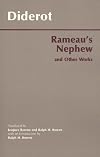
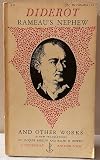
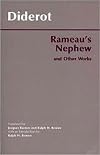
Rameau's Nephew, and Other Works
by Denis Diderot
228 Members (3.21)
On This Page
Description
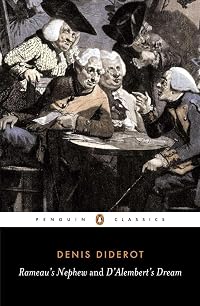
Rameau's Nephew is a fictional conversation written by Denis Diderot, one of the key figures of the French Enlightenment. Composed over many years and exploding onto the French literary scene when it was first released, in form and content it is unique in French literature. In a famous Parisian chess cafe?, a down-and-out ("HIM") accosts a former acquaintance ("ME") who has more or less made good. They trade stories and satirise the society in which they move, one of extreme inequality, show more corruption, and envy, where mediocrity is allowed to flourish. They gossip about the circle of hangers-on in which the down-and-out abides and discuss the nature of genius, good and evil, chess, music, and art. And towards half past five, when the warning bell of the Opera sounds, they part, going their separate ways.The book fascinated Goethe, Hegel, Engels, and Freud in turn, achieving a literary-philosophical status that no other work by Diderot shares. This edition offers a brand new translation of Diderot's famous dialogue. show lessTags
Recommendations






























Member Reviews
Members
- Recently Added By
Lists

Books Read in 2024
4,727 works; 128 members
Talk Discussions
Past Discussions
Diderot - Dialogues & Minor Works in Literary Centennials (October 2013)
Author Information

598+ Works 9,259 Members
Denis Diderot was a French philosopher and critic during the Age of Enlightenment. Born in 1713 in Langres, France, Diderot was educated at the University of Paris. From 1745 to 1772 he served as editor of L'Encyclopedie, which he fashioned as a journal of radical revolutionary opinion. He was a leader in the movement to challenge both church and show more state by furthering knowledge. Diderot also wrote several critical and philosophical works including Pensees sur l'interpretation de la nature (Thoughts on the Interpretation of Nature, 1754). In addition, he published essays based on personal experience, as well as several plays. As a philosopher, Diderot speculated on free will and held a completely materialistic view of the universe; he suggested all human behavior is determined by heredity. He is recognized now as an art critic of the first rank. His Essai sur la peinture (Essay on Painting, 1796) won him posthumous praise as a critic of painting technique and aesthetics. He died in Paris in 1784 and was buried in the city's Église Saint-Roch. His heirs sent his vast library to Catherine II, who had it deposited at the National Library of Russia. (Bowker Author Biography) show less
Some Editions
Series
Belongs to Publisher Series
Work Relationships
Common Knowledge
- Original publication date
- Rameau's Nephew: Written 1761-1774; Rameau's Nephew: German translation by Goethe published 1805; Rameau's Nephew: 1891 Publication based on Diderot's manuscript; D'Alembert’s Dream: Written 1769, published 1830; Supplement to Bougainville's "Voyage": Written 1772, published 1796; Other works: 1755-1772
Classifications
- Genres
- Fiction and Literature, General Fiction
- DDC/MDS
- 848.509 — Literature & rhetoric French Literature French miscellaneous writings 18th century 1715–89
- LCC
- PQ1979 .A66 .E5 — Language and Literature French, Italian, Spanish and Portuguese literatures French literature Modern literature 18th century
- BISAC
Statistics
- Members
- 228
- Popularity
- 143,679
- Rating
- (3.21)
- Languages
- English, German
- Media
- Paper, Ebook
- ISBNs
- 7
- ASINs
- 5