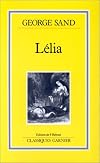
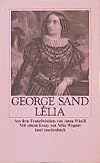
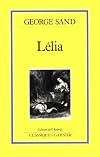
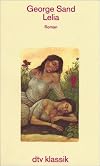
Lélia
by George Sand
On This Page
Description
Regarded as one of Sand's best novels, Lélia is an important document in the evolution of women's consciousness. Published in 1833, when Sand was 29, it stunned Victorians by advocating the same standard of morality for men and women and by suggesting that both the prostitute and the married woman were slaves to male desire. Sand also questioned monogamy, fidelity, and monastic celibacy. She later made an unsuccessful attempt to revise the book and to expunge its despair and skepticism. show more Although Sand wrote copiously, until recently only a handful of her books were available in English. This first English translation of Lélia is an excellent rendering, capturing the raptures, the mysticism, and the nineteenth-century flavor ot its eternally fascinating subject. show lessTags
Recommendations






























Member Recommendations

Member Reviews
Ce roman (1833) est inspiré moins par la vie que par la personne de George Sand. L'héroïne est une femme d'action, mais dévorée du démon de l'analyse, et dont le charme opère sur bien des hommes : le poète Sténio (on songe à Musset), l'ancien aventurier converti Trenmor, l'ermite Magnus. Lélia cherche la paix en devenant l'abbesse d'un couvent. Sténio l'y retrouve et c'est le drame. George Sand distinguait elle-même dans son livre une question psychologique, une question sociale (la femme dans la société), la poésie des personnages, le style qui traduit cette poésie. Lélia, ajoutait-elle, signifie la déception, la souffrance, le coeur défiant et desséché, le désespoir. - Sténio signifie l'espérance, la confiance show more dans l'avenir, l'amour. L'auteur apporte une philosophie, celle du désespoir lucide, au service d'un grand livre. show less
Nov 21, 2010French
Ratings
Members
- Recently Added By
Author Information

448+ Works 6,407 Members
George Sand began life as Aurore Dupin, the daughter of a count and a dressmaker. Educated both on her aristocratic grandmother's estate and in a Parisian convent, at 18 she married Casimer Dudevant, a provincial gentleman whose rough temperament was the opposite of her own, and from whom she obtained a separation several years later. At 31 she show more moved to Paris, where she changed her name and plunged into the bohemian world of French romanticism. Frequently dressed in men's clothing, she participated actively in literary debates, cultural events, and even the revolution of 1848. Sand was friend and correspondent with many of the major artists and writers of her age, including Balzac, Flaubert, and Liszt. Her love affairs with the poet Musset and the composer Chopin were the stuff of legend, chronicled in her own Story of My Life. Sand's immensely popular novels ranged from sentimental stories of wronged women, to utopian socialist fictions, such as her masterpiece in Consuelo, 1842, to explorations of pastoral themes written when she retired, late in life, to her estate in Berry. Though frequently dismissed as overblown or too sentimental, Sand's fiction has recently undergone a revaluation, emerging as an influential body of women's writing. As both a writer and an intellectual personality, Sand is a central figure in nineteenth-century French cultural life. George Sand died in 1876 (Bowker Author Biography) show less
Series
Belongs to Publisher Series
insel taschenbuch (737)
Work Relationships
Is contained in
Is abridged in
Common Knowledge
- Canonical title*
- Lélia
- Original title
- Lélia
- Original publication date
- 1833
*Some information comes from Common Knowledge in other languages. Click "Edit" for more information.
Classifications
Statistics
- Members
- 99
- Popularity
- 324,910
- Reviews
- 1
- Rating
- (3.88)
- Languages
- 6 — Danish, English, French, German, Russian, Turkish
- Media
- Paper, Ebook
- ISBNs
- 21
- ASINs
- 4