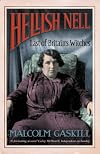
Hellish Nell: Last of Britain's Witches
by Malcolm Gaskill
On This Page
Description
The 1735 Witchcraft Act, charging that spirits of the dead had been raised by conjuration, was used for the last time in Portsmouth in 1944. The accused was Helen Duncan, a plump Scotswoman, convicted as a fraud yet believed by hundreds to possess the power to speak to the dead. This is her extraordinary story, and of religion and superstition in Britain in the first half of the 20th century.Tags
Recommendations
















Member Reviews
I do have some mixed feelings about this book. The author remarks that Sir Gerald Dodson, the judge who presided over the Old Bailey trial of Helen Duncan, could not hide his boredom when the defence brought a string of witnesses to describe Helen's achievements as a medium. And frankly, after some 400 pages, it is hard not to sympathise with Sir Gerald. Helen Duncan's life was a bit humdrum. She lived her life in the grey corners of society, a Scottish women of working class background. Someone who the more fortunate Britons looked down on, as uneducated, coarse, unattractive, unhealthy. Malcolm Gaskill's determined pursuit of detail reveals a rather dreary story.
Primarily, Helen Duncan was exposed to the glare of publicity because the show more prosecution at her 1944 trial chose to invoke the 1735 Witchcraft Act to condemn her for her activities as a "medium". That wasn't quite as eccentric as it sounds, as this act made it specifically illegal to pretend to conjure up the spirits of the dead, and that is exactly what Helen Duncan was doing. But it certainly made a poor impression on the public -- and on parts of the legal profession, as lawyers were aware that this 1735 Act left her with no options to defend herself. This crucial element aside, she was not a very interesting individual case, a small-time fraudster whose earnings gave her family a modestly comfortable life. The tricks she used during her seances were often crude. Gaskill fills pages and pages with speculation about them, incidentally, but with very little specific evidence to go on, and that is annoying.
What makes the book interesting is Gaskill's exploration of the role of spiritualism, mediums and seances in the 1940s. It was amazingly widespread and accepted. The armed services even accepted spiritualism as a religion: There were not that many adherents, but most were officers. Incidentally, I wish Gaskill had explored that a bit more, because one can only wonder about the consequences -- were seances held in the hold of His Majesty's Ships? On the other hand, I regret the meandering length of Gaskill's speculations in amateur psychology to explain the firm belief that many sitters at seances had in the things they thought to have seen, a belief that was often maintained in the full knowledge that fraud was commonplace. In this, Gaskill probably underestimates the importance of self-selection: The people who attended seances regularly were willing and eager to believe. The organisers of the seances tried to select their audience. Most skeptics regretted their wasted shillings, and did not come back.
It is nevertheless astonishing to find among the sitters both the Air Vice Marshalls Sir Hugh Dowding, leader of the Fighter Command during the Battle of Britain, and his nemesis and successor Sir Trafford Leigh-Mallory. Leigh-Mallory has been dismissed as a pompous ass by many contemporaries and historians, but "Stuffy" Dowding was not one to suffer fools gladly or quietly, and he was very much a scientifically oriented officer. (His retirement after the Battle of Britain, incidentally, was simply because of his age. It had already been postponed.) Frankly, that an officer should publish a book filled with messages-from-the-other side from men who have died under his command, is only too easy to associate with mental illness, and dismiss. But remember that every Christmas, priests (probably knowingly) read to their congregation a biblical story that is riddled with historical implausibilities and errors in chronology, and the congregation is generally willing to overlook such things in search of a higher truth. So we shouldn't critique the spiritualists too hard for their willingness to overlook regurgitated "ectoplasm" and the occasional ghost in white sheet. Gaskill reminds us that in wartime, many were grieving and desperately seeking for answers.
In his conclusion, Gaskill's defends the somewhat equivocating tone of his book as necessary to convey the spirit of the times, despite his own personal disbelief. That's not unreasonable, as you certainly cannot pretend to understand people if you just laugh at them. But at times, it causes him to indulge in unnecessary obfuscation, which grates a bit. show less
Primarily, Helen Duncan was exposed to the glare of publicity because the show more prosecution at her 1944 trial chose to invoke the 1735 Witchcraft Act to condemn her for her activities as a "medium". That wasn't quite as eccentric as it sounds, as this act made it specifically illegal to pretend to conjure up the spirits of the dead, and that is exactly what Helen Duncan was doing. But it certainly made a poor impression on the public -- and on parts of the legal profession, as lawyers were aware that this 1735 Act left her with no options to defend herself. This crucial element aside, she was not a very interesting individual case, a small-time fraudster whose earnings gave her family a modestly comfortable life. The tricks she used during her seances were often crude. Gaskill fills pages and pages with speculation about them, incidentally, but with very little specific evidence to go on, and that is annoying.
What makes the book interesting is Gaskill's exploration of the role of spiritualism, mediums and seances in the 1940s. It was amazingly widespread and accepted. The armed services even accepted spiritualism as a religion: There were not that many adherents, but most were officers. Incidentally, I wish Gaskill had explored that a bit more, because one can only wonder about the consequences -- were seances held in the hold of His Majesty's Ships? On the other hand, I regret the meandering length of Gaskill's speculations in amateur psychology to explain the firm belief that many sitters at seances had in the things they thought to have seen, a belief that was often maintained in the full knowledge that fraud was commonplace. In this, Gaskill probably underestimates the importance of self-selection: The people who attended seances regularly were willing and eager to believe. The organisers of the seances tried to select their audience. Most skeptics regretted their wasted shillings, and did not come back.
It is nevertheless astonishing to find among the sitters both the Air Vice Marshalls Sir Hugh Dowding, leader of the Fighter Command during the Battle of Britain, and his nemesis and successor Sir Trafford Leigh-Mallory. Leigh-Mallory has been dismissed as a pompous ass by many contemporaries and historians, but "Stuffy" Dowding was not one to suffer fools gladly or quietly, and he was very much a scientifically oriented officer. (His retirement after the Battle of Britain, incidentally, was simply because of his age. It had already been postponed.) Frankly, that an officer should publish a book filled with messages-from-the-other side from men who have died under his command, is only too easy to associate with mental illness, and dismiss. But remember that every Christmas, priests (probably knowingly) read to their congregation a biblical story that is riddled with historical implausibilities and errors in chronology, and the congregation is generally willing to overlook such things in search of a higher truth. So we shouldn't critique the spiritualists too hard for their willingness to overlook regurgitated "ectoplasm" and the occasional ghost in white sheet. Gaskill reminds us that in wartime, many were grieving and desperately seeking for answers.
In his conclusion, Gaskill's defends the somewhat equivocating tone of his book as necessary to convey the spirit of the times, despite his own personal disbelief. That's not unreasonable, as you certainly cannot pretend to understand people if you just laugh at them. But at times, it causes him to indulge in unnecessary obfuscation, which grates a bit. show less
Ratings
Members
- Recently Added By
Author Information

9 Works 1,250 Members
Malcolm Gaskill is a Fellow of Churchill College, Cambridge, where he is Director of Studies in History
Some Editions
Common Knowledge
- Original publication date
- 2001
- People/Characters
- Helen Duncan
- Epigraph
- Now, don't, sir! Don't expose me! Just this once!
This was the first and only time, I'll swear -
Look at me - see, I kneel - the only time,
I swear, I ever cheated - yes, by the soul
Of her who hears - (your saint... (show all)ed mother, sir!)
All, except this last accident, was truth.
Robert Browning, 'Mr Sludge, "The Medium"' (1864)
The belief that disembodied spirits may be permitted to revisit this world has its foundation upon that sublime hope of immortality which is at once the chief solace and greatest triumph of our reason.
Charles Mackay, E... (show all)xtraordinary Popular Delusions and the Madness of Crowds (1841) - Dedication
- My father, Ed Gaskill, was not only the first to tell me about this story but much earlier made me fascinated by the past. This book is for him, with love and gratitude.
- First words
- Towards the end of March 1944, Donald West, a nineteen-year-old medical student, boarded a train from Liverpool to London.
Classifications
- Genres
- Nonfiction, Religion & Spirituality, History, General Nonfiction, Biography & Memoir
- DDC/MDS
- 133.91092 — Philosophy & psychology Parapsychology & occultism Specific topics in parapsychology and occultism Spiritualism Spirit communication
- LCC
- BF1581 .G37 — Philosophy, Psychology and Religion Psychology Occult sciences Witchcraft
- BISAC
Statistics
- Members
- 61
- Popularity
- 505,795
- Reviews
- 1
- Rating
- (4.00)
- Languages
- English
- Media
- Paper
- ISBNs
- 3
- ASINs
- 1