
Benjamin Woolley
Author of The Queen's Conjurer: The Science and Magic of Dr. John Dee, Advisor to Queen Elizabeth I
About the Author
Benjamin Woolley, writer & broadcaster, covers both the arts & the sciences. His writing includes "Virtual Worlds," a book on virtual reality, "Bride of Science," a biography of Byron's brilliant daughter, & contributions to various British periodicals. He lives in London. (Bowker Author Biography)
Works by Benjamin Woolley
The Queen's Conjurer: The Science and Magic of Dr. John Dee, Advisor to Queen Elizabeth I (2001) 718 copies, 8 reviews
Savage Kingdom: The True Story of Jamestown, 1607, and the Settlement of America (2007) 272 copies, 7 reviews
Heal Thyself: Nicholas Culpeper and the Seventeenth-Century Struggle to Bring Medicine to the People (2004) 160 copies, 3 reviews
Tagged
Common Knowledge
- Birthdate
- 195?
- Gender
- male
- Education
- Durham University
- Occupations
- journalist
- Organizations
- British Broadcasting Corporation
Goldsmiths, University of London - Awards and honors
- Arts Journalist of the Year Award
Emmy (Commentary) - Nationality
- UK
- Places of residence
- London, England, UK
- Associated Place (for map)
- England, UK
Members
Reviews
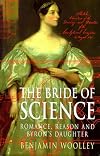
Ada Byron Lovelace, daughter of the infamous poet and credited with writing the first computer algorithm (over a century before the first computer was ever built), is truly the stuff of historical biographies. Benjamin Woolley rubs some of the shine from her posthumous reputation in his bid to portray a fair and accurate representation of her life, but really, romance novelists would struggle to pen such an original character. Talented but tragic father, cold and calculating mother, show more scandalous cousin, and a host of well-known acquaintances, including Messrs. Babbage and Dickens. Like an intelligent Georgiana, Duchess of Devonshire, Ada's personal life fills more pages than her 'professional' achievements.
The first few chapters are given over to the ill-fated match between Byron and Ada's mother, Annabella. Byron called her 'the Princess of Parallelograms', but Woolley shoots down her mathematical genius ('She did not have any special expertise'). After Byron's death, Annabella kept her daughter sequestered from society, with only books and tutors to divert her from her father's creative inheritance. Really, Ada's greatest achievement was surviving her manipulative mother, not inventing a computing code! The background to Babbage's Difference Engine - post-French Revolution statistics - is interesting, but according to Woolley, Ada's contribution was limited. 'She did not challenge the system - She did what she did on behalf of herself, not her sex', he writes.
I think I was expecting far more of Ada, but she married, had three children, an affair and a gambling addiction, and died relatively young, reminding me of Georgiana Cavendish. She was intelligent, yes, and had the means and the connections to test her mental agility and creativity, but I wasn't exactly overawed by her achievements. 'In more contemporary terms, it would be like nominating Lisa-Marie Presley to annotate a study of quantum computation', is Woolley's pithy summary of her work with Babbage. show less
The first few chapters are given over to the ill-fated match between Byron and Ada's mother, Annabella. Byron called her 'the Princess of Parallelograms', but Woolley shoots down her mathematical genius ('She did not have any special expertise'). After Byron's death, Annabella kept her daughter sequestered from society, with only books and tutors to divert her from her father's creative inheritance. Really, Ada's greatest achievement was surviving her manipulative mother, not inventing a computing code! The background to Babbage's Difference Engine - post-French Revolution statistics - is interesting, but according to Woolley, Ada's contribution was limited. 'She did not challenge the system - She did what she did on behalf of herself, not her sex', he writes.
I think I was expecting far more of Ada, but she married, had three children, an affair and a gambling addiction, and died relatively young, reminding me of Georgiana Cavendish. She was intelligent, yes, and had the means and the connections to test her mental agility and creativity, but I wasn't exactly overawed by her achievements. 'In more contemporary terms, it would be like nominating Lisa-Marie Presley to annotate a study of quantum computation', is Woolley's pithy summary of her work with Babbage. show less
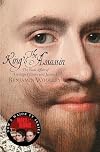
History is littered with stories of royal favourites who’ve clawed their way up from modest roots to dazzling heights of influence – but few did so quite as spectacularly as George Villiers. At the age of twenty, the future Duke of Buckingham had precious little going for him. He was a penniless gentleman, the second son of a second marriage, whose dead father had left everything to the children of his first marriage. In most cases this would have been a one-way ticket to obscure show more poverty, but George had several key advantages. He had a remarkably tenacious and ruthless mother, Mary Villiers, who recognised potential when she saw it. He had extraordinary good looks, remarkable charisma and intelligence. He (Mary decided) would be the catalyst by which his family dragged themselves to wealth and power – and there was one very obvious way to do that: to catch the king’s eye. This is one of British history’s great stories of social climbing, and Woolley delves into the detail with relish – even if I felt the book lacked the vivacity and panache that its captivating subject wielded with such ease...
For the full review, please see my blog:
https://theidlewoman.net/2019/11/06/the-kings-assassin-benjamin-woolley/ show less
For the full review, please see my blog:
https://theidlewoman.net/2019/11/06/the-kings-assassin-benjamin-woolley/ show less
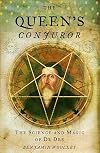
“The Queen’s Conjuror" by Benjamin Wolley is a hypnotic account of Dr. John Dee, the 16th-Century mapmaker, mathematician, venture capitalist, cryptanalyst, astrologer, alchemist and all-around international man of mystery.
Wolley, in a masterful work of scholarship, has written a detailed, engrossing biography of a most remarkable man. Which is something, for the Elizabethan era was a most remarkable age – a world transforming like a starburst, with science and superstition in equal show more measure, with dynastic power politics and feverish Christian theology locked daily in deadly embrace. A time, perhaps like no other, when the soothsayer, the scientist, the prince and the poet together engaged in rich intellectual exchange to weave an extraordinary cultural tapestry.
Dr. Dee led a precarious, wondrous life, full of blessings, full of tribulations, sometimes a trusted advisor, sometimes a fugitive, depending on the twist of fortune’s wheel. A renowned bibliophile and keen observer of the natural world and of the heavens, Dee’s search for universal truth was unquenchable, as he put it, “I found (at length) that neither any man living, nor any book I could yet meet withal was able to teach me those truths I desired and longed for.”
Eager to wrestle the secrets from the angels, Dr. Dee turns to crystal-ball gazing, employing a charming and unstable younger man named Edward Kelley to act as his medium , or scryer. Dr. Dee plans to use Kelley as his eyes and ears to the spirit world. But, as Wolley notes, it’s open to question exactly who was using who – especially when the angels sing.
Woolley keeps his account grounded in research, avoiding any temptation to drift into new age speculation. He is a sympathetic biographer, but definitely suggests that Dr. Dee’s eventual downfall was fault found, as Shakespeare put it - “not in our stars/But in ourselves.”
If I had to level any criticism of the book, it would be that Queen Elizabeth herself seems a little flat and wooden – her character isn’t explored in any great detail, and it’s hard to decipher why she would consult with Dee, or what she thought of him. Despite that, “The Queen’s Conjuror” is a book left me fascinated and hooked on wanting to learn more about this charming man. show less
Wolley, in a masterful work of scholarship, has written a detailed, engrossing biography of a most remarkable man. Which is something, for the Elizabethan era was a most remarkable age – a world transforming like a starburst, with science and superstition in equal show more measure, with dynastic power politics and feverish Christian theology locked daily in deadly embrace. A time, perhaps like no other, when the soothsayer, the scientist, the prince and the poet together engaged in rich intellectual exchange to weave an extraordinary cultural tapestry.
Dr. Dee led a precarious, wondrous life, full of blessings, full of tribulations, sometimes a trusted advisor, sometimes a fugitive, depending on the twist of fortune’s wheel. A renowned bibliophile and keen observer of the natural world and of the heavens, Dee’s search for universal truth was unquenchable, as he put it, “I found (at length) that neither any man living, nor any book I could yet meet withal was able to teach me those truths I desired and longed for.”
Eager to wrestle the secrets from the angels, Dr. Dee turns to crystal-ball gazing, employing a charming and unstable younger man named Edward Kelley to act as his medium , or scryer. Dr. Dee plans to use Kelley as his eyes and ears to the spirit world. But, as Wolley notes, it’s open to question exactly who was using who – especially when the angels sing.
Woolley keeps his account grounded in research, avoiding any temptation to drift into new age speculation. He is a sympathetic biographer, but definitely suggests that Dr. Dee’s eventual downfall was fault found, as Shakespeare put it - “not in our stars/But in ourselves.”
If I had to level any criticism of the book, it would be that Queen Elizabeth herself seems a little flat and wooden – her character isn’t explored in any great detail, and it’s hard to decipher why she would consult with Dee, or what she thought of him. Despite that, “The Queen’s Conjuror” is a book left me fascinated and hooked on wanting to learn more about this charming man. show less
This is a biography of Ada Lovelace, the "first computer scientist" (sort of) and daughter of Annabella Milbanke and Lord Byron, although it includes at least as much material on Annabella as on Ada. Annabella comes across as being so horrible but also so smugly self-deluded into thinking she was selfless and right-thinking that I sort of love her? I mean, she was terrible, but I feel like if I married a celebrity and then found out he was having an affair with his own sister I would also show more probably react with some vindictiveness.
This book feels a little hyperbolic in places, but I enjoyed the descriptions of all the other recognisable figures whose paths crossed (or almost crossed) with Ada's - Babbage, of course, but also Dickens, Brunel, etc. - and the scientific "fads" she was caught up in, particularly mesmerism and atmospheric railways.
I also enjoyed reading about Ada getting frustrated while trying to write a paper. I feel your pain! ;_;
Minus half a star for the ridiculous number of typos and missing/misplaced articles. show less
This book feels a little hyperbolic in places, but I enjoyed the descriptions of all the other recognisable figures whose paths crossed (or almost crossed) with Ada's - Babbage, of course, but also Dickens, Brunel, etc. - and the scientific "fads" she was caught up in, particularly mesmerism and atmospheric railways.
I also enjoyed reading about Ada getting frustrated while trying to write a paper. I feel your pain! ;_;
Minus half a star for the ridiculous number of typos and missing/misplaced articles. show less
Lists
Awards

You May Also Like


Statistics
- Works
- 6
- Members
- 1,546
- Popularity
- #16,659
- Rating
- 3.6
- Reviews
- 28
- ISBNs
- 47
- Languages
- 4

