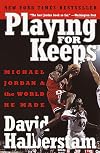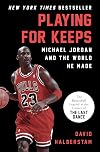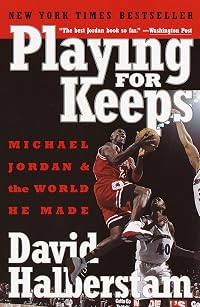
Playing for Keeps: Michael Jordan and the World He Made
by David Halberstam
On This Page
Description
A revealing portrait of a once-in-a-generation athlete and global icon One of sport's biggest superstars, Michael Jordan is more than an internationally renowned athlete. As illuminated through David Halberstam's trademark balance of impeccable research and fascinating storytelling, Jordan symbolizes the apex of the National Basketball Association's coming of age. Long before multimillion-dollar signings and lucrative endorsements, NBA players worked in relative obscurity, with most games show more woefully unattended and rarely broadcast on television. Then came Larry Bird and Magic Johnson, Jordan's two great predecessors, and the game's status changed. The new era capitalized on Jordan's talent, will power, and unrivaled competiveness. In Playing for Keeps, Halberstam is at his investigative best, delving into Jordan's expansive world of teammates and coaches. The result is a gripping story of the athlete and media powerhouse who changed a game forever. This ebook features an extended biography of David Halberstam. show lessTags
Recommendations













Member Reviews
Michael Jordan. A god ball in hands. An exceptional athlete and icon. A 'superstar' whose career goes beyond the small world of basketball to reach a whole era, incarnate a whole culture.
In 'Playing for Keeps', the historian and journalist David Halberstam, with passion and genius, has the talent to retrace more than the biography of the player -he also shows how the man, in his own way, personified the rapid changes of a society who shaped him to turn him into a God of sports and money. The thing is, turning professional in 1984, Michael Jordan, besides his incredible skills on the courts benefited also from an advantage his predecessors (Larry Bird, Magic Johnson...) didn't have: he came out of age, as a player, during the 1980s. It show more matters.
In a book which is as intelligent as it is detailed, Halberstam indeed shows himself instructive as much about how professional sports evolved during the past decades as he is about the triumphing capitalism fuelling it. Fans can rest assured -of course he retells the journey of the player, the big moments of his careers, from the kid in North Carolina to the Chicago Bulls (a tumultuous saga by itself!). He even shed some lights upon those who made such success possible in the first place (family, coaches, teammates, agents...). But it's not what stroke me the most in here. What sets such read apart is that he goes beyond it all to explain the rise of the Jordan's cult, a man who will end up getting paid more than $40 millions on average just to play ball.
At a time when the NBA itself was in the midst of a revolution (new owners, new image, new politics), take a young player with an exceptional talent and just throw him into a frenetic globalisation, full up to the brim of American culture and where new medias serve more and more the cults of 'stars' whose salaries are increasing exponentially, and you'll have all the ingredients indeed to birth a legend. ESPN, Nike, McDonald and other leading companies embodying triumphing profit-making will do the rest -thanks to them a player will transcend his sport to become an icon, the symbol of a whole culture that Halberstam displays with brio and relevance.
Fascinating, this perspective, besides being the retelling of the exceptional career of a basketball genius, adds a particular interest to a must-read which will no doubt please every fan. The only regret is that, published in 1999 (after Jordan's second retirement) it ends with the 1997-98 season. Such ending surely is epic (the Bulls' victory against the Utah Jazz!), but there's nothing about his return in 2001 and his following career with Washington (Halberstam died in 2007, he could have expended it). Nevertheless, here's a masterpiece of a biography! Brilliant. show less
In 'Playing for Keeps', the historian and journalist David Halberstam, with passion and genius, has the talent to retrace more than the biography of the player -he also shows how the man, in his own way, personified the rapid changes of a society who shaped him to turn him into a God of sports and money. The thing is, turning professional in 1984, Michael Jordan, besides his incredible skills on the courts benefited also from an advantage his predecessors (Larry Bird, Magic Johnson...) didn't have: he came out of age, as a player, during the 1980s. It show more matters.
In a book which is as intelligent as it is detailed, Halberstam indeed shows himself instructive as much about how professional sports evolved during the past decades as he is about the triumphing capitalism fuelling it. Fans can rest assured -of course he retells the journey of the player, the big moments of his careers, from the kid in North Carolina to the Chicago Bulls (a tumultuous saga by itself!). He even shed some lights upon those who made such success possible in the first place (family, coaches, teammates, agents...). But it's not what stroke me the most in here. What sets such read apart is that he goes beyond it all to explain the rise of the Jordan's cult, a man who will end up getting paid more than $40 millions on average just to play ball.
At a time when the NBA itself was in the midst of a revolution (new owners, new image, new politics), take a young player with an exceptional talent and just throw him into a frenetic globalisation, full up to the brim of American culture and where new medias serve more and more the cults of 'stars' whose salaries are increasing exponentially, and you'll have all the ingredients indeed to birth a legend. ESPN, Nike, McDonald and other leading companies embodying triumphing profit-making will do the rest -thanks to them a player will transcend his sport to become an icon, the symbol of a whole culture that Halberstam displays with brio and relevance.
Fascinating, this perspective, besides being the retelling of the exceptional career of a basketball genius, adds a particular interest to a must-read which will no doubt please every fan. The only regret is that, published in 1999 (after Jordan's second retirement) it ends with the 1997-98 season. Such ending surely is epic (the Bulls' victory against the Utah Jazz!), but there's nothing about his return in 2001 and his following career with Washington (Halberstam died in 2007, he could have expended it). Nevertheless, here's a masterpiece of a biography! Brilliant. show less
I reserved this at the library back in April when ESPN started airing “The Last Dance” (along with everyone else in Iowa, apparently) and finally got it last week. It was startling to realize how much of the documentary’s narrative seems to have been lifted directly from Halberstam’s work, but that's not a knock on either "The Last Dance" or Halberstam's book. When you're talking about an incredibly artistic and athletic basketball player, there's no substitute for showing the pictures. And certainly the new interviews with Jordan and his former teammates and rivals were well worth watching all 10 episodes.
But the book was also worth reading even after all this time, simply because of Halberstam's deft skill at weaving together show more storylines. His writing here did more than anything else I've read to explain just what made Phil Jackson such a tremendous coach. Jackson's sensitive handling of Dennis Rodman was incredible, and a key to the Bulls' last three championships. The only lack (not Halberstam's fault, since the book was published in 1999 and he died in 2007) is the lack of information about Jordan's post-Bulls career, including his current ownership of the Charlotte Hornets. show less
But the book was also worth reading even after all this time, simply because of Halberstam's deft skill at weaving together show more storylines. His writing here did more than anything else I've read to explain just what made Phil Jackson such a tremendous coach. Jackson's sensitive handling of Dennis Rodman was incredible, and a key to the Bulls' last three championships. The only lack (not Halberstam's fault, since the book was published in 1999 and he died in 2007) is the lack of information about Jordan's post-Bulls career, including his current ownership of the Charlotte Hornets. show less
There is no doubt in my mind that David Halberstam loved basketball. He may have even loved Michael Jordan even more. The care and consideration he gave both to the sport and to the athlete is exemplary. To be sure, you will also get biographies of the key people surrounding Michael Jordan's personal life and career path as well. From mama to coaches, from friends to agents, Halberstam details each and everyone one of them. You will learn about Michael Jordan, the driven kid; Michael Jordan, the aggressive ballplayer; Michael Jordan, the savvy salesman and everything else he was in between.
My only complaint - the chronology is a bit disorganized. Because the timeline is interrupted by different basketball games throughout out Jordan's show more career Halberstam's timeline isn't constructed in such a way that a reader could witness Michael Jordan's rise to success smoothly. The games lend a certain drama to the biography but the timeline suffers for it. show less
My only complaint - the chronology is a bit disorganized. Because the timeline is interrupted by different basketball games throughout out Jordan's show more career Halberstam's timeline isn't constructed in such a way that a reader could witness Michael Jordan's rise to success smoothly. The games lend a certain drama to the biography but the timeline suffers for it. show less
"The great strength of Michael Jordan, thought B.J. Armstrong as he watched that game, was that he had the most acute sense of the tempo and mood of every game of any player he had ever seen. A lot of players and coaches can look at film afterward and point to the exact moment when a game slipped away, but Jordan could tell it even as it was happening. It was, thought Armstrong, as if he were both in the game playing and yet sitting there studying it, completely distanced from it. It was a gift that allowed him to monitor and lift his own team with great skill and to put away other teams as well, when he sensed their moment of vulnerability."
Michael Jordan, considered the greatest ever to play basketball, had many gifts - tremendous show more eye-hand coordination, huge hands, a 6'6" height when no one else in his family came close, surprising speed, great leaping ability, and exceptional quickness. He also had a legendary hatred of losing and a never-ending will to win. His willpower led him to spend endless hours perfecting his craft, and strengthening and balancing his body to take the beating opponents routinely inflicted on him, in hopes of slowing him down and wearing him out. But for basketball junkies it is the quality B.J. Armstrong describes that is the most thrilling - his ability to understand the flow of the game, and to understand those junctures where a particular extra effort - a critical steal, a defensive stop, a drive to the hoop - would make the difference between a win and a loss. No one else in the game, except perhaps Bill Russell, had that vision of the game as if from the outside, the physical gifts to do what was necessary, and the tenacity to make it happen, no matter how tired he was. Even Bill Russell never won so many games at the end by hitting the winning shot. Jordan did so even though the other team knew he was going to shoot it, as he had so many times before, and was doing everything it could to stop him.
Although his end-of-the-game shot won a college championship for North Carolina, it took years for Jordan to reach that stage in the NBA. The first seven years of his NBA career were full of mind-boggling physical highlights, but no championships. Even what many cite as the beginning of Michael mania, his 63 point playoff effort against the mighty Boston Celtics in his second year, ended in an overtime loss. It is true that Jordan was surrounded by less than fearsome teammates during that time, but he also needed to learn what it took to win it all at the highest level, to learn that special skill of seeing what was needed and providing it. In his last six years with the Chicago Bulls (interrupted by nearly two years of pro baseball) the team won the championship every year.
In Playing for Keeps: Michael Jordan and the World He Made, David Halberstam, who unfortunately passed away in 2007, does a wonderful job of using wide-ranging interviews and diligent research to help him describe Jordan's journey and the impact Jordan had, not just in helping to save the NBA, but in becoming a merchandising giant and beloved figure around the world. Halberstam comes from an older generation, and explains in the afterword why the project fascinated him:
"When I was a young boy growing up in the forties, the signature figures of American athletics were all white baseball players - Williams, Dimaggio, Musial, Feller - and the NBA did not even exist. How then, in my lifetime, had it happened that the most famous athlete in the world was a young black man playing professional basketball, who had graduated from a southern school he would not even have been able to attend when I was a young foreign correspondent?"
Halberstam is passionate about the topic, and places Jordan and others in historical context, including the disappointment of many in the black community that Jordan didn't take on more political causes. It's clear that Jordan was uncomfortable in the political arena, but very comfortable as a product seller, famously saying, "You know, Republicans buy sneakers, too." Although he experienced his share of racism and the n-word, he was raised in a strong family to essentially ignore color, developed friends from many different backgrounds, and was at ease talking to corporate leaders.
I can remember in the 70s having to watch the NBA finals on tape delay late at night, because the NBA was so little valued that it didn't warrant prime time, even for its championship games. As Halberstam recounts, at that time there was a perception of "too many black players" and rampant drug use. The total of all players' salaries was $40 million, a small fraction of the two billion or so dollars shared today, with players today averaging over $5 million a piece annually. Larry Bird and Magic Johnson had a big impact in helping to turn the perceptions of the NBA to positive, but it was Jordan, who entered the league in 1984, who drew in the general public, not just die-hard basketball fans. They all wanted to see and find out more about this Michael Jordan whose spectacular play was being talked about everywhere. As Halberstam says, it didn't hurt that Jordan was handsome and poised off the court, with a megawatt smile, and wondrous to watch on the court, with his graceful but explosive style and intelligence causing some to compare him to famous artists like Michelangelo.
Playing for Keeps takes the reader from Jordan's high school days to North Carolina to his early days in the NBA and the championship years. Written in 2000, it doesn't include later developments like his now being the principal owner of the promising (finally) Charlotte pro basketball team, and his Nike brand shoe sales still leading the pack after all these years.
Halberstam was a journalist, a well-respected one, and his somewhat plodding writing here wasn't destined to win any prizes. But he knows how to organize a story and give it an engaging flow, and his enthusiasm is catchy. He manages to marshal a remarkable range of detailed facts and telling comments into a compelling story of one of the amazing figures of our time. The reader always feels in competent and honest hands, and reading this book was a pleasure. Four stars. show less
Michael Jordan, considered the greatest ever to play basketball, had many gifts - tremendous show more eye-hand coordination, huge hands, a 6'6" height when no one else in his family came close, surprising speed, great leaping ability, and exceptional quickness. He also had a legendary hatred of losing and a never-ending will to win. His willpower led him to spend endless hours perfecting his craft, and strengthening and balancing his body to take the beating opponents routinely inflicted on him, in hopes of slowing him down and wearing him out. But for basketball junkies it is the quality B.J. Armstrong describes that is the most thrilling - his ability to understand the flow of the game, and to understand those junctures where a particular extra effort - a critical steal, a defensive stop, a drive to the hoop - would make the difference between a win and a loss. No one else in the game, except perhaps Bill Russell, had that vision of the game as if from the outside, the physical gifts to do what was necessary, and the tenacity to make it happen, no matter how tired he was. Even Bill Russell never won so many games at the end by hitting the winning shot. Jordan did so even though the other team knew he was going to shoot it, as he had so many times before, and was doing everything it could to stop him.
Although his end-of-the-game shot won a college championship for North Carolina, it took years for Jordan to reach that stage in the NBA. The first seven years of his NBA career were full of mind-boggling physical highlights, but no championships. Even what many cite as the beginning of Michael mania, his 63 point playoff effort against the mighty Boston Celtics in his second year, ended in an overtime loss. It is true that Jordan was surrounded by less than fearsome teammates during that time, but he also needed to learn what it took to win it all at the highest level, to learn that special skill of seeing what was needed and providing it. In his last six years with the Chicago Bulls (interrupted by nearly two years of pro baseball) the team won the championship every year.
In Playing for Keeps: Michael Jordan and the World He Made, David Halberstam, who unfortunately passed away in 2007, does a wonderful job of using wide-ranging interviews and diligent research to help him describe Jordan's journey and the impact Jordan had, not just in helping to save the NBA, but in becoming a merchandising giant and beloved figure around the world. Halberstam comes from an older generation, and explains in the afterword why the project fascinated him:
"When I was a young boy growing up in the forties, the signature figures of American athletics were all white baseball players - Williams, Dimaggio, Musial, Feller - and the NBA did not even exist. How then, in my lifetime, had it happened that the most famous athlete in the world was a young black man playing professional basketball, who had graduated from a southern school he would not even have been able to attend when I was a young foreign correspondent?"
Halberstam is passionate about the topic, and places Jordan and others in historical context, including the disappointment of many in the black community that Jordan didn't take on more political causes. It's clear that Jordan was uncomfortable in the political arena, but very comfortable as a product seller, famously saying, "You know, Republicans buy sneakers, too." Although he experienced his share of racism and the n-word, he was raised in a strong family to essentially ignore color, developed friends from many different backgrounds, and was at ease talking to corporate leaders.
I can remember in the 70s having to watch the NBA finals on tape delay late at night, because the NBA was so little valued that it didn't warrant prime time, even for its championship games. As Halberstam recounts, at that time there was a perception of "too many black players" and rampant drug use. The total of all players' salaries was $40 million, a small fraction of the two billion or so dollars shared today, with players today averaging over $5 million a piece annually. Larry Bird and Magic Johnson had a big impact in helping to turn the perceptions of the NBA to positive, but it was Jordan, who entered the league in 1984, who drew in the general public, not just die-hard basketball fans. They all wanted to see and find out more about this Michael Jordan whose spectacular play was being talked about everywhere. As Halberstam says, it didn't hurt that Jordan was handsome and poised off the court, with a megawatt smile, and wondrous to watch on the court, with his graceful but explosive style and intelligence causing some to compare him to famous artists like Michelangelo.
Playing for Keeps takes the reader from Jordan's high school days to North Carolina to his early days in the NBA and the championship years. Written in 2000, it doesn't include later developments like his now being the principal owner of the promising (finally) Charlotte pro basketball team, and his Nike brand shoe sales still leading the pack after all these years.
Halberstam was a journalist, a well-respected one, and his somewhat plodding writing here wasn't destined to win any prizes. But he knows how to organize a story and give it an engaging flow, and his enthusiasm is catchy. He manages to marshal a remarkable range of detailed facts and telling comments into a compelling story of one of the amazing figures of our time. The reader always feels in competent and honest hands, and reading this book was a pleasure. Four stars. show less
Beautifully written book about a fascinating character in a sport I knew almost nothing about previously. Very impressively researched and as always with Halberstam, deeply rooted with a clear moral sense of who has done the right thing and who hasn’t.
Read most of it but for some reason, lost interest about halfway through and never finished although I skimmed the 2nd half. Book was interesting but I guess I lost interest in the Bulls and Jordan and so never returned to it.
Awesome book. Don't remember where I got it or when I read it, but I know it is one of my favorite MJ books that I will re-read someday. My love for this book encouraged me to purchase another book by Halberstam about baseball that I have yet to read.
Members
- Recently Added By
Author Information

43+ Works 16,046 Members
David Halberstam was born on April 10, 1934 in New York City and later attended Harvard University. After graduating in 1955, Halberstam worked at a small daily newspaper until he attained a position at the Nashville Tennessean. Halberstam has written over 20 books including The Children, a written account of his coverage of the Civil Rights show more Movement; The Best and Brightest, which was a bestseller; and The Game and October, 1964, both detailing his fascination of sports. Halberstam also won a Pulitzer Prize for his reports on the Vietnam War while working for the New York Times. He was killed in a car crash on April 23, 2007 at the age of 73. (Bowker Author Biography) show less
Awards and Honors
Distinctions
Work Relationships
Common Knowledge
- Canonical title*
- Michael Jordan. Jouer pour la postérité
- Original title
- Playing for keeps. Michael Jordan and the world he made
- Original publication date
- 1999
- People/Characters
- Michael Jordan
- Important places
- Chicago, Illinois, USA; Illinois, USA; North Carolina, USA; Chapel Hill, North Carolina, USA
- Original language*
- Anglais (Etats-Unis) (Etats-Unis)
*Some information comes from Common Knowledge in other languages. Click "Edit" for more information.
Classifications
- Genres
- Sports and Leisure, Nonfiction, Biography & Memoir, General Nonfiction, Teen
- DDC/MDS
- 796.323 — Arts & recreation Recreation, sports, and performing arts Sports Ball sports Ball and net sports Basketball
- LCC
- GV884 .J67 .H35 — Geography, Anthropology and Recreation Recreation. Leisure Recreation. Leisure Sports Ball games: Baseball, football, golf, etc.
- BISAC
Statistics
- Members
- 479
- Popularity
- 63,207
- Reviews
- 7
- Rating
- (4.03)
- Languages
- 5 — English, French, Italian, Portuguese, Spanish
- Media
- Paper, Audiobook, Ebook
- ISBNs
- 19
- ASINs
- 9