
On This Page
Description
Head of the Rule 34 Squad monitoring the Internet for illegal activities, Detective Inspector Liz Kavanaugh investigates the link between three ex-con spammers who have been murdered.Tags
Recommendations
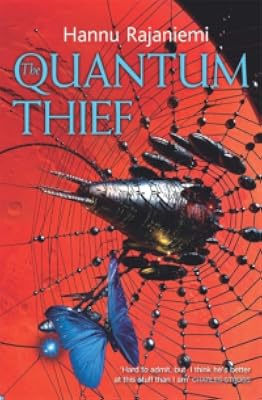
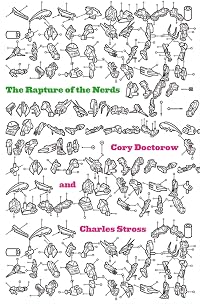
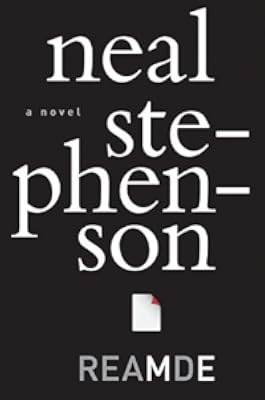
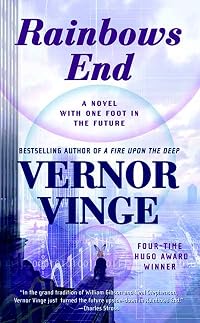
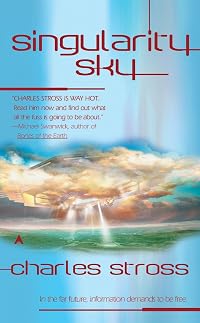
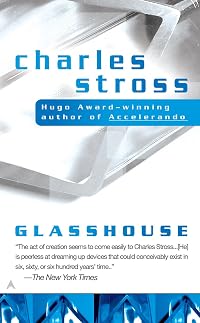
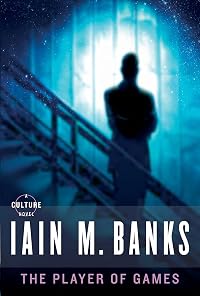

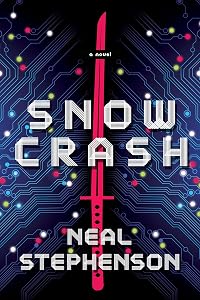




Member Recommendations
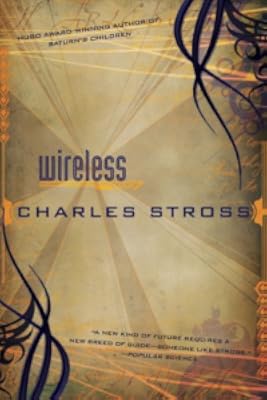
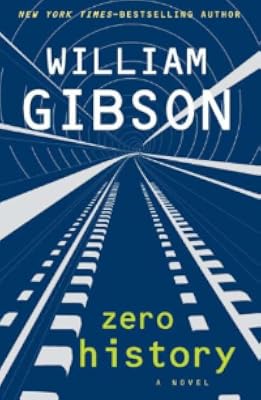
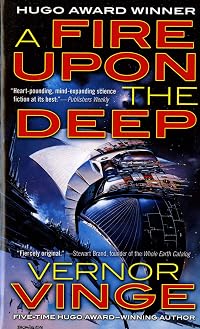
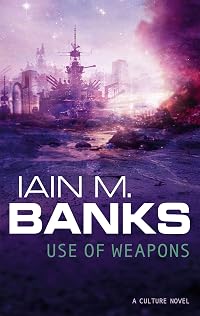
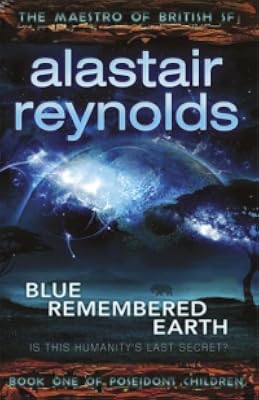
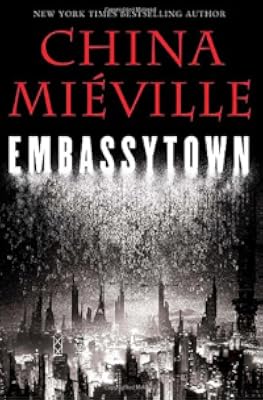
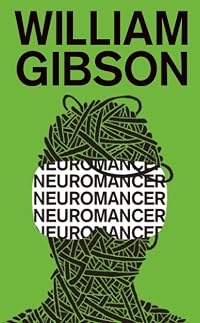
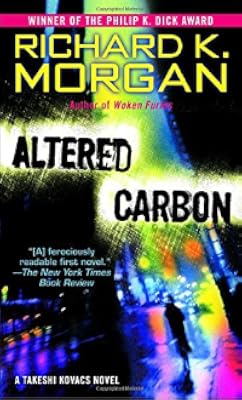
Mind_Booster_Noori Read Halting State first. If you like it, don't miss reading Rule 34.
40

Member Reviews
Stross is back in form with the sequel to Halting State, a grimly humorous cyberpunk police procedural set in Tomorrow's Scotland, where nobody knows what an honest job is anymore, and household appliances are murdering spammers.
I won't spoil the book, but Stross is at his best when he takes Big Ideas, twists them upside down, and shows you how they could happen. In Rule 34, he on the relationship between the police state and the Panopticon, and how at the end of the day, our system of laws requires a technological architecture capable of enforcing what the politicians put in place. Business, crime, and government are melding together in Stross' world, something which seems all too familiar given the revolving door between Wall Street, show more the White House, the CIA, and a shallow grave in Central Asia. And Detective Liz's memetic crime unit seems like something that we already need, given public hysteria about synthetic drugs like Spice and Bath Salts (or maybe we could, you know, legalize drugs that have a long history of Not Totally Fucking People Up, instead of putting police and black chemists in a Red Queen's Race, with ordinary drug users the losers.)
The style is dense, packed full of internet-speak and Scottish brogue, but it's Stross's native tongue and the style fits perfectly. It's a throwback to old-school cyberpunk eyeball kicks, and a welcome diversion from the usual fair. The soapboxes rants at the end are a new and useful perspective on security and power. show less
I won't spoil the book, but Stross is at his best when he takes Big Ideas, twists them upside down, and shows you how they could happen. In Rule 34, he on the relationship between the police state and the Panopticon, and how at the end of the day, our system of laws requires a technological architecture capable of enforcing what the politicians put in place. Business, crime, and government are melding together in Stross' world, something which seems all too familiar given the revolving door between Wall Street, show more the White House, the CIA, and a shallow grave in Central Asia. And Detective Liz's memetic crime unit seems like something that we already need, given public hysteria about synthetic drugs like Spice and Bath Salts (or maybe we could, you know, legalize drugs that have a long history of Not Totally Fucking People Up, instead of putting police and black chemists in a Red Queen's Race, with ordinary drug users the losers.)
The style is dense, packed full of internet-speak and Scottish brogue, but it's Stross's native tongue and the style fits perfectly. It's a throwback to old-school cyberpunk eyeball kicks, and a welcome diversion from the usual fair. The soapboxes rants at the end are a new and useful perspective on security and power. show less
I just finished re-reading Ready Player One, and the dark future it paints is a cake walk in comparison with the snap shot we get of Scotland in the not very distant future at all. I loved RPO it was a wild ride of 80's games, music, and movies and while it was a lot more fun to read then this, Rule 34 is clearly the better book. With lots of flawed and interesting characters and a frighteningly familiar world and great writing like "you don't need to mix the metaphor to drink the cocktail" and "they squawk and cackle like nuns at a wife swapping party". With writing like that you don't need a hero to cheer for, with Stross's real human characters the story comes alive and the killer is a surprise. Do the police always get their man?
Multiple POVs, all second person. Don’t start if that will annoy you. A cop, several criminals, and some law-enforcement-adjacent people all struggle to figure what is going on with a wave of bizarre deaths among spammers. I like Stross doing Lovecraft better, but this did have the breezy information overload feel of a Stross story, crossed with the weird immediacy of second person.
This is the first Stross novel I've read, so I can't compare it to anything else in his oeuvre. He has talent – his description of a futuristic world running on fumes is snarkily wise, his meanderings through the clogged bureaucracies of said world will resonate with anyone who's dealt with immovable organizations, and he delves into the dark side of human nature with the jaded poise of a seen-it-all underworld guide.
So the talent is there – the execution isn't.
The first half of the novel is setup, exposition, flashbacks, digressions into bureaucratic procedure and geopolitical history – and then more setup, exposition, etc. Stross could've moved all of his pieces onto the board and explained their capabilities in half the time. show more Why didn't he? Guess he had to fill up some pages to make the novel look satisfyingly thick.
The chapters were sometimes short, with nothing much happening. A character will ponder something, then the chapter ends and we jump to another character...who may also be pondering something. Again, a lot of this stuff could've been cut.
The second half of the novel picks up the pace. The devious and convoluted plot begins to make sense, both to the reader and to the determined law enforcement officials trying to clean up the mess – well, it makes sense to a degree. Odds are you'll still have to closely review all the novel's events – or perhaps reread the book – to understand everything.
On a basic level, the characters aren't exactly revolutionary (there's the female officer living in professional purgatory, the short-fused superior officer, the psychopathic fixer/hitman and so on) but Stross throws enough new stuff into the (bread) mix to make them memorable. John Christie in particular is one character who worms his way into your mind; any author who wants to have a true, dyed-in-blood-and-madness bad guy in their tale should study how Stross crafts him.
I can't decide if I'll try another Stross novel. If he contained his excesses, his writing would be insanely good. I'll have to read some reviews to see if his other books have promise. show less
So the talent is there – the execution isn't.
The first half of the novel is setup, exposition, flashbacks, digressions into bureaucratic procedure and geopolitical history – and then more setup, exposition, etc. Stross could've moved all of his pieces onto the board and explained their capabilities in half the time. show more Why didn't he? Guess he had to fill up some pages to make the novel look satisfyingly thick.
The chapters were sometimes short, with nothing much happening. A character will ponder something, then the chapter ends and we jump to another character...who may also be pondering something. Again, a lot of this stuff could've been cut.
The second half of the novel picks up the pace. The devious and convoluted plot begins to make sense, both to the reader and to the determined law enforcement officials trying to clean up the mess – well, it makes sense to a degree. Odds are you'll still have to closely review all the novel's events – or perhaps reread the book – to understand everything.
On a basic level, the characters aren't exactly revolutionary (there's the female officer living in professional purgatory, the short-fused superior officer, the psychopathic fixer/hitman and so on) but Stross throws enough new stuff into the (bread) mix to make them memorable. John Christie in particular is one character who worms his way into your mind; any author who wants to have a true, dyed-in-blood-and-madness bad guy in their tale should study how Stross crafts him.
I can't decide if I'll try another Stross novel. If he contained his excesses, his writing would be insanely good. I'll have to read some reviews to see if his other books have promise. show less
Most of the public still believe in Sherlock Holmes or Inspector Rebus, the lone genius with an eye for clues: And it suits the brass to maintain the illusion of inscrutable detective insight for political reasons.
But the reality is that behind the magic curtain, there’s a bunch of uniformed desk pilots frantically shuffling terabytes of information, forensic reports and mobile-phone-traffic metadata and public-webcam streams and directed interviews, looking for patterns in the data deluge spewing from the fire-hose. Indeed, a murder investigation is a lot like a mechanical turk: a machine that resembles a marvellous piece of artificial-intelligence software, oracular in its acuity, but that under the hood turns out to be the work of show more huge numbers of human piece-workers coordinating via network. Crowdsourcing by cop, in other words.
I nominated this book to be read by my on-line book club, and from people's initial comments, it seemed not to be a very popular choice. Most people found the second person annoying at least to start with, or found that having so many viewpoint characters meant that they couldn't relate to any of them. People though there was too much technical detail and found the Kyrgyzstan and Issyk-Kulistan politics confusing, and a couple said that it would be better as a short story. On the other hand, this book did lead to a lot more discussion than most of the other books we have read, with people asking and answering questions about ATHENA and MacDonald's role in the story, and a couple of people commented that although they found it a chore to read, they found themselves thinking about it and talking to other people about it a lot after they finished. So it was a good choice for our book club after all.
I enjoyed this book a lot, and the main thing that I found confusing was about the Issyk-Kulistan bonds, which I had to go back and re-read again after I finished. After re-reading that section it did make sense, so I was probably rushing too much the first time. The second person viewpoint ceased to bother me about half way through andmy early thoughts about second person being like a game master talking about what your game character is doing weren't far off the mark as it turns out. By the mid-point I was wondering how the author could possibly expect his readers to accept so many unlikely coincidences happening, and it was surprisingly satisfying to find out that there probably wasn't a single coincidence in the whole book . And now I will have to re-read Halting State to find out if that is the case that caused Liz's career to derail so spectacularly, as I can't remember much about the plot of the earlier book. show less
But the reality is that behind the magic curtain, there’s a bunch of uniformed desk pilots frantically shuffling terabytes of information, forensic reports and mobile-phone-traffic metadata and public-webcam streams and directed interviews, looking for patterns in the data deluge spewing from the fire-hose. Indeed, a murder investigation is a lot like a mechanical turk: a machine that resembles a marvellous piece of artificial-intelligence software, oracular in its acuity, but that under the hood turns out to be the work of show more huge numbers of human piece-workers coordinating via network. Crowdsourcing by cop, in other words.
I nominated this book to be read by my on-line book club, and from people's initial comments, it seemed not to be a very popular choice. Most people found the second person annoying at least to start with, or found that having so many viewpoint characters meant that they couldn't relate to any of them. People though there was too much technical detail and found the Kyrgyzstan and Issyk-Kulistan politics confusing, and a couple said that it would be better as a short story. On the other hand, this book did lead to a lot more discussion than most of the other books we have read, with people asking and answering questions about ATHENA and MacDonald's role in the story, and a couple of people commented that although they found it a chore to read, they found themselves thinking about it and talking to other people about it a lot after they finished. So it was a good choice for our book club after all.
I enjoyed this book a lot, and the main thing that I found confusing was about the Issyk-Kulistan bonds, which I had to go back and re-read again after I finished. After re-reading that section it did make sense, so I was probably rushing too much the first time. The second person viewpoint ceased to bother me about half way through and
As shown by the four stars, I very much liked Rule 34, but...
Its predecessor, [b:Halting State|222472|Halting State|Charles Stross|http://photo.goodreads.com/books/1232769480s/222472.jpg|930563], was better. Here, the ending felt a little bit rushed rather than tension-filled. And the imperative narration style ("You go into the room and see...") worked well with Halting State because that story dealt with gaming, and so the narration was reminiscent of D&D sessions. That isn't the case with Rule 34. Still, the characters are interesting and well-fleshed out. The plot is definitely not typical. And Stross' imagination is so fecund, he can turn out a one-paragraph sidebar that could easily become a novel on its own. (See the bit about show more the "Morningside Cannibals"). Even though it stands on its own, if you haven't already, read Halting State first, then come and enjoy this story. show less
Its predecessor, [b:Halting State|222472|Halting State|Charles Stross|http://photo.goodreads.com/books/1232769480s/222472.jpg|930563], was better. Here, the ending felt a little bit rushed rather than tension-filled. And the imperative narration style ("You go into the room and see...") worked well with Halting State because that story dealt with gaming, and so the narration was reminiscent of D&D sessions. That isn't the case with Rule 34. Still, the characters are interesting and well-fleshed out. The plot is definitely not typical. And Stross' imagination is so fecund, he can turn out a one-paragraph sidebar that could easily become a novel on its own. (See the bit about show more the "Morningside Cannibals"). Even though it stands on its own, if you haven't already, read Halting State first, then come and enjoy this story. show less
You pick this book up at the library because the title cracks you up and you think you're cool enough to read it. You take it home and start to read but something immediately begins to nag at you. You can't put your finger on it, exactly, because you are too busy trying to puzzle out the 1337 speak and then it dawns on you that you are reading a detective novel written in second-frakking-person. Not only are you reading it, you are enjoying it, despite the fact that it's not only second-person, it's multiple-POV-second-person and it rushes by in a whoosh of violence and oddness. You think that it's set in the nearish future, and you're not really qualified to judge how accurate a forecast it is, but you dig the conceits presented. show more Except the second person, you really, really hate the second person. You find it well-written if hard to follow, and you are not terribly sure about recommending it, especially given the escalation of the horror-like elements as you rush headlong into the satisfying and truly macabre ending. You wonder if your review is too spoilery, and you decide that yes, yes it is, so you mark it as such. You hope the next book you pick up is first person. Or third. Or maybe you will read a book with no person at all, a vacuum cleaner manual, say. You giggle to yourself, glad you marked the spoiler box. You don't know how to rate this, really. But you give it 3 stars and wonder if you'll come back later to bump it up. show less
Members
- Recently Added By
Lists

Singularity
12 works; 1 member

Second-person fiction
63 works; 3 members

Arthur C. Clarke Award Winners and Shortlisted Books
219 works; 14 members

Books Read in 2016
4,666 works; 199 members

Our digital age
79 works; 5 members
Author Information

119+ Works 45,434 Members
Born in Leeds, England, Charles Stross knew he wanted to be a science fiction writer from the age of six. Despite this, he went to university in London and qualified as a Pharmacist. He made his first writing sale to Interzone in 1986, and sold about a dozen stories elsewhere throughout the late 1980s and early 1990s. He now writes fiction show more full-time, has sold about 16 novels, has won one Hugo award and been nominated nearly a dozen times, and has been translated into about a dozen languages. He is the author of the Merchant Princes series. His latest book, The Revolution Business, is the fifth in this series. He lives in Edinburgh, Scotland, with his wife Feorag. (Bowker Author Biography) show less
Some Editions
Awards and Honors
Awards
Series

Common Knowledge
- Canonical title
- Rule 34
- Original title
- Rule 34
- Original publication date
- 2011
- People/Characters
- Liz Kavanaugh; Anwar Hussein; Dorothy Straight; Dr. Adam "Gnome" MacDonald; the toymaker
- Important places
- Edinburgh, Scotland, UK
- Epigraph
- "In Scotland, you can't believe how strong the homosexuals are." -Televangelist Pat Robertson, on the 700 Club, 1999 (attrib: BBC News)
- Dedication
- For George and Leo
- First words
- It's a slow Tuesday afternoon, and you're coming to the end of your shift on the West End control desk when Sergeant McDougall IMs you: INSPECTOR WANTED ON FATACC SCENE.
- Last words
- (Click to show. Warning: May contain spoilers.)It is time for ATHENA to fight crime.
- Blurbers
- Doctorow, Cory; Dozois, Gardner; Williams, Walter Jon; Vinge, Vernor; Brookmyre, Christopher
- Original language
- English
Classifications
Statistics
- Members
- 1,371
- Popularity
- 17,330
- Reviews
- 69
- Rating
- (3.60)
- Languages
- English
- Media
- Paper, Audiobook, Ebook
- ISBNs
- 10
- ASINs
- 5