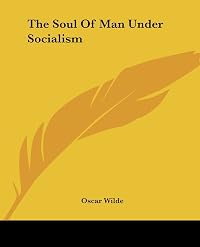
The Soul of Man Under Socialism
by Oscar Wilde 
On This Page
Description
The Soul of Man under Socialism is an 1891 essay by Oscar Wilde. Wilde puts forth the argument that within a capitalist system "the majority of people spoil their lives by an unhealthy and exaggerated altruism - are forced, indeed, so to spoil them" - that the necessity of solving the problems that capitalism creates draws away the talent that could otherwise be used to fulfill one's potential. In taking the the cause of this away, "Socialism itself will be of value simply because it will show more lead to individualism.". show less
Tags
Recommendations
















Member Reviews
The European Socialism movement of the 19th century is much different from socialism of today. Many things we take for granted in our so-called capitalist society simply did not exist then for the vast majority of people. Leisure time, vacation, property ownership, college education (or even high school education), child labor laws, did not exist for the vast majority. Barely subsistence wages and a huge pool of people needing work kept the majority of the population lock into wage slavery. There was little individualism if you were a cog in a machine.
Two points that caught my attention:
"High hopes were once formed of democracy; but democracy means simply the bludgeoning of the people by the people for the people." A great quote about show more the current national politics of the Untied States. Elections are treated like football games were you chose the red team or the blue team, and no matter who wins you can count on, for the most part, things will be exactly the same after the game as they were before the game. You may bask in the glory of a victory, but the victory is actually pretty hollow, because change will be mostly unnoticeable and the lack of change will be blamed on obstruction from the losing team (or even obstructionist inside the winning team). When has a team said "We accomplished what we wanted." even when they have the majority? Yet, this bludgeoning cost us $4.8 Billion in the 2012 presidential election.
"Indeed, so complete has man's personality been absorbed by his possessions that the English law has always treated offenses against a man's property with far more severity than offenses against his person..."
This seems to be true in America today. Run a red light and hit someones car and your insurance gets hit for property damage. Police show up, usually several police cars and maybe the fire department too. Cross a crosswalk and get hit by a car, maybe the police will show up, one car at the most. What no witnesses? Well I guess nothing happened here, you really need to be more careful when you cross the street. Another common occurrence, one that happened in my neighborhood. A cyclist stopped at a red light, the car behind him ran the red light killing the cyclist. The driver was charged with failure to drive within the conditions of the road, $250 ticket covered a human life. Looking up "cyclist killed" or "pedestrian killed" on any search engine and you will find many such cases.
We haven't changed since Wilde wrote this. show less
Two points that caught my attention:
"High hopes were once formed of democracy; but democracy means simply the bludgeoning of the people by the people for the people." A great quote about show more the current national politics of the Untied States. Elections are treated like football games were you chose the red team or the blue team, and no matter who wins you can count on, for the most part, things will be exactly the same after the game as they were before the game. You may bask in the glory of a victory, but the victory is actually pretty hollow, because change will be mostly unnoticeable and the lack of change will be blamed on obstruction from the losing team (or even obstructionist inside the winning team). When has a team said "We accomplished what we wanted." even when they have the majority? Yet, this bludgeoning cost us $4.8 Billion in the 2012 presidential election.
"Indeed, so complete has man's personality been absorbed by his possessions that the English law has always treated offenses against a man's property with far more severity than offenses against his person..."
This seems to be true in America today. Run a red light and hit someones car and your insurance gets hit for property damage. Police show up, usually several police cars and maybe the fire department too. Cross a crosswalk and get hit by a car, maybe the police will show up, one car at the most. What no witnesses? Well I guess nothing happened here, you really need to be more careful when you cross the street. Another common occurrence, one that happened in my neighborhood. A cyclist stopped at a red light, the car behind him ran the red light killing the cyclist. The driver was charged with failure to drive within the conditions of the road, $250 ticket covered a human life. Looking up "cyclist killed" or "pedestrian killed" on any search engine and you will find many such cases.
We haven't changed since Wilde wrote this. show less
There is a verve and a beauty to the character and especially the writing of Oscar Wilde. He's one of the few prose stylists who can be mentioned in the same breath as the likes of Shakespeare; and as far as raw beauty of language and expression I'd vouchsafe Wilde the greater skill in a narrower depth than the Bard.
That being said Wilde's statements concerning the status of an artist and their role in the society around them are gorgeously insightful. Wilde was that rare bird who from his undoubtedly privileged station in life was able to infer much artistic truth that could be termed near axiomatic. In an odd combination of what my father would call 'native intellect' along with the circumstances of his own life (especially the rough show more conclusion) a life narrative springs to attention almost Dostoyevskian in the inhering diametric opposites between beginning and end.
But this is in reference to Wilde's declamations regarding art. As regards Socialism...
It shouldn't come as too much of a shock, I suppose, that I tend to lean left on most issues. I'm pro choice, pro any kind of marriage (though the institution of marriage makes no sense to me at all at this life juncture but if you want it, hey go nuts), pro a social safety net, stricter gun laws, easier immigration laws, affirmative action WHATEVER. The only issues I'm truly at loggerheads with concerning the democrats (not that I'm registered but I will vote come 2020) is their stance vis a vis Israel. But Israel is a big boy nation that doesn't really need my vote to survive. One hopes, at least.
The reason for that digression is simple. I'm very left learning, borderline socialist. But note the 'borderline'. A few weeks ago I, along with a few friends, saw Bernie Sanders speak in Downtown Los Angeles. It was a good speech and Mr. Sanders, the consummate politician, said all the things he knew his base would love to hear, and did. I enjoyed the speech and believed as much of it as my inhering skepticism regarding politicians could allow, which was a decent amount. Is America ready for Socialism? A more socialized democracy? Sure, but full on Socialism and even Communism? I, honestly, highly doubt it. But Bernie made it sound good and that's where our friend Wilde comes in.
Socialism sounds wonderful, it sounds like a miracle, in fact, it sounds so good that it makes one wonder why it hasn't been tried successfully before, and if it has, what the hell are we waiting for? At least, that's the impression I got from Wilde. Whereas his treatise on art and artistry was spot on, even brilliant, Wilde's adumbration of Socialism felt treacly, even wide-eyed and naive. He doesn't really go into too many details concerning the logistics of how this system could and should be implemented and what to do if there was any opposition to it, or anything like that, Wilde just comes off as an ideologue so assured of his beliefs that a brief going over is all that's required.
Eh. Politics, especially the economic side of them, might not have been Wilde's bag, no harm. It wasn't Ayn Rand's either but it didn't stop her from being a lunatic. In summation: read this for Wilde's art, not his politics. The former is profound, the latter half-baked. show less
That being said Wilde's statements concerning the status of an artist and their role in the society around them are gorgeously insightful. Wilde was that rare bird who from his undoubtedly privileged station in life was able to infer much artistic truth that could be termed near axiomatic. In an odd combination of what my father would call 'native intellect' along with the circumstances of his own life (especially the rough show more conclusion) a life narrative springs to attention almost Dostoyevskian in the inhering diametric opposites between beginning and end.
But this is in reference to Wilde's declamations regarding art. As regards Socialism...
It shouldn't come as too much of a shock, I suppose, that I tend to lean left on most issues. I'm pro choice, pro any kind of marriage (though the institution of marriage makes no sense to me at all at this life juncture but if you want it, hey go nuts), pro a social safety net, stricter gun laws, easier immigration laws, affirmative action WHATEVER. The only issues I'm truly at loggerheads with concerning the democrats (not that I'm registered but I will vote come 2020) is their stance vis a vis Israel. But Israel is a big boy nation that doesn't really need my vote to survive. One hopes, at least.
The reason for that digression is simple. I'm very left learning, borderline socialist. But note the 'borderline'. A few weeks ago I, along with a few friends, saw Bernie Sanders speak in Downtown Los Angeles. It was a good speech and Mr. Sanders, the consummate politician, said all the things he knew his base would love to hear, and did. I enjoyed the speech and believed as much of it as my inhering skepticism regarding politicians could allow, which was a decent amount. Is America ready for Socialism? A more socialized democracy? Sure, but full on Socialism and even Communism? I, honestly, highly doubt it. But Bernie made it sound good and that's where our friend Wilde comes in.
Socialism sounds wonderful, it sounds like a miracle, in fact, it sounds so good that it makes one wonder why it hasn't been tried successfully before, and if it has, what the hell are we waiting for? At least, that's the impression I got from Wilde. Whereas his treatise on art and artistry was spot on, even brilliant, Wilde's adumbration of Socialism felt treacly, even wide-eyed and naive. He doesn't really go into too many details concerning the logistics of how this system could and should be implemented and what to do if there was any opposition to it, or anything like that, Wilde just comes off as an ideologue so assured of his beliefs that a brief going over is all that's required.
Eh. Politics, especially the economic side of them, might not have been Wilde's bag, no harm. It wasn't Ayn Rand's either but it didn't stop her from being a lunatic. In summation: read this for Wilde's art, not his politics. The former is profound, the latter half-baked. show less
Wilde's egoistic utopia found on aesthetic ideals. A scoiety where there is no property, no poverty and hunger and no burdens of wealth. Where machines do all the tedious labour and a man is completely free to chose himself. Wilde seems more concerned with the banality of the bourgeois than the suffering of the proletariat. You can clearly see that this is an artist's vision.
It's interesting to contrast this with Ayn Rand. Invdividualism vs communism is a false dichotomy.
It's interesting to contrast this with Ayn Rand. Invdividualism vs communism is a false dichotomy.
While Oscar Wilde was at times a truly brilliant man, he was also capable of being hopelessly naive. This book was almost cute, at times, like watching a child give a speech at a fundraiser or something. Still, even when I felt the things he was saying were head-slappingly simple-minded, I enjoyed his eloquent way of expressing it. His writing and his thought processes were wonderful, even if his opinions were rather simplistic.
Оскар Уайлд е бил нежна, романтична и драматична душа и освен това, милият, очевидно е бил абсолютно куха лейка що се отнася до политиката и живият живот. В което няма нищо кой знае колко чудно, много хора, особено по-образованите младежи в Западния свят са същите - дотолкова, че Георги Марков преди бая години е посветил цяло есе на тях, а те още са си такива.
Мечтите на О. Уайлд относно човека и душата му при show more социализма са точно такива, каквито са мечтите на всеки млад и глупав фен на социализма и са само и точно това: мечти. Че всички хора ще живеят братски, ще се трудят отдадено, ще делят насъщния и ще имат време, възможност и желание да израстват духовно, да летят на крилата на мечтите си и т.н. и т.н. детски приказки, които крепят и възраждат изсъхналата мумия на тая безчовечна идеология отново и отново с нов и нов грим. show less
Мечтите на О. Уайлд относно човека и душата му при show more социализма са точно такива, каквито са мечтите на всеки млад и глупав фен на социализма и са само и точно това: мечти. Че всички хора ще живеят братски, ще се трудят отдадено, ще делят насъщния и ще имат време, възможност и желание да израстват духовно, да летят на крилата на мечтите си и т.н. и т.н. детски приказки, които крепят и възраждат изсъхналата мумия на тая безчовечна идеология отново и отново с нов и нов грим. show less
[4.5]
Thoroughly enjoyed this. Unputtdownable.
This has definitely tempted me to read more Wilde as well as more essays.
Thoroughly enjoyed this. Unputtdownable.
This has definitely tempted me to read more Wilde as well as more essays.
[4.5]
Thoroughly enjoyed this. Unputtdownable.
This has definitely tempted me to read more Wilde as well as more essays.
Thoroughly enjoyed this. Unputtdownable.
This has definitely tempted me to read more Wilde as well as more essays.
Members
- Recently Added By
Published Reviews
Sosialismen og menneskets sjel
En som kunne ankomme USA med ordene, "jeg har ingenting annet å fortolle enn mitt geni" peker seg ut som en nokså selvsikker individualist. Den irske forfatteren Oscar Wilde var nettopp det, og hans essay Sosialismen og menneskets sjel (skrevet i 1891) handler i stor grad om menneskenes behov for å utfolde seg som individer, og hvordan samfunnet systematisk show more hindrer at det skjer.
Av: Tim Robinson
Publisert: 01.02.1992
Wilde skriver mye om sjønnhet og kunst, men i motsetning til mange radikale kunstnere ser han at også de er formet og kontrollert av det samfunnet de lever i. Det som går igjen i Sosialismen er behovet for at alle menneskene må være frie før noen kan virkelig realisere sin individualitet.
Wilde var ingen marxist, men hans forståelse av hvordan individualisme ødelegges var ikke ulik marxismens.
"Et menneske som produserer gjenstander til bruk for andre og tar hensyn til deres behov og ønsker, arbeider ikke med interesse. Det kan derfor ikke legge sin sjel i arbeidet."
Og når han beskriver et bedre samfunn,
"Ingen ville kaste bort livet sitt med å samle på ting og symboler. Menneskene fikk leve. For det å leve er det sjeldneste i verden. De fleste bare reker omkring."
Marx skrev om "varefetisjisme" og "fremmedgjøring". Vi er nødt til å selge vår egen arbeidskraft som en vare. For kapitalisme er akkumulasjon og profitt det eneste som teller, derfor blir alt, inkludert menneskene selv, varer. Dette fremmedgjør vårt forhold til alt, også de mest naturlige ting som mat og sex. Våre egne aktiviteter framstår som noe fremmed for oss selv. Wilde reagerte mot datidens utgaver av giftige hamburgere og Cindy-plakater.
Sosialismen er et velskrevet og forbanna skrik mot dette systemet og en klar argumentasjon for de mulighetene menneskene har, uten at den sier noe om hvordan mennesker oppdager uante evner og endrer seg sjøl når de bevisst slåss for å endre sin tilværelse. Wildes noe tvetydige holdning til religion gjør at han av og til svever i nærheten av mystisisme.
Men han understreker at mennesket er et sosialt vesen og på sitt beste er han en glimrende propagandist for opprør nedenfra:
"Vi hører at de fattige ofte er takknemlige for veldedighet. En del av dem er utvilsomt det. Men de beste blant de fattige er aldri takknemlige. De er utakknemlige, misfornøyde, ulydige og opprørske."
Wildes betraktninger om kunst er også verdifulle, han mener det er kun de kunstgrener som unngår "publikums" oppmerksomhet som vil kunne utvikle seg noenlunde fritt. Både individer og populære kunstgrener vil bli holdt tilbake på nivået av et minste felles multiplum. Hva Wilde ville sagt om dagens utallige tv-kanaler som alle viser de samme programmene kan vi bare tenke oss.
Oversetteren Unn Falkeid påpeker at forholdene var annerledes for hundre år siden. Hun konkluderer med at Wildes estetisme og tanker om skjønnhet er det viktige i hans essay. Hun får med at hadde han sett de "sosialistiske landene" så hadde Wilde nok innsett det urealistiske i å legge sosialisme til grunn for individualisme og personlig frihet. Og som så ofte skjer med opprørere når de er trygt plassert i graven får vi høre at teksten "har kanskje ikke en like eksplosiv kraft i dag".
Falkeid nevner ikke at Wilde utfordret samfunnets hykleri og dobbeltmoral også i praksis. Han levde i victorianske England som åpen bi-fil og hadde et homofilt forhold til en adelssønn. Av den grunn ble han satt i fengsel, der han fortsatte sitt raseri mot et umenneskelige system. Det engelske establishment forfulgte ham til sin død i 1900.
Selvsagt har verden endret seg, (hvor mye kan diskuteres hvis man ser på Thatchers forfølging av homofile på åtti-tallet), men essensen i Wildes budskap er like relevant i dag. At mennesket har en iboende individualisme som ikke vil bli realisert gjennom det frie markedet og høyre-liberalisme, men kun gjennom en bevisst kamp for hele menneskehetens frigjøring. Dette er i dag som det var i 1890 selve hjertet i kampen for sosialisme.
De fleste i dag vil si at Wildes visjoner var urealistiske og utopiske. Han svarer best selv:
"En praktisk plan er enten en som allerede eksisterer eller som kunne realiseres under de bestående forhold. Men det er nettopp den rådende tilstanden vi bekjemper....... "
"De systemene som svikter, er de som bygger på menneskenaturens konstans, og ikke på dens vekst og utvikling. Ludvig 14.s villfarelse var at han trodde at menneskenaturen alltid var den samme. Resultatet ble den franske revolusjon. Det var et beundringsverdig utfall." show less
En som kunne ankomme USA med ordene, "jeg har ingenting annet å fortolle enn mitt geni" peker seg ut som en nokså selvsikker individualist. Den irske forfatteren Oscar Wilde var nettopp det, og hans essay Sosialismen og menneskets sjel (skrevet i 1891) handler i stor grad om menneskenes behov for å utfolde seg som individer, og hvordan samfunnet systematisk show more hindrer at det skjer.
Av: Tim Robinson
Publisert: 01.02.1992
Wilde skriver mye om sjønnhet og kunst, men i motsetning til mange radikale kunstnere ser han at også de er formet og kontrollert av det samfunnet de lever i. Det som går igjen i Sosialismen er behovet for at alle menneskene må være frie før noen kan virkelig realisere sin individualitet.
Wilde var ingen marxist, men hans forståelse av hvordan individualisme ødelegges var ikke ulik marxismens.
"Et menneske som produserer gjenstander til bruk for andre og tar hensyn til deres behov og ønsker, arbeider ikke med interesse. Det kan derfor ikke legge sin sjel i arbeidet."
Og når han beskriver et bedre samfunn,
"Ingen ville kaste bort livet sitt med å samle på ting og symboler. Menneskene fikk leve. For det å leve er det sjeldneste i verden. De fleste bare reker omkring."
Marx skrev om "varefetisjisme" og "fremmedgjøring". Vi er nødt til å selge vår egen arbeidskraft som en vare. For kapitalisme er akkumulasjon og profitt det eneste som teller, derfor blir alt, inkludert menneskene selv, varer. Dette fremmedgjør vårt forhold til alt, også de mest naturlige ting som mat og sex. Våre egne aktiviteter framstår som noe fremmed for oss selv. Wilde reagerte mot datidens utgaver av giftige hamburgere og Cindy-plakater.
Sosialismen er et velskrevet og forbanna skrik mot dette systemet og en klar argumentasjon for de mulighetene menneskene har, uten at den sier noe om hvordan mennesker oppdager uante evner og endrer seg sjøl når de bevisst slåss for å endre sin tilværelse. Wildes noe tvetydige holdning til religion gjør at han av og til svever i nærheten av mystisisme.
Men han understreker at mennesket er et sosialt vesen og på sitt beste er han en glimrende propagandist for opprør nedenfra:
"Vi hører at de fattige ofte er takknemlige for veldedighet. En del av dem er utvilsomt det. Men de beste blant de fattige er aldri takknemlige. De er utakknemlige, misfornøyde, ulydige og opprørske."
Wildes betraktninger om kunst er også verdifulle, han mener det er kun de kunstgrener som unngår "publikums" oppmerksomhet som vil kunne utvikle seg noenlunde fritt. Både individer og populære kunstgrener vil bli holdt tilbake på nivået av et minste felles multiplum. Hva Wilde ville sagt om dagens utallige tv-kanaler som alle viser de samme programmene kan vi bare tenke oss.
Oversetteren Unn Falkeid påpeker at forholdene var annerledes for hundre år siden. Hun konkluderer med at Wildes estetisme og tanker om skjønnhet er det viktige i hans essay. Hun får med at hadde han sett de "sosialistiske landene" så hadde Wilde nok innsett det urealistiske i å legge sosialisme til grunn for individualisme og personlig frihet. Og som så ofte skjer med opprørere når de er trygt plassert i graven får vi høre at teksten "har kanskje ikke en like eksplosiv kraft i dag".
Falkeid nevner ikke at Wilde utfordret samfunnets hykleri og dobbeltmoral også i praksis. Han levde i victorianske England som åpen bi-fil og hadde et homofilt forhold til en adelssønn. Av den grunn ble han satt i fengsel, der han fortsatte sitt raseri mot et umenneskelige system. Det engelske establishment forfulgte ham til sin død i 1900.
Selvsagt har verden endret seg, (hvor mye kan diskuteres hvis man ser på Thatchers forfølging av homofile på åtti-tallet), men essensen i Wildes budskap er like relevant i dag. At mennesket har en iboende individualisme som ikke vil bli realisert gjennom det frie markedet og høyre-liberalisme, men kun gjennom en bevisst kamp for hele menneskehetens frigjøring. Dette er i dag som det var i 1890 selve hjertet i kampen for sosialisme.
De fleste i dag vil si at Wildes visjoner var urealistiske og utopiske. Han svarer best selv:
"En praktisk plan er enten en som allerede eksisterer eller som kunne realiseres under de bestående forhold. Men det er nettopp den rådende tilstanden vi bekjemper....... "
"De systemene som svikter, er de som bygger på menneskenaturens konstans, og ikke på dens vekst og utvikling. Ludvig 14.s villfarelse var at han trodde at menneskenaturen alltid var den samme. Resultatet ble den franske revolusjon. Det var et beundringsverdig utfall." show less
added by kirstenlund
Lists

Books cited in Progress by Samuel McDonald
160 works; 1 member
Author Information

1,783+ Works 121,334 Members
Flamboyant man-about-town, Oscar Wilde had a reputation that preceded him, especially in his early career. He was born to a middle-class Irish family (his father was a surgeon) and was trained as a scholarship boy at Trinity College, Dublin. He subsequently won a scholarship to Magdalen College, Oxford, where he was heavily influenced by John show more Ruskin and Walter Pater, whose aestheticism was taken to its radical extreme in Wilde's work. By 1879 he was already known as a wit and a dandy; soon after, in fact, he was satirized in Gilbert and Sullivan's Patience. Largely on the strength of his public persona, Wilde undertook a lecture tour to the United States in 1882, where he saw his play Vera open---unsuccessfully---in New York. His first published volume, Poems, which met with some degree of approbation, appeared at this time. In 1884 he married Constance Lloyd, the daughter of an Irish lawyer, and within two years they had two sons. During this period he wrote, among others, The Picture of Dorian Gray (1891), his only novel, which scandalized many readers and was widely denounced as immoral. Wilde simultaneously dismissed and encouraged such criticism with his statement in the preface, "There is no such thing as a moral or an immoral book. Books are well written or badly written. That is all." In 1891 Wilde published A House of Pomegranates, a collection of fantasy tales, and in 1892 gained commercial and critical success with his play, Lady Windermere's Fan He followed this comedy with A Woman of No Importance (1893), An Ideal Husband (1895), and his most famous play, The Importance of Being Earnest (1895). During this period he also wrote Salome, in French, but was unable to obtain a license for it in England. Performed in Paris in 1896, the play was translated and published in England in 1894 by Lord Alfred Douglas and was illustrated by Aubrey Beardsley. Lord Alfred was the son of the Marquess of Queensbury, who objected to his son's spending so much time with Wilde because of Wilde's flamboyant behavior and homosexual relationships. In 1895, after being publicly insulted by the marquess, Wilde brought an unsuccessful slander suit against the peer. The result of his inability to prove slander was his own trial on charges of sodomy, of which he was found guilty and sentenced to two years of hard labor. During his time in prison, he wrote a scathing rebuke to Lord Alfred, published in 1905 as De Profundis. In it he argues that his conduct was a result of his standing "in symbolic relations to the art and culture" of his time. After his release, Wilde left England for Paris, where he wrote what may be his most famous poem, The Ballad of Reading Gaol (1898), drawn from his prison experiences. Among his other notable writing is The Soul of Man under Socialism (1891), which argues for individualism and freedom of artistic expression. There has been a revived interest in Wilde's work; among the best recent volumes are Richard Ellmann's, Oscar Wilde and Regenia Gagnier's Idylls of the Marketplace , two works that vary widely in their critical assumptions and approach to Wilde but that offer rich insights into his complex character. (Bowker Author Biography) show less
Oscar Wilde has a Legacy Library. Legacy libraries are the personal libraries of famous readers, entered by LibraryThing members from the Legacy Libraries group.
All Editions
Some Editions
Series
Belongs to Publisher Series
Work Relationships
Common Knowledge
- Canonical title
- The Soul of Man Under Socialism
- Original title
- The Soul of Man Under Socialism
- Original publication date
- 1891
Classifications
Statistics
- Members
- 420
- Popularity
- 73,777
- Reviews
- 8
- Rating
- (3.74)
- Languages
- 12 — English, French, German, Greek, Italian, Norwegian (Bokmål), Polish, Portuguese, Croatian, Spanish, Swedish, Turkish
- Media
- Paper, Ebook
- ISBNs
- 79
- ASINs
- 12