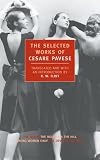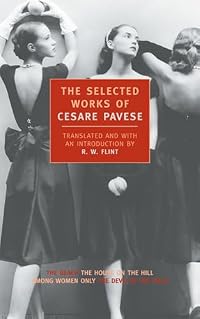
The Selected Works of Cesare Pavese
by Cesare Pavese
On This Page
Description
"There is only one pleasure, that of being alive. All the rest is misery," wrote Cesare Pavese, whose short, intense life spanned the ordeals of fascism and World War II to witness the beginnings of Italy's postwar prosperity. Searchingly alert to nuances of speech, feeling, and atmosphere, and remarkably varied, his novels offer a panoramic vision, at once sensual and finely considered, of a time of tumultuous change. This volume presents readers with Pavese's major works. The Beach is a show more wry summertime comedy of sexual and romantic misunderstandings, while The House on the Hill is an extraordinary novel of war in which a teacher flees through a countryside that is both beautiful and convulsed with terror. Among Women Only tells of a fashion designer who enters the affluent world she has always dreamed of, only to find herself caught up in an eerie dance of destruction, and The Devil in the Hills is an engaging road novel about three young men roaming the hills in high summer who stumble on mysteries of love and death. show lessTags
Recommendations









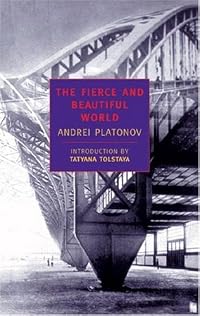



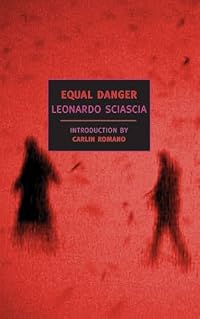
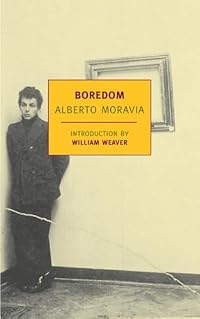
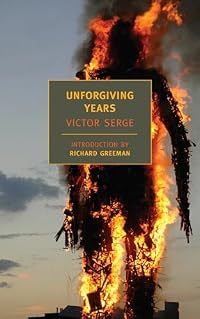





Member Reviews
THE BEACH
This story is about codes of behavior between men and women--and men and men--in mid-20th century Italy. Though published in 1941 there is no sign of war in the text. We begin with the narrator lamenting the loss of his male friend Doro to marriage. This has caused a rift between them, which the narrator mends by going to Genoa, where the happy couple now live, and apologizing. They renew their friendship. Doro returns to Turin for a boisterous night, which culminates in someone discharging a firearm. Afterwards, both go to the beach where new wife Clelia awaits. The narrator, known only as the "engineer," instead of staying with them, takes a room nearby. Outside his window a large olive tree thrives amidst the cobbles. He show more meets Doro and Clelia almost every day on the beach. It is summer. Also there is one Guido, often referred to as "friend Guido," as if to emphasize his lack of friendliness, who is there simply for Clelia. Waiting for his moment so to speak. Guido is a rogue. He keeps a mistress nearby whom Clelia will have not have in her house. Also at the beach by chance is a former student of the engineer, Berti, who at 15 is just starting his heady days of womanizing. Berti is the pre-Guido. They are two separate points along the womanizing continuum. Doro by contrast is utterly unlike the two Guidos. He loves and trusts his wife, though they fight (off stage), and it is this fighting that the somewhat nosey narrator seems to want to clear up; not realizing the happy couple's unwillingness to revisit the matter after the heat has passed. Doro is without guile or jealousy. He paints watercolors of the sea. He denigrates his talent. The prose is sensual, replete with omissions that might have told us more. The story merits multiple readings.
THE HOUSE ON THE HILL
AMONG WOMEN ONLY
THE DEVIL IN THE HILLS show less
This story is about codes of behavior between men and women--and men and men--in mid-20th century Italy. Though published in 1941 there is no sign of war in the text. We begin with the narrator lamenting the loss of his male friend Doro to marriage. This has caused a rift between them, which the narrator mends by going to Genoa, where the happy couple now live, and apologizing. They renew their friendship. Doro returns to Turin for a boisterous night, which culminates in someone discharging a firearm. Afterwards, both go to the beach where new wife Clelia awaits. The narrator, known only as the "engineer," instead of staying with them, takes a room nearby. Outside his window a large olive tree thrives amidst the cobbles. He show more meets Doro and Clelia almost every day on the beach. It is summer. Also there is one Guido, often referred to as "friend Guido," as if to emphasize his lack of friendliness, who is there simply for Clelia. Waiting for his moment so to speak. Guido is a rogue. He keeps a mistress nearby whom Clelia will have not have in her house. Also at the beach by chance is a former student of the engineer, Berti, who at 15 is just starting his heady days of womanizing. Berti is the pre-Guido. They are two separate points along the womanizing continuum. Doro by contrast is utterly unlike the two Guidos. He loves and trusts his wife, though they fight (off stage), and it is this fighting that the somewhat nosey narrator seems to want to clear up; not realizing the happy couple's unwillingness to revisit the matter after the heat has passed. Doro is without guile or jealousy. He paints watercolors of the sea. He denigrates his talent. The prose is sensual, replete with omissions that might have told us more. The story merits multiple readings.
THE HOUSE ON THE HILL
AMONG WOMEN ONLY
THE DEVIL IN THE HILLS show less
The stories of this book reminded me a lot of Michelangelo Antonioni's films in that they both tend to portray a kind of "cultivated boredom" (to borrow a phrase from the book.) Rich, young Italians doing relatively nothing, discussing, enjoying travel, wine and other little bourgeois pleasures.
Where Antonioni is memorable, I don't think Pavese is apt to stick in my head. The writing is good, and carries the same attention to small detail that's also present in Antonioni, but the stories just aren't that interesting.
Where Antonioni is memorable, I don't think Pavese is apt to stick in my head. The writing is good, and carries the same attention to small detail that's also present in Antonioni, but the stories just aren't that interesting.
Ratings
Members
- Recently Added By
Author Information

313+ Works 8,042 Members
In Torino in his native Piedmont, Pavese studied English and American literature and wrote a dissertation on Walt Whitman. He read and translated Defoe, Dickens, Joyce , Dos Passos, Stein and Faulkner and his version of Melville's , Moby Dick is a classic. Except for his book of poems Lavorare stanca (Work Wearies) (1936), Pavese's chief works are show more the novels The Comrade (1948), La Casa in Collina (The House on the Hill) (1949), Prima che il gallo canti (Before the Cock Crows) (1949), La bella estate (The Beautiful Summer) (1949), and his last and best, The Moon and the Bonfire (1952). During World War II, he was head of the Rome office of the publishing house of Einaudi and, with Elio Vittorini, did much to encourage young writers. Although a member of the Communist Party, he had not joined the anti-Fascist resistance. Unhappy in love, unable to believe in Christ, and disappointed with things in postwar Italy, he finally made good on what he had often urged as the finest of "final solutions" for himself, committing suicide after winning the coveted Strega Prize, for La bella estate. (Bowker Author Biography) show less
All Editions
Series
Belongs to Publisher Series
Work Relationships
Common Knowledge
- Canonical title
- The Selected Works of Cesare Pavese
Classifications
- Genres
- Fiction and Literature, General Fiction
- DDC/MDS
- 853.912 — Literature & rhetoric Italian, Romanian & related literatures Italian fiction 1900- 20th Century 1900-1945
- LCC
- PQ4835 .A846 .A238 — Language and Literature French, Italian, Spanish and Portuguese literatures Italian literature Individual authors, 1900-1960
- BISAC
Statistics
- Members
- 208
- Popularity
- 156,624
- Reviews
- 3
- Rating
- (4.42)
- Languages
- English
- Media
- Paper
- ISBNs
- 2
- ASINs
- 6