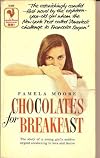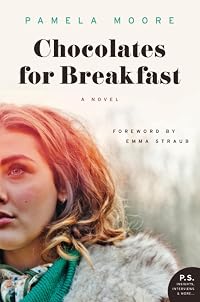
Chocolates for Breakfast
by Pamela Moore
On This Page
Description
“A gem of adolescent disaffection featuring a Holden Caulfield-like heroine.” — Vogue.com“Once I started reading it, I didn’t want to stop. . . . If your all-time favorite books include works of young-adult fiction (like Catcher), I strongly urge you to take a look." — USA Today/Pop Candy
A riveting coming-of-age story, Chocolates for Breakfast became an international sensation upon its initial publication in 1956, and still stands out as a shocking and moving account of the show more way teenagers collide, often disastrously, against love and sex for the first time. This edition includes an introduction by author Emma Straub.
Courtney Farrell is a disaffected, sexually precocious fifteen-year-old. She splits her time between Manhattan, where her father works in publishing, and Los Angeles, where her mother is a still-beautiful Hollywood actress. After a boarding-school crush on a female teacher ends badly, Courtney sets out to learn everything fast. Her first drink is a very dry martini, and her first kiss the beginning of a full-blown love affair with an older man.
. show less
Tags
Recommendations


















Member Recommendations
Member Reviews
Written by an 18-year old girl who started at Barnard College at 16, Chocolates for Breakfast is a sad, frenetic, pensive, self-indulgent, and deliciously dramatic novel of the late 1950s, Hollywood, and that horrible transition from child to adult.
Set in 1956, the novel follows Courtney Farrell, who at 15 is pulled out of her posh Connecticut boarding school when the school notifies her parents of Courtney's depression. Courtney is nursing a sapphic crush on a school teacher (which may or may not be reciprocal) and struggles with bouts of mania and depression.
Her divorced parents are self-absorbed and unwilling to take her on (over the holiday, both parent thought the other parent had taken Courtney, which meant she had been abandoned show more at the school for a few days until things were worked out). Courtney is moved out the Hollywood, living with her fading actress mother Sondra, at the idyllic apartment complex where F. Scott Fitzgerald once lived. It's there, left to herself, that Courtney teaches herself to drink, smoke, and eventually, make love.
The narrative style is quick, despite the fact we're in the mind of a dreamy teenager girl. This does like a first novel, both ambitious and a bit rough, but there's lovely sentences and creative twists of language along with a scandalous story. It's worth picking up for more than just the teenaged escapades.
Although only 18 when Moore wrote this book, there is some real maturity in her reflections and meditations on growing up, responsibility, desire, the search for happiness.
As with The Bell Jar, it's hard for me to read this book without projecting what I know about the author into the story and onto the characters. Like Plath, Moore killed herself with an infant in the house and had a history with depression and suicidal behavior.
Moore was often compared to Salinger, and in some ways, I can see this being the 'female' answer to Catcher in the Rye. (Certainly, more resonated with me in this book than in Salinger's.) While 'shocking' in the day, I'm not sure this book is any more graphic or dramatic than today's YA or New Adult, although those who are uncomfortable with teenagers drinking, smoking, and 'seducing' might want to pass on this one.
While the novel was entertaining, I will say the extras captured my attention more. Novelist Emma Straub is the reason for this book's reissue: she was gifted a copy by her 7th grade French and Latin teacher, who happened to be the author's son. Straub gave her novel to her agent, which resulted it its reissue. There's also an essay by Moore's son, Kevin Kanarek, about his mother, her diaries, and her 'missing years' after the publication of this book; an article by Robert Nedelkoff on Moore and the path of this novel's publication; and a piece comparing this edition to the French edition as well as the original manuscript (which, to my delight, has more lesbian-ish-ness to it!).
For those who like vintage fiction from the '50s, get this one. Fans of Plath's The Bell Jar or other coming-of-age novels by girls worldly beyond their years will find another kindred soul here. YA and New Adult addicts might consider picking this one up, as well: Moore is an unlikely great-aunt of the genre, I think! This is debauched beachy fun with an undercurrent of melancholy -- so good for those moody, sunny weekends. show less
Set in 1956, the novel follows Courtney Farrell, who at 15 is pulled out of her posh Connecticut boarding school when the school notifies her parents of Courtney's depression. Courtney is nursing a sapphic crush on a school teacher (which may or may not be reciprocal) and struggles with bouts of mania and depression.
Her divorced parents are self-absorbed and unwilling to take her on (over the holiday, both parent thought the other parent had taken Courtney, which meant she had been abandoned show more at the school for a few days until things were worked out). Courtney is moved out the Hollywood, living with her fading actress mother Sondra, at the idyllic apartment complex where F. Scott Fitzgerald once lived. It's there, left to herself, that Courtney teaches herself to drink, smoke, and eventually, make love.
The narrative style is quick, despite the fact we're in the mind of a dreamy teenager girl. This does like a first novel, both ambitious and a bit rough, but there's lovely sentences and creative twists of language along with a scandalous story. It's worth picking up for more than just the teenaged escapades.
Although only 18 when Moore wrote this book, there is some real maturity in her reflections and meditations on growing up, responsibility, desire, the search for happiness.
As with The Bell Jar, it's hard for me to read this book without projecting what I know about the author into the story and onto the characters. Like Plath, Moore killed herself with an infant in the house and had a history with depression and suicidal behavior.
Moore was often compared to Salinger, and in some ways, I can see this being the 'female' answer to Catcher in the Rye. (Certainly, more resonated with me in this book than in Salinger's.) While 'shocking' in the day, I'm not sure this book is any more graphic or dramatic than today's YA or New Adult, although those who are uncomfortable with teenagers drinking, smoking, and 'seducing' might want to pass on this one.
While the novel was entertaining, I will say the extras captured my attention more. Novelist Emma Straub is the reason for this book's reissue: she was gifted a copy by her 7th grade French and Latin teacher, who happened to be the author's son. Straub gave her novel to her agent, which resulted it its reissue. There's also an essay by Moore's son, Kevin Kanarek, about his mother, her diaries, and her 'missing years' after the publication of this book; an article by Robert Nedelkoff on Moore and the path of this novel's publication; and a piece comparing this edition to the French edition as well as the original manuscript (which, to my delight, has more lesbian-ish-ness to it!).
For those who like vintage fiction from the '50s, get this one. Fans of Plath's The Bell Jar or other coming-of-age novels by girls worldly beyond their years will find another kindred soul here. YA and New Adult addicts might consider picking this one up, as well: Moore is an unlikely great-aunt of the genre, I think! This is debauched beachy fun with an undercurrent of melancholy -- so good for those moody, sunny weekends. show less
This is not the least objective review as I adored this book as a teenager and wanted to see if it held up. It does. The characters are, for the most part, shallow, shelfish and hedonistic, moving between Hollywood and Manhattan in their lunching, shopping, partying and "dating." It was billed as America's answer to [b:Bonjour Tristesse|61672|Bonjour Tristesse|Françoise Sagan|http://d202m5krfqbpi5.cloudfront.net/books/1346107613s/61672.jpg|1708708]with its promiscuous, depressed cocktail-scarfing teen heroine. [a:Pamela Moore|845689|Pamela Moore|http://www.goodreads.com/assets/nophoto/nophoto-U-50x66-251a730d696018971ef4a443cdeaae05.jpg]was 17 when she published this book and it is remarkably coherent and perceptive considering her youth.
Giuro ero convinta che fosse chicklit, non ricordo nemmeno quanto tempo fa l'ho scaricato in ebook, poi sabato sera trovo un riferimento a questo libro nel memoir della Ernaux, in cui tra l'altro si dice che l'autrice si è poi suicidata a 26 anni. Mi ci sono buttata a capofitto.
E' un romanzo lineare, che ti tiene incollata alla storia, disarmante che mi ha fatta soffrire parecchio. Mi chiedo come mai passi così inosservato, pur se scritto a metà degli anni '50 è assolutamente contemporaneo e universale. Onestamente, avrei preferito leggere questo al posto dei 100 colpi di spazzola, racconta bene il diventare donna ed è più delicato e profondo.
E' un romanzo lineare, che ti tiene incollata alla storia, disarmante che mi ha fatta soffrire parecchio. Mi chiedo come mai passi così inosservato, pur se scritto a metà degli anni '50 è assolutamente contemporaneo e universale. Onestamente, avrei preferito leggere questo al posto dei 100 colpi di spazzola, racconta bene il diventare donna ed è più delicato e profondo.
Wow, this reprint of a 1956 bestseller is dynamite! I’ll just tell you what happens in the first chapter: Fifteen year old Courtney (this novel is what led to Courtney becoming a popular girl’s name, just as Charlotte Bronte gave us Shirley as a girl’s name, both names originally being for boys) lounges around with her naked roommate Janet and tells her about how her parents each thought the other was taking her for vacation so she got stuck at boarding school. Janet warns Courtney that she’s gone overboard in her crush for a female teacher and that she’ll end up queer. Courney goes to meet with this teacher, Miss Rosen. They talk a little about Finnegan’s Wake and Courtney tells her that she doesn’t think of herself as a show more woman and ever since she can remember she’s been male in her dreams. Then Miss Rosen tells her she doesn’t want to spend time alone with Courtney anymore because Courtney should make friends with her peers, and Courtney is devestated.
The novel follows Courtney for about two years from boarding school to Hollywood to NYC’s Upper East Side. I think I enjoyed this novel more as an adult than I would have as a teenager, because when I was a kid I got frustrated by stories where people were supposed to be “sophisticated” and that meant being exploited, abused, depressed, and constantly drunk. Parts of Chocolates for Breakfast seem very authentic and true to life, and other parts seem like a naive young person’s idea of what ought to be in a shocking novel. But since I was not alive during the 1950’s I could have the two completely backwards.
The story of the author Pamela Moore, who was eighteen when this novel was originally published and dead by suicide at 26, is as interesting as the novel. I get the impression that being a teenaged internationally-bestselling writer isn’t as sensational an experience as you’d think. She wrote several more novels, but they didn’t do well. When she died, she left behind a husband and baby son. At the end of the book there are some interesting essays on Pamela Moore, including one by her son. There are also some manuscript pages of material that was cut from the book either by Moore herself, her editor, or her agent, mostly homoerotic passages about Miss Rosen and stuff about suicide.
I love seeing a forgotten classic back in print and ready to be enjoyed by a new generation, especially a forgotten classic by a woman writer. I really wish I could discuss this book with my mom, who was born just one year earlier than Pamela Moore and most likely read this book. But the world is not a wish-granting factory &c.
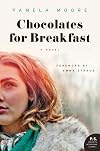
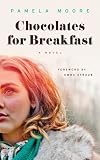
The part where I complain querulously about trivial matters: I feel a reprint should not have so many typos. Also, what’s going on with the cover, which seems to be a stock photo of a contemporary girl in contemporary clothes? The cover does not say 1950s or, well, anything, to me.
Theme song: Gloomy Sunday by Billie Holiday
Other book like this one: The Bell Jar by Sylvia Plath, just a little bit.
Trigger warning for: neglectful parents, M/C being molested by various men (“having an affair”), dating violence, frequent use of homophobic slurs, bisexual character who hates himself for not being a real man, cutting, being in the bin (“sanitarium”), casual mention of date rape, abusive parents, mentally ill parents, and suicide. show less
The novel follows Courtney for about two years from boarding school to Hollywood to NYC’s Upper East Side. I think I enjoyed this novel more as an adult than I would have as a teenager, because when I was a kid I got frustrated by stories where people were supposed to be “sophisticated” and that meant being exploited, abused, depressed, and constantly drunk. Parts of Chocolates for Breakfast seem very authentic and true to life, and other parts seem like a naive young person’s idea of what ought to be in a shocking novel. But since I was not alive during the 1950’s I could have the two completely backwards.
The story of the author Pamela Moore, who was eighteen when this novel was originally published and dead by suicide at 26, is as interesting as the novel. I get the impression that being a teenaged internationally-bestselling writer isn’t as sensational an experience as you’d think. She wrote several more novels, but they didn’t do well. When she died, she left behind a husband and baby son. At the end of the book there are some interesting essays on Pamela Moore, including one by her son. There are also some manuscript pages of material that was cut from the book either by Moore herself, her editor, or her agent, mostly homoerotic passages about Miss Rosen and stuff about suicide.
I love seeing a forgotten classic back in print and ready to be enjoyed by a new generation, especially a forgotten classic by a woman writer. I really wish I could discuss this book with my mom, who was born just one year earlier than Pamela Moore and most likely read this book. But the world is not a wish-granting factory &c.
The part where I complain querulously about trivial matters: I feel a reprint should not have so many typos. Also, what’s going on with the cover, which seems to be a stock photo of a contemporary girl in contemporary clothes? The cover does not say 1950s or, well, anything, to me.
Theme song: Gloomy Sunday by Billie Holiday
Other book like this one: The Bell Jar by Sylvia Plath, just a little bit.
Trigger warning for: neglectful parents, M/C being molested by various men (“having an affair”), dating violence, frequent use of homophobic slurs, bisexual character who hates himself for not being a real man, cutting, being in the bin (“sanitarium”), casual mention of date rape, abusive parents, mentally ill parents, and suicide. show less
I loved this book! I'm very impressed that the author was only 18 at the time of publication. To me, it's The Great Gatsby of the 1950's. The story has the same compelling sadness and provides a very immoral picture of New York and Hollywood in the post-WW II period.
While reading the story, you can't help wondering how much was autobiographical; it's easy in today's world to diagnose Courtney as bi-polar. The post-script information provides an informative final conclusion.
This was a Goodreads First-read that I highly recommend!
While reading the story, you can't help wondering how much was autobiographical; it's easy in today's world to diagnose Courtney as bi-polar. The post-script information provides an informative final conclusion.
This was a Goodreads First-read that I highly recommend!
Youth, sex and debauchery collide in a reprinted novel penned by an author as interesting as her wild, dead-eyed heroine.
Pamela Moore’s Chocolates for Breakfast is. . . crazed. Frenetic. Haunting. First released in 1956, Moore herself was only 18 years old when it reached publication. She would take her own life less than a decade later, already struggling to recreate the success of her explosive first novel, and it’s hard to separate Pamela from Courtney, her beautiful and morose main character.
The climate surrounding Chocolates for Breakfast seems crucial to understanding its shock value in the 1950s, but I’ll be honest: its content isn’t exactly tame by today’s standards, either. Though most of the action happens off-page, show more 15-year-old Courtney is still day-drinking herself into oblivion, becoming involved with men who actually favor men and privately pining for a female teacher. Themes of alcoholism, sex, depression and homosexuality held shock value for ’50s America . . . and sixty years later, the content is still enough to some raise eyebrows, mostly due to its teenage heroine.
As I read, I couldn’t help but think of parallels between the novel and “Rebel Without A Cause.” Released just a year before Moore’s novel hit shelves, James Dean’s Jim proclaims in the film, “If I had one day when I didn’t have to be all confused and I didn’t have to feel that I was ashamed of everything. If I felt that I belonged someplace. You know?”
Belonging. What a powerful concept. Shuttled between two coasts, Courtney belongs nowhere. She’s used and discarded and taken advantage of by everyone in her life, and her selfish and delusional mother can’t be bothered to look up from a manuscript long enough to pay attention to her only child. Courtney is looking for love “in all the wrong places,” as they say, and her desperation to be accepted and treasured settles on her skin like a musk. The men in her life exploit that desperation handily, and it’s heartbreaking to read. But it’s all so frustrating, too.
Like “Rebel Without a Cause,” Courtney seems to have no reason to be so wildly unhappy. Her family life is a shambles, yes, but the issues she faces in the story wouldn’t necessarily crack a modern reader. With divorce so common in current society, the explosion and destruction of her “perfect nuclear family” wouldn’t be so shocking today. But Courtney’s overblown, inappropriate behavior — a reaction to her parents’ disinterest — is what makes Chocolates for Breakfast so hard to put down.
Because make no mistake: this book is crazy, but it’s crazy good. With a foreword by Emma Straub detailing its current path to rerelease, I found myself equally fascinated by Pamela Moore’s life and tragic fate. Learning more about her personal history shed additional light on Courtney and her personal decisions, which added another layer of complexity to this already-complex story.
Masterfully crafted with language that guides without becoming explicit, Chocolates for Breakfast still manages to feel contemporary more than half a century after its young author brought Courtney to life. Fans of character-driven fiction and ’50s-era novels will find merit — and real depth — in Moore’s work. It’s truly memorable. show less
Pamela Moore’s Chocolates for Breakfast is. . . crazed. Frenetic. Haunting. First released in 1956, Moore herself was only 18 years old when it reached publication. She would take her own life less than a decade later, already struggling to recreate the success of her explosive first novel, and it’s hard to separate Pamela from Courtney, her beautiful and morose main character.
The climate surrounding Chocolates for Breakfast seems crucial to understanding its shock value in the 1950s, but I’ll be honest: its content isn’t exactly tame by today’s standards, either. Though most of the action happens off-page, show more 15-year-old Courtney is still day-drinking herself into oblivion, becoming involved with men who actually favor men and privately pining for a female teacher. Themes of alcoholism, sex, depression and homosexuality held shock value for ’50s America . . . and sixty years later, the content is still enough to some raise eyebrows, mostly due to its teenage heroine.
As I read, I couldn’t help but think of parallels between the novel and “Rebel Without A Cause.” Released just a year before Moore’s novel hit shelves, James Dean’s Jim proclaims in the film, “If I had one day when I didn’t have to be all confused and I didn’t have to feel that I was ashamed of everything. If I felt that I belonged someplace. You know?”
Belonging. What a powerful concept. Shuttled between two coasts, Courtney belongs nowhere. She’s used and discarded and taken advantage of by everyone in her life, and her selfish and delusional mother can’t be bothered to look up from a manuscript long enough to pay attention to her only child. Courtney is looking for love “in all the wrong places,” as they say, and her desperation to be accepted and treasured settles on her skin like a musk. The men in her life exploit that desperation handily, and it’s heartbreaking to read. But it’s all so frustrating, too.
Like “Rebel Without a Cause,” Courtney seems to have no reason to be so wildly unhappy. Her family life is a shambles, yes, but the issues she faces in the story wouldn’t necessarily crack a modern reader. With divorce so common in current society, the explosion and destruction of her “perfect nuclear family” wouldn’t be so shocking today. But Courtney’s overblown, inappropriate behavior — a reaction to her parents’ disinterest — is what makes Chocolates for Breakfast so hard to put down.
Because make no mistake: this book is crazy, but it’s crazy good. With a foreword by Emma Straub detailing its current path to rerelease, I found myself equally fascinated by Pamela Moore’s life and tragic fate. Learning more about her personal history shed additional light on Courtney and her personal decisions, which added another layer of complexity to this already-complex story.
Masterfully crafted with language that guides without becoming explicit, Chocolates for Breakfast still manages to feel contemporary more than half a century after its young author brought Courtney to life. Fans of character-driven fiction and ’50s-era novels will find merit — and real depth — in Moore’s work. It’s truly memorable. show less
This is one of those forays I tend to take into genres I don't typically read. I can't remember what caused me to chose this book and having read it I must write that it was a book that still pops into my thoughts even a week later. Courtney Farrell is a 15 (?) year old nascent alcoholic who smokes like my grandmother did. I found myself several times during the narrative having to remind myself that the book was written in 1956.
Courtney's parents are divorced - her father a NY publisher, her mother a faded Hollywood movie actress who thinks more of herself and her needs than her daughter's. Courtney has assumed a maturity far beyond her years from being dropped off at boarding school and in all honesty, mostly forgotten. When a minor show more scandal involving an older female teacher erupts Courtney ends up not returning to school and moving to California with her mother whose life will soon spiral further down.
Courtney though is 15, almost 16 as she says and is just starting to learn the power of her beauty. When she turns 16 her mother allows her to drink (it was written in 1956, it was written in 1956) and she learns to love scotch (it was written in 1956) with her cigarettes. She also falls in love with a handsome, gay, older actor despite being warned away. She is a teenager looking for love in any form.
This book was shocking in 1956 with its themes of homosexuality, divorce and suicide but ironically not for the teenage drinking and smoking. Those aspects shock more now. The representation of the children of the rich is/was a common storyline that continues to be provocative.
The writing at times is juvenile - the author was 18 when she wrote the book and it's odd reading it from my age (53) as she discusses older people and her "mature" self. Knowing what is was like to be a teenager and how much one thought one knew and how much of it was smoke and mirrors.
I found myself enthralled, disgusted, fascinated, shocked and saddened while reading this book. That a novel can call forth so many emotions is a good thing; it certainly made me think and is keeping me thinking. I can't say it was a happy book and knowing the author's back story makes it all the more poignant a tale (she committed suicide at 26). It wasn't easy to read, but I can say I was glad I've added to my bookshelf. show less
Courtney's parents are divorced - her father a NY publisher, her mother a faded Hollywood movie actress who thinks more of herself and her needs than her daughter's. Courtney has assumed a maturity far beyond her years from being dropped off at boarding school and in all honesty, mostly forgotten. When a minor show more scandal involving an older female teacher erupts Courtney ends up not returning to school and moving to California with her mother whose life will soon spiral further down.
Courtney though is 15, almost 16 as she says and is just starting to learn the power of her beauty. When she turns 16 her mother allows her to drink (it was written in 1956, it was written in 1956) and she learns to love scotch (it was written in 1956) with her cigarettes. She also falls in love with a handsome, gay, older actor despite being warned away. She is a teenager looking for love in any form.
This book was shocking in 1956 with its themes of homosexuality, divorce and suicide but ironically not for the teenage drinking and smoking. Those aspects shock more now. The representation of the children of the rich is/was a common storyline that continues to be provocative.
The writing at times is juvenile - the author was 18 when she wrote the book and it's odd reading it from my age (53) as she discusses older people and her "mature" self. Knowing what is was like to be a teenager and how much one thought one knew and how much of it was smoke and mirrors.
I found myself enthralled, disgusted, fascinated, shocked and saddened while reading this book. That a novel can call forth so many emotions is a good thing; it certainly made me think and is keeping me thinking. I can't say it was a happy book and knowing the author's back story makes it all the more poignant a tale (she committed suicide at 26). It wasn't easy to read, but I can say I was glad I've added to my bookshelf. show less
Members
- Recently Added By
Lists

Top Five Books of 2013
1,562 works; 721 members

Catalog
41 works; 2 members
Author Information

4 Works 211 Members
Series
Belongs to Publisher Series
Common Knowledge
- Canonical title
- Chocolates for Breakfast
- Original title
- Chocolates for Breakfast
- Original publication date
- 1956
- People/Characters
- Courtney Farrell; Sondra Farrell; Janet Parker; Barry Cabot; Anthony; Al Leone (show all 7); Charles Cunningham
- Important places
- Los Angeles, California, USA; New York, New York, USA
- First words
- Spring at Scaisbrooke Hall was clearly the most beautiful time of year.
- Quotations
- 'Last night, when I got back here, I realized that I couldn't ever be different from what I had been brought up to be. Maybe if I'd been farmed out to somebody like you when I was six or so, I could have been different. Now, ... (show all)I'm just stuck with cocktails at eleven and breakfast at noon.'
- Last words
- (Click to show. Warning: May contain spoilers.)How quickly the summer had gone.
Classifications
- Genres
- Fiction and Literature, General Fiction, Young Adult
- DDC/MDS
- 813.54 — Literature & rhetoric American literature in English American fiction in English 1900-1999 1945-1999
- LCC
- PZ4 .M825 .C — Language and Literature Fiction and juvenile belles lettres Fiction and juvenile belles lettres Fiction in English
- BISAC
Statistics
- Members
- 190
- Popularity
- 173,005
- Reviews
- 12
- Rating
- (3.49)
- Languages
- 5 — English, French, German, Italian, Norwegian (Bokmål)
- Media
- Paper, Ebook
- ISBNs
- 9
- ASINs
- 8