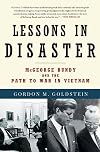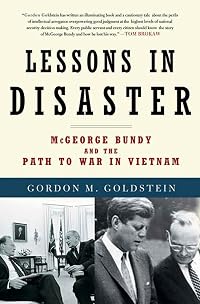
Lessons in Disaster: McGeorge Bundy and the Path to War in Vietnam
by Gordon M. Goldstein
On This Page
Description
Drawing on prodigious research as well as the interviews and analysis he has conducted with former National Security Adviser McGeorge Bundy, Goldstein offers this revelatory look at the decisions that led to the U.S. involvement in Vietnam.Tags
Recommendations




Member Reviews
Lessons in Disaster: McGeorge Bundy and the Path to War in Vietnam by Gordon M. Goldstein (Times Books, 2008) is the ultimate result of what was to be a collaborative retrospective analysis of the Vietnam era begun in 1995-96, prior to Bundy's death. That book was never published, but Goldstein drew on the project to create Lessons in Disaster, which he describes as "an original work that is informed by my experience with Bundy but which draws conclusions that are my own" (p. 23). His goal with this book, Goldstein writes, was to "distill what I believe are the pivotal lessons of Bundy's performance as national security adviser with respect to the vital question of American strategy in Vietnam" (p. 23-24).
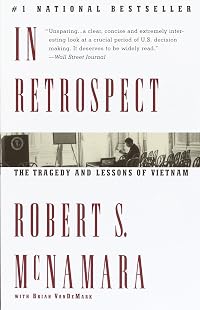
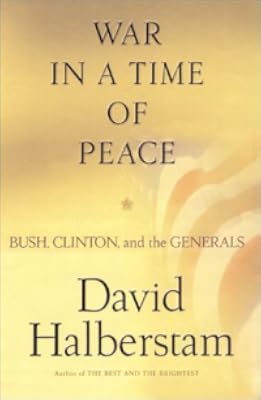
The attempt succeeds admirably. show more This, like Halberstam's The Best and the Brightest and McNamara's In Retrospect, is a remarkably disturbing and candid look at the decision-making processes that led the United States into the Vietnam conflict and kept us there. Goldstein takes us through Bundy's actions and decisions during the critical years of the early Sixties when he served as national security adviser to JFK and then LBJ, but he also manages to carry Bundy's thoughts forward until the years near the end of his life when he began to reexamine those decisions and the impact they had, with the benefit of hindsight. Goldstein concludes "With respect to the question of Vietnam, undoubtedly his most consequential encounter with history, Bundy in retrospect had embraced a quality he had lacked when in high office three decades earlier. He had finally learned humility" (p. 227).
Goldstein's examination of Bundy's relationships with Kennedy and Johnson, plus the other advisers in both administrations (particularly during the difficult transition following Kennedy's assassination), was detailed and captivating. And the lessons he has drawn from Bundy's experiences are important ones both for their historical interest and as cautionary tales for the present and future. As I read this, I couldn't help but wonder which officials from the current administration will be writing or inspiring books like this in the coming decades. Some things never change.
http://philobiblos.blogspot.com/2008/12/book-review-lessons-in-disaster.html show less
The attempt succeeds admirably. show more This, like Halberstam's The Best and the Brightest and McNamara's In Retrospect, is a remarkably disturbing and candid look at the decision-making processes that led the United States into the Vietnam conflict and kept us there. Goldstein takes us through Bundy's actions and decisions during the critical years of the early Sixties when he served as national security adviser to JFK and then LBJ, but he also manages to carry Bundy's thoughts forward until the years near the end of his life when he began to reexamine those decisions and the impact they had, with the benefit of hindsight. Goldstein concludes "With respect to the question of Vietnam, undoubtedly his most consequential encounter with history, Bundy in retrospect had embraced a quality he had lacked when in high office three decades earlier. He had finally learned humility" (p. 227).
Goldstein's examination of Bundy's relationships with Kennedy and Johnson, plus the other advisers in both administrations (particularly during the difficult transition following Kennedy's assassination), was detailed and captivating. And the lessons he has drawn from Bundy's experiences are important ones both for their historical interest and as cautionary tales for the present and future. As I read this, I couldn't help but wonder which officials from the current administration will be writing or inspiring books like this in the coming decades. Some things never change.
http://philobiblos.blogspot.com/2008/12/book-review-lessons-in-disaster.html show less
Lessons in Disaster is a post-mortem look at the pivotal moments of the Vietnam War as viewed through the eyes of National Security Adviser McGeorge Bundy. "Mac" was one of the hawks, who publicly argued for escalating the Vietnam War, but he held private doubts about the possibility of success. This book originated in a collaboration between the author and Bundy on his memoirs, which was cut short by Bundy's death in 1996. Based on the historical record, scribbled 'fragments' for that book, and conversations with Bundy, Goldstein wrote a different book about the key decisions to intervene in Vietnam, and the relationship between Bundy and the presidents he served.
The primary argument that Goldstein advances is one that defends the show more reputation of Kennedy at the expense of Johnson. The picture of Kennedy that emerges is one of skepticism towards the military bureaucracy, a man who learned hard lessons in the Bay of Bigs invasion and the Cuban Missile Crisis, who knew that starting a war was easier than finishing it, and that there was little of strategic interest in Vietnam. Kennedy was willing to deploy special forces and adviser/training forces, but not to commit ground combat troops.
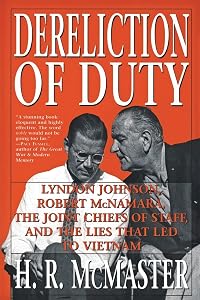
By contrast, Johnson was desperate to save political face, and unable to make the hard choice to abandon Vietnam. A dyed-in-the-wool creature of the legislature, Johnson treated his staff like Senators he was whipping for a key vote, not a source of ideas, options, and plans. The Gulf of Tonkin Resolution shored up Johnson's right flank during the 1964 election, rather than acting towards a strategic end. The decision to escalate was based on a desire to get General Westmoreland onboard, and then to negotiate the lowest number of troops that would keep Westmoreland's support, not any clear strategic goals. This is a solid story, but better told in H.R. McMaster's Dereliction of Duty.
The problem is that where we might get some unique insight into Bundy's character and role in the great drama of the Vietnam War, the book becomes maddeningly vague. American Rasputin draws a clear line between Rostow's modernization theory and faith in the efficacy of airpower. McNamara's memoirs describe a flawed process of analysis and roads not taken. The Best and The Brightest has a compelling argument about the fatal arrogance and political cowardice of the Washington establishment. All of those books are superior to Lessons in Disaster.
National Security Adviser is a strange role, with little formal power but a great deal of potential access to the President, and power through that channel. Bundy was one of the brightest of Kennedy's advisers, an academic wunderkind who became the youngest Dean of Harvard (fascinatingly, as Dean he was continually interviewed by David Halberstam for the Harvard Crimson, who would go on to cover the Vietnam War and excoriate Bundy for his role in it.) But relatively little of that man comes through. In fact, Bundy was on vacation for key moments, like the Vance telegram that set in motion the coup against Diem. The post-facto disapproval of the Gulf of Tonkin Resolution and the introduction of ground troops are weakly contrasted against active approval for escalating the war at all decision points. And I wish we had more about the SIGMA II-64 wargame that correctly predicted how the war would go in 1964, and at which Bundy was present. Not a bad book, per se, but one almost entirely redundant. show less
The primary argument that Goldstein advances is one that defends the show more reputation of Kennedy at the expense of Johnson. The picture of Kennedy that emerges is one of skepticism towards the military bureaucracy, a man who learned hard lessons in the Bay of Bigs invasion and the Cuban Missile Crisis, who knew that starting a war was easier than finishing it, and that there was little of strategic interest in Vietnam. Kennedy was willing to deploy special forces and adviser/training forces, but not to commit ground combat troops.
By contrast, Johnson was desperate to save political face, and unable to make the hard choice to abandon Vietnam. A dyed-in-the-wool creature of the legislature, Johnson treated his staff like Senators he was whipping for a key vote, not a source of ideas, options, and plans. The Gulf of Tonkin Resolution shored up Johnson's right flank during the 1964 election, rather than acting towards a strategic end. The decision to escalate was based on a desire to get General Westmoreland onboard, and then to negotiate the lowest number of troops that would keep Westmoreland's support, not any clear strategic goals. This is a solid story, but better told in H.R. McMaster's Dereliction of Duty.
The problem is that where we might get some unique insight into Bundy's character and role in the great drama of the Vietnam War, the book becomes maddeningly vague. American Rasputin draws a clear line between Rostow's modernization theory and faith in the efficacy of airpower. McNamara's memoirs describe a flawed process of analysis and roads not taken. The Best and The Brightest has a compelling argument about the fatal arrogance and political cowardice of the Washington establishment. All of those books are superior to Lessons in Disaster.
National Security Adviser is a strange role, with little formal power but a great deal of potential access to the President, and power through that channel. Bundy was one of the brightest of Kennedy's advisers, an academic wunderkind who became the youngest Dean of Harvard (fascinatingly, as Dean he was continually interviewed by David Halberstam for the Harvard Crimson, who would go on to cover the Vietnam War and excoriate Bundy for his role in it.) But relatively little of that man comes through. In fact, Bundy was on vacation for key moments, like the Vance telegram that set in motion the coup against Diem. The post-facto disapproval of the Gulf of Tonkin Resolution and the introduction of ground troops are weakly contrasted against active approval for escalating the war at all decision points. And I wish we had more about the SIGMA II-64 wargame that correctly predicted how the war would go in 1964, and at which Bundy was present. Not a bad book, per se, but one almost entirely redundant. show less
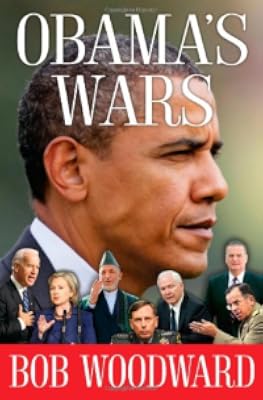
An infuriating book because I so hate how decisions were made about Americanizing the Vietnam War when they did not need to have been made IF McGeorge Bundy had been a better national security advisor, IF Lyndon Johnson had not cared only about his election, IF George Ball and others had been listened to, IF assumptions such as the domino theory had been discussed, analyzed, and considered fraudulent, IF war games' results had been paid attention to, and, most of all, IF Kennedy had not been assassinated, then and only then could so many lives have not been wasted. And all for what???? The parallels to what is happening today in Afghanistan and in the Obama administration are striking.
LESSONS IN DISASTER by Gordon Goldstein is about how Kennedy and Johnson decided to go to war in Vietnam. The book is good but he does not put enough emphasis on how Eisenhower started the war. What I mean is that he prevented the resolution of the previous war and made a commitment almost certain to lead to the next one.
The Geneva Conference of 1954 negotiated a settlement of the colonial war that France militarily lost. Up to then Vietnam was universally considered a single country. The settlement established two temporary administrations for two years - explicitly not a division into two countries. Eisenhower and Kennedy both agreed that the war should not be settled on that basis and Eisenhower committed the US to support for a new show more regime in the south contrary to the settlement. At the end of the two years the situation was that Vietnam was one country with a civil war between two contending governments.
By preventing the end of the last war Eisenhower started the next. He was trying to get his war goals without sending in troops. His puppet regime did his fighting for him.
Goldstein does say that the division was temporary (page 50). But when on page 25 he writes of "The accounts of all of the other central protagonists in the Vietnam drama - from the beginning of U.S. military engagement [1961] ..." he leaves out the most central of all: Eisenhower started the war by proxy with the troops of his government in "South Vietnam". show less
The Geneva Conference of 1954 negotiated a settlement of the colonial war that France militarily lost. Up to then Vietnam was universally considered a single country. The settlement established two temporary administrations for two years - explicitly not a division into two countries. Eisenhower and Kennedy both agreed that the war should not be settled on that basis and Eisenhower committed the US to support for a new show more regime in the south contrary to the settlement. At the end of the two years the situation was that Vietnam was one country with a civil war between two contending governments.
By preventing the end of the last war Eisenhower started the next. He was trying to get his war goals without sending in troops. His puppet regime did his fighting for him.
Goldstein does say that the division was temporary (page 50). But when on page 25 he writes of "The accounts of all of the other central protagonists in the Vietnam drama - from the beginning of U.S. military engagement [1961] ..." he leaves out the most central of all: Eisenhower started the war by proxy with the troops of his government in "South Vietnam". show less
I read this in January 2009, and see it's what all in the White House have been reading since this summer and before the big December decision for troop requests for Afghanistan.
Very good book and very good history of the writing of the book itself (qv, Goldstein working with Bundy before his death).
Very good book and very good history of the writing of the book itself (qv, Goldstein working with Bundy before his death).
Ratings
Members
- Recently Added By
Lists

Obama Reads
181 works; 3 members

Books recommended by Barack Obama
295 works; 28 members
Author Information
1 Work 236 Members
Awards and Honors
Awards
Common Knowledge
- People/Characters
- McGeorge Bundy
- Important places
- Vietnam
- Important events
- Vietnam War
Classifications
- Genres
- Nonfiction, History, Politics and Government, General Nonfiction, Biography & Memoir
- DDC/MDS
- 327.730597 — Society, government, & culture Political science International Relations: Spies North America United States U.S.-Asian Relations
- LCC
- E183.8 .V5 .G64 — History of the United States United States History Diplomatic history. Foreign and general relations. Relations with individual countries
- BISAC
Statistics
- Members
- 236
- Popularity
- 137,642
- Reviews
- 6
- Rating
- (3.80)
- Languages
- English
- Media
- Paper, Ebook
- ISBNs
- 4
- ASINs
- 4