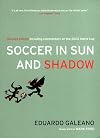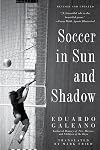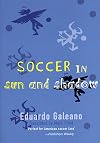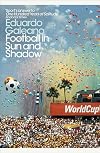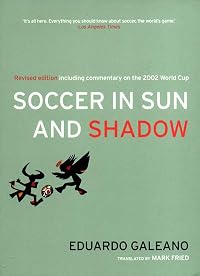
Soccer in Sun and Shadow
by Eduardo Galeano
On This Page
Description
"In this witty and rebellious history of world soccer, award-winning writer Eduardo Galeano searches for the styles of play, players, and goals that express the unique personality of certain times and places. In Soccer in Sun and Shadow, Galeano takes us to ancient China, where engravings from the Ming period show a ball that could have been designed by Adidas to Victorian England, where gentlemen codified the rules that we still play by today and to Latin America, where the "crazy English" show more spread the game only to find it creolized by the locals. All the greats-Pele;, Di Ste;fano, Cruyff, Euse;bio, Pusk, Gullit, Baggio, Beckenbauer- have joyous cameos in this book. yet soccer, Galeano cautions, "is a pleasure that hurts." Thus there is also heartbreak and madness. Galeano tells of the suicide of Uruguayan player Porte, who shot himself in the center circle of the Nacional's stadium; of the Argentine manager who wouldn't let his team eat chicken because it would bring bad luck; and of scandal-riven Diego Maradona whose real crime, Galeano suggests, was always "the sin of being the best." Soccer is a game that bureaucrats try to dull and the powerful try to manipulate, but it retains its magic because it remains a bewitching game-"a feast for the eyes... and a joy for the body that plays it"-exquisitely rendered in the magical stories of Soccer in Sun and Shadow"-- show lessTags
Recommendations










Member Reviews
Poetic vignettes, so the reader is more likely to dip in than to read through or to take them in order. Galeano highlights the play and the joy in the game of football, in contrast to the corporate side of the football business, the power wielders. “From beauty to duty” is one of his refrains. He champions the “insolent rascals who set aside the script,” the subversive and idiosyncratic, and of course those themes are strong in Latin American football culture, where much of this anthology takes place. His song of the dispossessed, where plucky underdogs upstage the corruptions of uniformity and profitability, can become a bit tiresome but his recognition of the fun and expressiveness that playing football channels is spot on. show more Among these vignettes, the author sets down anecdotes of legendary plays, their own hazy and indeed dubious details evoking nostalgia for the days when not everything was filmed and instantly broadcast.
Also worthy to read are the hardscrabble tales of the pioneering Uruguay team winning the Olympics in 1924 and ‘28 in Europe, and then that inaugural World Cup that Uruguay hosted, showcasing a different style to the English, and fostering a sense of identity in that small, and for much of the world distant, nation. show less
Also worthy to read are the hardscrabble tales of the pioneering Uruguay team winning the Olympics in 1924 and ‘28 in Europe, and then that inaugural World Cup that Uruguay hosted, showcasing a different style to the English, and fostering a sense of identity in that small, and for much of the world distant, nation. show less
A few reasons to re-read Galeano's reminiscences on global football, whether or not it's "updated" with new World Cup results:
● Galeano's take is distinct from that of the dominant European conversation, which places almost everything against the EPL and its Continental pretenders (La Liga, German Bundesliga, Serie A, Ligue 1).
● It's also distinct from that of the US "outlaw" conversation, soccer being one of the few areas of global capitalism in which the US doesn't control and dominate developments and preferences; that underdog perspective is a good one, but it's shot through with a prideful hurt manifesting as a perennial chip on the shoulder. I suspect it won't last another 50 years, and that will not be an improvement over the show more current situation.
● Galeano provides both a history lesson, primarily of South American football but also the World Cup; and he is decisively anti-FIFA.
This isn't a linear history or even closely-reasoned essay, but a few themes recur. Between his fond recollections of seeing individual players (in person or televised) and recounting legendary feats on the pitch, Galeano builds up a story of how football steadily becomes more and more regimented, increasingly efficient in both athletic and financial terms, and so further distant from the everyday player and fan. I took to heart the personal benefit of playing with friends as much or more than following a professional league or hometown team, especially to the extent the latter are contributing to the flattening of the overall experience. Make it your own, he urges.
A number of recurring jokes, among them "Well-informed sources in Miami were announcing the imminent fall of Fidel Castro, it was only a matter of hours." (e.g. p154) and the occasional series "It Happened At The World Cup". This edition illustrated with a number of silhouettes, icons, and clip art, used as chapter heads / tails.
//
LTer Sunita_p's review captures much better than mine the heart and rage driving Galeano's prose.
John Trumbull was interviewed for the series Five Books, with Galeano's one of his picks. After acknowledging Galeano's pedigree as an investigative journalist ("well-known for his social activism, his writing about the marginalised, and the underside of Latin America"), he claims that Galeano's prose follow a recognised format: "All his work is written in what in Latin America is called the crónica form, which are very short episodes." Incidentally, Trumbull's organising theme for his five picks is provocative (Football as a Second Language) and those of his remaining picks which weren't already went right on my syllabus. show less
● Galeano's take is distinct from that of the dominant European conversation, which places almost everything against the EPL and its Continental pretenders (La Liga, German Bundesliga, Serie A, Ligue 1).
● It's also distinct from that of the US "outlaw" conversation, soccer being one of the few areas of global capitalism in which the US doesn't control and dominate developments and preferences; that underdog perspective is a good one, but it's shot through with a prideful hurt manifesting as a perennial chip on the shoulder. I suspect it won't last another 50 years, and that will not be an improvement over the show more current situation.
● Galeano provides both a history lesson, primarily of South American football but also the World Cup; and he is decisively anti-FIFA.
This isn't a linear history or even closely-reasoned essay, but a few themes recur. Between his fond recollections of seeing individual players (in person or televised) and recounting legendary feats on the pitch, Galeano builds up a story of how football steadily becomes more and more regimented, increasingly efficient in both athletic and financial terms, and so further distant from the everyday player and fan. I took to heart the personal benefit of playing with friends as much or more than following a professional league or hometown team, especially to the extent the latter are contributing to the flattening of the overall experience. Make it your own, he urges.
A number of recurring jokes, among them "Well-informed sources in Miami were announcing the imminent fall of Fidel Castro, it was only a matter of hours." (e.g. p154) and the occasional series "It Happened At The World Cup". This edition illustrated with a number of silhouettes, icons, and clip art, used as chapter heads / tails.
//
LTer Sunita_p's review captures much better than mine the heart and rage driving Galeano's prose.
John Trumbull was interviewed for the series Five Books, with Galeano's one of his picks. After acknowledging Galeano's pedigree as an investigative journalist ("well-known for his social activism, his writing about the marginalised, and the underside of Latin America"), he claims that Galeano's prose follow a recognised format: "All his work is written in what in Latin America is called the crónica form, which are very short episodes." Incidentally, Trumbull's organising theme for his five picks is provocative (Football as a Second Language) and those of his remaining picks which weren't already went right on my syllabus. show less
All the stars.
This is deservedly a classic, and it's a book everyone who cares about soccer should read. It focuses on South American history, but it also incorporates discussions of Europe (a lot), Central America (some), and Africa, Asia, and North America (a little). The book is a series of mini-chapters, some just a couple of paragraphs, some a few pages, and it is structured by the World Cup years. Every World Cup chapter opens with a paragraph about what else is happening in the world, which serves as a reminder that soccer is embedded in and inseparable from the rest of life.
There are marvelous portraits of players, and players dominate the pages (as they should). Galeano never lets the reader forget how many great players came show more from poor, minority, and disadvantaged backgrounds, and how often they were used and then discarded by the soccer elites. He traces the roots of the sport's corruption back decades, and he excoriates the commodification of athletes and the greed of owners, association heads, and politicians (who are sometimes all the same person).
But this is also a warm, embracing love letter to the sport. You can recognize and acknowledge the flaws and still love soccer deeply, and Galeano shows you how. show less
This is deservedly a classic, and it's a book everyone who cares about soccer should read. It focuses on South American history, but it also incorporates discussions of Europe (a lot), Central America (some), and Africa, Asia, and North America (a little). The book is a series of mini-chapters, some just a couple of paragraphs, some a few pages, and it is structured by the World Cup years. Every World Cup chapter opens with a paragraph about what else is happening in the world, which serves as a reminder that soccer is embedded in and inseparable from the rest of life.
There are marvelous portraits of players, and players dominate the pages (as they should). Galeano never lets the reader forget how many great players came show more from poor, minority, and disadvantaged backgrounds, and how often they were used and then discarded by the soccer elites. He traces the roots of the sport's corruption back decades, and he excoriates the commodification of athletes and the greed of owners, association heads, and politicians (who are sometimes all the same person).
But this is also a warm, embracing love letter to the sport. You can recognize and acknowledge the flaws and still love soccer deeply, and Galeano shows you how. show less
يسرد إداردو غاليانو تاريخ كرة القدم بطريقة ممتعة جدا، وكقراء وعشاق لكرة القدم فمحظوظون أن تولى كتابة تاريخها رجل هو باحث وروائي وصحفي. وكمثال بسيط على جودة الكاتب والكتاب فيكفي هذه السطور
ھــدف ميـازا
حدث ذلك فـي مونديال 1938، فـي المباراة قبل النھائية، وكانت إيطاليا والبرازيل تقامران بكل شيء أو لا شيء
المھاجم الإيطالي بيولا ھوى على الأرض فجأة وكأن رصاصة قد صعقته، وأشار بإصبعه الوحيد الحي إلى المدافع show more البرازيلي دومينغوس دي غيا .
الحكم السويسري صدقه، ودوت الصافرة :ضربة جزاء.
وبينما كان صراخ البرازيليين يعلو حتى السماء، نھض بيولا وھو ينفض الغبار عن جسمه، ووضع غيوسيب ميازا الكرة فـي نقطة الإطلاق show less
ھــدف ميـازا
حدث ذلك فـي مونديال 1938، فـي المباراة قبل النھائية، وكانت إيطاليا والبرازيل تقامران بكل شيء أو لا شيء
المھاجم الإيطالي بيولا ھوى على الأرض فجأة وكأن رصاصة قد صعقته، وأشار بإصبعه الوحيد الحي إلى المدافع show more البرازيلي دومينغوس دي غيا .
الحكم السويسري صدقه، ودوت الصافرة :ضربة جزاء.
وبينما كان صراخ البرازيليين يعلو حتى السماء، نھض بيولا وھو ينفض الغبار عن جسمه، ووضع غيوسيب ميازا الكرة فـي نقطة الإطلاق show less
In Football in Sun and Shadow Eduardo Galeano tells an anecdotal history of football (soccer). Those who have read his Memories of the Fire will immediately recognize the style. And I guess the reasons to enjoy or dislike these histories are the same in both cases. I love (playing) football (and occasionally watch others play it) and I like Galeano's writing and his humour and his attitude, so I enjoyed the book quite unconditionally. Like he I am one of the greatest footballers in the world -- during the night, in my bed -- and while watching a game it doesn't matter who wins as long as I get to see even a minute of beautiful football. Galeano tells deliciously about the game itself, about a few great players, wonderful matches and show more even about individual goals, summarizes all the World Cups, and about the shady business and cabinet politics connected to the great game. show less
The beautiful book about the beautiful game. Galeano's series of brief vignettes on the game are poetic, luminescent, and downright informative.
"El gol es el orgasmo del fútbol." Truer words have never been written, and may never be.
"El gol es el orgasmo del fútbol." Truer words have never been written, and may never be.
- الكتاب ممتع ولا يسبب الملل الا في فصول قليلة جداً ويحتوي على كم غزير من المعلومات الكروية التاريخية.
- شاركت الكثير من اللمحات الموجودة في الكتاب على صفحتي في الفيسبوك لظرافتها وقلة التطرق لها.
- يحاول غاليانو بشكل مستمر اظهار ملامح الفساد في مؤسسة الفيفا اللي لا يضاهيها في الفساد الا الحكومة العراقية.
- المقدمة رائعة والخاتمة أروع
- شاركت الكثير من اللمحات الموجودة في الكتاب على صفحتي في الفيسبوك لظرافتها وقلة التطرق لها.
- يحاول غاليانو بشكل مستمر اظهار ملامح الفساد في مؤسسة الفيفا اللي لا يضاهيها في الفساد الا الحكومة العراقية.
- المقدمة رائعة والخاتمة أروع
Members
- Recently Added By
Lists

Books about sports
65 works; 3 members

Books Referenced by Montague's 1312: Among the Ultras
29 works; 1 member
Author Information

101+ Works 10,765 Members
Eduardo Galeano was born on September 3, 1940 in Montevideo, Uruguay. At the age of 13, he began publishing cartoons for the Uruguayan socialist newspaper El Sol. He worked as a journalist, historian, and political activist. While in his early 30s, he was imprisoned during a right-wing military coup and later forced to flee from Uruguay to show more Argentina. Later, another coup and several death threats forced him to leave Argentina for Spain where he lived in exile until he was permitted to return to Uruguay in 1984. During his lifetime, he wrote numerous fiction and non-fiction works including Days and Nights of Love and War, Football in Sun and Shadow, Open Veins of Latin America: Five Centuries of the Pillage of a Continent, Guatemala: Occupied Country, The Book of Embraces, and Children of the Days. In 1989, he won the American Book Award for Memory of Fire. He died of cancer on April 13, 2015 at the age of 74. (Bowker Author Biography) show less
Series
Belongs to Publisher Series
Common Knowledge
- Canonical title
- Soccer in Sun and Shadow
- Original title
- El fútbol a sol y sombra
- Original publication date
- 1995
- People/Characters
- Augusto C. Sandino; Hernando Siles; Hipolito Irigoyen; Rafael Trujillo; Jules Rimet; John Langenus (show all 40); Louis Laurent; Adhemar Canavessi; Carlos Gardel; Johnny Weissmülle; Adolf Hitler; Benito Mussolini; Max Theiler; Walt Disney; Alfonsina Storni; Leopoldo Lugones; Lazaro Cárdenas; Orson Welles; Cesar Vallejo; Albert Lebrun; Joe Louis; Max Schmeling; Domingos Antônio da Guia; Gyula Zsengellér; Atilio García; Marilyn Monroe; Luis Buñuel; Octavio Paz; Albizu Campos; Joe Gaetjens; Ary Barroso; Obdulio Varela; Moacir Barbosa Nascimento; Getulio Vargas; Manuel Francisco dos Santos; Pele; Gianni Rivera; Sandro Mazzola; Robert "Bobby" Charlton; Alf Ramsey
- Important places
- Uruguay
- Dedication*
- Die folgenden Seiten sind den Kindern gewidmet, die mir einmal vor Jahren in Calella da Costa über den Weg liefen. Sie kamen vom Fussballspielen und sangen:
Ob gewonnen, ob besiegt,
wie haben uns ganz arg vergnügt... (show all). - First words*
- Die Geschichte des Fussballs ist eine traurige Reise von der Lust zur Pflicht.
- Last words*
- (Click to show. Warning: May contain spoilers.)Und ich bleibe zurück, mit jener unweigerlichen Melancholie, die wir alle nach der Liebe spüren, und wenn das Spiel vorüber ist.
- Original language
- Spanish
*Some information comes from Common Knowledge in other languages. Click "Edit" for more information.
Classifications
- Genres
- Sports and Leisure, Nonfiction, History, General Nonfiction
- DDC/MDS
- 796.334 — Arts & recreation Recreation, sports, and performing arts Athletic and outdoor sports and games Ball sports Inflated ball driven by the foot Soccer
- LCC
- GV942.5 .G35 — Geography, Anthropology and Recreation Recreation. Leisure Recreation. Leisure Sports Ball games: Baseball, football, golf, etc.
- BISAC
Statistics
- Members
- 760
- Popularity
- 36,941
- Reviews
- 20
- Rating
- (4.00)
- Languages
- 13 — Chinese, Dutch, English, Finnish, French, German, Italian, Norwegian (Bokmål), Portuguese (Brazil), Portuguese (Portugal), Spanish, Swedish, Turkish
- Media
- Paper, Ebook
- ISBNs
- 55
- ASINs
- 6