
The Language of Bees
by Laurie R. King 
Mary Russell (9), Mary Russell: Chronological Order (August 1924)
On This Page
Description
For Mary Russell and her husband, Sherlock Holmes, returning to the Sussex coast after seven months abroad was especially sweet. There was even a mystery to solve--the unexplained disappearance of an entire colony of bees from one of Holmes's beloved hives. But the anticipated sweetness of their homecoming is quickly tempered by a galling memory from her husband's past. Mary had met Damian Adler only once before, when the promising surrealist painter had been charged with--and exonerated show more from--murder. Now the talented and troubled young man was enlisting their help again, this time in a desperate search for his missing wife and child. show lessTags
Recommendations








Member Recommendations
Member Reviews
Mary and Sherlock are just home from months abroad when Sherlock's son Damian Adler comes to ask for their help finding his missing wife and child. Sherlock wasn't aware of Damian's existence until 1919 when he and Mary worked to clear him of a murder charge.
Damian was a war hero, a drug addict, and a Bohemian painter. He greatly resented Holmes for his neglect and for his mother's unhappiness. He felt that Holmes should have know of his existence. As soon as he was cleared of the murder charge, he disappeared.
Now it is 1924 and Damian is back with his attitude toward Holmes pretty much unchanged. Adler and Holmes disappear to London to look for his family leaving Mary behind to work on the mystery of the hive of bees that had been show more abandoned. After a few days of working on that mystery, Mary decides to head to London to begin her own investigation.
Mary learns that Damian's wife Yolanda was fascinated by a wide variety of religions and belief systems. Mary discovers her relationship with the Children of Lights whose theology is a mash-up of many other beliefs including Norse mythology. She becomes convinced that their holy book is the work of a madman and she fears that Damian might be the author.
When Yolanda is found dead - murdered - at an ancient historical site, Mary and Sherlock begin looking at other odd events at historical sites to try to find out if her death was one in a pattern. Meanwhile, Holmes is looking for Damian who left him during their investigation.
This story was filled with great detail about the Bohemian movement and the art scene in London for those who were called Surrealists. I loved the descriptions of Damian's art work though I wouldn't want them in my living room any more than Mary did.
The tension builds as the story progresses until Mary is forced to fly from London to the Orkneys with a military pilot and through massively difficult weather to try to beat the villain to his final sacrificial site and save Damian and his daughter's lives. The descriptions made me feel that I was there along with Mary during that harrowing flight.
The only thing I didn't like about the story was the cliffhanger ending. I am very grateful that the next book is available for me and that I didn't have to wait a year for it. show less
Damian was a war hero, a drug addict, and a Bohemian painter. He greatly resented Holmes for his neglect and for his mother's unhappiness. He felt that Holmes should have know of his existence. As soon as he was cleared of the murder charge, he disappeared.
Now it is 1924 and Damian is back with his attitude toward Holmes pretty much unchanged. Adler and Holmes disappear to London to look for his family leaving Mary behind to work on the mystery of the hive of bees that had been show more abandoned. After a few days of working on that mystery, Mary decides to head to London to begin her own investigation.
Mary learns that Damian's wife Yolanda was fascinated by a wide variety of religions and belief systems. Mary discovers her relationship with the Children of Lights whose theology is a mash-up of many other beliefs including Norse mythology. She becomes convinced that their holy book is the work of a madman and she fears that Damian might be the author.
When Yolanda is found dead - murdered - at an ancient historical site, Mary and Sherlock begin looking at other odd events at historical sites to try to find out if her death was one in a pattern. Meanwhile, Holmes is looking for Damian who left him during their investigation.
This story was filled with great detail about the Bohemian movement and the art scene in London for those who were called Surrealists. I loved the descriptions of Damian's art work though I wouldn't want them in my living room any more than Mary did.
The tension builds as the story progresses until Mary is forced to fly from London to the Orkneys with a military pilot and through massively difficult weather to try to beat the villain to his final sacrificial site and save Damian and his daughter's lives. The descriptions made me feel that I was there along with Mary during that harrowing flight.
The only thing I didn't like about the story was the cliffhanger ending. I am very grateful that the next book is available for me and that I didn't have to wait a year for it. show less
Mary and Sherlock are just home from months abroad when Sherlock's son Damian Adler comes to ask for their help finding his missing wife and child. Sherlock wasn't aware of Damian's existence until 1919 when he and Mary worked to clear him of a murder charge.
Damian was a war hero, a drug addict, and a Bohemian painter. He greatly resented Holmes for his neglect and for his mother's unhappiness. He felt that Holmes should have know of his existence. As soon as he was cleared of the murder charge, he disappeared.
Now it is 1924 and Damian is back with his attitude toward Holmes pretty much unchanged. Adler and Holmes disappear to London to look for his family leaving Mary behind to work on the mystery of the hive of bees that had been show more abandoned. After a few days of working on that mystery, Mary decides to head to London to begin her own investigation.
Mary learns that Damian's wife Yolanda was fascinated by a wide variety of religions and belief systems. Mary discovers her relationship with the Children of Lights whose theology is a mash-up of many other beliefs including Norse mythology. She becomes convinced that their holy book is the work of a madman and she fears that Damian might be the author.
When Yolanda is found dead - murdered - at an ancient historical site, Mary and Sherlock begin looking at other odd events at historical sites to try to find out if her death was one in a pattern. Meanwhile, Holmes is looking for Damian who left him during their investigation.
This story was filled with great detail about the Bohemian movement and the art scene in London for those who were called Surrealists. I loved the descriptions of Damian's art work though I wouldn't want them in my living room any more than Mary did.
The tension builds as the story progresses until Mary is forced to fly from London to the Orkneys with a military pilot and through massively difficult weather to try to beat the villain to his final sacrificial site and save Damian and his daughter's lives. The descriptions made me feel that I was there along with Mary during that harrowing flight.
The only thing I didn't like about the story was the cliffhanger ending. I am very grateful that the next book is available for me and that I didn't have to wait a year for it. show less
Damian was a war hero, a drug addict, and a Bohemian painter. He greatly resented Holmes for his neglect and for his mother's unhappiness. He felt that Holmes should have know of his existence. As soon as he was cleared of the murder charge, he disappeared.
Now it is 1924 and Damian is back with his attitude toward Holmes pretty much unchanged. Adler and Holmes disappear to London to look for his family leaving Mary behind to work on the mystery of the hive of bees that had been show more abandoned. After a few days of working on that mystery, Mary decides to head to London to begin her own investigation.
Mary learns that Damian's wife Yolanda was fascinated by a wide variety of religions and belief systems. Mary discovers her relationship with the Children of Lights whose theology is a mash-up of many other beliefs including Norse mythology. She becomes convinced that their holy book is the work of a madman and she fears that Damian might be the author.
When Yolanda is found dead - murdered - at an ancient historical site, Mary and Sherlock begin looking at other odd events at historical sites to try to find out if her death was one in a pattern. Meanwhile, Holmes is looking for Damian who left him during their investigation.
This story was filled with great detail about the Bohemian movement and the art scene in London for those who were called Surrealists. I loved the descriptions of Damian's art work though I wouldn't want them in my living room any more than Mary did.
The tension builds as the story progresses until Mary is forced to fly from London to the Orkneys with a military pilot and through massively difficult weather to try to beat the villain to his final sacrificial site and save Damian and his daughter's lives. The descriptions made me feel that I was there along with Mary during that harrowing flight.
The only thing I didn't like about the story was the cliffhanger ending. I am very grateful that the next book is available for me and that I didn't have to wait a year for it. show less
Mary and Sherlock are just home from months abroad when Sherlock's son Damian Adler comes to ask for their help finding his missing wife and child. Sherlock wasn't aware of Damian's existence until 1919 when he and Mary worked to clear him of a murder charge.
Damian was a war hero, a drug addict, and a Bohemian painter. He greatly resented Holmes for his neglect and for his mother's unhappiness. He felt that Holmes should have know of his existence. As soon as he was cleared of the murder charge, he disappeared.
Now it is 1924 and Damian is back with his attitude toward Holmes pretty much unchanged. Adler and Holmes disappear to London to look for his family leaving Mary behind to work on the mystery of the hive of bees that had been show more abandoned. After a few days of working on that mystery, Mary decides to head to London to begin her own investigation.
Mary learns that Damian's wife Yolanda was fascinated by a wide variety of religions and belief systems. Mary discovers her relationship with the Children of Lights whose theology is a mash-up of many other beliefs including Norse mythology. She becomes convinced that their holy book is the work of a madman and she fears that Damian might be the author.
When Yolanda is found dead - murdered - at an ancient historical site, Mary and Sherlock begin looking at other odd events at historical sites to try to find out if her death was one in a pattern. Meanwhile, Holmes is looking for Damian who left him during their investigation.
This story was filled with great detail about the Bohemian movement and the art scene in London for those who were called Surrealists. I loved the descriptions of Damian's art work though I wouldn't want them in my living room any more than Mary did.
The tension builds as the story progresses until Mary is forced to fly from London to the Orkneys with a military pilot and through massively difficult weather to try to beat the villain to his final sacrificial site and save Damian and his daughter's lives. The descriptions made me feel that I was there along with Mary during that harrowing flight.
The only thing I didn't like about the story was the cliffhanger ending. I am very grateful that the next book is available for me and that I didn't have to wait a year for it. show less
Damian was a war hero, a drug addict, and a Bohemian painter. He greatly resented Holmes for his neglect and for his mother's unhappiness. He felt that Holmes should have know of his existence. As soon as he was cleared of the murder charge, he disappeared.
Now it is 1924 and Damian is back with his attitude toward Holmes pretty much unchanged. Adler and Holmes disappear to London to look for his family leaving Mary behind to work on the mystery of the hive of bees that had been show more abandoned. After a few days of working on that mystery, Mary decides to head to London to begin her own investigation.
Mary learns that Damian's wife Yolanda was fascinated by a wide variety of religions and belief systems. Mary discovers her relationship with the Children of Lights whose theology is a mash-up of many other beliefs including Norse mythology. She becomes convinced that their holy book is the work of a madman and she fears that Damian might be the author.
When Yolanda is found dead - murdered - at an ancient historical site, Mary and Sherlock begin looking at other odd events at historical sites to try to find out if her death was one in a pattern. Meanwhile, Holmes is looking for Damian who left him during their investigation.
This story was filled with great detail about the Bohemian movement and the art scene in London for those who were called Surrealists. I loved the descriptions of Damian's art work though I wouldn't want them in my living room any more than Mary did.
The tension builds as the story progresses until Mary is forced to fly from London to the Orkneys with a military pilot and through massively difficult weather to try to beat the villain to his final sacrificial site and save Damian and his daughter's lives. The descriptions made me feel that I was there along with Mary during that harrowing flight.
The only thing I didn't like about the story was the cliffhanger ending. I am very grateful that the next book is available for me and that I didn't have to wait a year for it. show less
For those who don't know, the Mary Russell series are books of basically Sherlock Holmes fan fiction. Set in the early 20th Century, King gives Holmes a female romantic and professional partner, Mary Russell, a much younger--and feminist partner. And yes, incongruous and unlikely as that might sound, they work. A lot of the fun is the depiction of Holmes--I'm a fan of the original Conan Doyle stories. Some is just the character of Mary, a strong woman protagonist and vivid character in her own right. And a lot is just the picture it paints of the historical period. We get a glimpse of the world right after the Great War, and each book tends to treat a different slice of it: Palestine, India during the British Raj, a great English show more estate, Prohibition Era San Francisco. That helps keep the series fresh, and in the last book--and this one--the events of the books hit closer to home. They're not just mysteries for our couple to solve. The last book, Locked Rooms, involved Mary dealing with her troubled past. In this one, pages in, Sherlock Holmes estranged son by Irene Adler shows up on their doorstep.
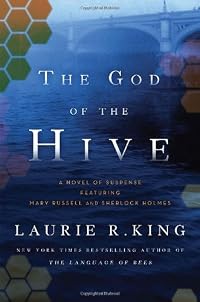
And that's not all. I don't think any of the other books in the series are darker than this one. This time we get a glimpse of the Bohemian set, avant-garde artists, the world of the occult, even aviation. Reading this I realize that I love these I think even more as historical fiction than mysteries. I love how the books show our modern world taking shape. King so obviously has so much fun with that, mixing fictional and historical characters: Lord Peter Wimsey, Kipling's Kimball O'Hara, Dashiell Hammett, and in this book Aleister Crowley gets some mention. Not that I have any complaints about the mystery aspects. Although King is no Christie or Tey with mind-boggling twists, her plots are solid and with Sherlock Holmes and Mary Russell on hand, the one thing these books never do is insult your intelligence with too-stupid-to live characters. One thing I do think I should warn potential readers about. This book is no standalone. My first Mary Russell book was the third book, A Letter of Mary, and I had no problem immersing myself in it. Most of the books can be read on their own. This one, however, ends, if not exactly on a cliffhanger, than certainly with a very, very loose end and a "to be continued." So I'd have the next book, The God of the Hive, close by for after you finish this one. show less
And that's not all. I don't think any of the other books in the series are darker than this one. This time we get a glimpse of the Bohemian set, avant-garde artists, the world of the occult, even aviation. Reading this I realize that I love these I think even more as historical fiction than mysteries. I love how the books show our modern world taking shape. King so obviously has so much fun with that, mixing fictional and historical characters: Lord Peter Wimsey, Kipling's Kimball O'Hara, Dashiell Hammett, and in this book Aleister Crowley gets some mention. Not that I have any complaints about the mystery aspects. Although King is no Christie or Tey with mind-boggling twists, her plots are solid and with Sherlock Holmes and Mary Russell on hand, the one thing these books never do is insult your intelligence with too-stupid-to live characters. One thing I do think I should warn potential readers about. This book is no standalone. My first Mary Russell book was the third book, A Letter of Mary, and I had no problem immersing myself in it. Most of the books can be read on their own. This one, however, ends, if not exactly on a cliffhanger, than certainly with a very, very loose end and a "to be continued." So I'd have the next book, The God of the Hive, close by for after you finish this one. show less
Have an extra half star. Picked it up for the title. Initially I was a bit disappointed by the main character Mary and by the writing which is a bit ponderous, but it soon picked up as I got to know her properly. This isn't this first in this series - actually the ninth - so I guess the author had no need to draw the character fully at the start of book none! A refreshingly active heroine, and not out of period - there were lots of real life women zooming all over the globe having adventures right back to the previous century. I'll look out for the first in the series. Always a sucker for bees....
I have to say, I don't think I've been disappointed by any of the Mary Russell books and this new one is right in line. Another excellent read=)
There was an interesting paralleling to the last one (Locked Rooms). In LOCK, Russell is more than a little preoccupied with her past and her family and Holmes is in the background noticing clues with his clear mind and waiting for Russell to come around to herself to help with the mystery. In this new one it's reversed; Holmes is visited by his past/family and Russell goes about the business of objectively collecting clues and moving forward with the case at hand. Not quite the same since Holmes is still very actively trying to solve the case, but I thought it was an interesting transition from show more the last book to this one.
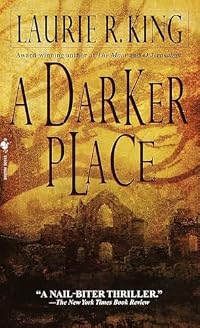
Also, I saw a similarity between this new book and one of Ms. King's stand-alone novels, A Darker Place. DARK deals with alternative religions and cults, with a focus on alchemy and a little bit on mysticism. This new Russell moves in that direction as well. I'm not really sure what to say about it past that, just that I noticed the similarity. We've seen Russell tackle mysticism before in A Monstrous Regiment of Women, but the new religious movement discussed in this book was much more out there. Maybe because the stuff discussed in MREG was having to do with old religion and seemed more legitimate? And to that end, maybe this new book is more about charlatans and that's why I was reminded of DARK. I really find it interesting when LRK injects some of her academic interests into her novels; despite the fact that I have very little interest in religion, she always gives me plenty to think about.
Oddly, I think this is the first book I've ever read that had a "to be continued" ending that I wasn't scaling the walls over. It's not a cliff hanger or anything; more like she left the ending open to a point that we know where she has to be going with the next book, which she hasn't done before. Usually we get a nice clean finished story; there could be a next one, but there doesn't have to be. This one, there's very obviously some unresolved story that we're going to have to delve into in the next book. show less
There was an interesting paralleling to the last one (Locked Rooms). In LOCK, Russell is more than a little preoccupied with her past and her family and Holmes is in the background noticing clues with his clear mind and waiting for Russell to come around to herself to help with the mystery. In this new one it's reversed; Holmes is visited by his past/family and Russell goes about the business of objectively collecting clues and moving forward with the case at hand. Not quite the same since Holmes is still very actively trying to solve the case, but I thought it was an interesting transition from show more the last book to this one.
Also, I saw a similarity between this new book and one of Ms. King's stand-alone novels, A Darker Place. DARK deals with alternative religions and cults, with a focus on alchemy and a little bit on mysticism. This new Russell moves in that direction as well. I'm not really sure what to say about it past that, just that I noticed the similarity. We've seen Russell tackle mysticism before in A Monstrous Regiment of Women, but the new religious movement discussed in this book was much more out there. Maybe because the stuff discussed in MREG was having to do with old religion and seemed more legitimate? And to that end, maybe this new book is more about charlatans and that's why I was reminded of DARK. I really find it interesting when LRK injects some of her academic interests into her novels; despite the fact that I have very little interest in religion, she always gives me plenty to think about.
Oddly, I think this is the first book I've ever read that had a "to be continued" ending that I wasn't scaling the walls over. It's not a cliff hanger or anything; more like she left the ending open to a point that we know where she has to be going with the next book, which she hasn't done before. Usually we get a nice clean finished story; there could be a next one, but there doesn't have to be. This one, there's very obviously some unresolved story that we're going to have to delve into in the next book. show less
With every book in her Russell/Holmes series, Laurie King has managed to both keep things fresh and please long-time fans by having her characters grow and learn while always retaining the core qualities that make them so appealing. I’ve enjoyed some books more than others, but the series as a whole shows no signs of falling off.
I must confess I was worried about the introduction of the new character Damian Adler and his prior connection to Holmes. It’s the kind of development that could easily feel like a stunt, introducing a complication just for the sake of creating tension between Russell and Holmes. Damian’s presence does introduce tension between our beloved detectives, but both Russell and Holmes handle it in ways that feel show more honest and mature. And Damian himself is an intriguing character. I changed my mind about him and his motivations multiple times as I read because King plants lots of plausible red herrings about Damian’s actions. I particularly loved the descriptions of Damian’s surrealist art and his wife’s religious activities. And then there’s the nail-biter of an ending at the Ring of Brodgar, a stone circle in the Orkney Islands. A great addition to a great series.
See my complete review at Shelf Love. show less
I must confess I was worried about the introduction of the new character Damian Adler and his prior connection to Holmes. It’s the kind of development that could easily feel like a stunt, introducing a complication just for the sake of creating tension between Russell and Holmes. Damian’s presence does introduce tension between our beloved detectives, but both Russell and Holmes handle it in ways that feel show more honest and mature. And Damian himself is an intriguing character. I changed my mind about him and his motivations multiple times as I read because King plants lots of plausible red herrings about Damian’s actions. I particularly loved the descriptions of Damian’s surrealist art and his wife’s religious activities. And then there’s the nail-biter of an ending at the Ring of Brodgar, a stone circle in the Orkney Islands. A great addition to a great series.
See my complete review at Shelf Love. show less
Members
- Recently Added By
Lists

Crime and Mysteries to Read
746 works; 31 members

Female Author
1,235 works; 64 members

Books Read in 2013
1,629 works; 51 members
Author Information

80+ Works 46,659 Members
Laurie R. King is the bestselling author of "A Darker Place," four contemporary novels featuring Kate Martinelli, and five acclaimed Mary Russell mysteries. She lives in northern California. Her newest book is the ninth one in the Mary Russell mystery series, The Language of Bees. (Publisher Provided) Laurie R. King is a mystery writer, who holds show more a bachelor's degree and a master's degree in theology. Her first novel, Grave Talent, was published in 1993 and won the Edgar Award for Best First Novel. Since then, she has written over twenty books including the Mary Russell Mysteries series, the Stuyvesant and Grey series, the Kate Martinelli Mystery series, A Darker Place, Folly, and Keeping Watch. She has also co-authored a number of nonfiction works and anthologies including Crime Writing, The Grand Game, and Studies in Sherlock. Laurie's title, Dreaming Spies, is a 2015 New York Times Bestseller. (Bowker Author Biography) show less
Laurie R. King is a LibraryThing Author, an author who lists their personal library on LibraryThing.
Some Editions
Awards and Honors
Distinctions
Series


Work Relationships
Common Knowledge
- Canonical title
- The Language of Bees
- Original title
- The language of bees
- Original publication date
- 2009-04-28
- People/Characters
- Mary Russell; Sherlock Holmes; Mycroft Holmes; Damian Adler; Yolanda Adler; Estelle Adler
- Important places
- Sussex, England, UK
- Epigraph
- First Birth (1): The boy came into being on a night of celestial alignment, when a comet travelled the firmament and the sky threw forth a million shooting stars to herald his arrival. Testimony, I:1
- Dedication
- For Lynn and Robert on whose backs this book was written
- First words
- As homecomings go, it was not auspicious.
- Last words
- (Click to show. Warning: May contain spoilers.)Some of us knew otherwise.
...to be continued. - Original language
- English
- Canonical DDC/MDS
- 813.54
- Canonical LCC
- PS3561.I4813 L36
Classifications
Statistics
- Members
- 1,748
- Popularity
- 12,557
- Reviews
- 80
- Rating
- (3.99)
- Languages
- English, Latvian
- Media
- Paper, Audiobook, Ebook
- ISBNs
- 23
- ASINs
- 5