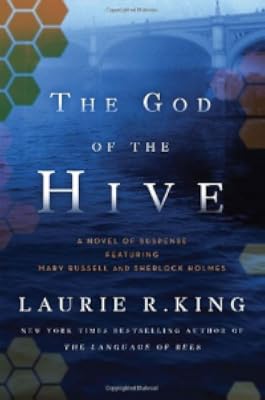
The God of the Hive
by Laurie R. King 
Mary Russell (10), Mary Russell: Chronological Order (August-September 1924)
On This Page
Description
Fiction. Mystery. Historical Fiction. Mary Russell and her husband, Sherlock Holmes, have stirred the wrath of a murderous secret organization bent on infiltrating the government. Now they are separated and on the run, wanted by the police, and pursued across the Continent by a ruthless enemy with limitless resources and powerful connections. Unstoppable together, Russell and Holmes will have to survive this time apart, maintaining contact only by means of coded messages and cryptic notes. show more But has the couple made a fatal mistake by separating, making themselves easier targets for the shadowy government agents sent to silence them? A hermit with a mysterious past and a beautiful young female doctor with a secret, a cruelly scarred flyer and an obsessed man of the cloth: Everyone Russell and Holmes meet could either speed their safe reunion or betray them to their enemies-in the most complex, shocking, and deeply personal case of their career. show lessTags
Recommendations















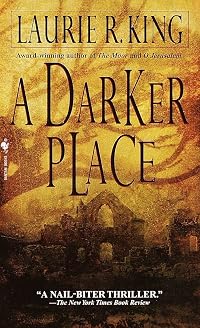
Member Recommendations

Member Reviews
In The Beekeeper's Apprentice (1994), Laurie R. King introduces readers to Mary Russell, a fifteen year old girl walking the Sussex downs with her nose in a text of Vergil. On her walk, she stumbles upon "a gaunt, graying man in his fifties" who mistakes her for a boy. The man is Sherlock Holmes, who has retired from detection to become a beekeeper. Inevitably, Russell and Holmes are drawn into an adventure together, and a new detective partnership—and a new detective series—is born. In the course of ten books, Russell and Holmes solve crimes, escape death, engage in espionage, revisit the scenes of canonical Holmes adventures (such as Dartmoor), develop a close intellectual affinity, and get married.
That marriage, between partners show more separated by nearly forty years, is one of the improbable elements in the Russell-Holmes series that Laurie R. King somehow manages to make work. The novels are for the most part not standard cosy murder mysteries in the Agatha Christie vein, with a body and a slow process of working out the problem. They are more thrillers, or "novels of suspense," than mysteries, and Russell and Holmes occasionally do more spying than detecting—thanks to King's transformation of Holmes's older brother Mycroft into the prototype of the British spymaster. But King is also playfully aware of Sir Arthur Conan Doyle standing in the background, and for Holmes enthusiasts there are plentiful references to the detective's earlier career.
In fact, The God of the Hive opens with Russell fleeing from danger with Estelle Adler, the daughter of Damian Adler, who is Holmes's son by his former nemesis, Irene Adler (introduced in the Conan Doyle story, "A Scandal in Bohemia"). My progress through the opening chapters of the story was slowed by the fact that The God of the Hive is, in fact, a sequel, picking up the action where it was left at the end of the previous Russell and Holmes novel, The Language of Bees. It would be best to read the two books in order, but King does a good job of bringing the lapsed reader like me up to speed. (I had only read the first six of the nine previous novels in the series.)
Most of the novel follows the attempts of Holmes and Russell to keep Damian and Estelle safe from a madman out for their blood. Along the way, a dangerous plot involving Mycroft Holmes develops. For most of the novel, Russell and Holmes are forced to separate: Holmes is on the run with Damian and a feisty, red-haired Scottish doctor; Russell is on the run with Estelle, an American pilot, and a mysterious Lake District woodsman. In King's skilled hands, all the moving parts fit together to create a highly satisfying and suspenseful entertainment.
The novel is set in 1924, soon after the election of Britain's first Labour government. In the background of the novel is a sense of political and social change. Holmes, who was at home in the London of the 1890s, has begun to find the City in many ways unrecognizable. He and Mycroft are beginning to feel their age as a new generation comes to power. King is fascinated with the contrast between Britain's rural and pagan traditions and its busy urban modernity. In the end, it's a case of Puck versus the bureaucrat.
Seasoned readers of the Russell-Holmes series know that Mary Russell speaks several languages, including Hebrew, and has an uncannily accurate throwing arm that allows her to bean six villains in the head with heavy stones in the middle of a pitch-black night. Russell herself is the most improbable of the improbable elements in the novels. But King makes her work, and makes her hold together these wild tales of mystery and suspense—and even has a little fun at the expense of her improbable creation. In one of my favorite bits of dialogue in the novel, Holmes is talking to the Scottish doctor, and mentions his wife.
"She read theology at Oxford," he explains.
"Of course she did," the doctor replies.
Russell, like much of King's marvelous series, is too good to be true. Fortunately, she's fictional, and keeps coming back for more skillfully written and highly entertaining adventures. show less
That marriage, between partners show more separated by nearly forty years, is one of the improbable elements in the Russell-Holmes series that Laurie R. King somehow manages to make work. The novels are for the most part not standard cosy murder mysteries in the Agatha Christie vein, with a body and a slow process of working out the problem. They are more thrillers, or "novels of suspense," than mysteries, and Russell and Holmes occasionally do more spying than detecting—thanks to King's transformation of Holmes's older brother Mycroft into the prototype of the British spymaster. But King is also playfully aware of Sir Arthur Conan Doyle standing in the background, and for Holmes enthusiasts there are plentiful references to the detective's earlier career.
In fact, The God of the Hive opens with Russell fleeing from danger with Estelle Adler, the daughter of Damian Adler, who is Holmes's son by his former nemesis, Irene Adler (introduced in the Conan Doyle story, "A Scandal in Bohemia"). My progress through the opening chapters of the story was slowed by the fact that The God of the Hive is, in fact, a sequel, picking up the action where it was left at the end of the previous Russell and Holmes novel, The Language of Bees. It would be best to read the two books in order, but King does a good job of bringing the lapsed reader like me up to speed. (I had only read the first six of the nine previous novels in the series.)
Most of the novel follows the attempts of Holmes and Russell to keep Damian and Estelle safe from a madman out for their blood. Along the way, a dangerous plot involving Mycroft Holmes develops. For most of the novel, Russell and Holmes are forced to separate: Holmes is on the run with Damian and a feisty, red-haired Scottish doctor; Russell is on the run with Estelle, an American pilot, and a mysterious Lake District woodsman. In King's skilled hands, all the moving parts fit together to create a highly satisfying and suspenseful entertainment.
The novel is set in 1924, soon after the election of Britain's first Labour government. In the background of the novel is a sense of political and social change. Holmes, who was at home in the London of the 1890s, has begun to find the City in many ways unrecognizable. He and Mycroft are beginning to feel their age as a new generation comes to power. King is fascinated with the contrast between Britain's rural and pagan traditions and its busy urban modernity. In the end, it's a case of Puck versus the bureaucrat.
Seasoned readers of the Russell-Holmes series know that Mary Russell speaks several languages, including Hebrew, and has an uncannily accurate throwing arm that allows her to bean six villains in the head with heavy stones in the middle of a pitch-black night. Russell herself is the most improbable of the improbable elements in the novels. But King makes her work, and makes her hold together these wild tales of mystery and suspense—and even has a little fun at the expense of her improbable creation. In one of my favorite bits of dialogue in the novel, Holmes is talking to the Scottish doctor, and mentions his wife.
"She read theology at Oxford," he explains.
"Of course she did," the doctor replies.
Russell, like much of King's marvelous series, is too good to be true. Fortunately, she's fictional, and keeps coming back for more skillfully written and highly entertaining adventures. show less
 This review was written for LibraryThing Early Reviewers.
At the outset, reading “The God of the Hive” was, for me, a lot like walking in an hour late to a new Bruce Willis action-adventure movie. I hadn’t read one of Laurie R. King’s Mary Russell-Sherlock Holmes mysteries since the first installment, “The Beekeeper’s Apprentice.” Obviously, a lot had happened since that novel, and “God of the Hive” continued to feel like Part II of a larger opus for many pages. To her credit, King fills in the background quite well as she goes, and when I caught my breath after the opening chapters, I readily followed the plot. Nonetheless, I’d recommend reading the preceding book (“The Language of Bees”) before embarking on this newest chapter.
I think that giving a plot outline of a show more mystery is of dubious value. The fun lies in knowing nothing more than the author reveals. If you are dying to read a synopsis, look elsewhere.
I’ll just say that murder, madness, imprisonment, and national security figure into the story.
The pacing of this book is quite good, danger at every turn and mysterious motives raising question marks in your brain until the end. Despite what I considered a rather disappointing culmination, I enjoyed this yarn. The interaction between Mary, Sherlock, Mycroft, and a host of friends and associates seems true to the Holmes character and canon. If the ending is melodramatic, well, some of Conan Doyle’s endings were as well. show less
I think that giving a plot outline of a show more mystery is of dubious value. The fun lies in knowing nothing more than the author reveals. If you are dying to read a synopsis, look elsewhere.
I’ll just say that murder, madness, imprisonment, and national security figure into the story.
The pacing of this book is quite good, danger at every turn and mysterious motives raising question marks in your brain until the end. Despite what I considered a rather disappointing culmination, I enjoyed this yarn. The interaction between Mary, Sherlock, Mycroft, and a host of friends and associates seems true to the Holmes character and canon. If the ending is melodramatic, well, some of Conan Doyle’s endings were as well. show less
This review was written for LibraryThing Early Reviewers.Given when the book was written and the style/words used, it took me awhile to get accustomed to things like 'connexion' and British spelling of things, ala Conan Doyle. Once the story started to move and I got a sense for Mary Russell and her journey with Holmes, his grand daughter and son, I much enjoyed it. She's a talented word smith and tells stories that are very typical of Sherlock and his brother Mycroft. Given the recent popularity of the contemporary "Sherlock" BBC series, this was quite fun. I just picked up a collaboration she did titled, "A Study in Sherlock" and will report back as I make my way through it.
If you read my review of King's last book, The Language of Bees, you'll understand why I approached this book with some trepidation. But after some initial concern, I found that my fears were unjustified.
For those unfamiliar with King's Mary Russell series, know that she has married off inveterate bachelor Sherlock Holmes to a woman much younger than, but just as intelligent as, he. In her last, she also gave him a son by Irene Adler, as well as a daughter-in-law and granddaughter. So purists need not apply! And if you haven't read the last book, and don't want to know, read no further, because I have to give away some of that plot to discuss The God of the Hive. You have been warned!
When we last saw Holmes and Russell, they had rescued show more his granddaughter and his wounded son Damian, leaving for dead (or so they thought) the cult leader who had murdered Damian's wife as well as several other people. Circumstances had made Damian a suspect, and a warrant had issued for his arrest, as well as for the arrests of Sherlock and Mycroft Holmes, and Mary Russell.
The tale continues, told from several points of view. Holmes has taken his son off by boat, picking up a stray female physician along the way, and gone to ground in Holland. Mary and the child Estelle have found their pilot, and are flying off, but someone shoots at the plane, wounds the pilot, and they are forced to land in a forested area where they meet, and are assisted by, an odd man who goes by the name of Robert Goodman. In London, meanwhile, Mycroft has been kidnapped, and is being held prisoner by persons unknown for reasons unknown.
All roads, in this case, lead to London, as Holmes and Mary try to re-connect via the agony column of the Times, staying one jump ahead of the evildoers trying to find them, while Mycroft tries to figure out where he is and why. All sorts of complications arise. If the plot sounds rather intricate, that's because it is, and if I have any criticism at all, it's that the plot is a mite confusing at times (but that's the Intelligence Service for you!), and there are rather too many new characters introduced, some of whom, if you've read Dr. Watson's memoirs, you may have heard of before.
But King is a master of misdirection, and of story-telling. In Robert Goodman particularly, King has created a very intriguing character, the disaffected scion of a noble family and shell-shocked veteran ("that old responsibility dream" as Peter Wimsey once said). Indeed, I think my favorite parts of this book were those with Mary, Estelle and Robert, learning more about him, and watching his easy play with the child.
So I'm happy to say that, unlike with her last, I did find this one satisfying, and can say that King is back on track, and I am looking forward to more, particularly if the end presages what I hope it does. show less
For those unfamiliar with King's Mary Russell series, know that she has married off inveterate bachelor Sherlock Holmes to a woman much younger than, but just as intelligent as, he. In her last, she also gave him a son by Irene Adler, as well as a daughter-in-law and granddaughter. So purists need not apply! And if you haven't read the last book, and don't want to know, read no further, because I have to give away some of that plot to discuss The God of the Hive. You have been warned!
When we last saw Holmes and Russell, they had rescued show more his granddaughter and his wounded son Damian, leaving for dead (or so they thought) the cult leader who had murdered Damian's wife as well as several other people. Circumstances had made Damian a suspect, and a warrant had issued for his arrest, as well as for the arrests of Sherlock and Mycroft Holmes, and Mary Russell.
The tale continues, told from several points of view. Holmes has taken his son off by boat, picking up a stray female physician along the way, and gone to ground in Holland. Mary and the child Estelle have found their pilot, and are flying off, but someone shoots at the plane, wounds the pilot, and they are forced to land in a forested area where they meet, and are assisted by, an odd man who goes by the name of Robert Goodman. In London, meanwhile, Mycroft has been kidnapped, and is being held prisoner by persons unknown for reasons unknown.
All roads, in this case, lead to London, as Holmes and Mary try to re-connect via the agony column of the Times, staying one jump ahead of the evildoers trying to find them, while Mycroft tries to figure out where he is and why. All sorts of complications arise. If the plot sounds rather intricate, that's because it is, and if I have any criticism at all, it's that the plot is a mite confusing at times (but that's the Intelligence Service for you!), and there are rather too many new characters introduced, some of whom, if you've read Dr. Watson's memoirs, you may have heard of before.
But King is a master of misdirection, and of story-telling. In Robert Goodman particularly, King has created a very intriguing character, the disaffected scion of a noble family and shell-shocked veteran ("that old responsibility dream" as Peter Wimsey once said). Indeed, I think my favorite parts of this book were those with Mary, Estelle and Robert, learning more about him, and watching his easy play with the child.
So I'm happy to say that, unlike with her last, I did find this one satisfying, and can say that King is back on track, and I am looking forward to more, particularly if the end presages what I hope it does. show less
Oh dear. Somebody changed. Was it Laurie King or LizzieD? I can't quite tell.....
I loved the Russell/Holmes books when they first appeared and read about half of them before they began to pall. Ms. King's writing remains facile, Mary and Sherlock and company are still engaging, but I found more fault than pleasure in The God of the Hive. Because I was familiar with the characters, I didn't have trouble entering into the spirit of the chase even though I hadn't read The Language of Bees, The Hive's immediate predecessor. This is not one for an uninitiated reader though.
Mary and Holmes's granddaughter Estelle find themselves cast on the mercy of one Robert Goodman, an elemental spirit type when their plane crashes in the Lake District. I show more enjoyed their interlude with Goodman. I enjoyed Holmes's interlude in Holland with his son and a kidnapped woman doctor. I was less patient with the villain of the piece who was so sketchily drawn as to be the stereotype of a criminal mastermind. And I was much less than satisfied by the epilogue which lost the book a half star.
Thank you, ER, for giving me a chance with this. At some point I'll return to the early books to discover which of us has changed. show less
I loved the Russell/Holmes books when they first appeared and read about half of them before they began to pall. Ms. King's writing remains facile, Mary and Sherlock and company are still engaging, but I found more fault than pleasure in The God of the Hive. Because I was familiar with the characters, I didn't have trouble entering into the spirit of the chase even though I hadn't read The Language of Bees, The Hive's immediate predecessor. This is not one for an uninitiated reader though.
Mary and Holmes's granddaughter Estelle find themselves cast on the mercy of one Robert Goodman, an elemental spirit type when their plane crashes in the Lake District. I show more enjoyed their interlude with Goodman. I enjoyed Holmes's interlude in Holland with his son and a kidnapped woman doctor. I was less patient with the villain of the piece who was so sketchily drawn as to be the stereotype of a criminal mastermind. And I was much less than satisfied by the epilogue which lost the book a half star.
Thank you, ER, for giving me a chance with this. At some point I'll return to the early books to discover which of us has changed. show less
This review was written for LibraryThing Early Reviewers.In this outing, a direct sequel to Language of Bees, we learn that the baddie from the last Holmes/Russell adventure, a religious zealot, was merely a tool in the employ of a mastermind dedicated to dethroning the mighty Mycroft Holmes. Will Russell and Holmes, variously wounded and burdened by familial baggage, be able to ferret out the mastermind and nip his evil plot in the bud?
Of all the books in this series, this one left me coldest. Following are some of the things that irked me most.
Issue #1: The villain of the piece. King bothers to equip him with neither backstory, motivation, nor any recognizably human attributes (except, perhaps, "likes efficiency"). Really? You've got Holmes as your superhero, and the best villain you can show more come up with to pit against him is a fellow who comes off as (at his most villanous) a ambitious, sociopathic bank manager?
Issue #2: The plot. This was meaty where thinness would have been more appropriate, and thin where meatiness was needed. I usually don't mind King's digressions because she always ends up circling back to the plot, but this outing felt decidedly lopsided: way too much overinvestment in digressions, way too little investment in developing the main plot, which had so many holes in it that even I - a fan of the series - had trouble suspending disbelief.
Issue #3: The storytelling. This book includes long chapters narrated in 3rd person. I understand the narrative necessity - major parts of the story happen beyond Mary Russell's personal experience, and therefore can't be narrated by her. But after growing accustomed to experiencing these adventures through Mary Russell's "lens" (made necessary by the conceit that these were personal memoirs, which conceit seems to have been conveniently abandoned), these sections of 3rd person narration feel jarringly impersonal, uninteresting, and unconvincing.
Issues #4. The relationship. Holmes/Russell will never top the ranks of "great romances" (thank goodness), but their relationship here is so cold and distant, you wonder why they bother with each other. One of the things that I valued in the early books was the lovely "tightrope" way in which King balances the independence of each character with their growing interdependence on each other. There's no sign of that interdependence here, though: the two characters seem barely to care what the other is up to.
Rather than filling me with anticipation for the next book in the series, this outing just made me nostalgic for the books that came before - back when villains were worthy rivals (Moriarty!), plots were multi-layered and subtle, Russell and Holmes worked brilliantly in tandem, each mitigating the others' weaknesses, and the Russell character wasn't quite so unrelentingly whiny. show less
Of all the books in this series, this one left me coldest. Following are some of the things that irked me most.
Issue #1: The villain of the piece. King bothers to equip him with neither backstory, motivation, nor any recognizably human attributes (except, perhaps, "likes efficiency"). Really? You've got Holmes as your superhero, and the best villain you can show more come up with to pit against him is a fellow who comes off as (at his most villanous) a ambitious, sociopathic bank manager?
Issue #2: The plot. This was meaty where thinness would have been more appropriate, and thin where meatiness was needed. I usually don't mind King's digressions because she always ends up circling back to the plot, but this outing felt decidedly lopsided: way too much overinvestment in digressions, way too little investment in developing the main plot, which had so many holes in it that even I - a fan of the series - had trouble suspending disbelief.
Issue #3: The storytelling. This book includes long chapters narrated in 3rd person. I understand the narrative necessity - major parts of the story happen beyond Mary Russell's personal experience, and therefore can't be narrated by her. But after growing accustomed to experiencing these adventures through Mary Russell's "lens" (made necessary by the conceit that these were personal memoirs, which conceit seems to have been conveniently abandoned), these sections of 3rd person narration feel jarringly impersonal, uninteresting, and unconvincing.
Issues #4. The relationship. Holmes/Russell will never top the ranks of "great romances" (thank goodness), but their relationship here is so cold and distant, you wonder why they bother with each other. One of the things that I valued in the early books was the lovely "tightrope" way in which King balances the independence of each character with their growing interdependence on each other. There's no sign of that interdependence here, though: the two characters seem barely to care what the other is up to.
Rather than filling me with anticipation for the next book in the series, this outing just made me nostalgic for the books that came before - back when villains were worthy rivals (Moriarty!), plots were multi-layered and subtle, Russell and Holmes worked brilliantly in tandem, each mitigating the others' weaknesses, and the Russell character wasn't quite so unrelentingly whiny. show less
I read the God of the Hive in one sitting - well, one laying, as I read it in bed! Thank you Library Thing for your early reviewer program that sent me this book!
Review:
This book is the second of a trilogy in the middle of the Mary Russell/Sherlock Holmes series. If you have never read ANY of the Mary Russell's, don't start here! At least go to the first book of this trilogy, Language of the Bees.
This is a fabulous series; innovative, clever, erudite and completely readable. The God of the Hive is no different. It is hard to write a review without spoilers, so I will say that as with Language of the Bees, Mary and Sherlock spend a lot of time apart in the novel, each working their own end of a family dilemma. The villain is worthy of show more the title once worn by Moriarty, and great appearances are made by former irregular Billy, and a wonderful new character, "Robert Goodman."
As a lifelong fan of Sherlock Holmes in all his many guises by different authors, King does the best in keeping true to the oeuvre - I worry a bit about Sherlock's aging, and the dynamics of the fairly new characters, Damian Adler and his daughter.
Overall, as usual, this book left me thirsting for more. I am addressing that longing by re-reading Language of the Bees and my favorite Russell/Holmes - Locked Rooms.
Wishing you the joy of reading! show less
Review:
This book is the second of a trilogy in the middle of the Mary Russell/Sherlock Holmes series. If you have never read ANY of the Mary Russell's, don't start here! At least go to the first book of this trilogy, Language of the Bees.
This is a fabulous series; innovative, clever, erudite and completely readable. The God of the Hive is no different. It is hard to write a review without spoilers, so I will say that as with Language of the Bees, Mary and Sherlock spend a lot of time apart in the novel, each working their own end of a family dilemma. The villain is worthy of show more the title once worn by Moriarty, and great appearances are made by former irregular Billy, and a wonderful new character, "Robert Goodman."
As a lifelong fan of Sherlock Holmes in all his many guises by different authors, King does the best in keeping true to the oeuvre - I worry a bit about Sherlock's aging, and the dynamics of the fairly new characters, Damian Adler and his daughter.
Overall, as usual, this book left me thirsting for more. I am addressing that longing by re-reading Language of the Bees and my favorite Russell/Holmes - Locked Rooms.
Wishing you the joy of reading! show less
This review was written for LibraryThing Early Reviewers.Members
- Recently Added By
Lists

Books Read in 2013
1,630 works; 51 members

To Read
617 works; 7 members
Author Information

80+ Works 46,726 Members
Laurie R. King is the bestselling author of "A Darker Place," four contemporary novels featuring Kate Martinelli, and five acclaimed Mary Russell mysteries. She lives in northern California. Her newest book is the ninth one in the Mary Russell mystery series, The Language of Bees. (Publisher Provided) Laurie R. King is a mystery writer, who holds show more a bachelor's degree and a master's degree in theology. Her first novel, Grave Talent, was published in 1993 and won the Edgar Award for Best First Novel. Since then, she has written over twenty books including the Mary Russell Mysteries series, the Stuyvesant and Grey series, the Kate Martinelli Mystery series, A Darker Place, Folly, and Keeping Watch. She has also co-authored a number of nonfiction works and anthologies including Crime Writing, The Grand Game, and Studies in Sherlock. Laurie's title, Dreaming Spies, is a 2015 New York Times Bestseller. (Bowker Author Biography) show less
Laurie R. King is a LibraryThing Author, an author who lists their personal library on LibraryThing.
Some Editions
Awards and Honors
Distinctions
Series


Work Relationships
Common Knowledge
- Canonical title
- The God of the Hive
- Original title
- The God of the Hive
- Alternate titles
- The Green Man (working title) (working title)
- Original publication date
- 2010
- People/Characters
- Damian Adler; Estelle Adler; Thomas Brothers (Reverend); Robert Goodman; Marcus Gunderson; Mycroft Holmes (show all 12); Sherlock Holmes; Cash Javitz; John Lestrade (Chief Inspector, son of the original Lestrade); Mary Russell; Eric VanderLowe; Richard Sosa
- Important places
- Amsterdam, North Holland, Netherlands; Lake District, Cumbria, England, UK; London, England, UK; Orkney, Scotland, UK
- Dedication
- In memory of Noel, who would have loved Robert Goodman
- First words
- Two clever London gentlemen. Both wore City suits, both sat in quiet rooms, both thought about luncheon. (prologue)
A child is a burden, after a mile. - Last words
- (Click to show. Warning: May contain spoilers.)There I undid the twine for a second time, and let what was left of Thomas Brothers' knife vanish into the cleansing depths of the English Channel.
- Blurbers
- Connelly, Michael
- Original language
- English
- Canonical DDC/MDS
- 813.54
- Canonical LCC
- PS3561.I4813 G64
Classifications
Statistics
- Members
- 1,517
- Popularity
- 15,163
- Reviews
- 134
- Rating
- (4.07)
- Languages
- English, French
- Media
- Paper, Audiobook, Ebook
- ISBNs
- 22
- ASINs
- 10
