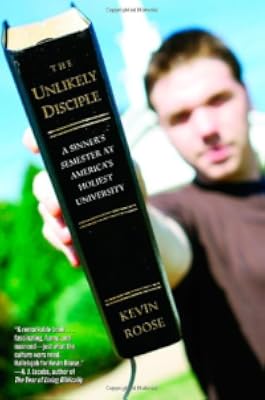
The Unlikely Disciple: A Sinner's Semester at America's Holiest University
by Kevin Roose
On This Page
Description
No drinking. No smoking. No cursing. No dancing. No R-rated movies. Kevin Roose wasn't used to rules like these. As a sophomore at Brown University, he spent his days drinking fair-trade coffee, singing in an a cappella group, and fitting right in with Brown's free-spirited, ultra-liberal student body. But when Roose leaves his Ivy League confines to spend a semester at Liberty University, a conservative Baptist school in Lynchburg, Virginia, obedience is no longer optional. Liberty is the show more late Reverend Jerry Falwell's "Bible Boot Camp" for young evangelicals, his training ground for the next generation of America's Religious Right. Liberty's ten thousand undergraduates take courses like Evangelism 101, hear from guest speakers like Sean Hannity and Karl Rove, and follow a forty-six-page code of conduct that regulates every aspect of their social lives. Hoping to connect with his evangelical peers, Roose decides to enroll at Liberty as a new transfer student, leaping across the God Divide and chronicling his adventures in this daring report from the front lines of America's culture war. His journey takes him from an evangelical hip-hop concert to choir practice at Falwell's legendary Thomas Road Baptist Church. He experiments with prayer, participates in a spring break mission trip to Daytona Beach (where he learns to preach the gospel to partying coeds), and pays a visit to Every Man's Battle, an on-campus support group for chronic masturbators. He meets pastors' kids, closet doubters, Christian rebels, and conducts what would be the last print interview of Rev. Falwell's life. Hilarious and heartwarming, respectful and thought-provoking, THE UNLIKELY DISCIPLE will inspire and entertain believers and nonbelievers alike. show lessTags
Recommendations







Member Recommendations

In the Land of Believers: An Outsider's Extraordinary Journey into the Heart of the Evangelical Church by Gina Welch
ToTheWest The two authors were coincidentally in the same place, with similar goals, using similar "undercover" methods, but studying different populations of evangelicals. These books complement each other nicely.
20
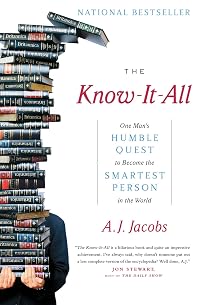
The Year of Living Biblically: One Man's Humble Quest to Follow the Bible as Literally as Possible by A. J. Jacobs
schatzi Kevin is introduced in "The Year of Living Biblically" (and serves as the author's "intern/slave")
31
Member Reviews
Roose, a Sophomore at Brown, a liberal Democrat, the only child of lapsed Quakers, also liberal Democrats, attended one semester at Jerry Falwell's Liberty University. This book is his chronicle of those three months.
Based on that, one expects fish-out-of-water type hijinks, of which this book has plenty. For example, early in the semester, a group of Liberty U student-Evangelicals descend on Spring Break in South Florida in order to to witness to the gone-wild wicked. Picture earnest, clean-cut, rosy-cheeked kids asking drunk, bikini-wearing, pot-smoking, raucous-music-listening, flip-flops-flapping, sun-burnt, red-eyed, fuzzy-toothed, body-abusing, pleasure-seeking sinners whether they'd like to get saved. Imagine the sinners' own show more four-letter invitation. Our man Roose, along for the ride, plays his role to the hilt, witnessing right along with the best of them. Well, actually, he does a pretty poor job of witnessing because he really doesn't believe in the Christ he's putatively espousing the asking of salvation from. Awkward, yes, but you've got to admire him for being game.
The best part is the depiction of the student-Evangelicals' own fake night-club located across the street from a real night club. Outside the fake Evangelical night club were B-girls and a restive line of obnoxious frat guys waiting for admittance, strobe lights, neon, techno beats, etc.; i.e., all the hip-hop signifiers of night-club sin. However, inside the fake club was a calm room, well-lit and quiet but for the hum of earnest conversion conversations, and (one imagines) the here-and-there indignant howl of a reveler recognizing that he's been duped. One wonders if any of the revelers so duped initially -- like in the first few disorienting seconds when they first stepped into the light from the nighttime darkness and din -- if initially they thought they'd died and gone to the Great Judgment Bar. It's fun to imagine the slow change in facial expression.
Liberty University is a strict, religious institution of higher learning, and Roose has much to say about the myriad differences between his LU roommates and his Brown U friends. But let me switch gears here and say that making snarky fun of true-beliver Evangelicals is not what this book is about. In fact, Roose is to be commended for giving his semester in the ideological-abroad a good-faith effort. The students and faculty at LU are depicted as 3D, blood-red people, complicated and real, not at all what we've come to expect to from the stereotypical media portrayal of this demographic.
In fact, it should say something that Roose's book is positively blurbed by members on both sides of the ideological divide. If you're looking for a fun, funny, well-written chronicle of what a responsible portrayal of the religious and irreligious alike, you'll want to read /The Unlikely Disciple./
Also, you'll want to read /TUD/ for Jerry Falwell's very last media interview, with the author, wherein the divisive Damnation-and-Hellfire demagogue endorses Diet Peach Snapple Iced-Tea and comes across as winningly avuncular. It says something about Jerry Falwell that he counted as friends not only the clerical and religious, but also Hustler's Larry Flynt. What that very odd friendship says, aside from the initial, what-the-heck cognitive dissonance, is that whatever else Falwell publicly was, he took seriously the admonition to love the sinner, to turn the other cheek to his enemy. And it's ultimately that last sentiment that Roose takes great rhetorical pains to manifest in his account. show less
Based on that, one expects fish-out-of-water type hijinks, of which this book has plenty. For example, early in the semester, a group of Liberty U student-Evangelicals descend on Spring Break in South Florida in order to to witness to the gone-wild wicked. Picture earnest, clean-cut, rosy-cheeked kids asking drunk, bikini-wearing, pot-smoking, raucous-music-listening, flip-flops-flapping, sun-burnt, red-eyed, fuzzy-toothed, body-abusing, pleasure-seeking sinners whether they'd like to get saved. Imagine the sinners' own show more four-letter invitation. Our man Roose, along for the ride, plays his role to the hilt, witnessing right along with the best of them. Well, actually, he does a pretty poor job of witnessing because he really doesn't believe in the Christ he's putatively espousing the asking of salvation from. Awkward, yes, but you've got to admire him for being game.
The best part is the depiction of the student-Evangelicals' own fake night-club located across the street from a real night club. Outside the fake Evangelical night club were B-girls and a restive line of obnoxious frat guys waiting for admittance, strobe lights, neon, techno beats, etc.; i.e., all the hip-hop signifiers of night-club sin. However, inside the fake club was a calm room, well-lit and quiet but for the hum of earnest conversion conversations, and (one imagines) the here-and-there indignant howl of a reveler recognizing that he's been duped. One wonders if any of the revelers so duped initially -- like in the first few disorienting seconds when they first stepped into the light from the nighttime darkness and din -- if initially they thought they'd died and gone to the Great Judgment Bar. It's fun to imagine the slow change in facial expression.
Liberty University is a strict, religious institution of higher learning, and Roose has much to say about the myriad differences between his LU roommates and his Brown U friends. But let me switch gears here and say that making snarky fun of true-beliver Evangelicals is not what this book is about. In fact, Roose is to be commended for giving his semester in the ideological-abroad a good-faith effort. The students and faculty at LU are depicted as 3D, blood-red people, complicated and real, not at all what we've come to expect to from the stereotypical media portrayal of this demographic.
In fact, it should say something that Roose's book is positively blurbed by members on both sides of the ideological divide. If you're looking for a fun, funny, well-written chronicle of what a responsible portrayal of the religious and irreligious alike, you'll want to read /The Unlikely Disciple./
Also, you'll want to read /TUD/ for Jerry Falwell's very last media interview, with the author, wherein the divisive Damnation-and-Hellfire demagogue endorses Diet Peach Snapple Iced-Tea and comes across as winningly avuncular. It says something about Jerry Falwell that he counted as friends not only the clerical and religious, but also Hustler's Larry Flynt. What that very odd friendship says, aside from the initial, what-the-heck cognitive dissonance, is that whatever else Falwell publicly was, he took seriously the admonition to love the sinner, to turn the other cheek to his enemy. And it's ultimately that last sentiment that Roose takes great rhetorical pains to manifest in his account. show less
Think Blue Like Jazz if Don Miller wasn’t a Christian. Roose has so much heart. He’s gracious and vulnerable, which makes him so enduring. But his transparency is coupled with wisdom beyond his years (or a phenomenal editor). This book is great reading for anyone with a connection with fundamentalist Christians. It’s also great for “Bible believing Christians” to read to help them empathize with the target of their evangelism. Roose’s story is a great testimony to the blessings that can arise when we get beyond labels and make an honest effort to treat people with real respect and open arms.
As someone who has attended a fundamentalist church for the past five years (think Liberty University) as well as liberal churches with show more gay pastors (think Brown University), I am in awe of Roose's even-handedness. Although I don't agree with him on every point, he made a phenomenal effort of good will and open mindedness and should be commended. show less
As someone who has attended a fundamentalist church for the past five years (think Liberty University) as well as liberal churches with show more gay pastors (think Brown University), I am in awe of Roose's even-handedness. Although I don't agree with him on every point, he made a phenomenal effort of good will and open mindedness and should be commended. show less
How good is this author? I'm a fairly liberal Christian, a Quaker, like the author, but I come from the majority tradition in American Quakerism, that is more Christ-centered. I believe Jesus is God, that he died and rose again, but I think Moses was probably ahistorical, and I know Abraham was. Most of the beginning of the Old Testament was written by four guys named J,E,D, and P (and not for nothing that happens to spell out my name and initials). While I grew up believing that women should obey their husbands and evolution was false, God changed those views in me, and more recently, I've come out in favour of a Biblical mandate for homosexuality. My life is based on the Bible, but as a Quaker, it is first based on the Holy Spirit. show more I'm against the military, capitol punishment, the war on the poor, and abortion (again, Quaker). In short, I'm not a Jerry Falwell kind of guy. Short of Jesus himself, we have nothing in common. The guy pretty much turned my stomach.
How good is this author? He had me weeping as I read about Falwell's death.
This book was so very illuminating, even to me, having grown up as a Christian, all my life. At first I felt he was too much equivocating conservative Christianity with Christianity in general, but over time, I came to understand where Roose was coming from. I loved how very even-handed he was, treating those at Liberty U as people, and not simply caricatures. Roose goes through a transition himself on this, but he is disarmingly honest, which allows the reader to like both him and all the fellow students at LU, though both camps are so diametrically opposed. I could relate to much of what he described, as I've seen or experienced this myself with Christians and conservative Christians. And I learned a lot about the extreme conservative end of Christendom, that I had not been aware of (though it may perhaps be the Liberty experience alone), such as the regular sexual objectification of women that his classmates engaged in. This was surprising, as it's not something I've ever seen or experienced myself within Christianity, and I am indebted to Roose for revealing that aspect to me.
How good is this author? I am busy teaching six classes in high school and so have a lot of work, and I could *not put this book down*. It's non-fiction, but reads as a novel. And I think, I think, he may have helped me consider the expression of Jesus in my life in new and deeper ways. show less
How good is this author? He had me weeping as I read about Falwell's death.
This book was so very illuminating, even to me, having grown up as a Christian, all my life. At first I felt he was too much equivocating conservative Christianity with Christianity in general, but over time, I came to understand where Roose was coming from. I loved how very even-handed he was, treating those at Liberty U as people, and not simply caricatures. Roose goes through a transition himself on this, but he is disarmingly honest, which allows the reader to like both him and all the fellow students at LU, though both camps are so diametrically opposed. I could relate to much of what he described, as I've seen or experienced this myself with Christians and conservative Christians. And I learned a lot about the extreme conservative end of Christendom, that I had not been aware of (though it may perhaps be the Liberty experience alone), such as the regular sexual objectification of women that his classmates engaged in. This was surprising, as it's not something I've ever seen or experienced myself within Christianity, and I am indebted to Roose for revealing that aspect to me.
How good is this author? I am busy teaching six classes in high school and so have a lot of work, and I could *not put this book down*. It's non-fiction, but reads as a novel. And I think, I think, he may have helped me consider the expression of Jesus in my life in new and deeper ways. show less
Ah, now. This is more like it. Kevin Roose, a sophomore at Brown University and the son of Quaker liberals, decides to spend a semester at the jewel in the crown of Jerry Falwell's empire: far-right, fundamentalist Liberty University. (In passing, have you EVER HEARD of such an ironic name for a school? *loves it*) He makes a conscious decision to fit in by talking the talk AND walking the walk - he stops cussing, tries mighty hard to stop masturbating, prays daily, even joins the choir and takes creation "science".
I admit it: I have a tiny little reader-crush on Kevin. Not only is he a talented writer (his characterizations of the Liberty students are so spot-on that the reader becomes totally enmeshed in the Liberty world), but he is show more also an astoundingly open-minded and mature observer of his brave new world.The Liberty University that Kevin portrays is no cartoon: it is complex, layered, nuanced. Moreover, I was genuinely impressed by Roose's sheer goodness and personal integrity: he struggles with the anti-gay rhetoric and lack of academic freedom he encounters, but avoids simplistic explanations that objectify or demonize Liberty students and professors. And he manages to build genuine relationships that are both respectful and mature. This guy is 19? Kudos. show less
I admit it: I have a tiny little reader-crush on Kevin. Not only is he a talented writer (his characterizations of the Liberty students are so spot-on that the reader becomes totally enmeshed in the Liberty world), but he is show more also an astoundingly open-minded and mature observer of his brave new world.The Liberty University that Kevin portrays is no cartoon: it is complex, layered, nuanced. Moreover, I was genuinely impressed by Roose's sheer goodness and personal integrity: he struggles with the anti-gay rhetoric and lack of academic freedom he encounters, but avoids simplistic explanations that objectify or demonize Liberty students and professors. And he manages to build genuine relationships that are both respectful and mature. This guy is 19? Kudos. show less
In the first chapter of this book, Kevin Roose calls Liberty University "the evangelical equivalent of Notre Dame or Brigham Young." Having attended BYU for undergrad and a "secular" university for grad school, I felt as if I came to this book with an understanding of each side. Half the time I spent nodding in agreement (when casual sex isn't an option, it can actually make dating better) half the time I spent shaking my head in disbelief (unlike Liberty University, the BYU biology department has no problem teaching that evolution is scientifically valid).
Overall, I enjoyed this book for the same reasons I enjoyed "The Year of Living Biblically." Roose doesn't pull punches when pointing out the things he feels are problematic in show more Evangelical Christian culture and at Liberty, in particular, but he comes to the project with a genuine desire to understand people who are very different from him, and he comes away changed for the better. show less
Overall, I enjoyed this book for the same reasons I enjoyed "The Year of Living Biblically." Roose doesn't pull punches when pointing out the things he feels are problematic in show more Evangelical Christian culture and at Liberty, in particular, but he comes to the project with a genuine desire to understand people who are very different from him, and he comes away changed for the better. show less
A fascinating little book about an undergrad who enrolled for a semester at infamous Liberty University.
The author did a good job acknowledging the flaws in his undercover experiment (he's a straight white cis dude, so it was easy for him to feel comfortable in that environment). His description of becoming emotionally invested in evangelical culture makes for an interesting read. There's also the voyeuristic appeal of finding out what extreme evangelical college students are "really" like (the answer: well-meaning if deluded).
The author did a good job acknowledging the flaws in his undercover experiment (he's a straight white cis dude, so it was easy for him to feel comfortable in that environment). His description of becoming emotionally invested in evangelical culture makes for an interesting read. There's also the voyeuristic appeal of finding out what extreme evangelical college students are "really" like (the answer: well-meaning if deluded).
I'm also a Brown alum, and while I didn't know Kevin Roose, we know a lot of the same people on the newspaper (the Herald). I had heard about this book a few times but only got around to reading it now, something like ten years later. It's still eye opening and worth the read, if you are interested in this subculture. Roose is rather too equivocating for my taste, though perhaps this is because I am more interested in the anthropology of insular religious communities than in any individual man's struggle to compartmentalize the hateful anti LGBT rhetoric of people he otherwise likes. I would be curious to know whether things look similar at Liberty University now, in the age of Trump.
Members
- Recently Added By
Published Reviews
ThingScore 73
This book not only helps to better understand our nation’s next generation of evangelicals, it helps us to better understand— and enjoy— ourselves.
added by Katya0133
I found this book to be all kinds of things: enjoyable though annoying, frustrating as well as refreshing, informative yet leaving me with questions. What I personally liked most about the book is the author’s search for spiritual truth.
added by stephmo
His account of the experience is nuanced, respectful and personal.
added by Katya0133
Lists

Recommend the 20 best books you've read in the last five years
2,168 works; 602 members

Non-Fiction Worth Reading
1,015 works; 261 members

To Read - Non Fiction
46 works; 4 members

Books to Recommend to My Niece/Nephew (The late teenage years)
29 works; 3 members

Christianity Books You've Read
179 works; 19 members

My Year Spent Doing Something Stupid so I Could Write This Book
31 works; 5 members

Hachette Book Group
152 works; 6 members
Author Information

3 Works 1,558 Members
Kevin Roose is a business and technology writer for New York magazine and the Daily Intelligencer blog. He has written several books including The Unlikely Disciple: A Sinner's Semester at America's Holiest University and Young Money: Inside the Hidden World of Wall Street's Post-Crash Recruits. (Bowker Author Biography)
Awards and Honors
Work Relationships
Common Knowledge
- Canonical title
- The Unlikely Disciple: A Sinner's Semester at America's Holiest University
- Original publication date
- 2009-03-26
- People/Characters
- Anna; God; Jerry Falwell; Jersey Joey; Jesus Christ; Kevin Roose (show all 9); Paul; Holy Spirit; Zipper
- Important places
- Liberty University, Lynchburg, Virginia, USA; Brown University, Providence, Rhode Island, USA
- Epigraph
- Do not forget to entertain strangers, for by so doing some people have entertained angels without knowing it.
HEBREWS 13:2 - Dedication
- To Mom and Dad,
who would kill the fatted calf for me any day. - First words
- It's midnight at Liberty University, and I'm kneeling on the floor of my dorm room, praying.
- Quotations
- "Prayer may not always be entirely about God," he said. Here, Pastor Seth quoted the famous Christian author Oswald Chambers, who wrote: "It is not so true that prayer changes things as that prayer changes me and I change thi... (show all)ngs."
"When you pray for other people, your own heart will be transformed," Pastor Seth said. "You'll find yourself living for others, making decisions with others in mind, putting the concerns of others ahead of your own. It's a w... (show all)ay to connect to other believers in the way God wants you to connect." - Last words
- (Click to show. Warning: May contain spoilers.)If that's not worth praying for, I don't know what is.
- Blurbers
- Perrotta, Tom; Bell, Rob; Kurson, Robert; McLaren, Brian; Jacobs, A.J.
Classifications
- Genres
- Religion & Spirituality, Nonfiction, General Nonfiction, Biography & Memoir
- DDC/MDS
- 378.755671 — Society, government, & culture Education Higher education (Tertiary education) North America Southeastern United States (South Atlantic states) Virginia
- LCC
- LD3071 .L33 .R66 — Education Individual institutions – United States United States Universities. Colleges
- BISAC
Statistics
- Members
- 1,232
- Popularity
- 20,034
- Reviews
- 84
- Rating
- (4.05)
- Languages
- English, French
- Media
- Paper, Audiobook, Ebook
- ISBNs
- 9
- ASINs
- 6