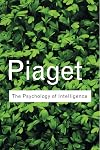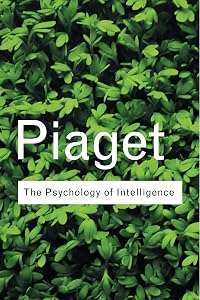
The Psychology of Intelligence (Routledge Classics) (Volume 92)
by Jean Piaget
On This Page
Description
Think of developmental psychology, and the name of Jean Piaget immediately springs to mind. His theory of learning lies at the very heart of the modern understanding of the human learning process, and he is celebrated as the founding father of child psychology. A prolific writer, is the author of more than fifty books and several hundred articles. The Psychology of Intelligence is one of his most important works. Containing a complete synthesis of his thoughts on the mechanisms of show more intellectual development, it is an extraordinary volume by an extraordinary writer. Given his significance, it is hardly surprising that Psychology Today pronounced Piaget the Best Psychologist of the twentieth century. show lessTags
Recommendations














Member Reviews
Piaget afirmaba que la psicología de la inteligencia o el pensamiento constituía casi la mitad de la psicología y que, sin embargo, aún no había podido explicar el funcionamiento de la vida cognitiva y sus relaciones con la vida afectiva. En estas lecciones, el autor se propone definir qué cosa es la inteligencia, y demostrar hasta qué punto se trata de una construcción, de una evolución desde mecanismos sensorio-motrices elementales y espontáneos hasta una compleja organización que implica razonamientos muy elaborados. Contra las concepciones de la inteligencia que la consideran algo dado y la reducen a espejo de la lógica –entendida como una realidad anterior a cualquier experiencia–, sostiene que el estudio de las show more operaciones cognitivas del niño prueba que es una realidad viva, cambiante, hecha de estadios móviles y reversibles, el instrumento indispensable de los intercambios entre el sujeto y el universo. Lejos de ser un modo de estructuración entre otros, es la forma de equilibrio hacia la cual tienden los tipos inferiores de adaptación cognitiva y motriz. Así, Piaget analiza la relación de la inteligencia con el hábito, la percepción y el medio social, mientras expone las etapas de su formación a partir de la aparición del lenguaje: desde el pensamiento simbólico y preconceptual hasta el pensamiento abstracto y formal, cuyos agrupamientos caracterizan a la inteligencia reflexiva consumada. show less
Jan 16, 2020Spanish
Naturaleza de la inteligencia Inteligencia y adaptacion biologica Situacion de la inteligencia en la organizacion mental Naturaleza adaptativa de la inteligencia Definicion de la inteligencia Clasificacion de las interpretaciones posibles de la inteligencia Psicologia del pensamiento y la naturaleza psicologica de las operaciones logicas Interpretacion de B Ruseell Psicologia del pensamiento Buhler y Selz Psicologia del pensamiento Logica y psicologia Las operaciones y sus agrupamientos La significacion funcional y la estructura de los agrupamientos Clasificacion de los agrupamientos y de las operaciones funcionales del pensamiento Equilibrio y genesis La inteligencia y las funciones senso motrices La inteligencia y la percepcion show more Historia La teoria de la forma El habito y la inteligencia senso motriz Independencia o derivaciones directas Tanteo y estructuracion Desarrollo del pensamiento Elaboracion del pensamiento Intuicion y operaciones Las etapas de la construccion de las operaciones El pensamiento simbolico y preconceptual El pensamiento intuitivo Las operaciones concretas Las operaciones formales La jerarquia de las operaciones y su diferenciacion progresiva La determinacion del nivel mental Los factores sociales del desarrollo intelectual La socializacion de la inteligencia individual Agrupamientos operaciones y cooperacion show less
Mar 31, 2015Spanish
Ratings
Members
- Recently Added By
Author Information

238+ Works 4,713 Members
Jean Piaget, 1896-1980 Jean Piaget, a Swiss psychologist, whose original training was in the natural sciences, spent much of his career studying the psychological development of children, largely at the Institut J.J. Rousseau at the University of Geneva, but also at home, with his own children as subjects. The impact of this research on child show more psychology has been enormous, and Piaget is the starting point for those seeking to learn how children view numbers, how they think of cause-and-effect relationships, or how they make moral judgments. Piaget found that cognitive development from infancy to adolescence invariably proceeds in four major stages from infancy to adolescence: sensory-motor, preoperational, concrete operational, and formal operational. Each of these stages is marked by the development of cognitive structures, making possible the solution of problems that were impossible earlier and laying the foundation for the cognitive advances of the next stage. He showed that rational adult thinking is the culmination of an extensive process that begins with elementary sensory experiences and unfolds gradually until the individual is capable of dealing with imagined concepts, that is, abstract thought. By learning how children comprehend the world and how their intellectual processes mature, Piaget contributed much to the theory of knowledge as an active process in which the mind transforms reality. Put simply, Piaget described children from a perspective that no one had seen before. (Bowker Author Biography) show less
Series
Belongs to Publisher Series
Common Knowledge
- Canonical title*
- De psychologie van de intelligentie
*Some information comes from Common Knowledge in other languages. Click "Edit" for more information.
Classifications
Statistics
- Members
- 258
- Popularity
- 126,121
- Reviews
- 2
- Rating
- (3.39)
- Languages
- 7 — Dutch, English, French, German, Italian, Portuguese, Spanish
- Media
- Paper, Ebook
- ISBNs
- 26
- ASINs
- 11