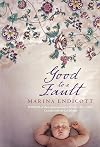
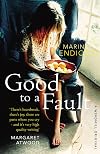
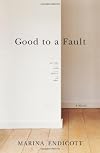
Good to a Fault
by Marina Endicott
On This Page
Description
"There's heartbreak, there's joy, there are parts where you cry—and it's very high quality writing. Well done!"— Margaret Atwood
"Unpretentious and affecting, with characters to remember and themes that linger and resound."
— Meg Wolitzer, New York Times bestselling author of The Ten-Year Nap
Marina Endicott's Good to a Fault wrings suspense and humor out of the everyday choices we make, revealing the delicate balance between sacrifice and self-interest, between doing good and being show more good. In the vein of the novels of Carol Shields and Ann Patchett, Good to a Fault is a "witty, wise. . . . [and] brilliantly paced" (Colm Tóibín) delight.
. show less
Tags
Recommendations


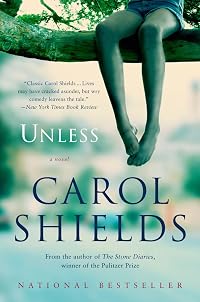
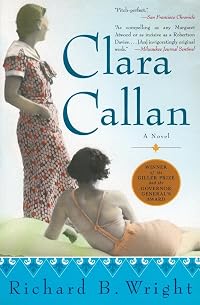


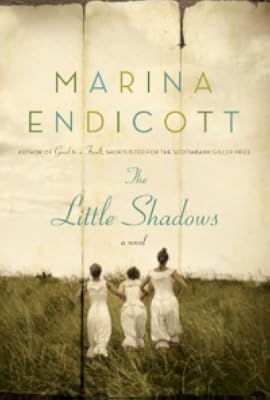
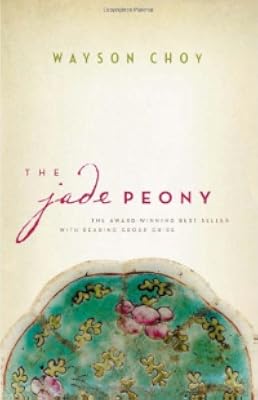







Member Recommendations
Member Reviews
Loved this book and all the characters in it, even those people who were so flawed and determined to be crappy. All seemed so well fleshed out and real. Loved the way the narration switched around from person to person to give all different viewpoints of the story and let you see inside their thoughts and feelings.
I kept wishing it not to end while at the same time reading in every spare second to see what was going to happen. I haven't been that involved in a story in a very long time and it was wonderful to be so immersed in this story.
I kept wishing it not to end while at the same time reading in every spare second to see what was going to happen. I haven't been that involved in a story in a very long time and it was wonderful to be so immersed in this story.
I found Good to a Fault absorbing, real people with real lives. People you like, people you don't like living their lives and nobody's bad or good, just who they are. If I compare Marina Endicott to Barbara Pym I am afraid it will give the wrong impression. Pym's world was a microscopically small Anglican place peopled with "good" spinsters and absent-minded priests dancing their roles in a comedy of 1950s English manners. Like Jane Austen, Pym dealt with social and moral issues that remain meaningful to us in the 21st century. Marina Endicott's characters don't dance however; they stumble along, lovably, truthfully, resentfully, meanly.....in every way.
You can't really quote from this book, I find. It would be like pulling a thread show more from a tapestry and expecting you to be able to grasp the beauty of the whole piece. But here is an exchange between the women who are the two main characters:
"Lorraine said, Here's the difference between us: you got taken to the dentist more, and your mother filled your head with stuck-up shit about how great you are, and you got to live in the same house all your life. That's most of it. You went to school longer, and you worked in a clean office instead of cleaning the office. You have a better-looking face and better-looking clothes, and that gives you some feeling that you're better than me."
From the comments I've read on the web, not too many people want to read about a middle-aged single white woman finding meaning in trying to fix the lives of an itinerant family. Endicott described her book as "a domestic comedy wrapped around a sorrowful meditation on God and death. So watch out." show less
You can't really quote from this book, I find. It would be like pulling a thread show more from a tapestry and expecting you to be able to grasp the beauty of the whole piece. But here is an exchange between the women who are the two main characters:
"Lorraine said, Here's the difference between us: you got taken to the dentist more, and your mother filled your head with stuck-up shit about how great you are, and you got to live in the same house all your life. That's most of it. You went to school longer, and you worked in a clean office instead of cleaning the office. You have a better-looking face and better-looking clothes, and that gives you some feeling that you're better than me."
From the comments I've read on the web, not too many people want to read about a middle-aged single white woman finding meaning in trying to fix the lives of an itinerant family. Endicott described her book as "a domestic comedy wrapped around a sorrowful meditation on God and death. So watch out." show less
In this novel, Endicott recreates an improbable but heart-warming tale of generosity, family and community. While the circumstances, actions and developments are perhaps too optimistic for this age of cynicism, Endicott does not try to simplify or negate complex emotions - which is why the novel works and the reader becomes entangled in this story of relationships. I liked that each character was given a clear and unique voice, that each had their own agenda, perspectives and opinions, children included. The ending, while it could have been syrupy and unbelievable, is actually quite charming without being simplistic. All in all, a lovely uplifting story which restores faith in human nature.
Marina Endicott's novel Good to a Fault is one of those rare pieces of fiction that makes compelling drama out of the stuff of everyday life while avoiding sentimentality and remaining true to its author's literary ambitions. Forty something Clara Purdy's uneventful and unfulfilling life is thrown into disarray in the wake of a car accident, but not in the way we expect. Clara, alone in her car, is shaken up but not hurt, and neither are the six members of the Gage family, who occupy the other car. But Lorraine Gage, the young mother of Dolly, Trevor and Pearce, and wife of Clayton, is diagnosed with advanced lymphoma after being examined at the hospital. Clara, a claims adjuster who knows a thing or two about liability--long divorced show more and living by herself in her parents' house after the recent death of her mother--and motivated by a potent mix of guilt and loneliness, invites the itinerant Gage family to temporarily share her home. Soon after this Clayton takes off, who knows where, and Clara is left with the children and selfish, contrary Mrs. Pell, Clayton's mother. What ensues is not high drama but an awakening of sorts. Clara has no choice but to rouse herself from her middle-age stupor and forge emotional connections when Lorraine's recovery takes the better part of a year and she is the sole provider for three children. Along the way various others barge into Clara's life, and after discovering the joy and heartbreak of depending on and providing for other people, once the children are gone Clara finds herself unable to return to the tentative aloofness and crushing solitude of her old life. This is an unpretentious novel that shows us what it is like to place oneself at risk emotionally, to be vulnerable and to live in the world. Endicott's characters experience joy and sorrow and disappointment, they argue and make up, they connect and drift apart. This is real life, masterfully rendered. Essential reading. show less
When Clara Purdy is involved in a minor car accident, is it a mix of misplaced guilt and personal dissatisfaction, or simply an altruistic wish to help someone less fortunate, that prompts her to take in and care for the homeless Gage family? Good To A Fault is a thought provoking novel that examines some intriguing moral and social questions.
After years of dutifully caring for her parents, 43 year old Clara discovers that she is dissatisfied with the emptiness of her life but is at a loss to know how to change it. The collision prompts her to open her heart and her home to the homeless Gage family but the situation grows more complex when Lorraine is diagnosed with late stage Lymphoma. What was a temporary impulse to help the family show more get back on it's feet becomes a daunting responsibility when Lorraine must remain in hospital for treatment and her husband Clayton abandons his family to Clara's care. Clara finds she is unable to, nor wants to, leave the fate of the family to social services and so chooses to keep the three children, Dolly, Trevor and Pearce and their grandmother, Mrs Pell with her. While Clara fleetingly regrets her impetuous decision she finds that she enjoys caring for the children, and with their father gone, their grandmother indifferent and Lorraine desperately ill, Clara begins to fantasise about keeping them to raise as her own. Endicott so deftly explores the blurring of the line between altruism and egotism, when the desire to help someone else becomes a means to satisfy your own needs is it still the right thing to do? As the reader you can not help but consider what choices you would make in the same situations. I like to think I would do everything possible but I think if tested, uncomfortably, my generosity would have limits.
Good at Fault is not only a thematically rich novel but is also populated with interesting, authentic characters who evoke compassion, distaste, love and resentment.
One of the biggest struggles for me was the inherent conflict between Lorraine and Clara. Lorraine is desperately ill, she has no resources to help herself or her family, yet she is nothing if not practical and so she is willing to take Clary's offer of help. It's not so much a matter of taking advantage but more taking what is available and making the most of the opportunity to ensure her children are cared for. I sympathise with her motives, I can not imagine being so isolated at a time when need was greatest, still as Clary's attachment to the children grows I, like Clary, begin to resent Lorraine's claim. After all Clary offered the children opportunities and a level of care Lorraine can't but, and it is a huge but, Lorraine is their mother and she does love her children, she just simply can't shower them with the trappings that a middle class mentality consider to be indicators of good parenting. This thread really challenged my thinking and honestly, I felt ashamed that even if for only a moment, I felt Clary deserved the children more than Lorraine.
Good At Fault engages the reader in both an internal and social debate about a wide range of issues and I think it would be an ideal read for a book club. While I felt it dragged a little in places, it provokes thought and emotion and I found myself ruminating on it long after I had put it down. A compelling read, Good At Fault is a wonderful novel. show less
After years of dutifully caring for her parents, 43 year old Clara discovers that she is dissatisfied with the emptiness of her life but is at a loss to know how to change it. The collision prompts her to open her heart and her home to the homeless Gage family but the situation grows more complex when Lorraine is diagnosed with late stage Lymphoma. What was a temporary impulse to help the family show more get back on it's feet becomes a daunting responsibility when Lorraine must remain in hospital for treatment and her husband Clayton abandons his family to Clara's care. Clara finds she is unable to, nor wants to, leave the fate of the family to social services and so chooses to keep the three children, Dolly, Trevor and Pearce and their grandmother, Mrs Pell with her. While Clara fleetingly regrets her impetuous decision she finds that she enjoys caring for the children, and with their father gone, their grandmother indifferent and Lorraine desperately ill, Clara begins to fantasise about keeping them to raise as her own. Endicott so deftly explores the blurring of the line between altruism and egotism, when the desire to help someone else becomes a means to satisfy your own needs is it still the right thing to do? As the reader you can not help but consider what choices you would make in the same situations. I like to think I would do everything possible but I think if tested, uncomfortably, my generosity would have limits.
Good at Fault is not only a thematically rich novel but is also populated with interesting, authentic characters who evoke compassion, distaste, love and resentment.
One of the biggest struggles for me was the inherent conflict between Lorraine and Clara. Lorraine is desperately ill, she has no resources to help herself or her family, yet she is nothing if not practical and so she is willing to take Clary's offer of help. It's not so much a matter of taking advantage but more taking what is available and making the most of the opportunity to ensure her children are cared for. I sympathise with her motives, I can not imagine being so isolated at a time when need was greatest, still as Clary's attachment to the children grows I, like Clary, begin to resent Lorraine's claim. After all Clary offered the children opportunities and a level of care Lorraine can't but, and it is a huge but, Lorraine is their mother and she does love her children, she just simply can't shower them with the trappings that a middle class mentality consider to be indicators of good parenting. This thread really challenged my thinking and honestly, I felt ashamed that even if for only a moment, I felt Clary deserved the children more than Lorraine.
Good At Fault engages the reader in both an internal and social debate about a wide range of issues and I think it would be an ideal read for a book club. While I felt it dragged a little in places, it provokes thought and emotion and I found myself ruminating on it long after I had put it down. A compelling read, Good At Fault is a wonderful novel. show less
This is one of the finalists for the 2008 Giller Prize, but in my opinion it will not win, stacked up against Boyden: Through Black Spruce, or Hage: Cockroach. Good to a Fault is a straight-forward narrative novel, no wild metaphors, no pyrotechniques in the writing, no magical realism, just ordinary people beset by, and trying to deal with, the sometimes extraordinary vicissitudes of ordinary life and the tangles of emotions that they release. It is good as far as it tries to go.
Clara Purdy is a 44 years old, briefly married a long time ago, working in a deadend job in an insurance adjustor’s office, recently (two years earlier) bereaved with the death of her mother who died slowly and painfully in hospital, and now Clara lives alone show more in the same house where she grew up, goes to church regularly and expects nothing else from life. But then she has a car accident and in her guilt, she takes in the itinerant family: father, three small children and irascible mother of the father; the mother of the children (Lorraine) is found to have cancer and she begins the long process of assessment then chemo and bone-marrow transplant. In the meantime, the feckless father absconds with Clara’s car and phone card, Clara builds a life for and around the children and falls completely in love with them, with being their provider and protector. Against all odds, Lorraine does not die but enters into remission and so you have the immediate conflict: the parents taking their children back (the father has briefly returned); Clara is crushed and the loss and pain make her lash out at the budding emotional and sexual relationship she was building with the recently cuckolded and abandoned priest of her church.
The protagonists are well-drawn and sympathetic, but they are too pat: the elderly, unflappable neighbor with the heart of gold, the relations who are so understanding, sympathetic and helpful, the awful mother-in-law, the unreliable husband, Lorraine’s equally itinerant brother but also with a heart of gold, and the crabby neighbours. Clara is the most fully developed character, followed to some extent by the oldest child, the priest, and Lorraine. The others just play their roles and we learn nothing of their internal selves. The best emotional descriptions and structures surround Clara’s emotional awakening in her love and care for the children, and her discovery of just what it means to take on the raising of three young kids. A certain tension builds in the early stages with the mother-in-law’s shoplifting and the young girl’s entering various homes to explore and find valuables, but this is not developed further. The breakup with the priest (later rectified) struck me as not real even as part of Clara’s distress over losing the children. Especially not real was the priest admitting (in bed with Clara!) that he misses his wife….the wife with whom he had not had sex for years, who humiliated and criticized him at every opportunity privately and publicly, who cheated on him, who cleaned him out in the divorce proceedings. The ending is a perfect harmony and coming together of everyone….not to say that these things don’t happen in life, but it all seemed a little too pat.
I think this could be described as a “bourgeois novel” (in the words of J.G.Ballard) which he described as having, “a vast, sentimentalizing structure that reassures the reader, and at every point , offers the comfort of secure moral frameworks and recognizable characters.” Ballard did not mean this as a compliment. show less
Clara Purdy is a 44 years old, briefly married a long time ago, working in a deadend job in an insurance adjustor’s office, recently (two years earlier) bereaved with the death of her mother who died slowly and painfully in hospital, and now Clara lives alone show more in the same house where she grew up, goes to church regularly and expects nothing else from life. But then she has a car accident and in her guilt, she takes in the itinerant family: father, three small children and irascible mother of the father; the mother of the children (Lorraine) is found to have cancer and she begins the long process of assessment then chemo and bone-marrow transplant. In the meantime, the feckless father absconds with Clara’s car and phone card, Clara builds a life for and around the children and falls completely in love with them, with being their provider and protector. Against all odds, Lorraine does not die but enters into remission and so you have the immediate conflict: the parents taking their children back (the father has briefly returned); Clara is crushed and the loss and pain make her lash out at the budding emotional and sexual relationship she was building with the recently cuckolded and abandoned priest of her church.
The protagonists are well-drawn and sympathetic, but they are too pat: the elderly, unflappable neighbor with the heart of gold, the relations who are so understanding, sympathetic and helpful, the awful mother-in-law, the unreliable husband, Lorraine’s equally itinerant brother but also with a heart of gold, and the crabby neighbours. Clara is the most fully developed character, followed to some extent by the oldest child, the priest, and Lorraine. The others just play their roles and we learn nothing of their internal selves. The best emotional descriptions and structures surround Clara’s emotional awakening in her love and care for the children, and her discovery of just what it means to take on the raising of three young kids. A certain tension builds in the early stages with the mother-in-law’s shoplifting and the young girl’s entering various homes to explore and find valuables, but this is not developed further. The breakup with the priest (later rectified) struck me as not real even as part of Clara’s distress over losing the children. Especially not real was the priest admitting (in bed with Clara!) that he misses his wife….the wife with whom he had not had sex for years, who humiliated and criticized him at every opportunity privately and publicly, who cheated on him, who cleaned him out in the divorce proceedings. The ending is a perfect harmony and coming together of everyone….not to say that these things don’t happen in life, but it all seemed a little too pat.
I think this could be described as a “bourgeois novel” (in the words of J.G.Ballard) which he described as having, “a vast, sentimentalizing structure that reassures the reader, and at every point , offers the comfort of secure moral frameworks and recognizable characters.” Ballard did not mean this as a compliment. show less
This book starts with quite a bang - in more ways than one. It's a great start, but then it starts to sag a bit as it goes on.
I think it's quite hard to write a story about goodness that's interesting (evil is much more dramatic) - and it's also hard to make the daily round of domestic duties interesting. So Endicott gave herself quite a challenge, but I think she's done a reasonable job with tough material.
I think it's quite hard to write a story about goodness that's interesting (evil is much more dramatic) - and it's also hard to make the daily round of domestic duties interesting. So Endicott gave herself quite a challenge, but I think she's done a reasonable job with tough material.
Members
- Recently Added By
Lists

Recommend the 20 best books you've read in the last five years
2,168 works; 606 members

Top Five Books of 2017
757 works; 231 members

Canada Reads Winners and Nominees
129 works; 9 members

Evergreen Award™ Winners and Nominees 2005–2024
200 works; 3 members
Author Information

8+ Works 929 Members
Awards and Honors
Common Knowledge
- Canonical title
- Good to a Fault
- Original title
- Good to a Fault
- Original publication date
- 2008
- People/Characters*
- Clara (Clary) Purdy (Clary); Lorraine Gage; Clayton Gage; Darlene (Dolly) Gage (Dolly); Trevor Gage; Pearce Gage (show all 22); Mrs. Pell; Paul Tippett; Lisanne Tippett; Mrs. Zenko; Darwin Hand; Grace; Moreland; Fern; Vivian Porter; Candy Kane Vincent; Barrett Gilman; Iris Haywood; Ann Hayter; Joan Lester; Bertrice Morgan; Carol
- Important places
- Saskatoon, Saskatchewan, Canada
- Dedication*
- For Peter
You that are in love and charity
with your neighbours,
and intend to lead
a new life - First words
- Thinking about herself and the state of her soul, Clara Purdy drove to the bank one hot Friday in July. The other car came from nowhere...
- Last words*
- (Click to show. Warning: May contain spoilers.)Mrs. Zenko, sweet and tidy on the wild night shore, wrapped the wings of her sweater around the children to keep them warm while the others began to pack up, leaving that place, ready for the short walk back to the cars.
- Publisher's editor*
- Broadview Press Inc.
- Blurbers
- Hay, Elizabeth; Van Herk, Aritha; Coady, Lynn; Atwood, Margaret
*Some information comes from Common Knowledge in other languages. Click "Edit" for more information.
Classifications
Statistics
- Members
- 494
- Popularity
- 61,138
- Reviews
- 39
- Rating
- (3.87)
- Languages
- Dutch, English, French, German
- Media
- Paper, Audiobook, Ebook
- ISBNs
- 18
- ASINs
- 7