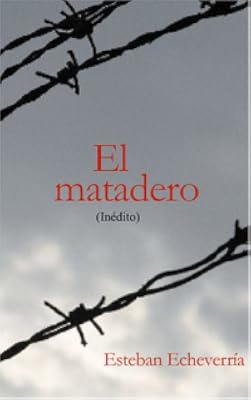
The Slaughteryard
by Esteban Echeverría
On This Page
Description
Esteban Echeverría's childhood was marked by the deaths of his parents. He was one of the most outstanding students in the department of preparatory studies at his university, where he worked in an office while studying history and French and writing poems. Later, in October 1825, he went to France on a trip that marked his philosophical and political orientation.
Tags
Recommendations
































Member Reviews
Key short story by Echeverria, political activist in 1830s Argentina, in a new and very complete edition by The Friday Project containing a long and helpful-for-context foreword by translator which set the historical context (without which I would have been lost), text, glossary, original text with note, further poetry by Echeverria, and translation of foreword to original posthumous edition.
The story is barely 30 pages long, and there is no doubt about its gore and grisliness. The political satire/parody is very extreme - portrays bleak and bloody events and then says they show the glory of the regime. 5/10 awarded because I find it very difficult to award any sort of mark - so short and bizarre.
The story is barely 30 pages long, and there is no doubt about its gore and grisliness. The political satire/parody is very extreme - portrays bleak and bloody events and then says they show the glory of the regime. 5/10 awarded because I find it very difficult to award any sort of mark - so short and bizarre.
Alrededor del 1800, en Buenos Aires se daba la lucha entre unitarios y federales. En este cuento, que transcurre en un matadero de vacas, se cuentan las rivalidades existentes, los abusos de poder y como era la sociedad de la época
Apr 22, 2016Spanish
30000
Oct 29, 2024Spanish
Ratings
Members
- Recently Added By
Author Information

26+ Works 301 Members
Some Editions
Awards and Honors
Work Relationships
Common Knowledge
- Canonical title
- The Slaughteryard
- Original publication date
- 1871
- Quotations*
- Lo que hace principalmente a mi historia es que por causa de la inundación estuvo quince días el Matadero de la Convalecencia sin ver una sola cabeza vacuna, y que en uno o dos, todos los bueyes y quinteros y aguateros se c... (show all)onsumieron en el abasto de la ciudad. (...) La abstinencia de carne era general en el pueblo, que nunca se hizo más digno de la bendición de la Iglesia, y así fue que llovieron sobre él millones y millones de indulgencias plenarias.
...el caso es reducir al hombre a una máquina cuyo móvil principal no sea su voluntad sino la de la Iglesia y el gobierno. Quizá llegue el día en que sea prohibido respirar aire libre, pasearse y hasta conversar con un am... (show all)igo, sin permiso de las autoridad competente. Así era, poco más o menos, en los felices tiempos de nuestros abuelos, que por desgracia vino a turbar la revolución de mayo.
La perspectiva del Matadero, a distancia, era grotesca, llena de animación. Cuarenta y nueve reses estaban tendidas sobre sus cueros, y cerca de doscientas personas hollaban aquel suelo de lodo regado con la sangre de sus ar... (show all)terias. En torno a cada res resaltaba un grupo de figuras humanas de tez y raza distintas. La figura más prominente de cada grupo era el carnicero (...) A sus espaldas rebullían, caracoleando y siguiendo sus movimientos, una comparsa de muchachos, de negras y mulatas achuradoras, cuya fealdad trasuntaba las arpías de fábula...
*Some information comes from Common Knowledge in other languages. Click "Edit" for more information.
Classifications
- Genres
- Fiction and Literature, General Fiction, Historical Fiction
- DDC/MDS
- 863 — Literature & rhetoric Spanish Literature Spanish fiction
- LCC
- PQ7797 .E3 .E185 — Language and Literature French, Italian, Spanish and Portuguese literatures Spanish literature Provincial, local, colonial, etc. Spanish America
- BISAC
Statistics
- Members
- 77
- Popularity
- 409,644
- Reviews
- 4
- Rating
- (3.25)
- Languages
- English, French, Spanish
- Media
- Paper, Ebook
- ISBNs
- 21
- ASINs
- 6