
Rodolfo Walsh (1927–1977)
Author of Operación Masacre
About the Author
Image credit: Rodolfo Walsh
Works by Rodolfo Walsh
Ese hombre y otros papeles personales/ That man and other personal papers (Spanish Edition) (2007) 6 copies
Esa mujer 3 copies
Cartas y documentos 2 copies
Cuentos Reunidos 1 copy
CUENTOS 1 copy
TRAMAS 1 copy
LA REVOLUCIÓN PALESTINA 1 copy
LA GRANADA 1 copy
Entre el combate y el verbo 1 copy
Cuento para tahures 1 copy
Walsh Rodolfo 1 copy
ESE HOMBRE 1 copy
Associated Works
Tagged
Common Knowledge
- Other names
- Walsh Gil, Rodolfo Jorge (birth name)
- Birthdate
- 1927-01-09
- Date of death
- 1977-03-25
- Gender
- male
- Occupations
- investigative journalist
true crime writer - Organizations
- Montoneros
- Relationships
- Walsh, Patricia (daughter)
Walsh, María Victoria (daughter) - Short biography
- Walsh was an investigative journalist and true crime writer who ran afoul of the right wing Argentine military dictatorship (1976-1983). His daughter María Victoria--an active member of the guerrilla group the Montoneros had previously been killed in a shootout with Argentine military forces. Walsh himself was accosted by members of the Argentine Navy on a Buenos Aires street on March 25, 1977 shortly after having mailed off copies of his 'Open letter from a writer to the military junta'. The regime was known for disappearing people and Walsh had vowed in the event of his being arrested--not to be taken alive. He had good reason as many of his friends and colleagues had already disappeared. He fired at his assailants-wounding one and was himself shot. Eyewitnesses had him then being thrown in the trunk of a Ford Falcon and driven away (dead? alive?) most probably to ESMA (The school of Naval Mechanics) then being used as a prison and torture center and where bodies were often thrown in an incinerator. ESMA was located in a residential area of Buenos Aires. Walsh's daughter Patricia is a politician in Argentina.
- Nationality
- Argentina
- Birthplace
- Lamarque, Argentina
- Places of residence
- Buenos Aires, Argentina
- Place of death
- Buenos Aires, Argentina
- Associated Place (for map)
- Buenos Aires, Argentina
Members
Reviews

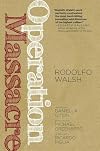
This is the long-anticipated English translation of Rodolfo Walsh’s most important work. A journalist and writer of crime fiction, Walsh revealed the story of a secret execution by Argentine military officers in 1956 in a series of magazine articles that became an oft-reprinted classic of investigative reporting and a touchstone in the anti-authoritarian literature of Latin America. His activism against successive military governments in the 1960s and 70s eventually got him killed.
In show more Operación Masacre, a group of men gathered in a house to listen to a prize fight are arrested then driven to a remote garbage dump and shot. Half of the men—some gravely wounded, others cool and quick-thinking—survive. Some of the survivors vanish, others are rearrested. Neighbors and commuters discover dead bodies along the roadside. Walsh pursues the incredible truth and assembles an account that is riveting and chilling and wholly original in its construction, the prose precise and uncomplicated, the story heavy and oppressive. The sensation of reading it put me in mind of Vassilis Vassilikos’ Z, another literary treatment of political murder and the dogged search for answers in an atmosphere of danger that envelops characters and reader alike.
This volume also includes the “Open Letter From a Writer to the Military Junta,” which Walsh dropped in the post in March 1977, a day before he was gunned down on the street by government agents. One of the great paradoxes of Argentina is the coexistence of a rich artistic and literary culture along with a violent, authoritarian political culture. The work of Rodolfo Walsh remains a powerful symbol of that paradox. show less
In show more Operación Masacre, a group of men gathered in a house to listen to a prize fight are arrested then driven to a remote garbage dump and shot. Half of the men—some gravely wounded, others cool and quick-thinking—survive. Some of the survivors vanish, others are rearrested. Neighbors and commuters discover dead bodies along the roadside. Walsh pursues the incredible truth and assembles an account that is riveting and chilling and wholly original in its construction, the prose precise and uncomplicated, the story heavy and oppressive. The sensation of reading it put me in mind of Vassilis Vassilikos’ Z, another literary treatment of political murder and the dogged search for answers in an atmosphere of danger that envelops characters and reader alike.
This volume also includes the “Open Letter From a Writer to the Military Junta,” which Walsh dropped in the post in March 1977, a day before he was gunned down on the street by government agents. One of the great paradoxes of Argentina is the coexistence of a rich artistic and literary culture along with a violent, authoritarian political culture. The work of Rodolfo Walsh remains a powerful symbol of that paradox. show less

I compare it to "In Cold Blood" in that it's a brilliant telling of a true life crime. It's better than Capote's in the magnitude of the crime (government-sponsored silencing of the opposition), and the fact that it was maybe the first case of investigative reporting in Latin America. Walsh was later "disappeared" by the Argentinian government that he was writing about in the 70s.
May be one of the earlier examples of the "new journalism", thinking here of Tom Wolfe, Truman Capote.
What Walsh has done here is write a suspenseful tale, based on extensive research and documentation of a gross injustice initiated by Government troopps in putting down a revolt in Buenos Aires in the late 1950's.
He paid the ultimate price when he was gunned down in what appeared to be an assination. To this day there remain "dark forces" in Argentina.
This book should be a source book in any show more journalism graduate program. show less
What Walsh has done here is write a suspenseful tale, based on extensive research and documentation of a gross injustice initiated by Government troopps in putting down a revolt in Buenos Aires in the late 1950's.
He paid the ultimate price when he was gunned down in what appeared to be an assination. To this day there remain "dark forces" in Argentina.
This book should be a source book in any show more journalism graduate program. show less
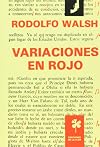
Tre racconti gialli, in stile classicissimo. Molto piacevoli.
Quello che mi è piaciuto meno è il secondo, e cioè quello in cui il commissario contatta direttamente il correttore di bozze per farsi aiutare. Il primo e il terzo, invece, coinvolgono Hernandez un po' per caso, alla Jessica Fletcher per intendersi.
Quello che mi è piaciuto meno è il secondo, e cioè quello in cui il commissario contatta direttamente il correttore di bozze per farsi aiutare. Il primo e il terzo, invece, coinvolgono Hernandez un po' per caso, alla Jessica Fletcher per intendersi.
Awards

You May Also Like


Associated Authors
Statistics
- Works
- 56
- Also by
- 3
- Members
- 531
- Popularity
- #46,873
- Rating
- 3.8
- Reviews
- 29
- ISBNs
- 73
- Languages
- 6
- Favorited
- 3