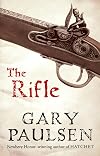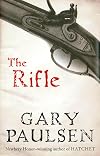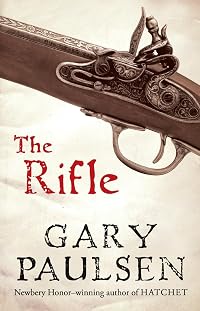
The Rifle
by Gary Paulsen
On This Page
Description
A priceless, handcrafted rifle, fired throughout the American Revolution, is passed down through the years until it fires on a fateful Christmas Eve of 1994.Tags
Recommendations
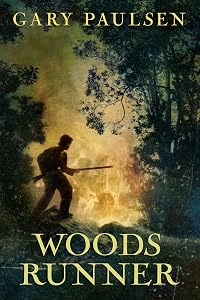
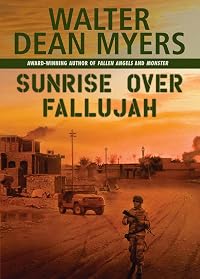
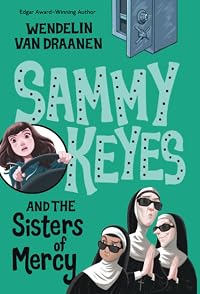
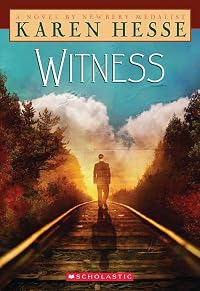
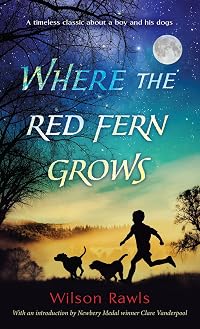
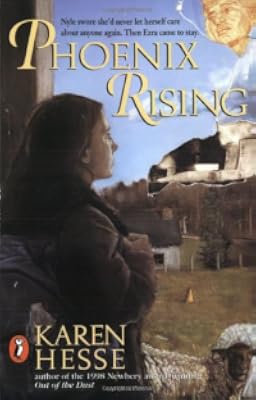
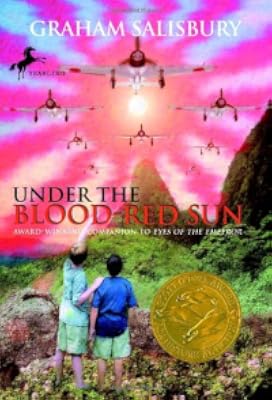
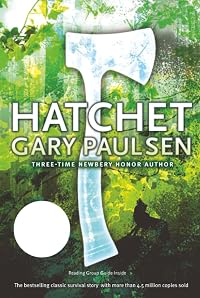


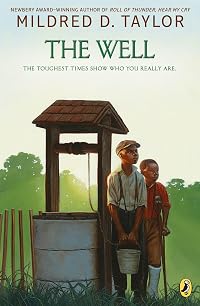
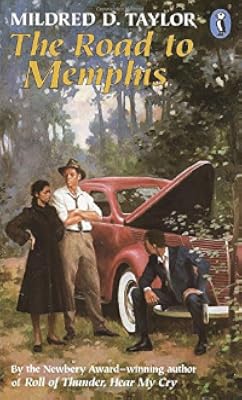

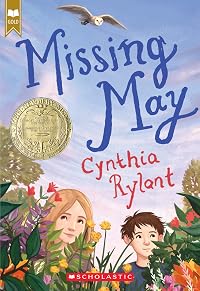

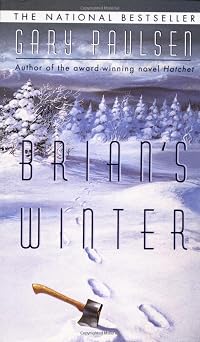
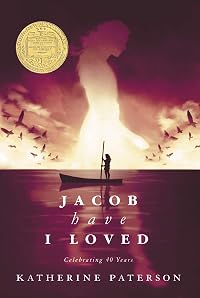
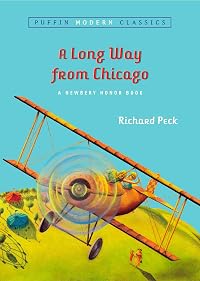
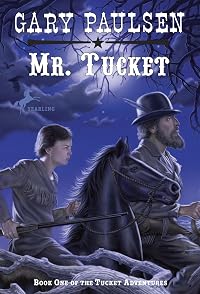
Member Recommendations
Member Reviews
First Line: It is necessary to know this rifle.
This short little book traces the history of one flintlock rifle from its creation during the American Revolution to the 1990s.
The rifle's creation is a months-long labor of love by a journeyman gunsmith named Cornish McManus. When completed, it is most definitely a "sweet rifle" (meaning one of stunning beauty and accuracy). In desperate need of money, Cornish reluctantly sells the gun to John Byam, a sharpshooter in the Revolutionary War who dies of dysentery.
The rifle, intended as a gift to a son killed in battle, is tucked away and forgotten as the centuries pass. In the 1990s it is found, and changes hands a few times until it rests above the mantel of a home in Missouri. Tragedy will show more ensue because-- during all this time and through all the hands it's passed-- no one has ever checked to see if the rifle is loaded.
The first part of this book is wonderful. The craftsmanship that goes into the making of this rifle is phenomenal, and Paulsen brings the entire process to life. The rifle's "life" while in the hands of sharpshooter John Byam is also vivid and well done.
But the book falls apart in the end. It's obvious that the author wants to teach children how deadly serious guns are, that no matter how beautiful they are or how innocently they are kept, guns are made to kill-- and they will kill. But it strains credulity to the breaking point to believe that a gun loaded in the 1770s will still fire first-time true in 1993.
Paulsen does not believe that "guns don't kill people, people kill people," but the tragedy that occurs at the end of the book is due entirely to humans who don't care about simple gun safety. The ending of the book, in particular, bothered me: "And in the meantime the rifle sits in the gun cabinet. Waiting." Guns are not inhabited by evil spirits who lurk patiently until the unwary come within range. (Although all too often they are owned by people who have no business having them in their possession.)
Middle school children may well take Paulsen's message to heart, and I hope they do, but for most of the adults who read along with their children, the aim of his story is going to fall short. show less
This short little book traces the history of one flintlock rifle from its creation during the American Revolution to the 1990s.
The rifle's creation is a months-long labor of love by a journeyman gunsmith named Cornish McManus. When completed, it is most definitely a "sweet rifle" (meaning one of stunning beauty and accuracy). In desperate need of money, Cornish reluctantly sells the gun to John Byam, a sharpshooter in the Revolutionary War who dies of dysentery.
The rifle, intended as a gift to a son killed in battle, is tucked away and forgotten as the centuries pass. In the 1990s it is found, and changes hands a few times until it rests above the mantel of a home in Missouri. Tragedy will show more ensue because-- during all this time and through all the hands it's passed-- no one has ever checked to see if the rifle is loaded.
The first part of this book is wonderful. The craftsmanship that goes into the making of this rifle is phenomenal, and Paulsen brings the entire process to life. The rifle's "life" while in the hands of sharpshooter John Byam is also vivid and well done.
But the book falls apart in the end. It's obvious that the author wants to teach children how deadly serious guns are, that no matter how beautiful they are or how innocently they are kept, guns are made to kill-- and they will kill. But it strains credulity to the breaking point to believe that a gun loaded in the 1770s will still fire first-time true in 1993.
Paulsen does not believe that "guns don't kill people, people kill people," but the tragedy that occurs at the end of the book is due entirely to humans who don't care about simple gun safety. The ending of the book, in particular, bothered me: "And in the meantime the rifle sits in the gun cabinet. Waiting." Guns are not inhabited by evil spirits who lurk patiently until the unwary come within range. (Although all too often they are owned by people who have no business having them in their possession.)
Middle school children may well take Paulsen's message to heart, and I hope they do, but for most of the adults who read along with their children, the aim of his story is going to fall short. show less
*** Possible Spoiler Alert ***
Wow. This is a book that was written to be controversial. And if you check over on Amazon.com you can hear the reviewers frothing and seething.
The reason is that Mr. Paulsen takes a stand in this book that at least half of the adult population aren't going to like. For example, in one place he writes:
It was, for instance, entirely possible and in his own mind completely logical for Tim to equate killing an intruder ... with freedom of speech, Christ's teachings, and an understanding of the technical aspects of the weapon being used to kill the intruder...
And in another place:
"Had he known the true identity of the rifle but then been told that the original owner -- a true Revolutionary War hero-- died of show more dysentery on the dirty straw spread on an earth floor, Tim would simply have remembered the first part and put the knowledge of the second part in the back of his mind and forgotten it.
The point of the man's 'blindness' being not enough of an insult, Paulsen then describes some of Tim's morally bankrupt behavior .AND. has him die, NOT at the hands of someone he could have stopped if only he had had a gun, but of stomach cancer from carcinogens Tim refused to admit were dangerous.
BUT controversy aside, let me get back to my muttons and talk briefly about the book and my own take. The story really has three aspects. The first is the origin of The Rifle and the use it was put to. Mr. Paulsen goes into great detail describing the nature of these old rifles and how they were manufactured. I thought it was interesting but I know plenty of people who are likely to scan these pages.
The second part of the story is how The Rifle came to be in modern times. While the third part of the story is how The Rifle came to murder an innocent child.
Now personally I enjoyed the first part of the story and didn't enjoy the rest very much. But then again this book wasn't written for adults -- which is where I think most frothing adult reviewers go astray. Paulsen wrote this book for Middle-Schoolers. It was meant to be read and discussed by kids who haven't made up their own minds yet about these heady topics.
It wasn't meant for old ladies like me who have read tomes by slick political hacks in the Wall Street Journal and the New York Times.
And in this more narrower sense The Rifle isn't even meant as a narrowly disguised political track, but rather as a book which, in it's own way, shows both sides of the issue of gun control. It shows the best of what weapons can do, and the worst. And by presenting both sides so strongly, it creates the basis for discussion by kids, with kids.
So I recommend it for that purpose: to create dialog.
Pam T~
booksforkids-reviews show less
Wow. This is a book that was written to be controversial. And if you check over on Amazon.com you can hear the reviewers frothing and seething.
The reason is that Mr. Paulsen takes a stand in this book that at least half of the adult population aren't going to like. For example, in one place he writes:
It was, for instance, entirely possible and in his own mind completely logical for Tim to equate killing an intruder ... with freedom of speech, Christ's teachings, and an understanding of the technical aspects of the weapon being used to kill the intruder...
And in another place:
"Had he known the true identity of the rifle but then been told that the original owner -- a true Revolutionary War hero-- died of show more dysentery on the dirty straw spread on an earth floor, Tim would simply have remembered the first part and put the knowledge of the second part in the back of his mind and forgotten it.
The point of the man's 'blindness' being not enough of an insult, Paulsen then describes some of Tim's morally bankrupt behavior .AND. has him die, NOT at the hands of someone he could have stopped if only he had had a gun, but of stomach cancer from carcinogens Tim refused to admit were dangerous.
BUT controversy aside, let me get back to my muttons and talk briefly about the book and my own take. The story really has three aspects. The first is the origin of The Rifle and the use it was put to. Mr. Paulsen goes into great detail describing the nature of these old rifles and how they were manufactured. I thought it was interesting but I know plenty of people who are likely to scan these pages.
The second part of the story is how The Rifle came to be in modern times. While the third part of the story is how The Rifle came to murder an innocent child.
Now personally I enjoyed the first part of the story and didn't enjoy the rest very much. But then again this book wasn't written for adults -- which is where I think most frothing adult reviewers go astray. Paulsen wrote this book for Middle-Schoolers. It was meant to be read and discussed by kids who haven't made up their own minds yet about these heady topics.
It wasn't meant for old ladies like me who have read tomes by slick political hacks in the Wall Street Journal and the New York Times.
And in this more narrower sense The Rifle isn't even meant as a narrowly disguised political track, but rather as a book which, in it's own way, shows both sides of the issue of gun control. It shows the best of what weapons can do, and the worst. And by presenting both sides so strongly, it creates the basis for discussion by kids, with kids.
So I recommend it for that purpose: to create dialog.
Pam T~
booksforkids-reviews show less
"Now and then, with great rarity, there came a blending of steel and wood and brass and a man's knowledge into one rifle, when it all came together just ... exactly ... right, and a weapon of such beauty and accuracy was born that it might be actually worshiped." Just knowing what a gunsmith thinks of his work makes you want to read about it and learn how a gun is made
The conflict is in the perception of the beloved rifle as it can be an amazing work of art and at other times it can be seen as a powerful life-taking object. Like any other gun, treat it as if it were loaded. As the theme seems to be rifles/guns don't kill people, it's when a loaded gun falls into a person's hands that's when the killing starts. This book is a prime show more example of today's society as gun control is a huge issue.
This book can be emotional towards certain people as in contains some things that are sensitive and sad, as there are multiple main characters, and all of them besides one has a sad story for example the first main character Cornish who is a gunsmith the one who actual makes the gun spends a great amount of time and effort to successfully make a work of art. Now when a man comes along named John Byam Cornish is forced to sell his masterpiece which he does not want but in order to provide for his family he has to. Which is sad considering that he took a lot of time and effort and was partially attached to it. And after he sells it, John Byam, the new owner later joins the colonists in the fight against The British.
Now after the beginning of the book, it starts to get boring and repetitive as the gun is bouncing back and forth with multiple owners. This is where the book starts to get bad and actually where I lost lots of interest. But in the end, it gets sad and unpleasant.
I would recommend this book “The Rifle'' to only a certain audience because I really enjoyed the beginning part of the book, the part in which he makes the rifle because of how descriptive it is, and at some points, I could imagine the gunsmith using his hands to craft the firearm. It started to get progressively tedious and boring as the gun was passed down and then sold often to then ended up in a mechanic's hand, and in the end, there was a terrible accident that happened which I won't spoil. All and all it was a good book in the beginning but towards the middle it started getting repetitive and I wasn't really interested in it anymore. But if you're one for guns and a little bit of war and history this book would be an alright book. show less
The conflict is in the perception of the beloved rifle as it can be an amazing work of art and at other times it can be seen as a powerful life-taking object. Like any other gun, treat it as if it were loaded. As the theme seems to be rifles/guns don't kill people, it's when a loaded gun falls into a person's hands that's when the killing starts. This book is a prime show more example of today's society as gun control is a huge issue.
This book can be emotional towards certain people as in contains some things that are sensitive and sad, as there are multiple main characters, and all of them besides one has a sad story for example the first main character Cornish who is a gunsmith the one who actual makes the gun spends a great amount of time and effort to successfully make a work of art. Now when a man comes along named John Byam Cornish is forced to sell his masterpiece which he does not want but in order to provide for his family he has to. Which is sad considering that he took a lot of time and effort and was partially attached to it. And after he sells it, John Byam, the new owner later joins the colonists in the fight against The British.
Now after the beginning of the book, it starts to get boring and repetitive as the gun is bouncing back and forth with multiple owners. This is where the book starts to get bad and actually where I lost lots of interest. But in the end, it gets sad and unpleasant.
I would recommend this book “The Rifle'' to only a certain audience because I really enjoyed the beginning part of the book, the part in which he makes the rifle because of how descriptive it is, and at some points, I could imagine the gunsmith using his hands to craft the firearm. It started to get progressively tedious and boring as the gun was passed down and then sold often to then ended up in a mechanic's hand, and in the end, there was a terrible accident that happened which I won't spoil. All and all it was a good book in the beginning but towards the middle it started getting repetitive and I wasn't really interested in it anymore. But if you're one for guns and a little bit of war and history this book would be an alright book. show less
Gary Paulsen is an excellent storyteller, and I have read a number of his books about nature and survival. As I started reading The Rifle, I was entranced with his descriptions of early America, and the tale of a gunsmith determined to make the best rifle he could. It wasn't until I got about halfway through this small book before I started seeing some indication that this was not just a tale of a man and a rifle, but I continued reading to the end.
I cannot and will not recommend this book, because, unfortunately, the author turns it into a heavy-handed political statement, and ruins the enjoyment of the first part. What a shame.
I cannot and will not recommend this book, because, unfortunately, the author turns it into a heavy-handed political statement, and ruins the enjoyment of the first part. What a shame.
Paulsen's well written response to the stupid statement "guns don't kill people, people kill people"
The beauty of the rifle that is the center of this story is a deadly beauty. Whatever side of the guns-in-America controversy you're on, prepare to be caught up in this expertly told tale.
(Review by Nan Bell, Librarian, Ithaca High School)
(Review by Nan Bell, Librarian, Ithaca High School)
Gary Paulsen consistently delivers compelling books. The intricate descriptions in this short book were well thought out and articulated.
Members
- Recently Added By
Lists

Novels that you shouldn't waste your time on
94 works; 52 members
Author Information

235+ Works 100,072 Members
Gary Paulsen was born on May 17, 1939 in Minnesota. He was working as a satellite technician for an aerospace firm in California when he realized he wanted to be a writer. He left his job and spent the next year in Hollywood as a magazine proofreader. His first book, Special War, was published in 1966. He has written more than 175 books for young show more adults including Brian's Winter, Winterkill, Harris and Me, Woodsong, Winterdance, The Transall Saga, Soldier's Heart, This Side of Wild, and Guts: The True Stories Behind Hatchet and the Brian Books. Hatchet, Dogsong, and The Winter Room are Newbery Honor Books. He was the recipient of the 1997 Margaret A. Edwards Award for his lifetime achievement in writing for young adults. (Bowker Author Biography) show less
Awards and Honors
Awards
Distinctions
Notable Lists
Work Relationships
Has as a student's study guide
Common Knowledge
- First words
- It is necessary to know this rifle.
- Last words
- (Click to show. Warning: May contain spoilers.)And in the meantime the rifle sits in the gun cabinet. Waiting.
Classifications
- Genres
- Fiction and Literature, Kids, Young Adult
- DDC/MDS
- 808.899 — Literature & rhetoric Literature, rhetoric & criticism Composition Literature Collections Collections by and for groups of people Literature for and by groups of people with specific attributes, residents of specific areas
- LCC
- PZ7 .P2843 .R — Language and Literature Fiction and juvenile belles lettres Fiction and juvenile belles lettres Juvenile belles lettres
- BISAC
Statistics
- Members
- 618
- Popularity
- 47,084
- Reviews
- 15
- Rating
- (3.46)
- Languages
- English
- Media
- Paper, Audiobook, Ebook
- ISBNs
- 23
- ASINs
- 5