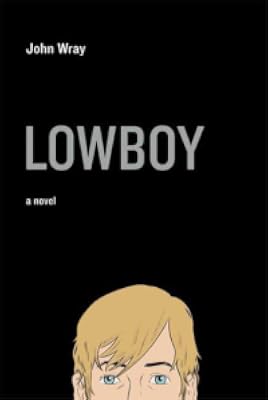
Lowboy
by John Wray
On This Page
Description
Early one morning in New York City, Will Heller, a sixteen-year-old paranoid schizophrenic, gets on a New York City uptown B train on a fantastic and terrifying quest to save the world. Violet Heller, his frantic mother, is joined by Ali Lateef, a missing persons specialist, in a desperate attempt to locate her son before psychosis claims him completely. As the stakes grow higher, Lateef gradually comes to realize that this is more than a case of a runaway teen: Will Heller has a chilling show more case history, and Violet, beautiful and enigmatic, harbors a secret that Lateef will discover at his own peril.Suspenseful and comic, devastating and hopeful by turns, Lowboy is a fearless exploration of youth, sex and violence in contemporary America, seen through one boy's haunting and extraordinary vision.
DON'T MISS THIS TRAIN! John Wray and others read from Lowboy on a New York subway. Click HERE.
. show less
Tags
Recommendations










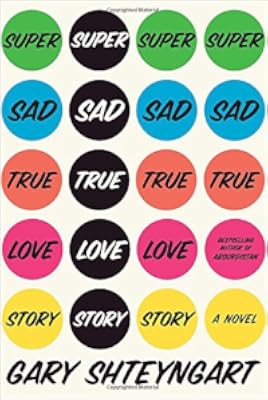







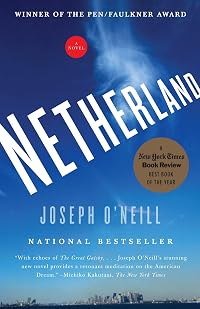


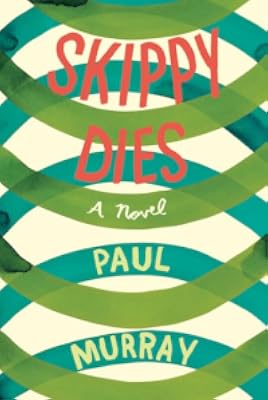





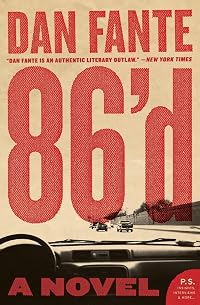















Member Recommendations

by meggyweg
Member Reviews
John Wray's dizzyingly seductive "Lowboy" is a tale told by a schizophrenic teenager. (Farrar Straus Giroux, $25). Wray's protagonist is on the lam from a mental institution, loose among the commuters and winos and rolling thunder of the Manhattan subway. Making your central character deeply insane is, of course, a risky and ambitious trick, but Wray carries it off with a fluid, inventive style that rises at times to a frightening pitch. Lowboy is an amplified hero for our times; despite his violence and craziness and incoherence, he is fundamentally sweet and in search of love.
Lowboy is fluidly written with evocative descriptions, particularly of the city and the subway. Wray successfully navigates the reader from viewing the main character as a confused innocent, grappling to make his way in a threatening world--the paranoid part of paranoid schizophrenia that at it's more benign end hits on something almost universal, to seeing him as the dark psycho in a creepy suspense (this part of the book flirts with the feel of a mainstream suspense flick), and finally to some sad combination of the points along this continuum. He is part victim, all disturbed. The side of the story that revolves around his mother is a bit unsatisfying. The payoff is a sort of a "yeah, and...??" It's obvious. You know it all along and show more you're expecting some more concrete, new, and shocking revelation. If there were more to that end of the story, it would enrich the book overall. show less
I found Lowboy to be a compelling read. It switched back and forth between the mostly unreliable point of view of the schizophrenic, off-his-meds, main character, and the detective who is trying to find him before he hurts himself, or anyone else. I agree with other readers that there was no real "secret" revealed at the end. (That was just a marketing ploy in the book description.) But it is an interesting, off-kilter story that focuses on the marginalized people of society (the mentally ill, the homeless) and on two people (Ali and Emily) who, I got the impression, had been somehow damaged by life and are drawn to the mother and son who temporarily offer them a different view of the world.
 This review was written for LibraryThing Early Reviewers.
There's something about the New York subway that's mythical, more idea than perceived reality. Hell, to someone who grew up only learning about the city from books, movies and songs, the whole thing is mythical, but especially the subway. It's what runs underneath, connects without being seen. Its underground. For instance, since I always tend to approach books from music, the Velvet Underground become the Velvet Underground for real in one of the early demos, when John Cale (an immigrant, of course) tears apart a jaunty acoustical take on "Waiting For The Man" by having his viola suddenly imitate a braking subway train. And yet the album that I keep listening to while reading Lowboy is another quintessential New York album, show more Television's Marquee Moon.
I fell.
DIDJA FEEL LOW?
No, not at all.
HUH???
I fell right into the arms of Venus de Milo.
I'm not sure why, and I'd better start explaining myself before this becomes a record review. Because it's a review of John Wray's Lowboy, in which the 16-year-old schizophrenic Will "Lowboy" Heller runs away from the mental hospital and hides out in the New York subway system while his mother and a middle-age cop try to sniff him out. And this is important, because the book doesn't just use the subway as a mere location. The story alternates between crowded trains, full of unknown people, and old abandoned stations and dark tunnels where only the rats and the homeless live. And even when Lowboy is all alone (or thinks he is) Wray never lets us forget that there's 8 million people on top of him. There's no relaxing here; the world is going to end, the planet is heating up, people are chasing him, and to top it all off he's off his meds and horny as hell. And, as previously mentioned, insane.
And perhaps it's there, and obviously this is a completely personal thing, that I stumble upon Television; Tom Verlaine's breathless vocals and almost pathological wordplay about self-deception and -destruction, the way it seems to explore an other New York ("Broadway/Looks so medieval"), the free-jazz-inspired guitar solo on the title track that spends several minutes searching for something and then when it finds it chases it into a corner and beats it to a pulp. And the way it sounds both tough and vulnerable, all nervous skin and bone; as if what's killing it is sustaining it. F-R-I-C-T-I-O-N.
The train fit into the tunnel perfectly. It slipped into the tunnel like a hand into a pocket and closed over Lowboy’s body and held him still. He kept his right cheek pressed against the glass and felt the air and guttered bedrock passing. (...) Lowboy listened to the sound of the wheels, to the squealing of the housings at the railheads and the bends, to the train’s manifold and particulate elements functioning effortlessly in concert. Welcoming, familiar, almost sentimental sounds. His thoughts fell slackly into place. Even his cramped and claustrophobic brain felt a measure of affection for the tunnel. It was his skull that held him captive, after all, not the tunnel or the passengers or the train. I’m a prisoner of my own brainpan, he thought.
By telling half the story from Lowboy's point of view, we're dragged into his world as he explores New York and the people he meets on this, the last day on Earth, trying to unite the ideas in his head with the world. Because he knows the world is ending, and only he can stop it. Intercut with this is the story of the search for Lowboy by an African-American detective and Lowboy's Austria-born mother - two people who both have secret identities of a sort, both strangers here; the detective (born Rufus White, renamed Ali Lateef by his activist father in the 60s) has his issues, the mother (who's raised Lowboy) has hers. So as they travel around NYC looking for clues, they soon start looking for clues about each other as well. Oh, and then there's Lowboy's ex-girlfriend and doctor who get brought into the mess as well.
Prove it!
Just the facts!
The confidential.
This case that I've been working on so long, so long.
Yes, of course this is a detective story, and of course the detective story has been used in this way before - to understand not just how we find criminals and bring them in, but as a picture of how we learn about the world and interpret the clues it hands us to create a picture of ourselves which may or may not be true. By having two separate but connected mysteries, with at least four protagonists - at least one of which has a different view of the world, to say the least - Wray puts a lot of the work at the feet of the reader; who can we trust here, how do we interpret the story? Is the answer the important bit, or the method by which we get there? Yet he never lets that overpower the story; gradually, he cranks up the action until the story barrels through New York, the storylines past and present start aligning until they're all on the same track; just because it's well done doesn't mean it's not a thriller. And unlike, say, Mark Haddon, Wray doesn't use his protagonist's mental problems to make his own job easier; in Lowboy, he creates a believable, intelligent character (villain? hero? victim?) without shying away from a realistic depiction of his illness and how it makes him figure out the world.
Just then the uptown B arrived and saved him. Its ghost blew into the station first, a tunnelshaped clot of air the exact length of the train behind it, hot from its own great compression and speed, whipping the litter up into a cloud. He opened his mouth to taste it on the air. The cigarette wrapper spiraled upward, fluttering like a startled bird, and for the first time he noticed the zebra-striped sign mounted over his bench. He knew what the sign was for and he said its name proudly: the indication board. His voice was clear in his ears now, serene and assured, because he knew what was going to happen next.
It's easy to like Lowboy; what keeps me from loving it unconditionally is a little more difficult to explain. Part of it is the little things; one or two dream scenes too many, one or two situations too many where I felt like Wray was keeping something from the reader just to keep the mystery alive, a resolution that feels like he could have done more with it. Also, and again perfectly personal, I really don't care for Catcher In The Rye and there's a little too much Holden Caulfield in Lowboy. Nevermind; it's still one of those novels that will both hold your interest throughout and stay with you afterwards.
This case is closed. show less
I fell.
DIDJA FEEL LOW?
No, not at all.
HUH???
I fell right into the arms of Venus de Milo.
I'm not sure why, and I'd better start explaining myself before this becomes a record review. Because it's a review of John Wray's Lowboy, in which the 16-year-old schizophrenic Will "Lowboy" Heller runs away from the mental hospital and hides out in the New York subway system while his mother and a middle-age cop try to sniff him out. And this is important, because the book doesn't just use the subway as a mere location. The story alternates between crowded trains, full of unknown people, and old abandoned stations and dark tunnels where only the rats and the homeless live. And even when Lowboy is all alone (or thinks he is) Wray never lets us forget that there's 8 million people on top of him. There's no relaxing here; the world is going to end, the planet is heating up, people are chasing him, and to top it all off he's off his meds and horny as hell. And, as previously mentioned, insane.
And perhaps it's there, and obviously this is a completely personal thing, that I stumble upon Television; Tom Verlaine's breathless vocals and almost pathological wordplay about self-deception and -destruction, the way it seems to explore an other New York ("Broadway/Looks so medieval"), the free-jazz-inspired guitar solo on the title track that spends several minutes searching for something and then when it finds it chases it into a corner and beats it to a pulp. And the way it sounds both tough and vulnerable, all nervous skin and bone; as if what's killing it is sustaining it. F-R-I-C-T-I-O-N.
The train fit into the tunnel perfectly. It slipped into the tunnel like a hand into a pocket and closed over Lowboy’s body and held him still. He kept his right cheek pressed against the glass and felt the air and guttered bedrock passing. (...) Lowboy listened to the sound of the wheels, to the squealing of the housings at the railheads and the bends, to the train’s manifold and particulate elements functioning effortlessly in concert. Welcoming, familiar, almost sentimental sounds. His thoughts fell slackly into place. Even his cramped and claustrophobic brain felt a measure of affection for the tunnel. It was his skull that held him captive, after all, not the tunnel or the passengers or the train. I’m a prisoner of my own brainpan, he thought.
By telling half the story from Lowboy's point of view, we're dragged into his world as he explores New York and the people he meets on this, the last day on Earth, trying to unite the ideas in his head with the world. Because he knows the world is ending, and only he can stop it. Intercut with this is the story of the search for Lowboy by an African-American detective and Lowboy's Austria-born mother - two people who both have secret identities of a sort, both strangers here; the detective (born Rufus White, renamed Ali Lateef by his activist father in the 60s) has his issues, the mother (who's raised Lowboy) has hers. So as they travel around NYC looking for clues, they soon start looking for clues about each other as well. Oh, and then there's Lowboy's ex-girlfriend and doctor who get brought into the mess as well.
Prove it!
Just the facts!
The confidential.
This case that I've been working on so long, so long.
Yes, of course this is a detective story, and of course the detective story has been used in this way before - to understand not just how we find criminals and bring them in, but as a picture of how we learn about the world and interpret the clues it hands us to create a picture of ourselves which may or may not be true. By having two separate but connected mysteries, with at least four protagonists - at least one of which has a different view of the world, to say the least - Wray puts a lot of the work at the feet of the reader; who can we trust here, how do we interpret the story? Is the answer the important bit, or the method by which we get there? Yet he never lets that overpower the story; gradually, he cranks up the action until the story barrels through New York, the storylines past and present start aligning until they're all on the same track; just because it's well done doesn't mean it's not a thriller. And unlike, say, Mark Haddon, Wray doesn't use his protagonist's mental problems to make his own job easier; in Lowboy, he creates a believable, intelligent character (villain? hero? victim?) without shying away from a realistic depiction of his illness and how it makes him figure out the world.
Just then the uptown B arrived and saved him. Its ghost blew into the station first, a tunnelshaped clot of air the exact length of the train behind it, hot from its own great compression and speed, whipping the litter up into a cloud. He opened his mouth to taste it on the air. The cigarette wrapper spiraled upward, fluttering like a startled bird, and for the first time he noticed the zebra-striped sign mounted over his bench. He knew what the sign was for and he said its name proudly: the indication board. His voice was clear in his ears now, serene and assured, because he knew what was going to happen next.
It's easy to like Lowboy; what keeps me from loving it unconditionally is a little more difficult to explain. Part of it is the little things; one or two dream scenes too many, one or two situations too many where I felt like Wray was keeping something from the reader just to keep the mystery alive, a resolution that feels like he could have done more with it. Also, and again perfectly personal, I really don't care for Catcher In The Rye and there's a little too much Holden Caulfield in Lowboy. Nevermind; it's still one of those novels that will both hold your interest throughout and stay with you afterwards.
This case is closed. show less
A schizophrenic sixteen-year-old boy escapes from a mental hospital and takes to the New York subway system in the belief that only he can prevent the imminent end of the world. It's an excellent, believable portrayal of a schizophrenic mind, effectively written and blessedly free of the usual pop culture stereotypes. This boy isn't a soulless psycho, a holy fool, or entertainingly wild 'n' crazy, and he doesn't have colorfully cartoony hallucinations or "Surprise, that wasn't real!" plot-twist delusions. He's just a thoughtful, intelligent teenage kid whose perceptions of reality are strange and broken and sad.
The other characters, unfortunately, are rather less convincing, and there's a vague sense of artificiality to much of it that show more made the book harder to engage with than I would have liked. At least, that's true up until the last hundred pages or so, when some sort of invisible switch flipped in my mind, and I suddenly found myself utterly gripped by it for reasons I'm still not entirely clear on, but am not complaining about. show less
The other characters, unfortunately, are rather less convincing, and there's a vague sense of artificiality to much of it that show more made the book harder to engage with than I would have liked. At least, that's true up until the last hundred pages or so, when some sort of invisible switch flipped in my mind, and I suddenly found myself utterly gripped by it for reasons I'm still not entirely clear on, but am not complaining about. show less
I'm still looking for the definitive description of what it's like to be schizophrenic. Lowboy isn't it, but it has its moments. There are two intertwined stories here, schizophrenic sixteen year-old Will's journey through New York City and his pursuit by his mother and a missing persons detective. The first of these is the strongest: everything is filtered through Will's point of view, and the mismatch between what he perceives and what we can puzzle together to be actually happening provides a compelling view of schizophrenic thought processes. The latter is weak: too much expository dialog, characters that never quite snap into focus, and a twist that if you can't see it coming from a mile off, you can at least see it from twenty or show more so pages. I think it would have enjoyed the novel better if it had jettisoned the mother, the detective, and the thriller plot that takes over in the last half and focused entirely on Will's fractured experience of the world. Not great, but compelling descriptive prose and stretches of New York City picaresque make me curious to see what else John Wray has written. show less
Personal opinion is I would prefer something more complicated or moving than this book. Familial relationships, mental health issues, new york city -- all of it is more complicated and moving than this book.
What we have here is a 16 yr old individual with schizophrenia off his meds meandering through new York, overstuffed with incongruous observations as one would expect from someone experiencing psychosis. There is also a detective stock character into “solving puzzles” set with the task of finding the young man. Accompanying is a frail dowdy mother character that we find out later also has a mental health history. There has been a previous incident of the boy pushing a girl onto the train track during a psychotic break. The girl show more and lowboy are written to having a typical teenage puppy dog love right in the middle of the detective + mother’s quest for finding the AWOL lowboy. An end event concludes the novel that at least to me, was predictable. Ending not included for spoiler’s sake.
Although Lowboy’s thoughts are engrossing and possibly a good mirror for the experience of those experiencing psychosis, similar more complete accounts are available in equally heartbreaking nonfiction forms. And on top of that, mental illness need not always be a tragedy punctuated by comedic points, as it is in this book.
Beyond the brief tragic romance between lowboy and Emily (token girl crush), I was not entertained nor educated by this book. And even in the small sad love story between teenagers - how many times can a girl fall for the “crazy” boy with issues? The book is meticulously crafted and conceptually OK. But it won’t surprise you if you have any experience with individuals with mental illness/mental health literature. No more. No less. show less
What we have here is a 16 yr old individual with schizophrenia off his meds meandering through new York, overstuffed with incongruous observations as one would expect from someone experiencing psychosis. There is also a detective stock character into “solving puzzles” set with the task of finding the young man. Accompanying is a frail dowdy mother character that we find out later also has a mental health history. There has been a previous incident of the boy pushing a girl onto the train track during a psychotic break. The girl show more and lowboy are written to having a typical teenage puppy dog love right in the middle of the detective + mother’s quest for finding the AWOL lowboy. An end event concludes the novel that at least to me, was predictable. Ending not included for spoiler’s sake.
Although Lowboy’s thoughts are engrossing and possibly a good mirror for the experience of those experiencing psychosis, similar more complete accounts are available in equally heartbreaking nonfiction forms. And on top of that, mental illness need not always be a tragedy punctuated by comedic points, as it is in this book.
Beyond the brief tragic romance between lowboy and Emily (token girl crush), I was not entertained nor educated by this book. And even in the small sad love story between teenagers - how many times can a girl fall for the “crazy” boy with issues? The book is meticulously crafted and conceptually OK. But it won’t surprise you if you have any experience with individuals with mental illness/mental health literature. No more. No less. show less
This review was written for LibraryThing Early Reviewers.Members
- Recently Added By
Lists

to get
244 works; 2 members
Author Information

Awards and Honors
Distinctions
Notable Lists
Common Knowledge
- Canonical title
- Lowboy
- Original title
- Lowboy
- Original publication date
- 2009
- People/Characters
- William Heller; Ali Lateef (a.k.a. Rufus Lamarck White); Yda Heller (a.k.a. Violet); Emily Wallace
- Important places
- New York, New York, USA; NYC Subway, New York, New York, USA
- Dedication
- For Violet
- First words
- On November 11 Lowboy ran to catch a train.
- Last words
- (Click to show. Warning: May contain spoilers.)On November 12 the world ended by fire.
- Blurbers
- Pears, Tim; Whitehead, Colson; Shteyngart, Gary; Englander, Nathan
Classifications
Statistics
- Members
- 725
- Popularity
- 39,196
- Reviews
- 54
- Rating
- (3.21)
- Languages
- 8 — Dutch, English, French, German, Italian, Portuguese, Spanish, Swedish
- Media
- Paper, Audiobook, Ebook
- ISBNs
- 23
- ASINs
- 8