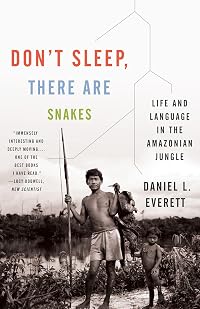
Don't Sleep, There Are Snakes: Life and Language in the Amazonian Jungle
by Daniel L. Everett
On This Page
Description
A linguist offers a thought-provoking account of his experiences and discoveries while living with the Pirahã, a small tribe of Amazonian Indians living in central Brazil and a people possessing a language that defies accepted linguistic theories and reflects a culture that has no counting system, concept of war, or personal property, and lives entirely in the present.Tags
Recommendations







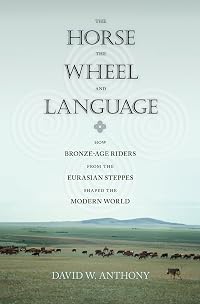

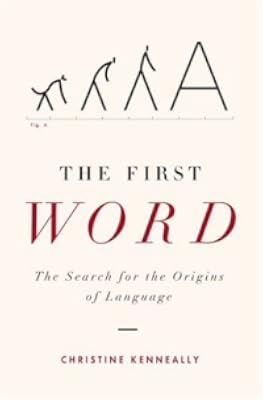
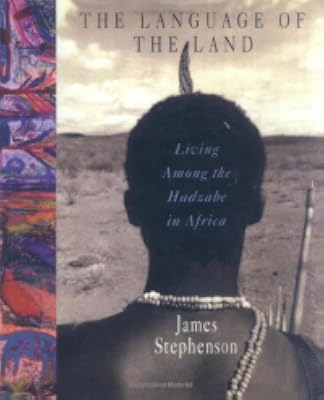



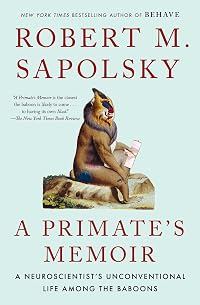











Member Reviews
Absolutely fascinated by this book. Given to me by my mother after she got it for Christmas and also adored it, I can see I will be recommending it to others - and of course Richard is also in line to read it soon.
It's divided into unequal halves - the long half recounting the story of working and living with the Pirahã indians of the Brazilian Amazon, and the shorter half going into more detail about the linguistic theories and findings that this work has brought or helped to bring about. I could have wished for more of the second half, though some other reviews I've read have indicated this might be more than a general audience would be interested in.
Part of the fascination is the sheer huge difference in culture that the Pirahã show more represent - a culture where, Everett's theory developed over twenty years goes, the principle of immediacy of experience is all-important. They will and can only talk about experiences had either by they themselves, or by others who are still alive and trustworthy. This is a cultural constraint (so when Everett tries to tell them about the Bible, they ask whether he has met Jesus himself or not) but, Everett's radical claim is, this also shapes their language in a very striking fashion.
I could also have wished for more direct information or feedback from Everett's family - his wife Keren makes an appearance in some discussions, as do their children, but it would have been great to have got their view on what it was like to grow up somewhere like that, and particularly their view on whether they think Everett's theories of this language match their experience. After all, how better to study a language (in some ways) than to chuck a 4 year old child into the environment and bring them up bilingual? show less
It's divided into unequal halves - the long half recounting the story of working and living with the Pirahã indians of the Brazilian Amazon, and the shorter half going into more detail about the linguistic theories and findings that this work has brought or helped to bring about. I could have wished for more of the second half, though some other reviews I've read have indicated this might be more than a general audience would be interested in.
Part of the fascination is the sheer huge difference in culture that the Pirahã show more represent - a culture where, Everett's theory developed over twenty years goes, the principle of immediacy of experience is all-important. They will and can only talk about experiences had either by they themselves, or by others who are still alive and trustworthy. This is a cultural constraint (so when Everett tries to tell them about the Bible, they ask whether he has met Jesus himself or not) but, Everett's radical claim is, this also shapes their language in a very striking fashion.
I could also have wished for more direct information or feedback from Everett's family - his wife Keren makes an appearance in some discussions, as do their children, but it would have been great to have got their view on what it was like to grow up somewhere like that, and particularly their view on whether they think Everett's theories of this language match their experience. After all, how better to study a language (in some ways) than to chuck a 4 year old child into the environment and bring them up bilingual? show less
American Daniel Everett spent many years, off and on, living among the Pirahã people of the Amazon jungle. Initially he came as a missionary, with the goal of learning their language and culture in order to translate the Bible for them, but became deeply interested in that language and culture for their own sake, and eventually came to regard much about their attitude towards life and belief as superior to his own, ultimately de-converting himself rather than converting the Pirahã.
In this book, he describes his own experiences living with and learning about the Pirahã and adjusting to life on the Amazon. He also describes, in depth and with considerable analysis, some of the unique and interesting features of Pirahã society and show more language. The language, in particular, potentially challenges a lot of conventional wisdom about how human languages work, and, Everett believes, suggests a much more complex interplay between language and culture than linguists usually allow for.
The linguistic discussion sometimes gets very technical, and I am in no way expert enough to evaluate whether Everett's take on things is completely right or not, but it is thought-provoking, and there's no question that the language itself is fascinating. As are Everett's observations of the Pirahã culture, although it seemed pretty clear to me that he must be overgeneralizing a bit in places. For instance, he states quite emphatically that the Pirahã are extremely peaceful and non-aggressive among themselves (if not necessarily always with foreigners), but then mentions in passing a couple of details that perhaps call that into question. Although that's probably understandable, really; I don't think there's a society on Earth that's entirely consistent and free of contradiction.
In any case, if you can handle the sometimes hard-to-follow linguistic discussions, it's well worth reading, if only for the example it provides of just how diverse human languages and societies can be, and for its look at thought and speech patterns that can be very different from the ones most of us take for granted. show less
In this book, he describes his own experiences living with and learning about the Pirahã and adjusting to life on the Amazon. He also describes, in depth and with considerable analysis, some of the unique and interesting features of Pirahã society and show more language. The language, in particular, potentially challenges a lot of conventional wisdom about how human languages work, and, Everett believes, suggests a much more complex interplay between language and culture than linguists usually allow for.
The linguistic discussion sometimes gets very technical, and I am in no way expert enough to evaluate whether Everett's take on things is completely right or not, but it is thought-provoking, and there's no question that the language itself is fascinating. As are Everett's observations of the Pirahã culture, although it seemed pretty clear to me that he must be overgeneralizing a bit in places. For instance, he states quite emphatically that the Pirahã are extremely peaceful and non-aggressive among themselves (if not necessarily always with foreigners), but then mentions in passing a couple of details that perhaps call that into question. Although that's probably understandable, really; I don't think there's a society on Earth that's entirely consistent and free of contradiction.
In any case, if you can handle the sometimes hard-to-follow linguistic discussions, it's well worth reading, if only for the example it provides of just how diverse human languages and societies can be, and for its look at thought and speech patterns that can be very different from the ones most of us take for granted. show less
This book describes the time spent among an isolated Amazonian tribe by a missionary and linguist, but it is about much, much more. The author was sent to learn the language of the Piraha, a tribe that now numbers less than a thousand people, so that he could translate the New Testament into that language to help convert the Pirahas. Over many years, he learned the language and came to appreciate the culture; both of which are extraordinary. His description of his family's life with the Piraha, far into the Amazon jungle, is fascinating, as is his description of Piraha culture.
But there is much more to the book than adventure in the Amazon, and discussion of an Amazonian people. In the book, he discusses the ways in which the language show more came to affect his views about language, to the point where they made him question Noam Chomsky's theory that grammar is innate. His work challenging Chomsky has had wide influence, and his discussion of that work (and of Chomsky's view) is the clearest that I have ever read. Essentially, the author regards language as much more a product of culture (or an interaction with culture) than a matter of genetics -- a revolutionary view.
In addition, the book discusses faith, and the challenges to his faith that the author found in the Amazon. All in all, this book made me think really hard about very big themes, despite the fact that it is a relatively easy read. I can't recommend it too highly. show less
But there is much more to the book than adventure in the Amazon, and discussion of an Amazonian people. In the book, he discusses the ways in which the language show more came to affect his views about language, to the point where they made him question Noam Chomsky's theory that grammar is innate. His work challenging Chomsky has had wide influence, and his discussion of that work (and of Chomsky's view) is the clearest that I have ever read. Essentially, the author regards language as much more a product of culture (or an interaction with culture) than a matter of genetics -- a revolutionary view.
In addition, the book discusses faith, and the challenges to his faith that the author found in the Amazon. All in all, this book made me think really hard about very big themes, despite the fact that it is a relatively easy read. I can't recommend it too highly. show less
The author writes an interesting account of his years as a missionary in the Amazon jungle, working with a tribe that had been studied and missionized for centuries, but no one had been able to sort out the anomalies of their life and their language. The adventures are interesting, but on the whole, it's a little sluggish reading. The author does manage to avoid the trap that so often snares anthropologists. He manages to work toward accepting their culture as it is, without judgment, without the usual finger pointing and criticism of his own culture, as though all Western ideas are inherently inferior if they are different. There is a touch of that in the final chapter, but overall, he presents a much more objective view than usually show more seen. The book is worthwhile reading just for the challenges it raises to contemporary conventional wisdom in linguistics, particularly the Chomsky school. Also, the lack of a creation myth among the Pirahã tribe is an interesting challenge to traditional views about religion and culture. show less
Everett’s Don’t Sleep, There’s Snakes was the May read for my book club. From the description offered by the member, it seemed as if it might be an interesting anthropological look at an isolated group of indigenous peoples in the Amazon. The Pirahã (pronounced “pee-da-HAN”). When I got a copy of the book, the dust jacket revealed Everett went to the Amazon as a missionary.
Since I am adamantly opposed to missionary work – I admire the prime directive of the Federation of Planets: non interference in the culture of indigenous people – I almost stopped right there. But, this man lost his faith, so I was intrigued.
Daniel Everett moved his wife, Keren, and their children (seven, four, and one!!!) to this remote jungle show more village with no electricity, no water, and no contact with the outside world. Shortly after his arrival, the Brazilian government banned missionaries from these tribes, so his sponsor, The Summer Institute of Linguistics, tried “to find a way around the governments prohibition” (14). Nice. So Daniel enrolls in a graduate school to study linguistics, and his project is to study the language of these people. He is re-admitted to the Amazon as a “scientist.”
The next problem involves linguistics. Linguistics is akin to “statistics” for English majors -- boring. But for the sake of a friend, I began to slog through the jungles of crazy spellings, crazy phonetics, and lots of missionary-speak.
Then, I did something I rarely do. I skipped to the end to see what later chapters had to offer, and I came upon Chapter 17: “Converting the Missionary.” Everett writes, “the challenge of the missionary [is] to convince a happy, satisfied people that they are lost and need Jesus as their personal savior” (266). He quotes his “evangelism professor,” who said, “You’ve got to get ‘em lost before you can get ‘em saved” (266). Disgusting. When I think of the millions of lives lost as a result of missionaries over the ages, the cultures destroyed, the languages, traditions, stories, obliterated, the acts of genocide committed in the name of religion and progress, my stomach turns over and over.
Fortunately, Everett comes to the conclusion that “the universal appeal of the spiritual message I was bringing was ill-founded” (269). Indeed. Everett’s wife was from a missionary family, and inexplicably, she found it it impossible to stand by her husband after his enlightenment and took the children and went home.
The “primitive” Pirahã asked Everett if he had ever seen Jesus, and when he said no, the wondered how he could believe in such a person. The Pirahã live an immediate life, closely intertwined with their environment and the daily struggle to find food. These people have a clear “acceptance for things the way they are, by and large. No fear of death” (271). Who is the most rational in this story?
Everett closes this chapter with some startling admissions: “I have given up what I could not keep, my faith, to gain what I cannot lose, freedom from what Thomas Jefferson called ‘tyranny of the mind’ – following outside authorities rather than one’s own reason” (272) Hallelujah! Later, on the same page, “William James reminded us, we shouldn’t take ourselves too seriously. We are no more nor less than evolved primates” (272).
The nuns would always tell us about the “Eleventh Commandment” – MYOB – Mind Your Own Business. At the book club, I raised the question, “Why can’t we just leave these people alone? What is the purpose of studying them, proselytizing them, and destroying them in the process?” One member suggested, if we don’t study them some corporation, oil company, logging firm, or factory farmers will.
Have humans learned nothing from history? Especially the history of the last 135 years or so? The near extinction of native peoples stripped of their land, their culture, the source of food and shelter, driven to shameful living conditions on reservations – in many cases far from their ancestral homes? Why don’t we pay attention to the oft quoted line of George Santayana, “Those who cannot remember the past are condemned to repeat it.” Five stars for chapter 17.
--Jim, 5/31/12 show less
Since I am adamantly opposed to missionary work – I admire the prime directive of the Federation of Planets: non interference in the culture of indigenous people – I almost stopped right there. But, this man lost his faith, so I was intrigued.
Daniel Everett moved his wife, Keren, and their children (seven, four, and one!!!) to this remote jungle show more village with no electricity, no water, and no contact with the outside world. Shortly after his arrival, the Brazilian government banned missionaries from these tribes, so his sponsor, The Summer Institute of Linguistics, tried “to find a way around the governments prohibition” (14). Nice. So Daniel enrolls in a graduate school to study linguistics, and his project is to study the language of these people. He is re-admitted to the Amazon as a “scientist.”
The next problem involves linguistics. Linguistics is akin to “statistics” for English majors -- boring. But for the sake of a friend, I began to slog through the jungles of crazy spellings, crazy phonetics, and lots of missionary-speak.
Then, I did something I rarely do. I skipped to the end to see what later chapters had to offer, and I came upon Chapter 17: “Converting the Missionary.” Everett writes, “the challenge of the missionary [is] to convince a happy, satisfied people that they are lost and need Jesus as their personal savior” (266). He quotes his “evangelism professor,” who said, “You’ve got to get ‘em lost before you can get ‘em saved” (266). Disgusting. When I think of the millions of lives lost as a result of missionaries over the ages, the cultures destroyed, the languages, traditions, stories, obliterated, the acts of genocide committed in the name of religion and progress, my stomach turns over and over.
Fortunately, Everett comes to the conclusion that “the universal appeal of the spiritual message I was bringing was ill-founded” (269). Indeed. Everett’s wife was from a missionary family, and inexplicably, she found it it impossible to stand by her husband after his enlightenment and took the children and went home.
The “primitive” Pirahã asked Everett if he had ever seen Jesus, and when he said no, the wondered how he could believe in such a person. The Pirahã live an immediate life, closely intertwined with their environment and the daily struggle to find food. These people have a clear “acceptance for things the way they are, by and large. No fear of death” (271). Who is the most rational in this story?
Everett closes this chapter with some startling admissions: “I have given up what I could not keep, my faith, to gain what I cannot lose, freedom from what Thomas Jefferson called ‘tyranny of the mind’ – following outside authorities rather than one’s own reason” (272) Hallelujah! Later, on the same page, “William James reminded us, we shouldn’t take ourselves too seriously. We are no more nor less than evolved primates” (272).
The nuns would always tell us about the “Eleventh Commandment” – MYOB – Mind Your Own Business. At the book club, I raised the question, “Why can’t we just leave these people alone? What is the purpose of studying them, proselytizing them, and destroying them in the process?” One member suggested, if we don’t study them some corporation, oil company, logging firm, or factory farmers will.
Have humans learned nothing from history? Especially the history of the last 135 years or so? The near extinction of native peoples stripped of their land, their culture, the source of food and shelter, driven to shameful living conditions on reservations – in many cases far from their ancestral homes? Why don’t we pay attention to the oft quoted line of George Santayana, “Those who cannot remember the past are condemned to repeat it.” Five stars for chapter 17.
--Jim, 5/31/12 show less
A riveting account of the astonishing experiences and discoveries made by linguist Daniel Everett while he lived with the Pirahã, a small tribe of Amazonian Indians in central Brazil. Daniel Everett arrived among the Pirahã with his wife and three young children hoping to convert the tribe to Christianity. Everett quickly became obsessed with their language and its cultural and linguistic implications. The Pirahã have no counting system, no fixed terms for color, no concept of war, and no personal property. Everett was so impressed with their peaceful way of life that he eventually lost faith in the God he'd hoped to introduce to them, and instead devoted his life to the science of linguistics. Part passionate memoir, part scientific show more exploration, Everett's life-changing tale is riveting look into the nature of language, thought, and life itself. show less
Как известно, в наши дни племя из 70 охотников и собирателей в среднем состоит из 30 охотников, 40 собирателей и 50 антропологов. Но автору книги повезло — он и его семья были единственными белыми, жившими среди амазонских индейцев пираха. Они были миссионерами.
Пираха крайне необычны: хотя они и живут в каменном веке, их язык очень сложен и, похоже, уникален. У любого глагола в пираха может быть не менее 65 000 show more форм, и при этом в языке всего 11 букв. Зато есть тона. У них нет слов вежливости, слов для счета. Красный у них — «похожий на кровь», а зеленый — «незрелый». Пираха смеются по любому поводу.
Однако миссию Эверетта потопили не трудности перевода. Индейцы не верят в то, чего не видели сами они или рассказчик лично. После показа картинок из Нового Завета впечатлительные амазонцы стали видеть Иисуса по ночам. Увы, в форме беса с метровым членом, пытавшегося овладеть их женщинами. show less
Пираха крайне необычны: хотя они и живут в каменном веке, их язык очень сложен и, похоже, уникален. У любого глагола в пираха может быть не менее 65 000 show more форм, и при этом в языке всего 11 букв. Зато есть тона. У них нет слов вежливости, слов для счета. Красный у них — «похожий на кровь», а зеленый — «незрелый». Пираха смеются по любому поводу.
Однако миссию Эверетта потопили не трудности перевода. Индейцы не верят в то, чего не видели сами они или рассказчик лично. После показа картинок из Нового Завета впечатлительные амазонцы стали видеть Иисуса по ночам. Увы, в форме беса с метровым членом, пытавшегося овладеть их женщинами. show less
Members
- Recently Added By
Published Reviews
Mit 26 Jahren zieht der Missionar Daniel Everett in den brasilianischen Urwald, um den Stamm der Pirahã zu bekehren. Sieben Jahren später verlässt er die Indianer – seinen Glauben hat er verloren.
added by rstauss
Lists

Non-Fiction Worth Reading
1,025 works; 264 members

Recommend the 20 best books you've read in the last five years
2,168 works; 603 members

Allie's Favourite 150 Books
145 works; 3 members

Books Read in 2012
816 works; 34 members

My favourite books
96 works; 3 members

5 Best 5 Years
71 works; 4 members

KayStJ's to-read list
1,616 works; 11 members

Five star books
1,767 works; 110 members

What are your favourite books?
121 works; 11 members

Favourite Books
50 works; 1 member

Pleasant Surprises: Books That Exceeded Our Expectations
418 works; 143 members

John Carey's Sunday Best
82 works; 3 members
Books That Changed Our Perspective
423 works; 168 members
Author Information

18+ Works 1,362 Members
Daniel L. Everett is the Dean of Arts and Sciences at Bentley University in Waltham, Massachusetts. He is the author of many books, including Don't Sleep, There Are Snakes; Language: The Cultural Tool; and Linguistic Fieldwork: A Student Guide. His life and work is also the subject of a documentary film, The Grammar of Happiness.
Awards and Honors
Awards
Notable Lists
Series
Belongs to Publisher Series
Common Knowledge
- Canonical title
- Don't Sleep, There Are Snakes: Life and Language in the Amazonian Jungle
- Important places
- Amazon Rainforest, Amazon Basin, South America
- Canonical DDC/MDS
- 305.8989
- Canonical LCC
- F2520.1.M9
Classifications
- Genres
- Anthropology, General Nonfiction, Nonfiction, Travel, Biography & Memoir
- DDC/MDS
- 305.8989 — Society, government, & culture Social sciences, sociology & anthropology Social group - Age, Gender, Ethnicity Ethnic and national groups Other ethnic and national groups South American native peoples
- LCC
- F2520.1 .M9 — Local History of the United States, Canada and Latin America Latin America. Spanish America South America Brazil
- BISAC
Statistics
- Members
- 890
- Popularity
- 30,496
- Reviews
- 36
- Rating
- (3.77)
- Languages
- 5 — English, German, Italian, Russian, Spanish
- Media
- Paper, Audiobook, Ebook
- ISBNs
- 16
- UPCs
- 1
- ASINs
- 8