On This Page
Description
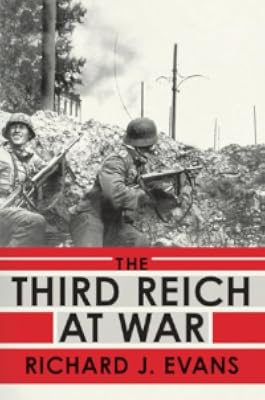
The final volume in Evans's masterly trilogy on the history of Nazi Germany traces the rise and fall of German military might, the mobilization of a people's community to serve a war of conquest, and Hitler's campaign of racial subjugation and genocide.Tags
Recommendations






Member Recommendations
fmorondo The second part of the monumental history of the Third Reich written by Richard Evans.
20
Member Reviews
Ez a Harmadik Birodalom-trilógia eszméletlen vállalkozás és hatalmas eredmény, még akkor is, ha nem érzem hibátlannak. Egyrészt akkora terjedelmű szöveg, hogy ha egyetlen sorba írták volna (mondjuk egy sortörési válságnak köszönhetően, ami íróknál biztos előfordul néha), körbeérné az Egyenlítőt párszor, és azzal sem lehet vitatkozni, hogy minden szava mögött nagyon komoly kutatással és adatgyűjtéssel eltöltött órák állnak. Ugyanakkor a záró kötet tökéletes illusztrációja annak is, hogy a mérhetetlen mennyiségű információba bele lehet fulladni. No persze Evans azért messze áll a fulladástól, de azt határozottan éreztem, hogy amíg a második világháború periférikus show more témáit (mint amilyen a náci kultúra, tudomány és gazdaság) sallangmentesen foglalja össze, addig azokkal az elemekkel, amiknek amúgy is gazdag szakirodalma gyűlt már össze, nem mindig tud mit kezdeni: esetenként szétforgácsolódik keze alatt a kezelhetetlen mennyiségű információ.
Látványos, hogy Evans a Harmadik Birodalom legjellemzőbb tulajdonságának a világ homogenizálására tett erőfeszítéseket tartja – az ezzel kapcsolatos leírások teszik ki a könyvnek legalább a felét. Védhető álláspont, hiszen agresszív nagyhatalmakat láttunk már, de olyat, aki még a totális vereség küszöbén is azzal foglalkozik, hogy vélt vagy valós ellenségeit (zsidókat, kommunistákat, idegeneket, árulókat) kiirtsa, nem sokat. Mintha a hitleri rezsim egyetlen célja az lett volna, hogy csak a németek maradjanak a földön, meg még pár helóta – ha pedig a német vereség elkerülhetetlen, akkor inkább a németek se. Ebben a megvilágításban másképp fest mind a náci politika, de még a náci hadtudomány is: a világháború eszközzé válik, a cél pedig egy utópisztikus jövő, ahol árja lurkók szőke haját lobogtatja a szél a szőke ukrán búzamezőn, amit rabszolgák hada művel. Ez a vízió magva, a Harmadik Birodalom alfája és omegája – ami pedig eltér ettől (például a porosz konzervatív-nacionalista Wehrmacht-szellemiség, ami a birodalmon belül időnként valóban konkurált a nácikkal), az csupán marginális jelenség, és ha Hitler időt tud szakítani rá, előbb-utóbb felszámolja majd a többi hasznos hülyeséggel együtt.
Amúgy meg a könyv olvasása során az is világossá vált számomra, miért nyilvánulok meg bizonyos témákról radikálisabban, mint néhány éve: pont mert azóta elég sokat olvastam a második világháborúról. Engem a hadtudomány és a történelem pacifistává tesz, hisz minden háború tökéletesen illusztrálja azt a folyamatot, amikor egy csoport valamely más csoportot – az ellenséget – dehumanizál, olyan helyzetet teremtve ezzel, amelyben megölésük nem bűn lesz, hanem szakma, amelynek megvannak a maga „jó szakemberei”, akiket hősként tisztelünk*. Hitler ebből a szempontból nem tett mást, mint logikusan továbbvitte a gondolatot: az ellenség kitételt egész népcsoportokra – „fajokra” – is kiterjesztette, a civileket, gyerekeket és nőket is beleértve. Ezzel amúgy nem találta fel a spanyolviaszt, mert bár egyfelől mindez a Tízparancsolatok felfüggesztése, másfelől viszont paradox módon pont visszatérés az Ószövetség háborúfelfogásához, ahol Isten Saulnak azt parancsolja, hogy „Ne kíméld, hanem öld meg a férfiakat és a nőket, a gyermekeket és a csecsemőket, a marhákat és a juhokat, a tevéket és a szamarakat!” (Sám1 15,3)**. Ez a fajta népirtás csak úgy lehetséges, ha olyan közeget teremtünk, ahol az elpusztításra kijelölt célcsoportot lassacskán megfosztjuk emberi mivoltától – a XX. század első felében pedig pont kezdtek kialakulni és tökéletesedni azok a csatornák, amiken keresztül meg lehetett fertőzni gyűlölettel egy egész népet***. Ezek a csatornák ma még tökéletesebbek, nagyobb intenzitással képesek megszólítani szélesebb közönséget. Reális a veszély, hogy felelőtlen használatuk tragédiát okoz – ilyen értelemben én is félek, azt hiszem. Csak én nem attól félek, amitől szerintük félnem kéne, hanem attól, hogy miféle hibákat ismételtet meg velünk ezt a valakire fókuszált félelem. Evans három kötetének felbecsülhetetlen értéke pedig az, hogy eszement részletességgel vázolja fel az utat, ami a gyűlölet kezdetétől egészen a totális megsemmisülésig vezet – ez pedig egy olyan történet, amit sokkal többen kéne ismerjenek, mégpedig sokkal részletesebben. Talán ők is radikálisabbak lennének. Óvatosságból.
* Észrevettétek már, hogy a hős általában olyan személyt jelöl, aki feláldozza a saját életét, vagy megment valakit? Tűzoltót, orvost, mártírt. Egyetlen kivétel a katona, akit az ölésért is hősnek tekinthetünk. Ezzel szemben a hóhér az európai kultúrkörben megvetendő figura – holott ő is csak olyat öl, aki a hatalom életre méltatlannak nyilvánított.
** Félreértés ne essék, ezzel nem Hitler és a kereszténység hasonlóságára kívánok utalni. Hanem egyszerűen arra, hogy a Biblia szó szerinti értelmezése ilyen olvasatot is megenged.
*** Érdemes megnézni pár magyar sajtóorgánumot a ’20-as, ’30-as évekből, amikor a határainkon egyszeriben ezrével jelentek meg a csak jiddisül beszélő, kaftános ortodox zsidók, akik ilyen-olyan okból kénytelenek voltak elhagyni kelet-európai stetljeiket. És érdemes azt is végigkövetni, hogyan csúszott át az irántuk érzett idegenkedés, félelem vagy gyűlölet idővel az asszimilálódott zsidók közösségére, összemosódva az amúgy is létező úri antiszemitizmussal. Ezeknek a publicisztikáknak a hangneme nagyon is ismerős. Csak még nem tudni, a mai idegenkedés, félelem és gyűlölet ki mindenkire fog még kiterjedni, azokon túl, akiket céloznak vele. show less
Látványos, hogy Evans a Harmadik Birodalom legjellemzőbb tulajdonságának a világ homogenizálására tett erőfeszítéseket tartja – az ezzel kapcsolatos leírások teszik ki a könyvnek legalább a felét. Védhető álláspont, hiszen agresszív nagyhatalmakat láttunk már, de olyat, aki még a totális vereség küszöbén is azzal foglalkozik, hogy vélt vagy valós ellenségeit (zsidókat, kommunistákat, idegeneket, árulókat) kiirtsa, nem sokat. Mintha a hitleri rezsim egyetlen célja az lett volna, hogy csak a németek maradjanak a földön, meg még pár helóta – ha pedig a német vereség elkerülhetetlen, akkor inkább a németek se. Ebben a megvilágításban másképp fest mind a náci politika, de még a náci hadtudomány is: a világháború eszközzé válik, a cél pedig egy utópisztikus jövő, ahol árja lurkók szőke haját lobogtatja a szél a szőke ukrán búzamezőn, amit rabszolgák hada művel. Ez a vízió magva, a Harmadik Birodalom alfája és omegája – ami pedig eltér ettől (például a porosz konzervatív-nacionalista Wehrmacht-szellemiség, ami a birodalmon belül időnként valóban konkurált a nácikkal), az csupán marginális jelenség, és ha Hitler időt tud szakítani rá, előbb-utóbb felszámolja majd a többi hasznos hülyeséggel együtt.
Amúgy meg a könyv olvasása során az is világossá vált számomra, miért nyilvánulok meg bizonyos témákról radikálisabban, mint néhány éve: pont mert azóta elég sokat olvastam a második világháborúról. Engem a hadtudomány és a történelem pacifistává tesz, hisz minden háború tökéletesen illusztrálja azt a folyamatot, amikor egy csoport valamely más csoportot – az ellenséget – dehumanizál, olyan helyzetet teremtve ezzel, amelyben megölésük nem bűn lesz, hanem szakma, amelynek megvannak a maga „jó szakemberei”, akiket hősként tisztelünk*. Hitler ebből a szempontból nem tett mást, mint logikusan továbbvitte a gondolatot: az ellenség kitételt egész népcsoportokra – „fajokra” – is kiterjesztette, a civileket, gyerekeket és nőket is beleértve. Ezzel amúgy nem találta fel a spanyolviaszt, mert bár egyfelől mindez a Tízparancsolatok felfüggesztése, másfelől viszont paradox módon pont visszatérés az Ószövetség háborúfelfogásához, ahol Isten Saulnak azt parancsolja, hogy „Ne kíméld, hanem öld meg a férfiakat és a nőket, a gyermekeket és a csecsemőket, a marhákat és a juhokat, a tevéket és a szamarakat!” (Sám1 15,3)**. Ez a fajta népirtás csak úgy lehetséges, ha olyan közeget teremtünk, ahol az elpusztításra kijelölt célcsoportot lassacskán megfosztjuk emberi mivoltától – a XX. század első felében pedig pont kezdtek kialakulni és tökéletesedni azok a csatornák, amiken keresztül meg lehetett fertőzni gyűlölettel egy egész népet***. Ezek a csatornák ma még tökéletesebbek, nagyobb intenzitással képesek megszólítani szélesebb közönséget. Reális a veszély, hogy felelőtlen használatuk tragédiát okoz – ilyen értelemben én is félek, azt hiszem. Csak én nem attól félek, amitől szerintük félnem kéne, hanem attól, hogy miféle hibákat ismételtet meg velünk ezt a valakire fókuszált félelem. Evans három kötetének felbecsülhetetlen értéke pedig az, hogy eszement részletességgel vázolja fel az utat, ami a gyűlölet kezdetétől egészen a totális megsemmisülésig vezet – ez pedig egy olyan történet, amit sokkal többen kéne ismerjenek, mégpedig sokkal részletesebben. Talán ők is radikálisabbak lennének. Óvatosságból.
* Észrevettétek már, hogy a hős általában olyan személyt jelöl, aki feláldozza a saját életét, vagy megment valakit? Tűzoltót, orvost, mártírt. Egyetlen kivétel a katona, akit az ölésért is hősnek tekinthetünk. Ezzel szemben a hóhér az európai kultúrkörben megvetendő figura – holott ő is csak olyat öl, aki a hatalom életre méltatlannak nyilvánított.
** Félreértés ne essék, ezzel nem Hitler és a kereszténység hasonlóságára kívánok utalni. Hanem egyszerűen arra, hogy a Biblia szó szerinti értelmezése ilyen olvasatot is megenged.
*** Érdemes megnézni pár magyar sajtóorgánumot a ’20-as, ’30-as évekből, amikor a határainkon egyszeriben ezrével jelentek meg a csak jiddisül beszélő, kaftános ortodox zsidók, akik ilyen-olyan okból kénytelenek voltak elhagyni kelet-európai stetljeiket. És érdemes azt is végigkövetni, hogyan csúszott át az irántuk érzett idegenkedés, félelem vagy gyűlölet idővel az asszimilálódott zsidók közösségére, összemosódva az amúgy is létező úri antiszemitizmussal. Ezeknek a publicisztikáknak a hangneme nagyon is ismerős. Csak még nem tudni, a mai idegenkedés, félelem és gyűlölet ki mindenkire fog még kiterjedni, azokon túl, akiket céloznak vele. show less
This book is the third volume in Richard J. Evans history of Nazi Germany. The Third Reich in Power told how Adolf Hitler fashioned Germany into a totalitarian state where life was lived according to Nazi ideology and whose sole purpose was waging war. This volume tells what happened when Germany waged their planned war and used mass murder to implement the Nazi principles of eugenics and racism throughout Europe. Like the whole series it is written for the general reader and should replace The Rise and Fall of the Third Reich as the authoritative history of this era. The book is a history of Germany during World War II and not a history of World War II. Selected excerpts of the history of the war are discussed in depth when their show more effect on life in Germany was pronounced. The fall of France revenged the shame of 1918 and filled the German people with pride. The goal of Adolf Hitler formed in a hospital bed after he learned of the German surrender in World war I was realized. Two years later the battle of Stalingrad, with an estimated two million total casualties, was a disastrous defeat that marked the the beginning of the end for Germany and her allies. As the defeat became obvious Hitler's speeches no longer thrilled the masses.
The author shows a complete command of the source material for his topic. The footnotes and bibliography list a wide variety of contemporary and secondary sources in English and German. Diary excerpts convey the experiences of individuals and numerous statistics illustrate the breadth and depth of events.
The combination of war, genocide and repression produced an era of death and destruction on a scale unrivaled in human history. The author's thorough and detailed narration conveys to the reader the day to day events that combined to produce an epic of horror that belied the concept of the banality of evil. Reading over and over again, he was executed by being shot in the back of the neck, fails to reduce the emotional impact of that statement
1939 brought the beginnings of mass murder and genocide but it was the war with Russia that brought wholesale slaughter. It is estimated that the civilian and military casualties of the Russians were a total of twenty million people. The German Army suffered seventy percent of their casualties on the Eastern front, thirty percent of those in 1945, and the Russian invasion of Germany exacted revenge for the suffering of the Russian people. The mass murder of eastern European Jews began in the summer of 1941.
The author makes it clear that the genocide was done on the specific orders of Adolf Hitler. In a speech on January 30, 1939 Hitler said that if a world war started it would be the fault of the Jews and they would be killed in retribution. There are numerous references to this speech in the discussion of the genocide of the Jews. The genocide continued up to the end of the war. As late as March of 1945 trainloads of Jews were being deported from Slovokia to the extermination camps.
Another important theme of the book is the destruction of Germany as the war was fought to the bitter end. The bombing of Germany day and night often created fire storms. These tornadoes of flame destroyed large portions of major cities and one in February of 1945 killed 35,000 people in the city of Dresden. As the Allied troops moved into Germany Hitler called for a scorched earth policy of destruction of everything in their path. This was resisted by Albert Speer who saw the need to preserve the ability of the German people to provide for themselves after the end of the war.
The taking of Berlin and Hitler's suicide ended the war. Germany was defeated and the ideas that had led her to war in 1914 and 1939 were destroyed as thoroughly as her bombed out cities. All that was left was her collective guilt and knowledge for future generations described by the author as follows:
" The Third Reich raises in the most acute form the possibilities and consequences of the human hatred and destructiveness that exist, even if only in a small way, within all of us. It demonstrates with terrible clarity the ultimate potential consequences of racism, militarism and authoritarianism." show less
The author shows a complete command of the source material for his topic. The footnotes and bibliography list a wide variety of contemporary and secondary sources in English and German. Diary excerpts convey the experiences of individuals and numerous statistics illustrate the breadth and depth of events.
The combination of war, genocide and repression produced an era of death and destruction on a scale unrivaled in human history. The author's thorough and detailed narration conveys to the reader the day to day events that combined to produce an epic of horror that belied the concept of the banality of evil. Reading over and over again, he was executed by being shot in the back of the neck, fails to reduce the emotional impact of that statement
1939 brought the beginnings of mass murder and genocide but it was the war with Russia that brought wholesale slaughter. It is estimated that the civilian and military casualties of the Russians were a total of twenty million people. The German Army suffered seventy percent of their casualties on the Eastern front, thirty percent of those in 1945, and the Russian invasion of Germany exacted revenge for the suffering of the Russian people. The mass murder of eastern European Jews began in the summer of 1941.
The author makes it clear that the genocide was done on the specific orders of Adolf Hitler. In a speech on January 30, 1939 Hitler said that if a world war started it would be the fault of the Jews and they would be killed in retribution. There are numerous references to this speech in the discussion of the genocide of the Jews. The genocide continued up to the end of the war. As late as March of 1945 trainloads of Jews were being deported from Slovokia to the extermination camps.
Another important theme of the book is the destruction of Germany as the war was fought to the bitter end. The bombing of Germany day and night often created fire storms. These tornadoes of flame destroyed large portions of major cities and one in February of 1945 killed 35,000 people in the city of Dresden. As the Allied troops moved into Germany Hitler called for a scorched earth policy of destruction of everything in their path. This was resisted by Albert Speer who saw the need to preserve the ability of the German people to provide for themselves after the end of the war.
The taking of Berlin and Hitler's suicide ended the war. Germany was defeated and the ideas that had led her to war in 1914 and 1939 were destroyed as thoroughly as her bombed out cities. All that was left was her collective guilt and knowledge for future generations described by the author as follows:
" The Third Reich raises in the most acute form the possibilities and consequences of the human hatred and destructiveness that exist, even if only in a small way, within all of us. It demonstrates with terrible clarity the ultimate potential consequences of racism, militarism and authoritarianism." show less
I finished "The Third Reich At War" immediately after finishing Ian Kershaw's "The End" and I'm afraid Kershaw's book suffers by comparison. What Kershaw can take 20 pages to attempt to explain, Evans does in one paragraph. As well, Evans includes detail that makes the whole terrible history that much more immediate.
He also made me realize how destructive, in so many ways, were the last four months of WWII. For some reason, I had erroneously formed the opinion that after D-Day, while there was still nearly a year of war to go, the overwhelming superiority in resources and manpower of the allies made the end inevitable and that much of the last year was one of a predictable collapse of the Reich. This caused me to form a false inference show more about the intensity of that last 11 months. But Evans cut through that by pointing out that over a third of all German troops killed in WWII died in the last 4 1/2 months of the war.
It is a long book but very worth reading. show less
He also made me realize how destructive, in so many ways, were the last four months of WWII. For some reason, I had erroneously formed the opinion that after D-Day, while there was still nearly a year of war to go, the overwhelming superiority in resources and manpower of the allies made the end inevitable and that much of the last year was one of a predictable collapse of the Reich. This caused me to form a false inference show more about the intensity of that last 11 months. But Evans cut through that by pointing out that over a third of all German troops killed in WWII died in the last 4 1/2 months of the war.
It is a long book but very worth reading. show less
The Third Reich at War is the finale to Richard J. Evans's impressive trilogy on Nazi Germany. It is best read as a continuation of the preceding volume, The Third Reich in Power, showing how the militaristic and brutal trends of the first half of Hitler's regime reached fruition following the invasion of Poland and how the Nazi edifice then collapsed under the hammer blows of war.
The preceding volume focused on the fabric of life under Hitler; in this one, the fabric first unravels, then burns. As before, Professor Evans focuses on the impact of the regime's practices and policies on individuals, quoting frequently from contemporary diaries and letters. He is much less interested in discrete events, statistics and the intricacies of show more high politics, topics that, it may be noted, have been covered in extenso in many other works.
The central theme here is Nazi barbarism: toward the mentally and physically defective, toward the populace of conquered countries and, of course, toward Hitler's most hated victims, the Jews. Also chronicled is the retaliatory violence of Germany's enemies, particularly the massive Anglo-American bombing raids and the savage Soviet invasion of the eastern half of the country. The course of World War II provides a loose narrative structure on which other topics hang more or less appropriately in generally self-contained units. There is, for instance, a section on the euthanasia of "lives unworthy of life", one on the effect of the war on culture, one of the drive to develop "wonder weapons", and so on. A few matters of special importance, above all the destruction of European Jewry, reappear.
The book has a subtle approach to the multitude of controversies that divide historians of the war. It generally does not call attention to them but does present pertinent facts for the consideration of readers who are aware of the debates. Sometimes the author's own position is firmly set forth. He does not believe, for instance, that Germany's defeat was due to any delay in wartime economic mobilization (as his previous book shows in detail, the economy was on a full war footing by 1938) or to Hitler's disregard of the advice of his generals. Elsewhere, as on the attitude of the Roman Catholic and Protestant churches toward the persecution of the Jews, he lays out the conflicting evidence without trying to shape it.
On one question, The Third Reich at War is absolutely clear: The reassuring idea that the Holocaust was a secret known only to a handful of villains is unsustainable. Professor Evans does not accuse millions of Germans of being "Hitler's willing executioners", but he leaves no doubt that very few were ignorant bystanders. He does not, however, omit to note acts of sympathy, even heroism, by ordinary Germans on behalf of threatened Jews.
In the course of the book, one runs across a few minor, but interesting revisionist points, e. g., that the Waffen-SS was far less elite than its reputation and that the received picture of the Battle of Kursk has large elements of myth: The climactic clash at Prochorovka, supposedly the largest tank battle in history, was invented by the Soviet commander to cover up an embarrassing tactical blunder, and the Germans called off the offensive not because they had been defeated on the ground but in order to send reinforcements to the West. It looks, then, as if the oft-derided invasion of Sicily served the purpose of a Second Front.
I have two regrets about this book: first, that Professor Evans had to squeeze his material into a single volume, thus giving it a sometimes helter-skelter feel, and, second, that the excellently conceived maps were not better reproduced. The shades of gray too often fade into one another, though I suppose that color would be economically unfeasible.
A vast amount has been written about the Third Reich, and much old scholarship has gradually been upended. For those who want a comprehensive, up-to-date portrait, from Hitler's first stirrings to his immolation in the Berlin bunker, and who have the moderate leisure necessary for 2,000-plus pages of reading, The Coming of the Third Reich, The Third Reich in Power and The Third Reich at War are unsurpassed. show less
The preceding volume focused on the fabric of life under Hitler; in this one, the fabric first unravels, then burns. As before, Professor Evans focuses on the impact of the regime's practices and policies on individuals, quoting frequently from contemporary diaries and letters. He is much less interested in discrete events, statistics and the intricacies of show more high politics, topics that, it may be noted, have been covered in extenso in many other works.
The central theme here is Nazi barbarism: toward the mentally and physically defective, toward the populace of conquered countries and, of course, toward Hitler's most hated victims, the Jews. Also chronicled is the retaliatory violence of Germany's enemies, particularly the massive Anglo-American bombing raids and the savage Soviet invasion of the eastern half of the country. The course of World War II provides a loose narrative structure on which other topics hang more or less appropriately in generally self-contained units. There is, for instance, a section on the euthanasia of "lives unworthy of life", one on the effect of the war on culture, one of the drive to develop "wonder weapons", and so on. A few matters of special importance, above all the destruction of European Jewry, reappear.
The book has a subtle approach to the multitude of controversies that divide historians of the war. It generally does not call attention to them but does present pertinent facts for the consideration of readers who are aware of the debates. Sometimes the author's own position is firmly set forth. He does not believe, for instance, that Germany's defeat was due to any delay in wartime economic mobilization (as his previous book shows in detail, the economy was on a full war footing by 1938) or to Hitler's disregard of the advice of his generals. Elsewhere, as on the attitude of the Roman Catholic and Protestant churches toward the persecution of the Jews, he lays out the conflicting evidence without trying to shape it.
On one question, The Third Reich at War is absolutely clear: The reassuring idea that the Holocaust was a secret known only to a handful of villains is unsustainable. Professor Evans does not accuse millions of Germans of being "Hitler's willing executioners", but he leaves no doubt that very few were ignorant bystanders. He does not, however, omit to note acts of sympathy, even heroism, by ordinary Germans on behalf of threatened Jews.
In the course of the book, one runs across a few minor, but interesting revisionist points, e. g., that the Waffen-SS was far less elite than its reputation and that the received picture of the Battle of Kursk has large elements of myth: The climactic clash at Prochorovka, supposedly the largest tank battle in history, was invented by the Soviet commander to cover up an embarrassing tactical blunder, and the Germans called off the offensive not because they had been defeated on the ground but in order to send reinforcements to the West. It looks, then, as if the oft-derided invasion of Sicily served the purpose of a Second Front.
I have two regrets about this book: first, that Professor Evans had to squeeze his material into a single volume, thus giving it a sometimes helter-skelter feel, and, second, that the excellently conceived maps were not better reproduced. The shades of gray too often fade into one another, though I suppose that color would be economically unfeasible.
A vast amount has been written about the Third Reich, and much old scholarship has gradually been upended. For those who want a comprehensive, up-to-date portrait, from Hitler's first stirrings to his immolation in the Berlin bunker, and who have the moderate leisure necessary for 2,000-plus pages of reading, The Coming of the Third Reich, The Third Reich in Power and The Third Reich at War are unsurpassed. show less
Volume 3 of the trilogy. I'll put my whole review here.
Massive, all encompassing view of Hitler's Germany - its social programs, its military success - a whole nation structured and subservient to a narrow ethnocentric worldview of a mad warlord.
Exhausting. Evans' use of diary entries, in order to capture the thoughts of the people of Germany at the time, is heart-rending and terrifying. He is unflinching in his detail. A brilliant and terrifying look at how an organized system of terror and death can consume a nation, and almost the world.
The evil that men do lives after them. The good is oft interred with their bones.
Massive, all encompassing view of Hitler's Germany - its social programs, its military success - a whole nation structured and subservient to a narrow ethnocentric worldview of a mad warlord.
Exhausting. Evans' use of diary entries, in order to capture the thoughts of the people of Germany at the time, is heart-rending and terrifying. He is unflinching in his detail. A brilliant and terrifying look at how an organized system of terror and death can consume a nation, and almost the world.
The evil that men do lives after them. The good is oft interred with their bones.
I found this a bit of a let down compared to the previous volumes. It is really very little about WWII as a military operation: As much outsized attention to Stalingrad as Hitler gave it, and nearly nothing on D-Day. As much it seems a refutation of the self-serving memoirs of Albert Speer, Actually, this so dismantles the integrity of Speer, I no longer want to read the copy of Inside the Third Reich: Memoirs I had acquired. There is also a lot of commentary on William L. Shirer. Also, there is much about the Holocaust from first techniques to the final days of death camps as well as administrative goals and realities in conquered territory.
Two small things I did enjoy: several period jokes are told. While they are not funny to me, show more they are insightful.
Also, Hitler during this time had an intense appreciation for The Merry Widow, an operetta by the Austro-Hungarian composer Franz Lehár. This went beyond oft-listening to trying to improve the man's royalties, despite the fact that he always used Jewish librettists for his operas and had a Jewish wife.
Maybe this is all sour grapes to me as it shows too much how a fascistic leadership even without majority support can persist ... and persist. show less
Two small things I did enjoy: several period jokes are told. While they are not funny to me, show more they are insightful.
Also, Hitler during this time had an intense appreciation for The Merry Widow, an operetta by the Austro-Hungarian composer Franz Lehár. This went beyond oft-listening to trying to improve the man's royalties, despite the fact that he always used Jewish librettists for his operas and had a Jewish wife.
Maybe this is all sour grapes to me as it shows too much how a fascistic leadership even without majority support can persist ... and persist. show less
Superlative account of the descent into World War II--the Nazis instigated the conflict and were determined to truly make this one "the war to end all wars". And as the tide turned and the mighty Wehrmacht was driven back, utterly defeated, Hitler vented his rage
on the Jews, Communists, Gypsies, homosexuals, enemies of the state, employing an industrial era killing machine (whose levers he silently and invisibly operated) to do its cruel work right up to the closing days of the war.
This is the third book of Mr. Evans' weighty trilogy but there's not a word wasted. A solid, perhaps even indispensable addition to Second World War scholarship, to be read alongside Bullock's biography of Hitler and Shirer's RISE AND FALL OF THE THIRD REICH.
on the Jews, Communists, Gypsies, homosexuals, enemies of the state, employing an industrial era killing machine (whose levers he silently and invisibly operated) to do its cruel work right up to the closing days of the war.
This is the third book of Mr. Evans' weighty trilogy but there's not a word wasted. A solid, perhaps even indispensable addition to Second World War scholarship, to be read alongside Bullock's biography of Hitler and Shirer's RISE AND FALL OF THE THIRD REICH.
Members
- Recently Added By
Lists

Best Military History Books
123 works; 21 members

Books About World War II
102 works; 29 members

Top Five Books of 2021
604 works; 181 members

All Things Germany
321 works; 4 members

Books Set in Germany
74 works; 12 members

Books about World War II
241 works; 22 members

Europe
205 works; 6 members

r/AskHistorians' Recommended Books
1,068 works; 17 members
Author Information

Richard J. Evans is Regius Professor of History at Cambridge University. He is the author of a trilogy on the Third Reich and, most recently, The Pursuit of Power: Europe 1815-1914. He is currently writing a biography of the historian Eric Hobsbawm.
Some Editions
Awards and Honors
Series

Belongs to Publisher Series
Work Relationships
Is contained in
Common Knowledge
- Canonical title*
- Le troisième Reich. Tome 3/3 : 1939-1945
- Original title
- The third Reich. Volume 3 : The third Reich at wa
- Original publication date
- 2009-03
- People/Characters
- Adolf Eichmann; Adolf Hitler
- Important places
- Germany
- Important events
- World War II (1939 | 1945)
- Dedication
- For Matthew and Nicholas
- First words
- On 1 September 1939 the first of a grand total of sixty divisions of German troops crossed the Third Reich's border with Poland.
- Last words
- (Click to show. Warning: May contain spoilers.)It [the Third Reich] poses in the most extreme possible form the moral dilemmas we all face at one time or another in our lives, of conformity or resistance, action or inaction in the particular situations with which we are confronted. That is why the Third Reich will not go away, but continues to command the attention of thinking people throughout the world long after it has passed into history.
- Publisher's editor
- Winder, Simon
- Original language
- English
*Some information comes from Common Knowledge in other languages. Click "Edit" for more information.
Classifications
- Genres
- History, Nonfiction, General Nonfiction
- DDC/MDS
- 940.5343 — History & geography History of Europe History of Europe 1918- World War II, 1939-1945 Europe Germany; Austria; Czechoslovakia; Poland; Hungary
- LCC
- D757 .E83 — History of Europe, Asia, Africa and Oceania History (General) World War II (1939-1945)
- BISAC
Statistics
- Members
- 1,627
- Popularity
- 13,855
- Reviews
- 27
- Rating
- (4.38)
- Languages
- 8 — Dutch, English, French, German, Hungarian, Italian, Portuguese, Spanish
- Media
- Paper, Audiobook, Ebook
- ISBNs
- 28
- ASINs
- 11