On This Page
Description
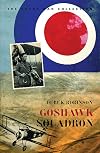
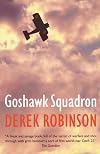
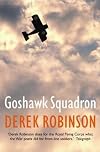
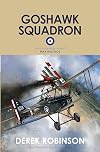
World War One pilots were the knights of the sky, and the press and public idolised them as gallant young heroes. At just twenty-three, Major Stanley Woolley is the old man and commanding officer of Goshawk Squadron. He abhors any notion of chivalry in the clouds and is determined to obliterate the decent, gentlemanly outlook of his young, public school-educated pilots - for their own good. But as the war goes on he is forced to throw greener and greener pilots into the meat grinder. Goshawk show more Squadron finds its gallows humour and black camaraderie no defence against a Spandau bullet to the back of the head. show lessTags
Recommendations
















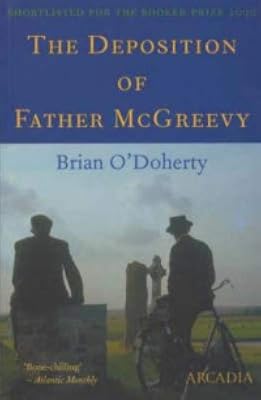
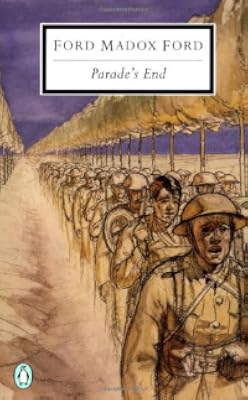


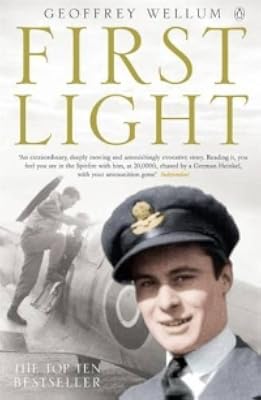
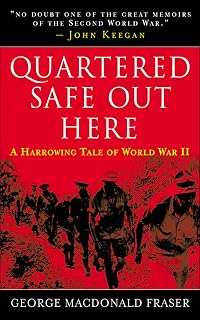

Member Recommendations


chrisharpe Cecil Lewis's memoir gives a very different picture of life as an allied pilot in WWI.
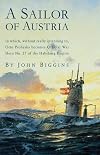
themulhern Two cynical but humane takes on military officers in WWI, one in the air, one in the water.
Member Reviews
"There's no room for eccentrics in this war, Woolley." (pg. 243).
Having read all of the RAF Quartet (starting with Piece of Cake), I knew what to expect from Derek Robinson's Goshawk Squadron. I have a love-hate relationship with his books, enjoying the descriptions of flying, the historical research and the unsentimental approach to death in the plot, whilst hating the overcooked cynicism that borders on nihilism, the miserable-bastard characters and the author's overt agenda regarding historical revisionism. Goshawk Squadron is no different, though I rather hoped it would be considering it was his first novel and it was shortlisted for the Booker Prize.
Much like his later Battle of Britain mythbuster Piece of Cake, Robinson's purpose show more here is to destroy the Biggles myth, that of the 'knights of the sky' fighting a decent war like gentlemen. It is a worthy aim, and you get a sense of the horror of aerial warfare in Robinson's books. But he always overdoes it: the war was horrible, so everything involved with it must be horrible – personally, professionally, conceptually. Woolley, the author's mouthpiece here, is a cartoonish bastard for most of the novel and though he does show some depth at the end (the line quoted above is a piece of irony), a more balanced approach would have served Robinson's aims better. His argument would be all the more forceful for being the gentler. Instead, we get OTT cynicism, which means that sparks fly and it can be entertaining, but it can also become tedious and exhausting.
But I keep coming back for more where this author is concerned, and no wonder: the prose is lucid and impeccably paced and the history is well-researched. We don't get a sense of the planes in Goshawk Squadron as much as we did in the RAF Quartet, which is a shame, but the book's later chapters do ably express the chaos in the Allied lines caused by the German offensive in 1918. There was a return to fluid battlefield warfare in that final spring, and Robinson's book does well to remind us of it when our popular conception of the Great War remains one of trenches and a static front. There is more to admire in Robinson than to decry, and after five books I feel like I have become inoculated to his excesses. Whenever I've recovered from the last one of his books, I always find myself happy to crack open another. show less
Having read all of the RAF Quartet (starting with Piece of Cake), I knew what to expect from Derek Robinson's Goshawk Squadron. I have a love-hate relationship with his books, enjoying the descriptions of flying, the historical research and the unsentimental approach to death in the plot, whilst hating the overcooked cynicism that borders on nihilism, the miserable-bastard characters and the author's overt agenda regarding historical revisionism. Goshawk Squadron is no different, though I rather hoped it would be considering it was his first novel and it was shortlisted for the Booker Prize.
Much like his later Battle of Britain mythbuster Piece of Cake, Robinson's purpose show more here is to destroy the Biggles myth, that of the 'knights of the sky' fighting a decent war like gentlemen. It is a worthy aim, and you get a sense of the horror of aerial warfare in Robinson's books. But he always overdoes it: the war was horrible, so everything involved with it must be horrible – personally, professionally, conceptually. Woolley, the author's mouthpiece here, is a cartoonish bastard for most of the novel and though he does show some depth at the end (the line quoted above is a piece of irony), a more balanced approach would have served Robinson's aims better. His argument would be all the more forceful for being the gentler. Instead, we get OTT cynicism, which means that sparks fly and it can be entertaining, but it can also become tedious and exhausting.
But I keep coming back for more where this author is concerned, and no wonder: the prose is lucid and impeccably paced and the history is well-researched. We don't get a sense of the planes in Goshawk Squadron as much as we did in the RAF Quartet, which is a shame, but the book's later chapters do ably express the chaos in the Allied lines caused by the German offensive in 1918. There was a return to fluid battlefield warfare in that final spring, and Robinson's book does well to remind us of it when our popular conception of the Great War remains one of trenches and a static front. There is more to admire in Robinson than to decry, and after five books I feel like I have become inoculated to his excesses. Whenever I've recovered from the last one of his books, I always find myself happy to crack open another. show less
This thin book came as a whiff of fresh air. No, that is not correct. It came like a howling rush of petrol- smelling ice-cold air, lethally stunning to pilots and readers alike.
Goshawk Squadron, Derek Robinson first novel, tells the misfortunes of a handful of pilots fighting off the Germans in the airspace over the trenches in France and Flanders.
In a horrible “carousel of death”, young inexperienced new pilots arrive at Goshawk Squadron, often with less than 10 hours of flight experience, and are immediately sacrificed up in the air where they are no match for more experienced German pilots. Often they don’t even make it to the fighting, crashing their wood and canvas planes in stupid flight accidents.
Major Stanley Wooley is show more the commanding officer of this fictional fighter squadron. He is in his early twenties but has survived 4 years of constant dogfights in his SE5A double deck plane. This makes him the most experienced guy around.
Wooley, in a futile attempt to keep his recruits alive, cuts corners in their education. Forget Chivalry. Go up in the air, hide in the clouds or glare of the sun and try to shoot the Germans in the back and flee while you can. Don’t waste ammo on the plane, shoot the enemy pilots, even if they are saving themselves in parachutes. All shocking to the new pilots who have joined the ranks with ideas of man to man combat, chivalry and other bygone notions.
The 12 chapters of the book are appropriately numbered and named according to meteorological gale force measurements. The intensity of combat, build gradually until the end of the book.
There is a post-modern ring to the depiction of Wooley as an “archangel of death” or as the “pedagogue-assassin”. It makes the figure a bit anachronistic. You would more easily expect such a figure in a Vietnam –war, Apocalypse now, psychedelic and hallucinating environment. In a hastily written defensive postscript, Derek Robinson reassures the worried readers that he has found his inspiration for the excesses depicted in Goshawk Squadron from genuine pilot journals and interviews.
Because of this modernism, ”Goshawk Squadron” has been compared to Heller’s “Catch 22”. But that might be stretching the comparison too much as “Goshawk Squadron” is much darker and lacking the humour.
Still one hell of a read. show less
Goshawk Squadron, Derek Robinson first novel, tells the misfortunes of a handful of pilots fighting off the Germans in the airspace over the trenches in France and Flanders.
In a horrible “carousel of death”, young inexperienced new pilots arrive at Goshawk Squadron, often with less than 10 hours of flight experience, and are immediately sacrificed up in the air where they are no match for more experienced German pilots. Often they don’t even make it to the fighting, crashing their wood and canvas planes in stupid flight accidents.
Major Stanley Wooley is show more the commanding officer of this fictional fighter squadron. He is in his early twenties but has survived 4 years of constant dogfights in his SE5A double deck plane. This makes him the most experienced guy around.
Wooley, in a futile attempt to keep his recruits alive, cuts corners in their education. Forget Chivalry. Go up in the air, hide in the clouds or glare of the sun and try to shoot the Germans in the back and flee while you can. Don’t waste ammo on the plane, shoot the enemy pilots, even if they are saving themselves in parachutes. All shocking to the new pilots who have joined the ranks with ideas of man to man combat, chivalry and other bygone notions.
The 12 chapters of the book are appropriately numbered and named according to meteorological gale force measurements. The intensity of combat, build gradually until the end of the book.
There is a post-modern ring to the depiction of Wooley as an “archangel of death” or as the “pedagogue-assassin”. It makes the figure a bit anachronistic. You would more easily expect such a figure in a Vietnam –war, Apocalypse now, psychedelic and hallucinating environment. In a hastily written defensive postscript, Derek Robinson reassures the worried readers that he has found his inspiration for the excesses depicted in Goshawk Squadron from genuine pilot journals and interviews.
Because of this modernism, ”Goshawk Squadron” has been compared to Heller’s “Catch 22”. But that might be stretching the comparison too much as “Goshawk Squadron” is much darker and lacking the humour.
Still one hell of a read. show less
What struck me most about this book was the futility of the encounters. Pilots are introduced, only to be sacrificed minutes later. Some were lucky to even get their plane off the ground. Major Wooley tries to give his men a fighting chance by teaching them war is not chivalrous, luck is not your friend, and the best thing you can hope for is to surprise your enemy and shoot him in the back. This is not a game for "gentlemen", not a sport. In the air at 50, 500, or even 4,000 feet, there is no such thing as 'honor'; only survival. A very good read, particularly if you're a military or aircraft fan.
Set during the height of World War I in January 1918, Goshawk Squadron follows the misfortunes of a British flight squadron on the Western Front. For Stanley Woolley, commanding officer of Goshawk Squadron, the romance of chivalry in the clouds is just a myth. The code he drums into his men is simple and savage: shoot the enemy in the back before he knows you're there. Even so, he believes the whole squadron will be dead within three months. A monumental work at the time of its original release, Booker-shortlisted Goshawk Squadron is now viewed as a classic in the mode of Catch 22. Wry, brutal, cynical and hilarious, the men of Robinson's squadron are themselves an embodiment of the maddening contradictions of war: as much a refined show more troop of British gentleman as they are a viscous band of brothers hell-bent on staying alive and winning the war. show less
It is Woolley. Just needed to correct that spelling after the other reviewers' attempts! A brutal telling of the story of the RFC during the final months of the war in 1918. These men are young and under very little illusion that they could be shot dead at any moment in the sky. Therefore we receive snapshots of their dogfights and also interestingly their recreational time which in one scene in particular is actually more shocking than the fighting itself! Definitely NOT Biggles!
Excellent novel, places you firmly amongst the young men of the RFC and the world around them.
Summary: Depicts the war in the air over the Western Front in 1918, and was short listed for the Booker Prize. Stanley Woolley, commanding officer of Goshawk Squadron, drums this code into his men: shoot the enemy in the back before he knows you're there. Even so, he believes the whole squadron will be dead within three months.
Members
- Recently Added By
Lists

Booker Prize
491 works; 62 members

Man Booker Prize Longlist 1971
6 works; 1 member

Booker Prize Shortlist: Titles Not Yet Read
161 works; 4 members

Slightly Foxed 2
21 works; 1 member
Author Information
28+ Works 1,373 Members
Awards and Honors
Awards
Series

Belongs to Publisher Series
Work Relationships
Was inspired by
Common Knowledge
- Original publication date
- 1971
Classifications
Statistics
- Members
- 353
- Popularity
- 89,095
- Reviews
- 12
- Rating
- (3.82)
- Languages
- English, French, Spanish
- Media
- Paper, Audiobook, Ebook
- ISBNs
- 22
- ASINs
- 14