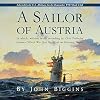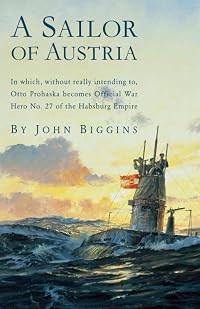
On This Page
Description
In this ironic, hilarious, and poignant story, Otto Prohaska is a submarine captain serving the almost-landlocked Austro-Hungarian Empire. He faces a host of unlikely circumstances, from petrol poisoning to exploding lavatories to trigger-happy Turks. All signs point to the total collapse of the bloated empire he serves, but Otto refuses to abandon the Habsburgs in their hour of need.Tags
Recommendations





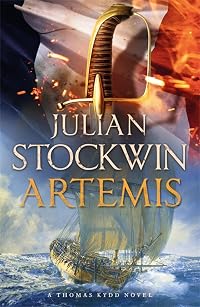
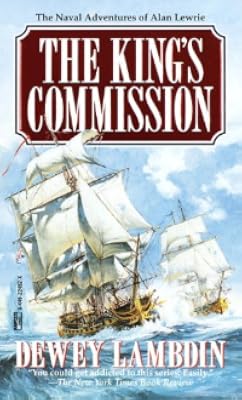
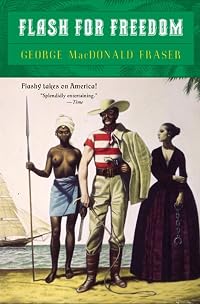
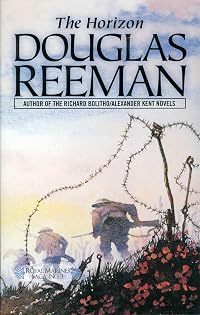
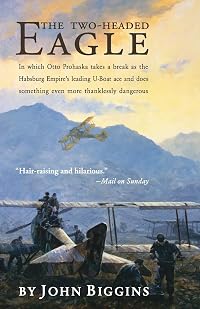



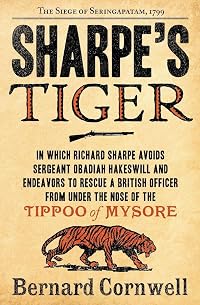
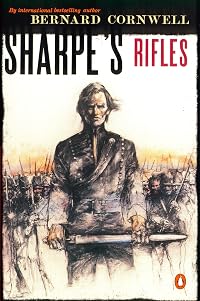
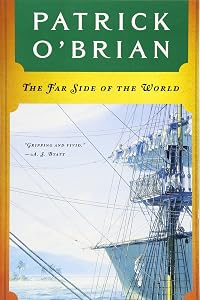


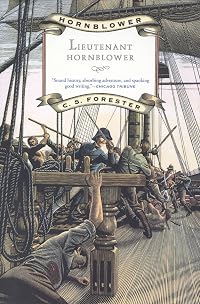

Member Recommendations

themulhern Two cynical but humane takes on military officers in WWI, one in the air, one in the water.
Member Reviews
A true unacknowledged classic in the historical fiction tradition, this is a book you simply must read.Like Flashman but without the racism or Aubrey but without the pompousity, the tales of Otto Prohaska, Submarine Captain of the Austrian Empire are exciting, educational (the research is outstanding) and surprisingly funny, although with moments of heart-stopping tragedy.
Told as reminiscences of a dying centenarian in a west Wales home for Polish veterans, to a younger Welsh submariner, this book carries the reader back to 1915 and then through the last years of the disintegrating Habsburg Monarchy to its inevitable fall, with a wit and panache that makes it amazing that this book is not better known.
High point: the chapter long show more description of Prohaska's childhood and why his hometown has no official name, which contains that rarest of things, black slapstick.
Low point: There are no low points.
By the way, this is one of my five desert island novels. By Jove, I think I'll have to read it again. show less
Told as reminiscences of a dying centenarian in a west Wales home for Polish veterans, to a younger Welsh submariner, this book carries the reader back to 1915 and then through the last years of the disintegrating Habsburg Monarchy to its inevitable fall, with a wit and panache that makes it amazing that this book is not better known.
High point: the chapter long show more description of Prohaska's childhood and why his hometown has no official name, which contains that rarest of things, black slapstick.
Low point: There are no low points.
By the way, this is one of my five desert island novels. By Jove, I think I'll have to read it again. show less
I love military historical fiction, and this book is one of my faves. Sadly, the book-buying public didn't agree with my opinion, and John Biggens was dropped by his publisher after four novels that didn't make money. The sad truth is most of the people who read this kind of fiction want a more standard-issue kind of hero, like Jack Aubrey or Dan Lenson; someone who is heroically going on to bigger and better things, which will be written about in due course. Lieutenant Ottokar Prohaska is in the service of Austria-Hungary, a decaying empire with a small navy; an empire that broke apart after World War One and lost all it’s oceanfront property in the process. This greatly limits opportunities for promotion to higher rank, among other show more things. Sadly, while Ottokar Prohaska is a certifiable hero: loyal, brave and extremely competent (a winner of the Military Order of Maria Theresa, no less!), his opportunities for heroic action are limited by circumstances beyond his control: rinky-dink u-boats with limited range and offensive capabilities; exploding submarine toilets; defective torpedoes; flatulence-inducing rations of tinned stew with sauerkraut. Yet he bravely sailors on with his multilingual crew with no little success, and only a bit of friendly fire. You have to love this guy; he’s loyal to the end and fun at parties.
The good news is this book is back in print again and can be easily found, along with the other three books in the series. This was not always the case. Even better, John Biggens has written a fifth novel, not about Austrian sailors, titled "The Surgeon’s Apprentice", which is available only as a kindle book. It’s on my to-read list. show less
The good news is this book is back in print again and can be easily found, along with the other three books in the series. This was not always the case. Even better, John Biggens has written a fifth novel, not about Austrian sailors, titled "The Surgeon’s Apprentice", which is available only as a kindle book. It’s on my to-read list. show less
The full title of this is worthy of note, as it says much of the dry humor:
A Sailor of Austria: In Which, Without Really Intending to, Otto Prohaska Becomes Official War Hero No. 27 of the Habsburg Empire
Currently Reading
In my research on the medical field in World War I, I kept seeing mentions of this book as one of the best World War I novels out there. It didn't pertain to my research, but my curiosity was piqued, so I had to get it. Biggins created a charming, realistic, and dryly-humored character in Otto Prohaska, an Austrian submarine officer. My husband was in the United States Navy, so I know all too well how ridiculous the modern navy can be; this book shows that some things never change.
Otto's adventures are hilarious show more bordering on the absurd... yet absolutely believable at the same time. In particular, there were incidents involving food poisoning and a camel that had me laughing out loud. There's also the uniqueness of the perspective. It's a book from the perspective of a "bad guy" in a sense: a Czech-Pole, who works as an ally of the Germans. It's also mostly set along the Adriatic Sea and Mediterranean, going into deep, fascinating (never boring!) detail on the operation of submarines. Biggins is very honest in his portrayal of how people suffered during the war; his descriptions of Austria at the war's conclusion are very wrenching.
I loved the book up to the end. It's clear from the start that Otto survives the war, since he's narrating these events when he is over a hundred years old, so that takes away a lot of tension. I was able to predict the one twist of the ending quite far out, and I was disappointed that it played out the way I expected. I really hoped I could be surprised instead.
Now I am not sure if I will read on in the series, which apparently goes into other incidents before and during the war, but overall I found this a delightful read. show less
A Sailor of Austria: In Which, Without Really Intending to, Otto Prohaska Becomes Official War Hero No. 27 of the Habsburg Empire
Currently Reading
In my research on the medical field in World War I, I kept seeing mentions of this book as one of the best World War I novels out there. It didn't pertain to my research, but my curiosity was piqued, so I had to get it. Biggins created a charming, realistic, and dryly-humored character in Otto Prohaska, an Austrian submarine officer. My husband was in the United States Navy, so I know all too well how ridiculous the modern navy can be; this book shows that some things never change.
Otto's adventures are hilarious show more bordering on the absurd... yet absolutely believable at the same time. In particular, there were incidents involving food poisoning and a camel that had me laughing out loud. There's also the uniqueness of the perspective. It's a book from the perspective of a "bad guy" in a sense: a Czech-Pole, who works as an ally of the Germans. It's also mostly set along the Adriatic Sea and Mediterranean, going into deep, fascinating (never boring!) detail on the operation of submarines. Biggins is very honest in his portrayal of how people suffered during the war; his descriptions of Austria at the war's conclusion are very wrenching.
I loved the book up to the end. It's clear from the start that Otto survives the war, since he's narrating these events when he is over a hundred years old, so that takes away a lot of tension. I was able to predict the one twist of the ending quite far out, and I was disappointed that it played out the way I expected. I really hoped I could be surprised instead.
Now I am not sure if I will read on in the series, which apparently goes into other incidents before and during the war, but overall I found this a delightful read. show less
READ THIS BOOK! I'M NOT KIDDING!
In 'Sailor of Austria', John Biggins introduced Otto Prohaska, captain of an Austro-Hungarian submarine during the Great War. The tale is told from Prohaska's perspective as a 100-year old resident of a nursing home in rural Wales. Surprised by the interest of a young worker at the home, Prohaska sets about recording his story. This 'looking back' perspective allows a modern sardonic narrative voice somewhat in the manner of Thomas Berger's Little Big Man.
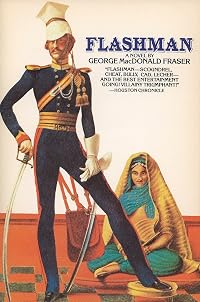
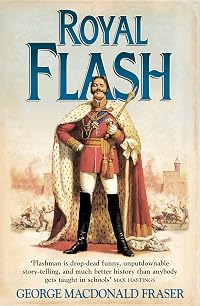
The manner of telling is reminiscent of George MacDonald Fraser's Flashman: A Novel (Flashman), as others have remarked, but darker. At times the book is laugh-out-loud funny - particularly early in the book when the dire consequences of a submarine show more crew fed on rotten cabbage stew leads to a serendipitous result. Biggins gives the reader a convincing sense of life and death aboard the absurdly primitive WW I submarines.
As the book moves into the later stages of the war, humor takes a backseat and tragedy takes center stage. Biggins' remarkable description of the disintegration of the Austro-Hungarian Empire puts the reader amidst the shock and utter chaos of a crumbling world. And then the Spanish Flu makes its entrance.
It's exciting to see the renewed interest in John Biggins works, which were hardly big sellers when first published in 1991 but are now being brought back by McBooks Press. I was only recently put on to Biggins over on LibraryThing and the discovery's been one of those great unexpected experiences that come along only rare even to devoted readers.
Help rescue John Biggins from undeserved obscurity. The writing is really first-rate and so is the story. Highest recommendation. show less
In 'Sailor of Austria', John Biggins introduced Otto Prohaska, captain of an Austro-Hungarian submarine during the Great War. The tale is told from Prohaska's perspective as a 100-year old resident of a nursing home in rural Wales. Surprised by the interest of a young worker at the home, Prohaska sets about recording his story. This 'looking back' perspective allows a modern sardonic narrative voice somewhat in the manner of Thomas Berger's Little Big Man.
The manner of telling is reminiscent of George MacDonald Fraser's Flashman: A Novel (Flashman), as others have remarked, but darker. At times the book is laugh-out-loud funny - particularly early in the book when the dire consequences of a submarine show more crew fed on rotten cabbage stew leads to a serendipitous result. Biggins gives the reader a convincing sense of life and death aboard the absurdly primitive WW I submarines.
As the book moves into the later stages of the war, humor takes a backseat and tragedy takes center stage. Biggins' remarkable description of the disintegration of the Austro-Hungarian Empire puts the reader amidst the shock and utter chaos of a crumbling world. And then the Spanish Flu makes its entrance.
It's exciting to see the renewed interest in John Biggins works, which were hardly big sellers when first published in 1991 but are now being brought back by McBooks Press. I was only recently put on to Biggins over on LibraryThing and the discovery's been one of those great unexpected experiences that come along only rare even to devoted readers.
Help rescue John Biggins from undeserved obscurity. The writing is really first-rate and so is the story. Highest recommendation. show less
Rceived as a surprise gift from a friend who works for a small publisher. The novel is a pleasant enough techno-actioner but the real value is the inspiration to find out more about the period and technology involved; I had some vague idea that there was an Austrian navy on the Adriatic in WWI but had no grasp of the details (I always wondered why Captain Von Trapp in The Sound of Music was a naval officer in a country with no seacoast.) I have no idea if the book's information on submarine performance, torpedo details, battles in the Adriatic, etc. are correct; they seem to have the right "look-and-feel" but the author could be making everything up and I'd have no clue; it's a novel, after all. You will probably enjoy this if you like show more Tom Clancy or Patrick O'Brian. There are two more books in the series that probably fill in the gaps in the life of Ottokar Prohaska, but they seem to be out of print.
This might go well with A soldier of the Great War, which covers the WWI Austrian front from the Italian side and is a more "literary" novel. I find myself reading a lot of WWI books recently. Is there anybody left? If you joined up in in 1918 you would be 104 or 105 now. There must be a few dozen WWI veterans left in the world; maybe a few more if some lied about their age. Has the last man who was at Verdun or the Somme or the Brusilov Offensive or Jutland already left us? show less
This might go well with A soldier of the Great War, which covers the WWI Austrian front from the Italian side and is a more "literary" novel. I find myself reading a lot of WWI books recently. Is there anybody left? If you joined up in in 1918 you would be 104 or 105 now. There must be a few dozen WWI veterans left in the world; maybe a few more if some lied about their age. Has the last man who was at Verdun or the Somme or the Brusilov Offensive or Jutland already left us? show less
Books like “A Sailor of Austria” by John Biggins are the reason I read. Charged with indelible heartfelt realistic stories of human endeavors in a time and within an empire long forgotten, Mr. Biggins brings to life an aspect of these times and the superlative adventures of Otto Prohaska. Even if you do not enjoy military adventures, seafaring or historical fiction read this book; the characterization and command of language alone is well worth your time. I only wish there were more of an historical note by Mr. Biggins regarding his research, writing and inspiration.
An excellent story well told about a little known topic; the WW1 Austrian navy and submarine warfare in the Mediterranean.
Members
- Recently Added By
Author Information

7 Works 439 Members
Some Editions
Series

Common Knowledge
- Canonical title
- A Sailor of Austria
- Alternate titles
- A Sailor of Austria: In Which, Without Really Intending To, Otto Prohaska Becomes Official War Hero No. 27 of the Habsburg Empire
- Original publication date
- 1991
- People/Characters
- Otto Prohaska
- Important places
- Austria
- Important events
- World War I
- Epigraph
- Österreich, du edles Haus,
Steck deine Fähne aus,
Las sie im Winde weben.
Österreich soll ewig steben!
Austria, thou noble house,
Raise thy banner high,
Let it wave in the w... (show all)ind.
Austria shall stand forever!
Patriotic verse
Anon
Vienna, 1915
Ganzes Dasein ist ein Schmarren,
Freunderl sei gescheit!
Heunte über fünfzig Jahren
Leben and're Leut'.
Everything is just a mess,
Friend, be clever!
Fifty years from now
... (show all)
Other people will be alive.
"Die Csardasfürstein"
Emmerich Kálmán
Vienna, 1915 - Dedication
- This book is dedicated to all those whose stories were never told
- First words
- I imagine that many of my listeners will take the view that, if a man has to wait until his hundred and first year before committing himself to posterity, then what he has to say cannot really have been very important in the ... (show all)first place.
- Last words
- (Click to show. Warning: May contain spoilers.)Nothing but a low hammock will mark the place where he lies, only a stone's throw from where the great ocean waves crash ceaselessly on the shore.
Classifications
Statistics
- Members
- 170
- Popularity
- 193,453
- Reviews
- 7
- Rating
- (4.32)
- Languages
- English
- Media
- Paper, Audiobook, Ebook
- ISBNs
- 9
- ASINs
- 6