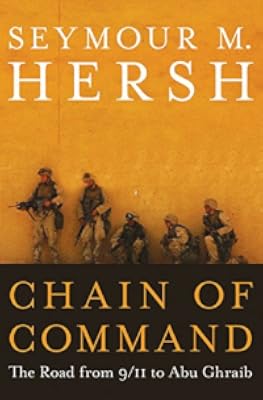
Chain of Command: the Road from 9/11 to Abu Ghraib
by Seymour M. Hersh
On This Page
Description
"Seymour M. Hersh brings together reporting, along with new revelations, to answer the critical question of the last three years: how did America get from the clear morning when hijackers crashed airplanes into the World Trade Center and the Pentagon to a divisive and dirty war in Iraq?" "In Chain of Command, Hersh takes an unflinching look behind the public story of President Bush's "war on terror" and into the lies and obsessions that led America into Iraq"--Jacket.Tags
Recommendations

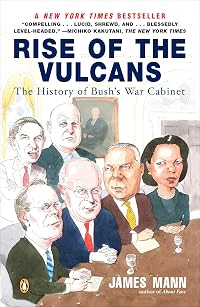
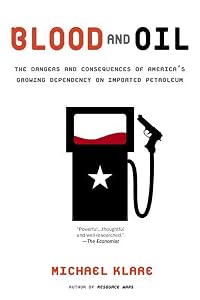
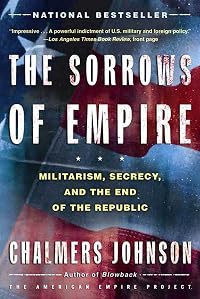
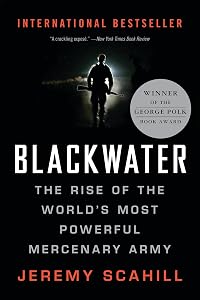
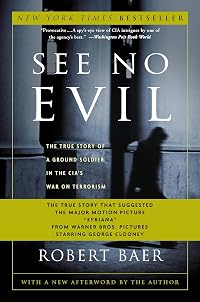

Member Recommendations
Member Reviews
Having already read most of Hersh's articles in the New Yorker, I come late to Chain of Command which bundles the banality of evil and incompetence that was the Bush administration. It makes me sad to note that most of the perpetrators fell upwards. All honorable men, indeed. Only the powerless received punishment.
The book is a kaleidoscope of the early Bush years, a fractured impression of many scandals in eight parts. The book opens with the Abu Ghraib scandal and its iconic ugly America. Nearly five years later, no general officer has spent time in jail. Donald Rumsfeld simply sat out the scandal and remained in office long after. The second part moves back in time to the intelligence failures of 9/11. The third part discusses the show more Afghanistan invasion. The fourth, fifth and sixth part deal with the snake oil salesmen of the Iraq War as well as the invasion itself. The seventh part sheds light on Pakistan and its peculiar friend of George W. Bush, Musharraf. The eighth and final is a tour de horizon of the US policy in the Middle East.
The book offers three major lessons. The first lesson is that even egregious failure does not lead to punishment or disgrace for members of the elite. Being a good German pays off with tenure, places on the bench, stars and other sinecures. The power of media disclosure (as far as the US corporate media allows) has lost much of its strength. If perpetrators manage to survive a media cycle, interest will wane.
The second lesson is that the failures of the Bush administration can look back on a long tradition of US foreign policy failure. The US has a penchant for allying with dictators and other nasty folks for short-term gain, selling their principles of liberty and democracy for small concessions - with a huge price tag in the future as the mistaken trade-offs hit home. A better US foreign policy would stick to promoting its core values and not try to accommodate bad guys just to do some business.
The third lesson is the on-going incompetence of the CIA, the state and defense departments in dealing with foreigners. How long does it take them to learn that speaking a foreigner's language is a sine qua non in playing the intelligence game? Having a huge inward-looking bureaucracy in Langley is of little value.
Overall, the articles have aged well. Rereading them leaves me sad and angry. The US used to be a beacon of hope. show less
The book is a kaleidoscope of the early Bush years, a fractured impression of many scandals in eight parts. The book opens with the Abu Ghraib scandal and its iconic ugly America. Nearly five years later, no general officer has spent time in jail. Donald Rumsfeld simply sat out the scandal and remained in office long after. The second part moves back in time to the intelligence failures of 9/11. The third part discusses the show more Afghanistan invasion. The fourth, fifth and sixth part deal with the snake oil salesmen of the Iraq War as well as the invasion itself. The seventh part sheds light on Pakistan and its peculiar friend of George W. Bush, Musharraf. The eighth and final is a tour de horizon of the US policy in the Middle East.
The book offers three major lessons. The first lesson is that even egregious failure does not lead to punishment or disgrace for members of the elite. Being a good German pays off with tenure, places on the bench, stars and other sinecures. The power of media disclosure (as far as the US corporate media allows) has lost much of its strength. If perpetrators manage to survive a media cycle, interest will wane.
The second lesson is that the failures of the Bush administration can look back on a long tradition of US foreign policy failure. The US has a penchant for allying with dictators and other nasty folks for short-term gain, selling their principles of liberty and democracy for small concessions - with a huge price tag in the future as the mistaken trade-offs hit home. A better US foreign policy would stick to promoting its core values and not try to accommodate bad guys just to do some business.
The third lesson is the on-going incompetence of the CIA, the state and defense departments in dealing with foreigners. How long does it take them to learn that speaking a foreigner's language is a sine qua non in playing the intelligence game? Having a huge inward-looking bureaucracy in Langley is of little value.
Overall, the articles have aged well. Rereading them leaves me sad and angry. The US used to be a beacon of hope. show less
You may know of Seymour Hersch already. He is a Pulitzer Prize-winning journalist who often writes for the New Yorker. More particularly he is the one who broke the story of both the My Lai massacre and Abu Ghraib. Yes, if there's one man in this country doing real reporting, it's him. For his impeccable investigative skills, I picked up the 2004 book Chain of Command.
Hersch is remarkable. In this book he details just how something like Abu Ghraib could have happened. Who said what to whom to allow such atrocities to begin and continue? How did the reorganization and power juggling within the Administration lead to a failure of intelligence before 9/11? Who knew what when about weapons of mass destruction in Iraq?
Chain of Command is a show more magnum opus, but also a difficult one to read. Is it the subject matter? The mendacity of this Administration? The atrocities? No, it is precisely the attention to detail that makes Hersch such a good journalist. Take for example his insistence on context for each statement. I can't help but be reminded of Homer. As in the Iliad every introduction of a person includes his entire history. Just for comparison:
"Kalchas, Thestor's son, far the best of the bird interpreters who knew all things that were...."
"Robert Baer, an Arabic speaker who was considered perhaps the best on-the ground field officer in the Middle East..."
See what I mean? It's informative, it gives you all the context for the following statement you could ever desire, but it is rather cumbersome. I quickly began to wish that I could read this book in short 15 page article segments instead of 400 pages at a time. Hersch is scrupulous about his sources, about his sources' sources, about his timelines and places and facts. That's a wonderful thing in a journalist, but makes for dry reading.
The best moments of the book are in the Epilogue. Here he scathingly attacks the Administration and caught my breath with his conclusion. After a long list of facts and press statements Hersch concludes with this:
"There are many who believe George Bush is a liar, a President who knowingly and deliberately twists facts for political gain. But lying would indicate an understanding of what is desired, what is possible, and how best to get there. A more plausible explanation is that words have no meaning for this President beyond the immediate moment, and so he believes that his mere utterance of the phrases makes them real. It is a terrifying possibility."
Terrifying indeed. I recommend this book to anyone who wants an in depth knowledge of what went wrong, and in many cases, what is still going wrong. Hersch is of course still reporting, so instead of reading this book already 3 years old, you may want to take a gander at the New Yorker Online for his latest analyses of politics in the Middle East. Hersch is a truthspeaker in a time when we so desperately need transparency and honesty. show less
Hersch is remarkable. In this book he details just how something like Abu Ghraib could have happened. Who said what to whom to allow such atrocities to begin and continue? How did the reorganization and power juggling within the Administration lead to a failure of intelligence before 9/11? Who knew what when about weapons of mass destruction in Iraq?
Chain of Command is a show more magnum opus, but also a difficult one to read. Is it the subject matter? The mendacity of this Administration? The atrocities? No, it is precisely the attention to detail that makes Hersch such a good journalist. Take for example his insistence on context for each statement. I can't help but be reminded of Homer. As in the Iliad every introduction of a person includes his entire history. Just for comparison:
"Kalchas, Thestor's son, far the best of the bird interpreters who knew all things that were...."
"Robert Baer, an Arabic speaker who was considered perhaps the best on-the ground field officer in the Middle East..."
See what I mean? It's informative, it gives you all the context for the following statement you could ever desire, but it is rather cumbersome. I quickly began to wish that I could read this book in short 15 page article segments instead of 400 pages at a time. Hersch is scrupulous about his sources, about his sources' sources, about his timelines and places and facts. That's a wonderful thing in a journalist, but makes for dry reading.
The best moments of the book are in the Epilogue. Here he scathingly attacks the Administration and caught my breath with his conclusion. After a long list of facts and press statements Hersch concludes with this:
"There are many who believe George Bush is a liar, a President who knowingly and deliberately twists facts for political gain. But lying would indicate an understanding of what is desired, what is possible, and how best to get there. A more plausible explanation is that words have no meaning for this President beyond the immediate moment, and so he believes that his mere utterance of the phrases makes them real. It is a terrifying possibility."
Terrifying indeed. I recommend this book to anyone who wants an in depth knowledge of what went wrong, and in many cases, what is still going wrong. Hersch is of course still reporting, so instead of reading this book already 3 years old, you may want to take a gander at the New Yorker Online for his latest analyses of politics in the Middle East. Hersch is a truthspeaker in a time when we so desperately need transparency and honesty. show less
Seymour (Sy) Myron Hersh is an American Pulitzer Prize-winning investigative journalist who first gained worldwide recognition in 1969 for exposing the My Lai Massacre and its cover-up during the Vietnam War, for which he received the 1970 Pulitzer Prize for International Reporting. His 2004 reports on the US military's mistreatment of detainees at Abu Ghraib prison gained much attention and this is his book on that. Like with My Lai, the audiobook explorers the culture that make the atrocity possible and the reaction of (Rumsefld's) dysfunctional institution. Hersh also suggests to me the thought that asymmetric war has successfully been done by Alexander in Afghanistan, Cortes in Mexico, Caesar in Gaul, etc. In each case soft show more intelligence with hard military technology fractured the enemy along natural fault lines of mistrust and division, bringing allies and opportunity to the invaders and sapping the strength of the insurgency. In Afghanistan and Iraq (and all the way back to Vietnam?), the U.S. blunders in like a juggernaut, forging a disjointed enemy into a united front with heavy-handed tactics that smack of prejudice and racism.
This audio book includes an epilog read by the author as well as interview with him. show less
This audio book includes an epilog read by the author as well as interview with him. show less
Since September 11, 2001, Seymour M. Hersh has riveted readers -- and outraged the Bush Administration -- with his stories in The New Yorker, including his breakthrough pieces on the Abu Ghraib prison scandal. Now, in Chain of Command, he brings together this reporting, along with new revelations, to answer the critical question of the last three years: how did America get from the clear morning when hijackers crashed airplanes into the World Trade Center and the Pentagon to a divisive and dirty war in Iraq?
Hersh established himself at the forefront of investigative journalism thirty-five years ago when he broke the news of the massacre at My Lai, Vietnam, for which he won a Pulitzer Prize. Ever since, he's challenged America's power show more elite by publishing the stories that others can't, or won't, tell. In exposés on subjects ranging from Saudi corruption to nuclear black marketeers and -- months ahead of other journalists -- the White House's false claims about weapons of mass destruction, Hersh has cemented his reputation as the indispensable reporter of our time.
In Chain of Command, Hersh takes an unflinching look behind the public story of President Bush's "war on terror" and into the lies and obsessions that led America into Iraq. He reveals the connections between early missteps in the hunt for Al Qaeda and disasters on the ground in Iraq. The book includes a new account of Hersh's pursuit of the Abu Ghraib story and of where, he believes, responsibility for the scandal ultimately lies. Hersh draws on sources at the highest levels of the American government and intelligence community, in foreign capitals, and on the battlefield for an unparalleled view of a crucial chapter in America's recent history. With an introduction by The New Yorker's editor, David Remnick, Chain of Command is a devastating portrait of an Administration blinded by ideology and of a President whose decisions have made the world a more dangerous place for America. show less
Hersh established himself at the forefront of investigative journalism thirty-five years ago when he broke the news of the massacre at My Lai, Vietnam, for which he won a Pulitzer Prize. Ever since, he's challenged America's power show more elite by publishing the stories that others can't, or won't, tell. In exposés on subjects ranging from Saudi corruption to nuclear black marketeers and -- months ahead of other journalists -- the White House's false claims about weapons of mass destruction, Hersh has cemented his reputation as the indispensable reporter of our time.
In Chain of Command, Hersh takes an unflinching look behind the public story of President Bush's "war on terror" and into the lies and obsessions that led America into Iraq. He reveals the connections between early missteps in the hunt for Al Qaeda and disasters on the ground in Iraq. The book includes a new account of Hersh's pursuit of the Abu Ghraib story and of where, he believes, responsibility for the scandal ultimately lies. Hersh draws on sources at the highest levels of the American government and intelligence community, in foreign capitals, and on the battlefield for an unparalleled view of a crucial chapter in America's recent history. With an introduction by The New Yorker's editor, David Remnick, Chain of Command is a devastating portrait of an Administration blinded by ideology and of a President whose decisions have made the world a more dangerous place for America. show less
Seymour Hersh is an investigative reporter who made a name for himself by breaking the story of the My Lai massacre during the Vietnam War. The 21st century found him breaking another similar story: the Abu Ghraib scandal. "Chain Of Command" is a collection of his magazine and newspaper pieces spanning 9/11 to the Iraq War, mid-2005. Unfortunately, Hersh's work reads better in its original format; the stories lack important contextual moorings which would have been immediately obvious to anyone reading them contemporaneously, but which are no longer so due to the passage of time. Furthermore, Hersh only bothered to do the minimum amount of editing when compiling his disparate articles into full length book format, and the narrative is show more subsequently choppy and oftentimes topical as a result. Hersh's work is nevertheless important reading for anyone hoping to get some sense of what was going on during this time period, but I'd recommend reading it in the magazines and newspapers in which it was originally published if you don't already have a good working knowledge of these events. show less
Written in 2004, shortly after the wars in Afghanistan and then Iraq, Hersch takes a critical look at the wars, and especially the civilian leaders in the Pentagon. Hersch spent a lifetime writing about the U.S. Military, and has established numerous contacts of people in the know. As a trusted writer, he has access to a significant number of high level officials, and his story seems to have stood the test of time. It provides a very different perspective than some of the books released after Bush left office, especially Donald Rumsfeld's memoir, and is probably a more accurate summary of those war years and decisions.
Authors first Pulitzer was for the My Lai massacre piece. He broke the Abu Ghraib prison interrogation story and weighed and measured on President Bush's "war on Terror" and the missing "weapons of "Mass Destruction" at the centre of the Iraq invasion. THE alternative story on the events of his time from a man concerned with those who command, and concerned for soldiers put in harms way.
Members
- Recently Added By
Lists

Huxley's reading log 2016
84 works; 3 members
Author Information

21+ Works 3,589 Members
All Editions
Some Editions
Awards and Honors
Series
Belongs to Publisher Series
Work Relationships
Has as a student's study guide
Common Knowledge
- Canonical title
- Chain of Command: the Road from 9/11 to Abu Ghraib
- Original title
- Chain of Command. The Road from 9/11 to Abu Ghraib
- Original publication date
- 2004
- People/Characters
- George W. Bush (President)
- Important places
- Iran; Iraq; Washington, D.C., USA; Afghanistan; Abu Ghraib Prison, Abu Ghraib, Iraq
- Important events
- Afghan Wars (2001- ); Abu Ghraib Prison scandal (2004); September 11 Attacks
- Dedication
- To Matthew, Melissa, and Joshua
- First words
- In the late summer of 2002, a Central Intelligence Agency analyst made a quiet visit to the detention center at the U.S. Naval Base at Guantanamo Bay, Cuba, where an estimated six hundred prisoners were being held, many, at f... (show all)irst, in steel-mesh cages that provided little protection from the brutally hot sun.
- Last words
- (Click to show. Warning: May contain spoilers.)It is a terrifying possibility.
- Original language*
- Anglais (Etats-Unis) (Etats-Unis)
*Some information comes from Common Knowledge in other languages. Click "Edit" for more information.
Classifications
Statistics
- Members
- 1,023
- Popularity
- 25,511
- Reviews
- 12
- Rating
- (3.87)
- Languages
- 8 — Dutch, English, French, German, Italian, Portuguese, Spanish, Swedish
- Media
- Paper, Audiobook, Ebook
- ISBNs
- 22
- ASINs
- 9