On This Page
Description
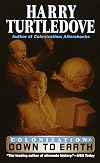
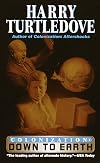
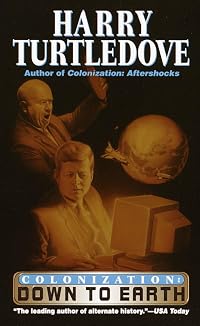
In 1942, Hitler led the world's most savage military machine. Stalin ruled Russia while America was just beginning to show its strength in World War II. Then, in Harry Turtledove's brilliantly imagined Worldwar saga, an alien assault changed everything. Nuclear destruction engulfed major cities, and the invaders claimed half the planet before an uneasy peace could be achieved.A spectacular tale of tyranny and freedom, destruction and hope, the Colonization series takes us into the tumultuous show more 1960s, as the reptilian Race ponders its uneasy future. But now a new, even deadlier war threatens. Though the clamoring tribes of Earth play dangerous games of diplomacy, the ultimate power broker will be the Race itself. For the colonists have one option no human can ignore. With a vast, ancient empire already in place, the Race has the power to annihilate every living being on planet Earth. show lessTags
Recommendations





Member Reviews
My reaction to reading this novel in 2000. Spoilers follow.
The second and enjoyable installment in Turtledove’s Colonization series packed some surprises: the Germans foolishly provoking war against the Race (and getting nuked big time), the Race taking a cue from Islamic history and taxing those who won’t revere the Lizard Emperors (which, of course, they don’t see as superstition unlike human religions) and being surprised that humans would object, and Sam Yeager (though this is not explicitly stated, only darkly hinted) uncovering evidence that the US launched a surprise nuclear attack on the Race at the series’ beginning.
As with his Great War series, Turtledove adopts a worms-eye view of events. When war breaks out between show more the Germans and the Race, I wanted a big screen view of events. Instead, we just see how the various characters we’ve been following see the war and are affected by it. However, Turtledove’s characteristic style and method for these alternate history novels has its own advantages. Turtledove, amongst all the chunks of dialogue and internal monologues (which make his books so palatable and quick reading), manages to track the personal nature and consequences of his characters’ problems. Monique Dutourd is coerced into sexually servicing Nazi Dieter Kuhn and, perhaps, learning hard lessons about life from her smuggler brother; Johannes Drucker continues to be a loyal soldier despite almost having his beloved wife carted off to a death camp; Lia Han begins to question her fanatical communism; Rance Auerbach, however, doesn’t really question his attitude toward blacks even after being forcibly relocated to South Africa though he wonders about his girlfriend. It was also nice to see Goldfarb have a bit of luck (and the aid of his old comrades) and land in Canada’s high tech industries. Characters questioning their religious and racial prejudices is a big element in Turtledove’s Great War, Worldwar, and Colonization series.
I liked Moshie Eeuven ponder converting Lizards to, presumably, Judaism. I particularly liked cross-species friendship between Lizard pilot Nesseref and Jewish leader Mordechai Anielewicz and his son and also between Sam Yeager, who, against orders, is taking a personal interest in discovering who launched that sneak nuclear attack on the Lizards. Exiled Shipleader Straha realizes that he considers Yeager a friend when he ponders informing the Race that Yeager is covertly racing two Race hatchlings as humans. This is a counterpoint to Ttomalss’ raising of human Kassquit from infancy. The book derives some humor from Ttomalss trying to sort out the influence of genetics from culture. His relation with Kassquit is similar to a human father with a teenage daughter (and somewhat mirrored by Johnathan’s Yeagers’ relationship with his parents), and he labors under the impression that surely a human child isn’t as ungrateful to its human parents.
This book has a lot of sex in it -- Turtledove usually considers his characters’ sex lives as an important part of their lives, but Race and human sexualities, and their differences, are explicitly given as significant factors in culture. The sex scenes between Kassquit and Johnathan Yeager are hilarious as Kassquit has naively studied porn videos to prepare for her sexual initiation and a nonplussed Ttomalss barges in on the action. show less
The second and enjoyable installment in Turtledove’s Colonization series packed some surprises: the Germans foolishly provoking war against the Race (and getting nuked big time), the Race taking a cue from Islamic history and taxing those who won’t revere the Lizard Emperors (which, of course, they don’t see as superstition unlike human religions) and being surprised that humans would object, and Sam Yeager (though this is not explicitly stated, only darkly hinted) uncovering evidence that the US launched a surprise nuclear attack on the Race at the series’ beginning.
As with his Great War series, Turtledove adopts a worms-eye view of events. When war breaks out between show more the Germans and the Race, I wanted a big screen view of events. Instead, we just see how the various characters we’ve been following see the war and are affected by it. However, Turtledove’s characteristic style and method for these alternate history novels has its own advantages. Turtledove, amongst all the chunks of dialogue and internal monologues (which make his books so palatable and quick reading), manages to track the personal nature and consequences of his characters’ problems. Monique Dutourd is coerced into sexually servicing Nazi Dieter Kuhn and, perhaps, learning hard lessons about life from her smuggler brother; Johannes Drucker continues to be a loyal soldier despite almost having his beloved wife carted off to a death camp; Lia Han begins to question her fanatical communism; Rance Auerbach, however, doesn’t really question his attitude toward blacks even after being forcibly relocated to South Africa though he wonders about his girlfriend. It was also nice to see Goldfarb have a bit of luck (and the aid of his old comrades) and land in Canada’s high tech industries. Characters questioning their religious and racial prejudices is a big element in Turtledove’s Great War, Worldwar, and Colonization series.
I liked Moshie Eeuven ponder converting Lizards to, presumably, Judaism. I particularly liked cross-species friendship between Lizard pilot Nesseref and Jewish leader Mordechai Anielewicz and his son and also between Sam Yeager, who, against orders, is taking a personal interest in discovering who launched that sneak nuclear attack on the Lizards. Exiled Shipleader Straha realizes that he considers Yeager a friend when he ponders informing the Race that Yeager is covertly racing two Race hatchlings as humans. This is a counterpoint to Ttomalss’ raising of human Kassquit from infancy. The book derives some humor from Ttomalss trying to sort out the influence of genetics from culture. His relation with Kassquit is similar to a human father with a teenage daughter (and somewhat mirrored by Johnathan’s Yeagers’ relationship with his parents), and he labors under the impression that surely a human child isn’t as ungrateful to its human parents.
This book has a lot of sex in it -- Turtledove usually considers his characters’ sex lives as an important part of their lives, but Race and human sexualities, and their differences, are explicitly given as significant factors in culture. The sex scenes between Kassquit and Johnathan Yeager are hilarious as Kassquit has naively studied porn videos to prepare for her sexual initiation and a nonplussed Ttomalss barges in on the action. show less
Fascinating look at what might have been had we been contacted by an alien race just prior to WWII. Are they truly our superiors or is their main advantage the fact that they have been organized for so many years? Good read.
The equivalent WWII ends with the Earth divided between the lizards and the humans. The next round is under way with the arrival of the colonization, as opposed to the conquest, fleet. The splits on either side between hard-liners and compromisers deepen.
As the race and the Nazi's prepare for war Sam Yeager discovers who attacked the colonization fleet. A good read.
Ratings
Members
- Recently Added By
Lists

Best Alternate History
111 works; 60 members
Author Information

279+ Works 43,163 Members
Harry Turtledove was born in Los Angeles, California on June 14, 1949. He received a Ph.D. in Byzantine history from UCLA in 1977. From the late 1970's to the early 1980's, he worked as a technical writer for the Los Angeles County Office of Education. He left in 1991 to become full-time writer. His first two novels, Wereblood and Werenight, were show more published in 1979 under the pseudonym Eric G. Iverson because his editor did not think people would believe that Turtledove was his real name. He used this name until 1985 when he published Herbig-Haro and And So to Bed under his real name. He has received numerous awards including the Homer Award for Short Story for Designated Hitter in 1990, the John Esthen Cook Award for Southern Fiction for Guns of the Southand in 1993, and the Hugo Award for Novella for Down in the Bottomlands in 1994. (Bowker Author Biography) show less
Some Editions
Series


Common Knowledge
- Canonical title
- Colonization: Down to Earth
- Original title
- Colonization: Down to Earth
- Original publication date
- 2000-02
- First words
- Atvar, the fleetlord of the Race's conquest fleet, and Reffet, the fleetlord of the colonization fleet, were having a disagreement.
- Publisher's editor
- Nielsen Hayden, Teresa
- Original language
- English
Classifications
Statistics
- Members
- 865
- Popularity
- 31,523
- Reviews
- 4
- Rating
- (3.49)
- Languages
- English, Italian
- Media
- Paper, Audiobook, Ebook
- ISBNs
- 14
- ASINs
- 9