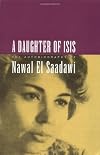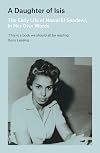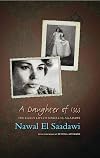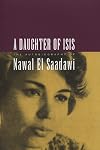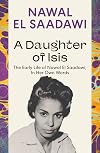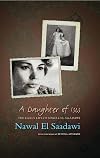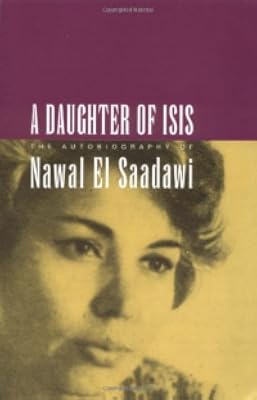
A Daughter of Isis: The Early Life of Nawal El Saadawi
by Nawal El Saadawi
On This Page
Description
In A Daughter of Isis, Nawal El Saadawi, author of Woman at Point Zero and one of the Arab world's greatest writers, tells the story of the formative years which shaped an iconic voice in global feminism. In poignant and moving prose we learn about her relationships with her family, her traumatic experience of female genital mutilation at seven years old and escaping suitors at ten and her journey from the rural Egyptian village of her birth to metropolitan Cairo to study medicine. Filled show more with warmth as well as critical reflection, this book reveals the early years of a remarkable life dedicated to the fight for justice and equality. show lessTags
Recommendations
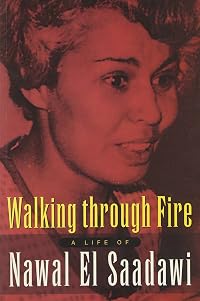
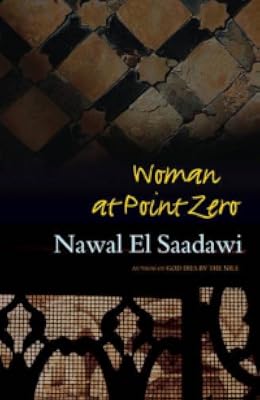


























Member Reviews
I picked ‘A Daughter of Isis’ off the library new acquisitions shelf knowing nothing about it, and was convinced to read it by a cover recommendation from Doris Lessing. It is the first volume in the autobiography of an Eygptian feminist, writer, and political activist. She recounts her childhood and life as a medical student in lyrical, non-linear fashion. Once I got used to her poetic style, I found it readable and involving, albeit depressing. Her overriding experience was of women being treated as second-class citizens. El Saadawi suffered female genital mutilation, fought to avoid being married off in her early teens, and was very lucky to get an education. Most female relatives of her generation were forced to abandon any show more dreams of study, music, or art in favour of housework and child-rearing. Their plight is depicted with great pathos: perpetually cooking and cleaning, constantly pregnant, dying prematurely. El Saadawi sensitively shows the contradictions of her father, who allowed his daughters to be educated yet still treated them as intellectually inferior to his sons. She gradually gained his respect by exceeding the academic achievements of her brothers through great effort, but was still expected to do all the women’s chores as well. The political turmoil in Egypt in the 1940s form the background to her adolescence, during which she came to question gender roles in society, culture, and religion.
The narrative is notably skilful at describing material details grounded in the body, including the wretchedness of menstruation. This passage was particularly memorable:
Although I found the style rather meandering, it is undoubtedly powerful and beautifully written and translated. A book well worth taking a chance on should you see it on the shelf. show less
The narrative is notably skilful at describing material details grounded in the body, including the wretchedness of menstruation. This passage was particularly memorable:
Between me and the primus stove there was a visceral feeling of enmity. It was such a strange, moody creature with a will of its own that always seemed to conflict with mine, as though it represented some strange, antagonistic power on earth, or in the beans. If I wanted it to burn, it went out. If I wanted it to go out, a tongue of fire would flare up from it in my face. It taunted me like the whims of fate or destiny.
[...]
As soon as I had reached the age of seven my mother started to teach me how to light the primus stove, and my father began to show me how to pray. Was there some relationship between the primus stove and praying? I soon discovered that there was. The body movements were similar. To light the stove I had to bend my back in a movement which resembled bowing down in prayer. When I cleaned the blocked hole with a needle sometimes it broke inside, the in order to extract it with the help of another needle I would have to bend even more so that my nose almost touched the tarboush in a movement very much like prostration.
Although I found the style rather meandering, it is undoubtedly powerful and beautifully written and translated. A book well worth taking a chance on should you see it on the shelf. show less
After reading The Fall of the Iman and watching some of her talks online I was curious to learn more about her life. I am richly rewarded: I don’t think I have ever read an autobiography that has spoken to me as intensely as Nawal El Saadawi writing about her childhood and youth, the formative years that made her into the extraordinary woman she is. (IV-18)
Ratings
Members
- Recently Added By
Published Reviews
"This brave book brings to life all too familiar news items from some traditional cultures where women are treated throughout their lives as misfortunes, compared to their brothers; are forcibly clitorectomised, married off at the age of ten. The author fought injustice all her life, succeeded in becoming a doctor... then a writer. In our culture women's education was fought for by our show more grandmothers and great-grandmothers; reading this we are reminded not to take our good fortune for granted. This is a book we should all be reading..." - Doris Lessing
"In this book we see how, from an early age, Saadawi combines her love of the Arabic language with her awareness of gender-based oppression to create texts which are as subversive as they are moving..." - Modern African Studies
"As I finished reading Dr. Nawal's autobiography I felt a sudden sense of loss. I didn't want to leave her. I went back and read the last sections again, and then again, until I remembered how many other books she has written. Then I felt delight that I will be able to return to her words and to her stories, and that so many others will share in them." - Bettina Aptheker show less
"In this book we see how, from an early age, Saadawi combines her love of the Arabic language with her awareness of gender-based oppression to create texts which are as subversive as they are moving..." - Modern African Studies
"As I finished reading Dr. Nawal's autobiography I felt a sudden sense of loss. I didn't want to leave her. I went back and read the last sections again, and then again, until I remembered how many other books she has written. Then I felt delight that I will be able to return to her words and to her stories, and that so many others will share in them." - Bettina Aptheker show less
added by ZedBooks
Lists

Feminists' memoirs/autobiographies
38 works; 11 members
Author Information

69+ Works 3,156 Members
Nawal El Saadawi was born in 1931. She is an Egyptian feminist author, acitvist, physician and psychiatrist whose writings focus on the subject of women in Islam. She is founder and president of the Arab Women's Solidarity Association, and co-founder of the Arab Association for Human Rights.
All Editions
Common Knowledge
- Canonical title
- A Daughter of Isis: The Early Life of Nawal El Saadawi
- Original publication date
- 1999
- First words
- It was my mother who taught me how to read and write. (Preface)
Since January 1993, I have been in this small house overlooking Duke Forest with its dense masses of tall cedars, pines and oak trees; an inundation of green.
Classifications
- Genres
- Biography & Memoir, Literature Studies and Criticism
- DDC/MDS
- 892.736 — Literature & rhetoric Literatures of other languages Afro-Asiatic literatures Arabic (Egypt, Lebanon, Palestine, Saudi Arabia, Sudan) Arabic fiction 1945–2000
- LCC
- PJ7862 .A3 .A3 — Language and Literature Oriental languages and literatures Oriental philology and literature Arabic Arabic literature Individual authors or works
- BISAC
Statistics
- Members
- 117
- Popularity
- 278,158
- Reviews
- 2
- Rating
- (4.00)
- Languages
- English, Italian, Spanish
- Media
- Paper, Ebook
- ISBNs
- 15
- ASINs
- 3