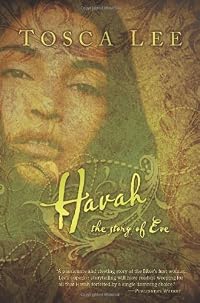
Havah
by Tosca Lee
On This Page
Description
Myth and legend shroud her in mystery. Now hear her story. From paradise to exile, from immortality to the death of Adam, experience the dawn of mankind through the eyes of Eve, the woman first known... as Havah.Praise for Havah: The Story of Eve "A passionate and riveting story of the Bible's first woman."-Publishers Weekly (starred review) "Havah is nothing less than a masterpiece."-Nicole Baart, New York Times bestselling author of Everything We Didn't Say "Much has been written about Eve show more . . . but I doubt her heart has ever been so deeply plumbed as in this lyrical novel by Tosca Lee."-Historical Novel Society "Havah is both breathtakingly beautiful and heart-rending."-Mesu Andrews, bestselling author of Isaiah's Daughter "Lush and luscious, spare and barren, rich and raw, threaded with inescapable hopelessness and undeniable hope." -Cynthia Ruchti, award-winning author of Facing the Dawn. show lessTags
Recommendations








Member Reviews
It's not the first time I've read a novel about the Bible's first woman. But it's the first time a novel about her intrigued and engrossed me this much.
While reading Havah: The Story of Eve by author Tosca Lee, I was glad to see that Ish and Isha aren't the more predictable—perhaps, stereotypical—"Adam and Eve" that I've seen depicted before. The author doesn't make this man and woman so much like modern (or Western) thinkers and speakers as to lose the curiousness and antiquity of the story. Havah's journey is poetically developed here with such keen observation and imagination that the telling is truly impeccable, bringing an age-old account to life without making it too easily...contemporary.
I must say, though, as engrossed as I show more was in this novel, much of it was so depressing to me that I almost gave up on it a few times. Of course, being banished from your home and losing depth of communion with your environment, your race, and your God is no "happy" predicament, and I'm not a stranger to books that are simultaneously excellent and hard to swallow. But it seemed so long before the hope that Havah's Adam spoke of early on found much space to convincingly breathe again. After Eden, Havah's petulance and Adam's aloofness became a bit much for me, and as I didn't exactly warm to any of the other characters during the often bleak events, I didn't enjoy the read as much as I would've liked.
Still, I can't dismiss the value or, again, the impeccability of the read, and I'd certainly recommend it to readers with questioning minds and an appreciation for lyrical literature. This is the first I've read by this author, and I've every intention of reading more. show less
While reading Havah: The Story of Eve by author Tosca Lee, I was glad to see that Ish and Isha aren't the more predictable—perhaps, stereotypical—"Adam and Eve" that I've seen depicted before. The author doesn't make this man and woman so much like modern (or Western) thinkers and speakers as to lose the curiousness and antiquity of the story. Havah's journey is poetically developed here with such keen observation and imagination that the telling is truly impeccable, bringing an age-old account to life without making it too easily...contemporary.
I must say, though, as engrossed as I show more was in this novel, much of it was so depressing to me that I almost gave up on it a few times. Of course, being banished from your home and losing depth of communion with your environment, your race, and your God is no "happy" predicament, and I'm not a stranger to books that are simultaneously excellent and hard to swallow. But it seemed so long before the hope that Havah's Adam spoke of early on found much space to convincingly breathe again. After Eden, Havah's petulance and Adam's aloofness became a bit much for me, and as I didn't exactly warm to any of the other characters during the often bleak events, I didn't enjoy the read as much as I would've liked.
Still, I can't dismiss the value or, again, the impeccability of the read, and I'd certainly recommend it to readers with questioning minds and an appreciation for lyrical literature. This is the first I've read by this author, and I've every intention of reading more. show less
This is certainly one the most imaginative and thought-provoking novels I have read to date. Tosca Lee accomplished an amazing feat in writing a novel from Eve's perspective that is still in line with the scriptural telling of the story of creation, fall, and the life after. If you have ever wondered how must have felt, what her life was like - you'd enjoy this book.
"Wake!" with this simple command the novel opens its doors to an amazing adventure, an invitation into Eve's life. An invitation to the beginning - life in the garden, a new relationship untarnished with sin (the wondrous state of marriage unsullied by the filth of the sinful world - in its most beautiful natural state), the fresh and inhibited relationship of God (called show more the ONE) and mankind - in it's perfect state. The richness of descriptive elements makes this story bound off the pages in full color in your minds imaginative eye.
I had never really taken time to contemplate the pureness of life before sin - how wondrous this must have been. A time of perfect, untarnished union with the Lord. A marriage free of temptation, shame, feelings of inadequacy or guilt - just sheer pleasure in knowing each other completely - neither person having anything to hide, withhold or fear.
Nor had I ever thought about the fact that God's most beautiful angel Satan (the angel of music and beauty) was possibly there deceiving Eve one encounter at a time, slowly leading her to the taking of that which was forbidden. That she was enchanted by his beauty and slick tongue, that she was led astray by his 98% truth and 1% lie. But then how true is that of us - one little fox ruins the entire vineyard. My heart cried out at the recounting of the fall - how Eve states, "I ate. I, who had come second went first. I, who had followed in the steps of every living thing before me, walked ahead. Perhaps my hands trembled as I held it out. Perhaps I already knew. Either way, I ate then gave it to him. He ate." WOW! My breath caught in my throat as I read it written in such a way. Never had I allowed myself to actually imagine this portion of scripture to allow the impact of the action to come to rest fully on my consciences in such a shocking heavy way. In that one moment creation became dull with the entrance of sin - things changed forever.
The remainder of the novel follows the life of Eve outside of the garden in what she calls the "slow death". For the first time all life around her, all creation was in the process of dying. Even now this is what we see - and her heart longed to find a way back to the beginning to a time where there was no word for death or pain. To a time when all creation existed together in perfect harmony a constant beautiful song raised to the Father of it all - and a daily communion with Him whose hands created it all. A relationship with God that was not a struggle to maintain - no enemy to fight - surrounded by peace and beauty unexplainable. This life outside Eden is one of firsts of all kinds - some good, some bad. Again, Tosca Lee's brilliant use of descriptive words and images wakens the reader's imagination, stirs the soul, pricks the heart - awakening that awareness deep in ones self that there is something better, something we are missing, something lost that must be restored. It is as if the reader is there in the midst of it all, experiencing the deep emotions of joy and anguish.
This is an excellent book for adults. I would not recommend it to youth because of some of the graphic details.
Thank you B&H for this review copy. show less
"Wake!" with this simple command the novel opens its doors to an amazing adventure, an invitation into Eve's life. An invitation to the beginning - life in the garden, a new relationship untarnished with sin (the wondrous state of marriage unsullied by the filth of the sinful world - in its most beautiful natural state), the fresh and inhibited relationship of God (called show more the ONE) and mankind - in it's perfect state. The richness of descriptive elements makes this story bound off the pages in full color in your minds imaginative eye.
I had never really taken time to contemplate the pureness of life before sin - how wondrous this must have been. A time of perfect, untarnished union with the Lord. A marriage free of temptation, shame, feelings of inadequacy or guilt - just sheer pleasure in knowing each other completely - neither person having anything to hide, withhold or fear.
Nor had I ever thought about the fact that God's most beautiful angel Satan (the angel of music and beauty) was possibly there deceiving Eve one encounter at a time, slowly leading her to the taking of that which was forbidden. That she was enchanted by his beauty and slick tongue, that she was led astray by his 98% truth and 1% lie. But then how true is that of us - one little fox ruins the entire vineyard. My heart cried out at the recounting of the fall - how Eve states, "I ate. I, who had come second went first. I, who had followed in the steps of every living thing before me, walked ahead. Perhaps my hands trembled as I held it out. Perhaps I already knew. Either way, I ate then gave it to him. He ate." WOW! My breath caught in my throat as I read it written in such a way. Never had I allowed myself to actually imagine this portion of scripture to allow the impact of the action to come to rest fully on my consciences in such a shocking heavy way. In that one moment creation became dull with the entrance of sin - things changed forever.
The remainder of the novel follows the life of Eve outside of the garden in what she calls the "slow death". For the first time all life around her, all creation was in the process of dying. Even now this is what we see - and her heart longed to find a way back to the beginning to a time where there was no word for death or pain. To a time when all creation existed together in perfect harmony a constant beautiful song raised to the Father of it all - and a daily communion with Him whose hands created it all. A relationship with God that was not a struggle to maintain - no enemy to fight - surrounded by peace and beauty unexplainable. This life outside Eden is one of firsts of all kinds - some good, some bad. Again, Tosca Lee's brilliant use of descriptive words and images wakens the reader's imagination, stirs the soul, pricks the heart - awakening that awareness deep in ones self that there is something better, something we are missing, something lost that must be restored. It is as if the reader is there in the midst of it all, experiencing the deep emotions of joy and anguish.
This is an excellent book for adults. I would not recommend it to youth because of some of the graphic details.
Thank you B&H for this review copy. show less
Originally posted on Tales to Tide You Over
Havah is a beautifully written book full of important questions about God, life, and what it means to be human in all our strengths and weaknesses. It tells the story of paradise lost, both how it came to happen and how the characters of Adam and Eve (or Havah) survived after being ejected from the garden in a rush of disastrous weather that destroys their first home.
Havah narrates her tale as a persistent voice with only dialogue on occasion. It’s an old style (though coincidentally I just read two published short stories in that style), but works exceeding well in this context where the story is not a matter of events but a matter of how she experiences those events through her own filter. show more It’s closer even than most first person narratives in that everything we experience is through her.
I was raised Catholic so many of the pieces in this story were familiar. Rather than tainting my read, it gave the story a meta text. The questions explored are many that I’ve pondered, and the book even goes so far as to look at the position of women in society and how that came about. Same with eating meat. Havah does not ignore the day to day changes that the events require, though some are glossed over simply because they occur outside of Havah’s perception. She does, however, address the consequences or aftermath, whether she can change the results or only mourn them.
This is not a simple novel. It is not a candy read where every piece is given to you on the page. Havah is an in-depth exploration of what it means to be human and to have free will along with the mix of emotions that come from birth.
Tosca Lee did her best to stay true to the Christian and Jewish traditions, consulting with both rabbis and priests/ministers, but she brings her own interpretation into play where the text has gaps or there are multiple interpretations of a single event. That said, she does a good job of not demanding her audience comes to the novel with foreknowledge. Whether you know the story of Adam and Eve or not, Havah offers a fascinating look at humanity, faith, and change.
I read Havah as a Net Galley title. As always, the opinions are my own. show less
Havah is a beautifully written book full of important questions about God, life, and what it means to be human in all our strengths and weaknesses. It tells the story of paradise lost, both how it came to happen and how the characters of Adam and Eve (or Havah) survived after being ejected from the garden in a rush of disastrous weather that destroys their first home.
Havah narrates her tale as a persistent voice with only dialogue on occasion. It’s an old style (though coincidentally I just read two published short stories in that style), but works exceeding well in this context where the story is not a matter of events but a matter of how she experiences those events through her own filter. show more It’s closer even than most first person narratives in that everything we experience is through her.
I was raised Catholic so many of the pieces in this story were familiar. Rather than tainting my read, it gave the story a meta text. The questions explored are many that I’ve pondered, and the book even goes so far as to look at the position of women in society and how that came about. Same with eating meat. Havah does not ignore the day to day changes that the events require, though some are glossed over simply because they occur outside of Havah’s perception. She does, however, address the consequences or aftermath, whether she can change the results or only mourn them.
This is not a simple novel. It is not a candy read where every piece is given to you on the page. Havah is an in-depth exploration of what it means to be human and to have free will along with the mix of emotions that come from birth.
Tosca Lee did her best to stay true to the Christian and Jewish traditions, consulting with both rabbis and priests/ministers, but she brings her own interpretation into play where the text has gaps or there are multiple interpretations of a single event. That said, she does a good job of not demanding her audience comes to the novel with foreknowledge. Whether you know the story of Adam and Eve or not, Havah offers a fascinating look at humanity, faith, and change.
I read Havah as a Net Galley title. As always, the opinions are my own. show less
Some stories are just accepted and never explored. Some stories are pondered and passed by. Then there is Tosca Lee’s Havah: The Story of Eve.
My whole life I have heard the story of the Garden of Eden. I have heard the story of the Fall of Man and the first murder. I’ve read debates on Cain’s life and even participated in a few. But in all honesty, I have never really thought much of Eve.
Yes, I’ve studied and discussed her eating of the fruit. But it never went beyond that. I never thought of how she felt coming to life and being the only woman. I never thought of how it must have felt to lose her innocence and find herself expelled from Paradise. I never thought much about her.
Thank goodness Tosca Lee did.
In Havah, Lee explores show more Eve like she has never been explored before. The reader is in Eve’s mind as she communes with God, realizes her sin, feels anger against her husband for the first time, feels the first pains of birth, sees death for the first time, watches generations grow up around her, and sees her own seed perish. This is a very moving story that will have the reader wanting to know more. You will have a whole new perspective of Eve and what she went through.
Lee does an excellent job of not painting Eve as a saint or as a complete sinner. Eve is shown more as what she probably was – a human who once knew Paradise and who was to live out her long days outside its walls. She is shown as a loving mother who struggles with being a mother as there is no example for her to go by. She is shown as a wife who now has strife in what once was a perfect marriage. She is shown as someone who longs for her communion with her Maker while knowing her life prevents it from being what it once was.
This is truly a great book that I will find myself reading over again.
Note: This book was provided to me by the publisher without expectation of a positive review. show less
My whole life I have heard the story of the Garden of Eden. I have heard the story of the Fall of Man and the first murder. I’ve read debates on Cain’s life and even participated in a few. But in all honesty, I have never really thought much of Eve.
Yes, I’ve studied and discussed her eating of the fruit. But it never went beyond that. I never thought of how she felt coming to life and being the only woman. I never thought of how it must have felt to lose her innocence and find herself expelled from Paradise. I never thought much about her.
Thank goodness Tosca Lee did.
In Havah, Lee explores show more Eve like she has never been explored before. The reader is in Eve’s mind as she communes with God, realizes her sin, feels anger against her husband for the first time, feels the first pains of birth, sees death for the first time, watches generations grow up around her, and sees her own seed perish. This is a very moving story that will have the reader wanting to know more. You will have a whole new perspective of Eve and what she went through.
Lee does an excellent job of not painting Eve as a saint or as a complete sinner. Eve is shown more as what she probably was – a human who once knew Paradise and who was to live out her long days outside its walls. She is shown as a loving mother who struggles with being a mother as there is no example for her to go by. She is shown as a wife who now has strife in what once was a perfect marriage. She is shown as someone who longs for her communion with her Maker while knowing her life prevents it from being what it once was.
This is truly a great book that I will find myself reading over again.
Note: This book was provided to me by the publisher without expectation of a positive review. show less
Tosca Lee has got to be one of the most talented authors in Christian fiction today. It has been such a long time since I read a novel with as much depth as this one had. Normally, I fly through books as so many of them have similar storylines and plot devices, but I found myself slowly and methodically reading this book, absorbing each and every page.
This book changed my perceptions of those early days from Genesis that I am familiar with. Tosca's ability to convey the joy of Adam and Eve's time in the garden was contrasted extremely well to their sudden flight after eating the fruit, along with their subsequent wonder of how they would survive. And while it's not the norm for Christian fiction, I appreciated Tosca going the extra mile show more in describing the love shared between Adam and Eve as husband and wife. It seems that lately this has been frowned upon by some Christian readers, but I found it to be completely natural and added that extra bit of realness to the story.
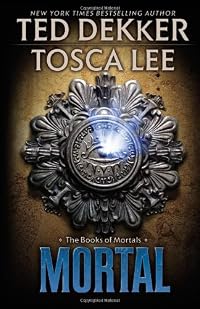
Not only is Havah a great addition to Christian fiction, it is a wonderful addition to the genre of Biblical fiction that is growing by leaps and bounds. I have found that these novels help me in my understanding of Biblical truths, and I always find myself going to the original source and comparing both works side by side. It is my belief that Tosca has found her niche with the Biblical fiction genre, and while I'm sure her newest novel with Ted Dekker is great, I'm eager for her next solo novel in the works called Iscariot. show less
This book changed my perceptions of those early days from Genesis that I am familiar with. Tosca's ability to convey the joy of Adam and Eve's time in the garden was contrasted extremely well to their sudden flight after eating the fruit, along with their subsequent wonder of how they would survive. And while it's not the norm for Christian fiction, I appreciated Tosca going the extra mile show more in describing the love shared between Adam and Eve as husband and wife. It seems that lately this has been frowned upon by some Christian readers, but I found it to be completely natural and added that extra bit of realness to the story.
Not only is Havah a great addition to Christian fiction, it is a wonderful addition to the genre of Biblical fiction that is growing by leaps and bounds. I have found that these novels help me in my understanding of Biblical truths, and I always find myself going to the original source and comparing both works side by side. It is my belief that Tosca has found her niche with the Biblical fiction genre, and while I'm sure her newest novel with Ted Dekker is great, I'm eager for her next solo novel in the works called Iscariot. show less
I loved this book in so many ways I don't even know where to begin! The language is beautiful and flows like music across the page. Interspersed throughout the lyrical sentences are poetic phrases and descriptions that read as if they come from Havah's imagination, but also remind me of the words of the Biblical books Psalms and Song of Solomon. Havah's life is fascinating to watch unfold, from her dreams of the creation of the world, to her first sin and the subsequent aftermath, to each skill that she acquires to survive with the Adam outside of the garden. I shared her joy at the birth of each child, and I found her many discussions and arguments with the Adam to be strangely similar to interactions with my own husband. Here is a show more woman that every woman ever living could relate to in some way, and it satisfies a craving that I have often felt to simply sit down and talk to the "Mother of All Living." The Bible says precious little about Eve - only three chapters in Genesis make mention of her. The lengths to which Tosca Lee went to create a more complete picture of this captivating woman are detailed at the end of the text, and her list of sources is quite impressive. So much of this story is believable and relevant to even the most modern of women, in such things as her musings of life and death, the ups and downs of her various relationships, her daily tasks to survive, and her struggle to find meaning and purpose for her life. All of the fine details of the development of civilization were also quite entertaining, as I read the beginnings of farming, food preparation, pottery, trade, art, cloth-making, herding, etc. So many things I will think about for years to come, such as how the smallest things could develop over time to have such great impact, like a drawing of Havah's becoming the symbol of a religious sect or the chants of one of her many daughters turning into the song of a nation. This book was a study in human behavior in so many ways as well, such as how their vegetarian lifestyle changed to include first fish and then other meats by repeated famine or how greater numbers of people in close quarters resulted in strife and conflict. I could go on and on about all that I loved about this book, but instead I will simply say that this book is definitely one of the best books I have ever read, and I highly recommend it, no matter what religion the reader prescribes to. show less
After reading the first chapter of this book I was drawn in by the way the book was written. I knew instantly that this version of Eve’s life was not going to be presented in the flowery way most Christian books are written. For a lack of a better term, this story of Eve was, well, dark.
Tosca Lee has taken a story that generations have heard time and again and researched and reflected deeply on the topic. Do not be fooled by the beautifully written prose in this book. The preciseness and intensity of man’s first sin and the repercussions of that sin will undoubtedly knock the wind out of you. Consider this: It is meant to have exactly that effect!
Never again will you look upon the story in Genesis with innocent eyes, from God’s show more command to Eve to “Wake!” to the beautifully cunning serpent to the grief that followed Adam and Eve for generations—this book is a must-read.
You know the story, I encourage you to buy it and have your eyes opened. show less
Tosca Lee has taken a story that generations have heard time and again and researched and reflected deeply on the topic. Do not be fooled by the beautifully written prose in this book. The preciseness and intensity of man’s first sin and the repercussions of that sin will undoubtedly knock the wind out of you. Consider this: It is meant to have exactly that effect!
Never again will you look upon the story in Genesis with innocent eyes, from God’s show more command to Eve to “Wake!” to the beautifully cunning serpent to the grief that followed Adam and Eve for generations—this book is a must-read.
You know the story, I encourage you to buy it and have your eyes opened. show less
Members
- Recently Added By
Author Information

17 Works 3,569 Members
Awards and Honors
Common Knowledge
- Original publication date
- 2010
- People/Characters
- Eve; Adam, husband of Eve; The Serpent
- Important places
- Eden
- Dedication
- For my mother, and for you.
- First words
- I have seen paradise and ruin. (Prologue)
A whisper in my ear: Wake! - Last words
- (Click to show. Warning: May contain spoilers.)Wake!
Classifications
Statistics
- Members
- 209
- Popularity
- 155,830
- Reviews
- 14
- Rating
- (4.32)
- Languages
- Dutch, English
- Media
- Paper, Audiobook, Ebook
- ISBNs
- 9
- ASINs
- 7