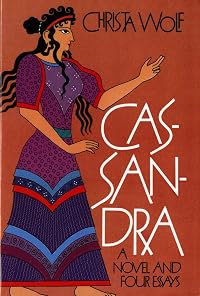
Cassandra: A Novel and Four Essays
by Christa Wolf, Jan van Heurck (Translator)
On This Page
Description
Cassandra, daughter of the King of Troy, is endowed with the gift of prophecy but fated never to be believed. After the fall of Troy, in a stream of memories, associations, reflections she comes to an understanding of her own life and of war. This is a recreation of a classical myth.Tags
Recommendations






















Member Reviews
Cassandra has always struck me as the most tragic figure in the story of the Trojan War. Gifted with prophecy, she could see the future, she knew what would happen, but no one would believe her. It's one thing to be doomed; it's another to know you are doomed.
German author Christa Wolf retells the story of the Trojan War from Cassandra's point of view in her novel Cassandra translated from the German by Jan Van Heurck. By telling the story from this way, Ms. Wolf increases our understanding of the Trojan War. There are no heroics in Cassandra. When Cassandra witnesses a battle, she sees it from the point of view of a helpless victim not as a combatant. Because she is King Priam's daughter, she has an insider's view of court politics. show more What she witnesses is a war fought not for honor, but for economic reasons--control of the Bosporus Straits trade. She sees a shift in Trojan politics and culture from a more peaceful, matriarchal society to a society controlled by men, one that shuts out women from all positions of power.
But Christa Wolf's most intriguing take on the Trojan War is her take on it's cause, the kidnapping of Helen. In Homer's version of the story, Helen of Troy, a beautiful young Greek girl who became the face who launched a thousand ships, was promised to Paris, a Trojan prince, by the goddess Aprhodite. She watched the war from the walls of Troy, despised by the Trojans as the cause of their suffering and despised by the Greeks for her betrayal of her father. In Cassandra, Helen is absent from the story altogether. She is taken from her father by Paris, but she is then taken from him by the King of Egypt when Paris stops there on his way to Troy. In order to save face, Paris and the men of the Trojan court, keep the second kidnapping of Helen a secret. When Paris docks his ships in Troy, he sends ashore a veiled woman. The men claim that Helen is too ill to receive visitors, so no one but Paris can see her. Weeks, and then months go by. Eventually, no one asks about Helen anymore. She is forgotten. The Greeks arrive to do battle with Troy and win Helen back; war between the two begins based entirely on deception. It's clear that everyone knows about the lie by then, but no one stops the war once it has begun.
Sound familiar?
The Trojan War continues to be the source of great literature. Margaret Atwood's recent novel The Penelopiad, which tells the story from the point of view of Odysseus' wife who famously fought off an army of suitors while waiting from him to return from the Trojan War, is a recent example. Cassandra, by Christa Wolf, proves that knowing the whole story before hand need not ruin it. At just under 150 pages, it's possible to read the entire novel in two or three sittings which is good because novel itself is a page turner. You think you know the story of the Trojan War, but Cassandra's insider view and the reinterpretation of the war's underlying causes make for eye-opening reading. Knowing how the story ends, does not lessen the experience of reading Cassandra at all. She is the witness to the events who can tell us what really happened. It's a fascinating and compelling read.
As was the case with Hans Fallada, author of Every Man Dies Alone, Christa Wolf's biography is as interesting as her work. Born in what is now Poland in the late 1920's, her family was expelled from their home after World War II and settled in what became East Germany. She became a literary scholar and critic, served briefly as an informant for the Stasis only to be criticised by them for her "reticence" and placed under surveillance for over 30 years. In spite of this she remained faithful to the ideals of Karl Marx and opposed German reunification. Cassandra is considered by many to be her most important work. show less
German author Christa Wolf retells the story of the Trojan War from Cassandra's point of view in her novel Cassandra translated from the German by Jan Van Heurck. By telling the story from this way, Ms. Wolf increases our understanding of the Trojan War. There are no heroics in Cassandra. When Cassandra witnesses a battle, she sees it from the point of view of a helpless victim not as a combatant. Because she is King Priam's daughter, she has an insider's view of court politics. show more What she witnesses is a war fought not for honor, but for economic reasons--control of the Bosporus Straits trade. She sees a shift in Trojan politics and culture from a more peaceful, matriarchal society to a society controlled by men, one that shuts out women from all positions of power.
But Christa Wolf's most intriguing take on the Trojan War is her take on it's cause, the kidnapping of Helen. In Homer's version of the story, Helen of Troy, a beautiful young Greek girl who became the face who launched a thousand ships, was promised to Paris, a Trojan prince, by the goddess Aprhodite. She watched the war from the walls of Troy, despised by the Trojans as the cause of their suffering and despised by the Greeks for her betrayal of her father. In Cassandra, Helen is absent from the story altogether. She is taken from her father by Paris, but she is then taken from him by the King of Egypt when Paris stops there on his way to Troy. In order to save face, Paris and the men of the Trojan court, keep the second kidnapping of Helen a secret. When Paris docks his ships in Troy, he sends ashore a veiled woman. The men claim that Helen is too ill to receive visitors, so no one but Paris can see her. Weeks, and then months go by. Eventually, no one asks about Helen anymore. She is forgotten. The Greeks arrive to do battle with Troy and win Helen back; war between the two begins based entirely on deception. It's clear that everyone knows about the lie by then, but no one stops the war once it has begun.
Sound familiar?
The Trojan War continues to be the source of great literature. Margaret Atwood's recent novel The Penelopiad, which tells the story from the point of view of Odysseus' wife who famously fought off an army of suitors while waiting from him to return from the Trojan War, is a recent example. Cassandra, by Christa Wolf, proves that knowing the whole story before hand need not ruin it. At just under 150 pages, it's possible to read the entire novel in two or three sittings which is good because novel itself is a page turner. You think you know the story of the Trojan War, but Cassandra's insider view and the reinterpretation of the war's underlying causes make for eye-opening reading. Knowing how the story ends, does not lessen the experience of reading Cassandra at all. She is the witness to the events who can tell us what really happened. It's a fascinating and compelling read.
As was the case with Hans Fallada, author of Every Man Dies Alone, Christa Wolf's biography is as interesting as her work. Born in what is now Poland in the late 1920's, her family was expelled from their home after World War II and settled in what became East Germany. She became a literary scholar and critic, served briefly as an informant for the Stasis only to be criticised by them for her "reticence" and placed under surveillance for over 30 years. In spite of this she remained faithful to the ideals of Karl Marx and opposed German reunification. Cassandra is considered by many to be her most important work. show less
I could not get into this book because it has no narrative. I gave up some way into it. Be warned: you need to like first person narration that just dwells on the past to get into this book.
This is sort of embarrassing: I remember I read this and thought it was brilliant, but don't remember another thing about it, except that the end was chilling.
Ratings
Members
- Recently Added By
Published Reviews
ThingScore 75
"Casandra", de Christa Wolf, revive el personaje mitológico con un toque magistral. La novela, narrada íntimamente en primera persona, explora las intuiciones proféticas de Casandra y su lucha por ser escuchada en un mundo patriarcal.
Impregnada de influencias históricas y literarias, "Casandra" ofrece una perspectiva distintiva de la guerra de Troya y de la condición humana. El estilo show more personal y poético de la novela cautiva a lectores de todas las culturas y épocas.
La obra de Wolf sirve para recordar el poder de las voces individuales, la complejidad de la naturaleza humana y la sabiduría que se encuentra en la comprensión de nuestros destinos. Es un testimonio de la fuerza perdurable de las voces femeninas y del impacto duradero de las narraciones antiguas en la conciencia moderna.
En "Casandra", Wolf lleva a los lectores a un cautivador viaje a la mente de una mujer profética, desentrañando los secretos inconfesables de la antigua Troya. A través de una prosa elocuente y una protagonista multidimensional, la novela desafía los relatos tradicionales y ofrece una nueva perspectiva de la guerra de Troya.
"Casandra", de interés para todas las generaciones, ahonda en la dinámica del poder, los retos de ser mujer en un mundo dominado por los hombres y la búsqueda de la verdad y el reconocimiento. Inmersos en el inquietante mundo de Casandra, los lectores descubren una voz atemporal que resuena a través de los tiempos, inspirándoles a desafiar la autoridad, aceptar las verdades y encontrar la fuerza en la resistencia. show less
Impregnada de influencias históricas y literarias, "Casandra" ofrece una perspectiva distintiva de la guerra de Troya y de la condición humana. El estilo show more personal y poético de la novela cautiva a lectores de todas las culturas y épocas.
La obra de Wolf sirve para recordar el poder de las voces individuales, la complejidad de la naturaleza humana y la sabiduría que se encuentra en la comprensión de nuestros destinos. Es un testimonio de la fuerza perdurable de las voces femeninas y del impacto duradero de las narraciones antiguas en la conciencia moderna.
En "Casandra", Wolf lleva a los lectores a un cautivador viaje a la mente de una mujer profética, desentrañando los secretos inconfesables de la antigua Troya. A través de una prosa elocuente y una protagonista multidimensional, la novela desafía los relatos tradicionales y ofrece una nueva perspectiva de la guerra de Troya.
"Casandra", de interés para todas las generaciones, ahonda en la dinámica del poder, los retos de ser mujer en un mundo dominado por los hombres y la búsqueda de la verdad y el reconocimiento. Inmersos en el inquietante mundo de Casandra, los lectores descubren una voz atemporal que resuena a través de los tiempos, inspirándoles a desafiar la autoridad, aceptar las verdades y encontrar la fuerza en la resistencia. show less
added by Peter_MacTroy
Lists

Female Author
1,235 works; 67 members

1980s
356 works; 23 members

German Literature
518 works; 55 members

20th Century Literature
1,161 works; 55 members
Author Information

115+ Works 5,599 Members
Christa Wolf was born on March 18, 1929, in Landsberg, which is now Gorzow, Poland. Her father joined the Nazi Party and she became a member of the girls' version of the Hitler Youth. In 1949, she joined the Socialist Unity Party and studied German literature at universities in Jena and Leipzig. She wrote numerous novels during her lifetime show more including The Divided Heaven, The Quest for Christa T., A Model Childhood, and Cassandra. She won several awards including the Heinrich Mann Prize in 1963 and Thomas Mann Prize for literature in 2010. She died on December 1, 2011 at the age of 82. (Bowker Author Biography) show less
Some Editions
Awards and Honors
Distinctions
Notable Lists
Series
Belongs to Publisher Series
Virago Modern Classics (315)
Work Relationships
Common Knowledge
- Canonical title
- Cassandra: A Novel and Four Essays
- Original title
- Kassandra
- Original publication date
- 1983; 1984 (English translation) (English translation)
- People/Characters
- Cassandra (of Troy); Agamemnon; Ajax the Lesser
- Important places
- Greece
- Epigraph
- Once again limb loosing love shakes me,/ bitter-sweet, untamable, a dusky animal.
- Sappho - First words
- It was here. This is where she stood. These stone lions looked at her; now they no longer have heads.
- Last words
- (Click to show. Warning: May contain spoilers.)They will continue to own the world in this roundabout way.
- Original language
- German
- Disambiguation notice*
- Diese Ausgabe beinhaltet den Roman Kassandra sowie auch die Poetikvorlesungen. Bitte nicht mit "Kassandra" zusammenführen
*Some information comes from Common Knowledge in other languages. Click "Edit" for more information.
Classifications
- Genres
- Fiction and Literature, General Fiction
- DDC/MDS
- 838.91409 — Literature & rhetoric German & related literatures German miscellaneous writings 1900- 1900-1990 1945-1990 Individual authors not limited to one specific form : description; critical appraisal; biography; collected works
- LCC
- PT2685 .O36 .K313 — Language and Literature German, Dutch and Scandinavian literatures German literature Individual authors or works 1961-2000
- BISAC
Statistics
- Members
- 599
- Popularity
- 48,665
- Reviews
- 3
- Rating
- (3.82)
- Languages
- English, German, Spanish
- Media
- Paper
- ISBNs
- 6
- ASINs
- 4